





Explore GDPR’s principles, compliance requirements, and impact to navigate data privacy effectively.
tag describtion

What Is the General Data Protection Regulation

Did you know that nearly 73% of European businesses say the GDPR has pushed them to manage customer data better? Plus, 62% have increased their spending on cybersecurity! So, what exactly is the GDPR?

The General Data Protection Regulation (GDPR) is a data privacy law introduced and established by the European Union. The scope of this law extends to protecting the personal data and privacy of data subjects in the EU and European Union Economic Area (EEA). A data subject is an individual whose personal information is collected and processed by an organization.

Comprising 99 articles across 11 chapters, the GDPR establishes clear guidelines for how organizations must collect, process, and safeguard personal data with the goal of ensuring transparency, accountability, and enhanced security.

GDPR definition

What is the purpose of the GDPR

The purpose of the General Data Protection Regulation (GDPR) is to protect the privacy and personal data of individuals within the European Union (EU). In a world where our digital footprint is constantly expanding, the GDPR ensures that every piece of information we share is handled with care, transparency, and respect.

At its heart, the GDPR is about protecting your privacy. It requires businesses to seek clear and informed consent before collecting personal data while also limiting the amount of data they can gather—only what's necessary for its purpose. This regulation empowers individuals with key rights: you can access, correct, or delete your data; transfer it elsewhere; and even object to how it’s being used.

For businesses, the GDPR provides a clear framework for managing data responsibly across the entire EU, giving organizations the ability to operate with trust and integrity in today’s data-driven world. It's not just about compliance—it’s about building a safer, more transparent digital environment.

According to CISCO's consumer privacy survey, 61% of individuals in countries with established data protection laws reported that these regulations had a positive impact.

History of the GDPR     

In Europe, privacy is considered a fundamental human right, supported by key legal frameworks like Article 12 of the Universal Declaration of Human Rights and Article 8 of the European Convention on Human Rights. The European Charter of Fundamental Rights further emphasizes this with Article 7.

These principles laid the groundwork for strong data protection laws. As technology advanced and privacy concerns intensified, the need for a unified approach became evident, leading to the development of the GDPR to modernize and harmonize data protection laws across the European Union. As of 2024, there are 138 countries globally with data and consumer privacy laws, reflecting the growing international emphasis on protecting personal information.

Let’s take a look at some of the crucial milestones that shaped the GDPR:

  • As technology advanced, concerns grew about privacy and the use of personal data. In response, the EU introduced the Data Protection Directive (95/46/EC) in 1995 to regulate responsible data handling in the digital age. The directive set fundamental data protection standards for all EU countries and permitted each member state to establish an independent national authority to oversee the processing of personal data.

  • The rise of the digital economy exposed flaws in the 1995 directive, with inconsistent data protection across the EU and no defenses beyond its borders. In 2009, the European Commission reviewed the directive, seeking a stronger, future-proof framework for the digital age.

  • On January 25, 2012, the European Commission launched a major reform of EU data protection laws, sparking years of negotiations to strengthen privacy rights, simplify regulations for businesses, and increase accountability.

  • After four years of discussions, the GDPR was adopted on April 27, 2016, replacing the 1995 directive with a unified EU regulation. Organizations had two years to comply with the new rules.

  • The GDPR came into full effect on May 25, 2018, marking a significant shift in global data protection standards. It introduced stricter rules for data protection, substantial fines for non-compliance, and strengthened individual rights, including the right to access, erase, and transfer personal data.

Today, 67% of Europeans are familiar with the GDPR, and 62% of UK consumers report feeling more comfortable sharing their data since the introduction of the data protection law, highlighting its positive impact on consumer trust and awareness.

GDPR policy

Key definitions in the GDPR     

Article 4 of the GDPR provides key definitions that clarify the regulation’s requirements. Let’s explore some of these essential terms.

  • Personal data: Personal data refers to any information that can identify an individual, directly or indirectly, including names, ID numbers, locations, online identifiers, and traits related to their identity. It encompasses any data that helps pinpoint who someone is, making it essential to their identity.

  • Processing: Processing refers to any activity carried out on personal data, whether it's done manually or through automated systems. This includes collecting, storing, modifying, using, sharing, and deleting the data. Essentially, it covers every step in handling data from start to finish.

  • Restriction of processing: Restriction of processing means marking or labeling personal data in a way that limits how it can be used or shared going forward.

  • Controller: A controller refers to any individual or organization that determines how personal data is handled and for what reasons. EU laws or specific country laws may also define who the controller is or how to identify them.

  • Processor: A processor refers to an individual or organization that manages personal data for the controller, following their specific instructions.

  • Third party: A third party is anyone or any organization that isn’t the data subject, the processor, or someone authorized by them to handle the data. This includes outside organizations or agencies that don’t have direct control over the data.

  • Consent: Consent means a person clearly and willingly agrees to the use of their personal data. This approval must be specific and well-informed, often provided through a clear statement or affirmative action. It ensures that individuals understand how their information will be processed and that they are giving informed approval.

  • Personal data breach: A personal data breach happens when a security failure results in personal data being accidentally or illegally destroyed, lost, altered, shared without permission, or accessed without authorization, regardless of how the data is handled.

Seven core GDPR principles      

Article 5 of the GDPR outlines seven key principles for handling personal data responsibly. Here’s a closer look at them:

1. Lawfulness, fairness, and transparency: Personal data must be processed in a way that’s lawful, fair, and transparent to the individual. For example, if a company collects customer emails for marketing, it must inform the customers how their emails will be used and ensure that they agree to it.

2. Purpose limitation: Data should be collected only for specific purposes and not used for anything beyond that. For instance, if an online store gathers personal information to process an order, it can't later use that data for unrelated purposes like selling it to advertisers without consent.

3. Data minimization: Only collect the necessary data for a particular purpose. For example, a company should only ask for information like name and address when delivering a product—not extra details like marital status if it’s irrelevant to the transaction.

4. Accuracy: Organizations must maintain the accuracy of the data and keep it updated. For example, if a customer moves to a new address, the company should update its records to avoid sending packages to the wrong location.

5. Storage limitation: Data should only be retained for as long as necessary to fulfill the purpose. For instance, a company might need to store a customer’s payment details for a transaction but should delete or anonymize them once they are no longer needed.

6. Integrity and confidentiality: Personal data must be handled securely to prevent unauthorized access or leaks. For example, companies should encrypt sensitive data like credit card details and use firewalls to protect customer information from cyberattacks.

7. Accountability: Organizations should comply with the GDPR and should be able to demonstrate their compliance. For instance, they should maintain records of data processing activities and be ready to show how they protect personal data in audits.

Principles of GDPR

GDPR requirements for businesses     

Lawful basis and transparency

  • Organizations with 250 or more employees, or those handling high-risk data, need to keep detailed records of their data activities to comply with the GDPR.

  • Conducting a data protection impact assessment (DPIA) can be really helpful, even for smaller organizations.

  • Your records should cover key details like why you're processing data, what types you're handling, who has access, any third parties involved, how you're protecting the data, and how long you plan to keep it.

  • It's also important to let individuals know that you're collecting their data and explain why. As required by Article 12, this information should be included in your privacy policy and shared when you collect data. Make sure it's clear and easy to understand, especially for younger audiences.

Data security

  • Companies need to integrate data protection into every aspect of handling personal data, following the principle of "data protection by design and by default." This means using technical measures like encryption and organizational strategies such as limiting data collection and ensuring proper deletion.

  • Many productivity tools now include built-in end-to-end encryption to keep your communications and data secure. From email services to messaging apps and cloud storage, these features help protect your sensitive information. The GDPR encourages using encryption or pseudonymization whenever possible, so make sure these tools are secure and compliant with data protection standards.

  • It's also important to have a security policy that keeps your team informed about data security practices. This should cover areas like email security, password management, two-factor authentication, device encryption, and VPN usage.

  • Conducting a Data Protection Impact Assessment (DPIA) helps identify potential risks to customer data and develop strategies to minimize them. In the event of a data breach that compromises personal information, it’s crucial to inform the appropriate supervisory authority within a 72-hour window.

Accountability and governance

  • As per "data protection by design and by default," companies need to designate someone responsible for GDPR compliance.

  • When working with third-party vendors, choose those that are reliable and offer strong data protection. It’s a good practice to sign a data processing agreement with any third parties handling personal data on your behalf.

  • While not mandatory, appointing a Data Protection Officer (DPO) can be beneficial. This expert helps ensure GDPR compliance, assesses risks, advises on impact assessments, and coordinates with regulators.

Privacy rights

  • Businesses must make it simple for individuals to exercise their privacy rights. This involves providing transparency, ensuring smooth processing of deletion requests, and supporting the seamless application of all other rights.


Rights under the GDPR 

Chapter 3 of the GDPR outlines various rights granted to data subjects to safeguard their personal information:

Right to be informed

Data subjects have the right to know how their personal data is collected and used, whether provided directly or obtained from another source.

Right to access

Individuals can reach out to organizations to request access to their personal data and obtain copies.

Right to rectification

In case of inaccurate or incomplete personal data, individuals can ask for corrections.

Right to restrict processing

Under certain circumstances, data subjects can request the restriction of the processing of their personal data.

Right to erasure (right to be forgotten)

Data subjects can request the deletion of their personal data under specific conditions, such as when it's no longer needed for its original purpose or if they withdraw consent.

Right to data portability

Individuals have the right to request their personal data in a format that is structured and easy to read, allowing them to transfer it seamlessly to another controller without any barriers.

Right to object

Data subjects can object to the processing of their personal data, and the data controller must stop unless they provide a valid justification to continue.

Rights related to automated decision-making and profiling

Data subjects have the right to understand and challenge decisions made about them by automated systems, especially when those decisions significantly affect their lives.


Fines and penalties for non-compliance     

Ignoring data protection requirements can hit your organization hard. Here’s what’s at stake:

  • Minor breaches: You'll face fines of up to €10 million or 2% of global annual turnover (whichever is higher) for issues like poor data processing records or incomplete impact assessments.

  • Major Breaches: For serious violations—like infringing on data subjects' rights or unlawful processing—you could be fined up to €20 million or 4% of global annual turnover (whichever is higher).

But it’s not just about the money. Non-compliance can lead to severe reputational damage and legal actions from individuals or regulators. Protect your data—and your organization’s future!

GDPR rules


GDPR data breach notifications     

When a data breach occurs, swift action is crucial under the GDPR. Here’s what organizations need to do:

  • Notify the supervisory authority: Upon discovering a breach that may jeopardize individuals' rights, you must inform the supervisory authority within 72 hours. Include details about the breach, its impact, and the steps you've taken to address it.

  • Inform affected individuals: In the case of a high-risk breach, it’s essential to inform data subjects without delay. Your message should explain the nature of the breach, potential consequences, and the measures you’re taking to mitigate the impact.


6 steps to ensure GDPR compliance

Wondering what GDPR compliance is and how you can maintain a GDPR checklist? Check out these six crucial steps to keep your data practices in line for GDPR compliance:

  1. Conduct a data audit: Identify what personal data you collect, how it's used, and who has access to it.

  2. Update privacy policies: Make sure your privacy policies are clear and current, outlining how you collect, use, and protect personal data.

  3. Implement data protection measures: Use technical and organizational safeguards, like encryption and access controls, to protect personal data.

  4. Train your team: Educate employees on GDPR requirements and their roles in compliance. Consistent training empowers your team with the knowledge they need, cultivating a culture of awareness and significantly lowering risks.

  5. Establish procedures for data subject rights: Create processes to handle requests related to rights like access, rectification, erasure, and data portability.

  6. Monitor and review: Regularly audit your data protection practices and stay updated on GDPR changes to ensure continuous compliance.


GDPR compliance myths 

  1. Myth: The GDPR is just for businesses located in the EU.
    Fact: In truth, the GDPR affects any organization that handles personal data belonging to EU residents, no matter where that organization is headquartered.

  2. Myth: The GDPR is only about consent.
    Fact: While consent is important, the GDPR encompasses various principles, including data protection by design, data minimization, and the rights of individuals regarding their data.

  3. Myth: All personal data must be deleted upon request.
    Fact: Organizations must comply with deletion requests unless they have a legitimate reason to retain the data, such as legal obligations.

  4. Myth: Achieving GDPR compliance is a one-time task.
    Fact: Compliance is an ongoing process that requires regular reviews and updates to policies, procedures, and security measures.

  5. Myth: The GDPR is only relevant for big corporations.
    Fact: The GDPR applies to all organizations, regardless of size, as long as they process personal data of individuals in the EU.

GDPR privacy


FAQ 

What is the main focus of the GDPR?  

The GDPR focuses on protecting your personal information and enhancing your control over privacy matters.

What is data protection under the GDPR?

It’s a set of rules designed to oversee how personal information from individuals in the EU is collected, processed, and stored. The goal is to empower people by giving them more control over their data. Organizations must handle this information openly and securely, and if they don’t play by the rules, they could face hefty fines.

What is a data processor according to the GDPR

As per the GDPR, a data processor is someone who processes personal data for a data controller. They follow the controller's instructions and must ensure the data is handled securely, but they don't own the data themselves.

What is personal data under the GDPR  

It’s any information that can help identify someone, whether directly or indirectly. This covers a range of details like names, email addresses, IP addresses, and even things like cookies used online.

How do companies become compliant under the general data protection regulation?  

To comply with the GDPR, companies must obtain clear consent before collecting personal data, implement strong security measures to protect it, and ensure all processing is lawful and transparent. They must also provide individuals with rights to access, correct, or delete their data and notify authorities and affected individuals in case of a data breach.

Who must comply with the GDPR?  

Any organization that processes the personal data of individuals within the European Union must comply with the GDPR, regardless of where the company is based. This applies to businesses, nonprofits, and government entities that handle EU citizens' data.

Who is covered under the GDPR?  

The GDPR applies to anyone whose personal data is processed by an organization, no matter their nationality or where they live. This encompasses EU citizens and residents as well as any individual present in the EU when their data is being processed.

When did the GDPR come into effect  

The GDPR came into effect on May 25, 2018.

Schema code
<script type="application/ld+json">
{
"@context": "https://schema.org",
"@type": "Article",
"mainEntityOfPage": {
"@type": "WebPage",
"@id": "https://www.manageengine.com/insights/tag/what-is-gdpr/"
},
"headline": "What is GDPR? 7 principles, rights, requirements, and compliance",
"description": "GDPR is a data privacy law in the EU that protects personal data.This blog covers its principles, rights, requirements, and six steps to ensure compliance.",
"image": "https://www.manageengine.com/insights/wp-content/uploads/2025/02/what-is-gdpr.jpg",
"author": {
"@type": "Person",
"name": "Sneha Banerjee",
"url": "https://www.manageengine.com/insights/author/sneha-banerjee/"
},
"publisher": {
"@type": "Organization",
"name": "ManageEngine",
"logo": {
"@type": "ImageObject",
"url": "https://www.manageengine.com/images/logo/manageengine-logo.svg"
}
},
"datePublished": "2025-03-04",
"dateModified": "2025-03-06"
}
</script>
Tag user
Sneha Banerjee

Published on May 14, 2026 | 7 min

The United States needs a federal consumer data privacy law, but not one like the recently proposed SECURE Data Act.

On April 22, Republicans on the House Energy and Commerce Committee introduced the SECURE Data Act (H.R. 8413), making it the first attempt at comprehensive privacy legislation in years; unfortunately, the bill is a disaster, as it would erase too much state-level progress.

The main problem with the SECURE Data Act is the issue of federal preemption. The bill would preempt all state legislation, effectively eviscerating strong state legislation like California’s CCPA (2018) and CPRA (2020).

The preemption problem

Nobody, myself included, wants businesses to have to deal with a patchwork of data privacy laws. We absolutely need a federal data privacy law on the books. That said, any federal law should build on top of state-level laws; it shouldn’t dilute existing laws, rendering them unenforceable, and erasing years of state-level legislative work.

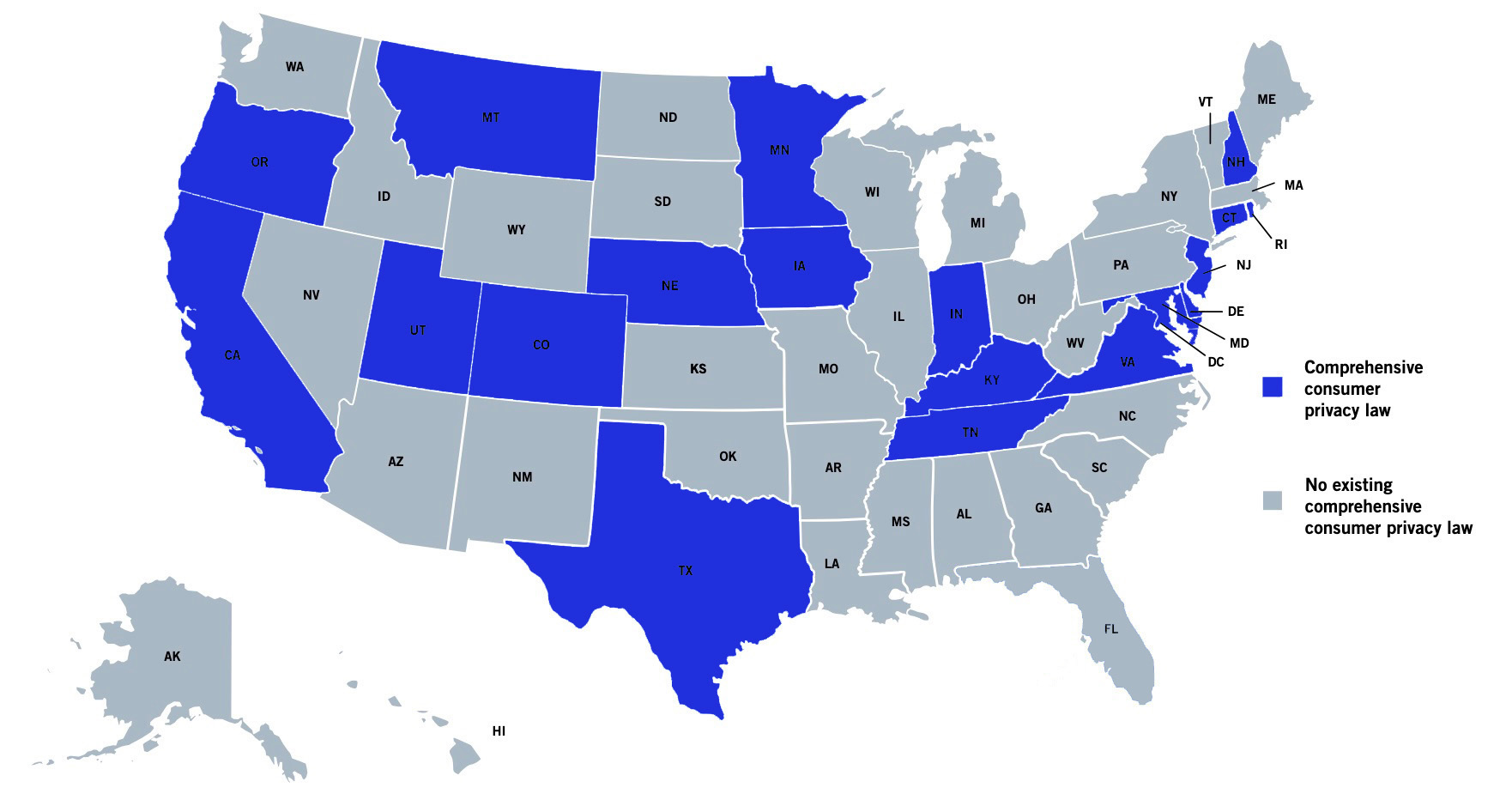
As of May 2026, the U.S. has comprehensive privacy legislation in 21 states: Alabama, California, Colorado, Connecticut, Delaware, Indiana, Iowa, Kentucky, Maryland, Minnesota, Montana, Nebraska, New Hampshire, New Jersey, Oklahoma, Oregon, Rhode Island, Tennessee, Texas, Utah, and Virginia.

Of course, there is a great deal of nuance here, as some states have stronger laws than others. Nevertheless, any proposed federal law should be treated as a floor to build on top of these state-level laws, rather than a ceiling.

I agree with the Electronic Frontier Foundation’s Mario Trujillo, who writes, “Federal privacy laws should allow states to build ever stronger rights on top of the federal floor. Many federal privacy laws allow this, including the Health Insurance Portability and Accountability Act (HIPAA).”

Which businesses are affected

The proposed bill would apply to all businesses subject to the FTC Act, as well as all businesses in the U.S. that process the personal data of 200,000 U.S. consumers or more.

Additionally, there’s another standard that would affect other businesses; any business that processes the data of more than 100,000 U.S. consumers and derives more than 25% of revenue from selling that data would also be subject to the SECURE Data Act.

As it stands, the proposed bill exempts businesses with less than $25m in adjusted gross annual revenue.

Key provisions of the bill

The SECURE Data Act mandates that U.S. consumers be given a clear mechanism to opt out of targeted advertising practices as well as the sale of their personal data.

Were the bill to pass, many businesses that process and control consumer data would be forced to obtain opt-in consent before they processed any sensitive consumer data, including geolocation, financial information, and health data. Also, the bill would require businesses to get parental consent before processing the personal data of kids aged 13-16.

Data broker registry

This is my favorite part of the proposed bill. The SECURE Data Act would create a federally mandated data broker registry. Maintained by the FTC, this registry would require many data brokers to register every year and disclose all of their data collection and sales activities.

All data brokers that make over 50% of their profits by selling our personal data would be forced to register in the FTC’s public database. This is a wonderful development.

Enforcement

Here is where things get problematic for privacy advocates. The SECURE Data Act mandates that all enforcement be handled by the FTC and state attorneys general.

Particularly problematic for most privacy advocates, the proposed bill doesn’t include a private right of action, meaning that consumers cannot file civil suits against law-breaking companies. Only the FTC and state attorneys general can enforce the SECURE Data Act.

Moreover, the proposed bill includes a “45-day notice-and-cure provision,” which basically means that if a company is caught breaking the law, they have 45 days to “cure” any violation with no penalty.

Personally, for me, the lack of a private right of action isn’t a deal-breaker. And I think future iterations of this bill can reach a compromise on this issue.

No private right of action

Although privacy rights activists are up in arms about the lack of a private right of action, Electronic Privacy Information Center (EPIC) Deputy Director and Policy Director Caitriona Fitzgerald suggests that a compromised version of a private right of action could be reached down the line.

As Fitzgerald writes, “Previous bipartisan privacy proposals, such as the American Data Privacy and Protection Act and the American Privacy Rights Act, proposed a compromise version of a private right of action that allowed for injunctive relief so that consumers could force companies to stop violating the law, but did not allow for statutory damages.”

I think such a “compromise version” of a private right of action could get future iterations of this bill across the finish line.

The issue of “notice and choice” and burying fine print in the privacy policy

Another important issue to highlight is “notice and choice”; this is a common model in data privacy that allows companies to collect our data as long as they tell us what they’re doing with it (and they give us an option to opt-out.)

The problem with “notice and choice” is that sometimes exactly how the data is being used is buried in the companies’ privacy policies. And who reads these?

Also, many times, the consumers’ choice to allow data collection is bundled with the service itself, creating a take-it-or-leave-it situation.

Alternatively, companies sometimes combine user consent for necessary data collection (e.g., a navigation app needing our location data in order to provide us with directions) with totally unrelated uses (e.g., selling our location data to third-party advertisers or data brokers).

A far better policy is to mandate that companies adhere to data minimization requirements. For example, some state-level laws prevent companies from collecting consumer data beyond what is necessary to fulfill the requested service. This way, even if the consumer technically gives his or her consent, it is still illegal for companies to surreptitiously over-collect and profit from that user’s data in other ways.

The SECURE Data Act perpetuates the notice-and-choice model, as opposed to requiring that companies adhere to data minimization. This is a shame.

Maryland’s data privacy law has an excellent data minimization standard, as did two other previous bipartisan federal bills: American Data Privacy and Protection Act (ADPPA) and American Privacy Rights Act (APRA). It’s too bad the SECURE Data Act didn’t have such a standard.

Support for the SECURE Data Act

I’d be remiss if I didn’t point out that many folks are happy with the proposed bill. As an example, Adam Thierer, a senior fellow at the R Street Institute, was excited to see the bill not include a private right of action. Thierer writes, “Importantly, the SECURE Data Act wisely does not include a PRA, which would only exacerbate America’s growing over-litigation problem.”

And of course, many lobbyists and lawmakers are rejoicing at the chance to dilute the CPRA and other state laws. For example, advocacy group Americans for Tax Reform and twenty-three other center-right groups are particularly excited by the prospect of the SECURE Data Act passing.

The self-proclaimed center-right groups collectively write, “If all 50 states move forward with their own privacy laws, it could cost the American economy over $1 trillion in the next decade, with $200 billion of that burden falling on small businesses.” These 24 groups want to see “strong preemption, with no private right of action and no open-ended rule-making authority for federal agencies or additional state regulations.”

My take

I agree with the EFF’s contention that “the bill is weaker than congressional proposals in prior years, as well as most of the 21 state consumer privacy laws already on the books.”

The fact that the SECURE Data Act preempts existing state-level laws ultimately makes this a bad bill.

Aside from the federal preemption problem, which is a deal-breaker in and of itself in my mind, there are several other issues with the SECURE Data Act. As it stands, the bill perpetuates the “notice and choice” status quo, allowing organizations to obfuscate how they process consumer data, as they bury the specifics deep in their corporate privacy policies. Given that few consumers bother to read or understand corporate privacy policies, data minimization provisions would be much better than this “notice and choice” approach.

Unlike other privacy advocates, I am less concerned about the bill’s failure to include a private right of action. That’s not a deal-breaker for me. However, I am inclined to agree with EPIC’s Fitzgerald, who writes, “The combination of minimal consumer protections, weak enforcement, and insanely expansive preemption of state laws makes the SECURE Act a disaster for Americans’ privacy.”

That said, there are some great things inside the proposed SECURE Data Act. I particularly like the call for a federal data broker registry. It’s refreshing to see politicians on both sides of the aisle ready to crack down on the data brokerage industry, a particularly pernicious part of the data surveillance apparatus.


Related reading

John Donegan

John Donegan

Enterprise Analyst, ManageEngine

Want to read<br>this article on the go?

Want to read
this article on the go?

Do it on the ManageEngine
Insights app.

Published on November 21, 2025 | 6 min

The government shutdown may be over, but there won’t be much federal data privacy legislation being passed in 2026. Given the current dysfunction in Congress, the onus will continue to fall onto the states.

In fact, 8 states—Delaware, Iowa, Maryland, Minnesota, Nebraska, New Hampshire, New Jersey, and Tennessee—have already enacted new data privacy laws in 2025. According to the IAPP Weston Research Center, there are now 19 states with comprehensive data privacy laws on the books. As a quick caveat, different trackers have different qualifications; some trackers list 20 states and include Florida.

As seen above, the 19 states are California, Colorado, Connecticut, Delaware, Indiana, Iowa, Kentucky, Maryland, Minnesota, Montana, Nebraska, New Hampshire, New Jersey, Oregon, Rhode Island, Tennessee, Texas, Utah, and Virginia.

Although similar bills in Alabama, Georgia, Oklahoma, Maine, and Vermont failed to pass in 2025, other states—Massachusetts, Michigan, North Carolina, Pennsylvania, and Wisconsin—are currently considering data privacy legislation. Moreover, new laws from Indiana, Kentucky, and Rhode Island are expected to arrive in 2026.

Of the 19 states with comprehensive data privacy laws, 9 states (more specifically, 10 regulators across 9 states) have joined the Consortium of Privacy Regulators, a bipartisan initiative formed last April to protect consumers across different jurisdictions.

State-level data privacy bills generally include both protections for consumers and obligations for businesses. On the consumer side, these state laws allow consumers to control how their data is collected, stored, and shared with other parties. These rights—e.g., consumers’ right to delete, correct, and opt-out of data collection—are similar in nature to provisions in the GDPR and CCPA. On the business side, organizations are often obligated to adhere to various data minimization requirements.

Of course, not all states’ data privacy bills are created equal

Big Tech lobbyists have historically been extremely adept at watering down state-level bills. Speaking at the Capitol Forum’s 2025 Tech Conference, the Electronic Privacy Information Center’s Sara Geoghegan opines that Big Tech lobbyist involvement often results in watered-down bills.

Geoghegan describes the current landscape of state-level data legislation as a “mixed bag.” As Geoghegan explains, “Unfortunately, some states’ laws have kind of been written by Amazon and Big Tech; so it really depends a lot on the state. Some states have some really interesting proposals, and then Big Tech gets involved during the process and the final result is watered-down. But some [other] states have passed bans on the sale of geolocation information, special protections for things like abortion care. So, it’s kind of a mixed bag.”

With artificial intelligence progressing at a rapid pace, many state lawmakers are calling for more forms of data privacy regulation, particularly in regard to the data brokerage industry and surveillance pricing.

States are cracking down on the data brokerage industry

Recently, Texas and Oregon joined California and Vermont in requiring data brokers to register in their respective states and disclose their activities. (Data brokers are third-party entities that purchase our personal data, often unbeknownst to us.) All data brokers that process data not collected directly from the data subjects themselves now have to register with these four states. However, as of today, it is not exactly straightforward for data subjects to delete their information from these brokers’ databases.

On the Capitol Forum’s recent “Anticipated Trends for the Data Broker Industry and Enforcement” panel, cybersecurity and data privacy consultant Justin Sherman makes the case that we need a one-stop deletion request tool across the board.

Speaking specifically about states with data broker registries, Sherman says, “It’s not realistic to say to a consumer, here’s this registry in Vermont or Oregon—four states, Vermont, Oregon, Texas, and California, [each] has 500 or 600 entries—to go click on each one individually. No one is doing that, right? […] Having a one-stop shop is essential for actually effectuating those rights.”

He makes a good point. There should be a single button where one can have his or her information removed from all registered brokers in the state. California’s new Delete Act (SB 362) provides such a mechanism for Californians; this law, which is set to take effect in August 2026, is a welcome development—one that other states should follow.

Of course, there are other carve-outs and loopholes that need to be rectified as well. For example, Montana, which has been ahead of the data privacy legislation curve, recently became the first state to close the infamous data broker loophole for law enforcement. In May 2025, Montana signed their bill SB 282 into law.

Essentially, SB 282 prevents law enforcement from purchasing citizens’ data from data brokers when ordinarily they would need a warrant to access such information. This is another welcome step in the right direction.

Efforts are also being made to combat surveillance pricing at the state level

As I’ve written about in the past, surveillance pricing is the practice of surreptitiously collecting behavioral data on individuals and using that information to set prices. On the surface, it seems legitimate; much like dynamic pricing, surveillance pricing is a subset of algorithmic pricing that allows businesses to react quickly to market changes. However, by definition, surveillance pricing also includes surreptitious data collection.

Essentially, surveillance pricing is the use of one’s personal data—collected through geographic locations, credit scores, or browsing patterns—to set different prices for different users for the exact same products or services. As an example, think of a mechanic that charges different prices for the same car service depending on the customers’ location or browsing history.

In another panel at the Capitol Forum Tech Conference, “Personalization or Discrimination: Outlook for Surveillance Pricing Law,” a group of pundits addressed recent state-level developments on surveillance pricing.

Brad Weber, an attorney at Troutman Pepper Locke, points out that “over twenty states now have data privacy laws that somehow implicate surveillance pricing.” Another panel member, Javier Mabrey, a member of the Colorado House of Representatives, suspects that this number will increase.

Mabrey says, “I have very little faith in the institution of the United States Congress to step in and provide any meaningful protections for consumers any time soon […] Of course, we no longer have consumer friendly cops on the beat at the FTC and the CFPB. And, so if we’re going to do anything to protect the people in Colorado, we need to do it at the state level.” Maybrey recently brought a bill to ban surveillance pricing in Colorado; however, it didn’t pass. A similar bill proposed in California also did not pass.

Even without new state laws on the books, Mabrey makes the case that, given the size and scope of many of these companies, surveillance pricing might already be in violation of existing federal antitrust law.

Transparency alone is not an adequate policy solution

Some states have opted for transparency, rather than outright bans on surveillance pricing. As an example, New York’s recent Algorithmic Pricing Disclosure Act requires companies to disclose when they use consumers’ personal data to set a price.

Hannah Garden-Monheit, senior fellow at the American Economic Liberties Project, takes umbrage with this pivot to transparency. Garden-Monheit opines, “Transparency cannot be an end, in itself […] When you see something that is taking advantage of people, and your policy solution is ‘Let me tell you more information about how you’re being taken advantage of,’ but then you don’t actually stop it, that fundamentally undermines citizens’ trust that their institutions are capable of standing up for them.”

From a policy perspective, transparency is not as good as an outright ban on the practice; however, it certainly is yet another step in the right direction.

Breaking down the larger issue at hand, Garden-Monheit hits the nail on the head with her call for an assessment of the current mass collection of our personal data. She says, “I think we need to be thinking too about the mass collection of data in our society. One of my biggest regrets from my time in the last administration is that we didn’t succeed in passing comprehensive data minimization laws in this country; surveillance pricing is the latest pernicious symptom of an economy in which companies are amassing huge amounts of data to understand our innermost thoughts, wishes, and desires—and manipulate us with it.”

To be sure, getting companies to stop surreptitiously amassing large quantities of our personal data will not happen overnight. However, if and when these companies are reined in, one thing is certain: it will be the states leading the charge.

Related reading:

John Donegan

John Donegan

Enterprise Analyst, ManageEngine

Want to read<br>this article on the go?

Want to read
this article on the go?

Do it on the ManageEngine
Insights app.

Published on June 10, 2025 | 7 min

When it comes to protecting its citizens’ data, Brazil is a country the rest of the world should emulate. The South American country is dead serious about protecting its citizens’ privacy.

Much of Brazil’s data privacy enforcement power steps from its General Data Protection Law, “Lei Geral de Proteção de Dados” (LGPD). Inspired by the E.U.’s GDPR, the LGPD was enacted in August 2018, and it became effective on September 18, 2020. The legislation is a part of a wide-ranging effort to regulate the collection, processing, and storage of Brazilians’ personal data by companies, both foreign and domestic.

 In an effort to protect the privacy rights of Brazilian data subjects, the LGPD forces covered entities to disclose data breaches, install data privacy officers, and take precautions when accessing Brazilians’ biometrics or transferring personal data internationally to other entities.

 Since the LGPD became effective in 2020, Brazil’s data privacy regulatory body, the National Data Protection Authority (ANPD), has aggressively cracked down on Brazilian entities and international tech giants alike.

Brazil’s data regulator is off to the races

The ANPD, which is an independent, public authority linked to the Brazilian Ministry of Justice, enforces the LGPD. The ANPD issues guidelines for covered entities to follow, reviews and approves these entities’ data protection impact assessments, and applies sanctions on entities that fail to comply with the law.

Failure to comply with the LGPD can result in fines up to 2% of the entity’s annual revenue—with a maximum penalty of 50 million reais per violation (roughly $9.3m USD).

Helmed by Waldemar Gonçalves, the ANPD has issued enforcement activities on over seven public government agencies and at least one private Brazilian company. Additionally, twenty large companies have been investigated and inspected for data protection officer (DPO) appointment-related issues.

Perhaps most enviable, the ANPD has shown that it isn’t afraid to go after international tech conglomerates that process Brazilans’ personal data. In fact, the ANPD has already issued preemptive and preventive measures against the likes of Meta, X, TikTok, Telegram, and Sam Altman’s Tools for Humanity project.

ANPD stops Meta and X from indiscriminately using Brazilians’ data to train AI projects

Last year, Meta and X both found themselves in the ANPD’s crosshairs, as both tech behemoths were scraping Brazilian users’ data from social media platforms and using that personal data to train generative AI systems.

In order to stop Meta from pulling Brazilians’ data from Facebook, Instagram, and Messenger and using it to train Meta’s AI systems, the ANPD issued a preventive measure on July 1, 2024. That measure suspended one of Meta’s privacy policies, “Facebook Online Services of Brazil.”

Meta was in violation of the LGPD in four different ways. Without getting into the legalese, Meta had essentially failed to (1) provide adequate disclosures, (2) enact guardrails for children, (3) give data subjects opt-out mechanisms, and (4) respect the legitimate expectations of Brazilian social media users.

If Meta were to have violated the ANPD’s preventive measure, the company would have been required to pay 50,000 reals (roughly $10,000) per breach per day. Facing this reality, Meta addressed the four noncompliance issues. Meta began providing Brazilians with notices and disclosure about how their data would be used for AI training; it allowed Brazilians to opt-out of the data collection, and it committed to not ever process the personal data of Brazilian minors for the purpose of AI training. On August 30, 2024, after Meta had made the requisite adjustments, the ANPD suspended its preventative measure.

Around the same time period, the ANPD went after X for using Brazilians’ tweets to train Grok. Much like Meta did, X made changes to its privacy policy to ensure that user consent would be obtained before X processed any user data and used it to train its generative AI systems.

The key here is transparency. Tech companies try to process our data in ways that best serve their interests; moreover, these processes are often put into practice by default. Users do not always know, as the policies are frequently buried in privacy documents. In the case of Meta and X, the ANPD has showed that it will not tolerate such behavior.

ANPD cracks down on TikTok and Altman’s Tools for Humanity

In December of 2024, the ANPD ordered TikTok parent company ByteDance to strengthen its age verification measures on the platform. Access to TikTok was blocked in Brazil if a user wasn’t registered. TikTok appealed the ruling; however, a federal court eventually ruled that ByteDance must suspend unregistered users’ access to TikTok.  Additionally, ByteDance was forced to submit a compliance plan, which included age verification mechanisms.

In a legal win for the ANPD, TikTok complied with the court ruling in March, ensuring that Brazilian children and adolescents could not view content on TikTok without a registered account. The ANPD is keeping TikTok active in Brazil, while ensuring that it takes the appropriate privacy and security measures.

Via another preventive measure, the ANPD also regulated Sam Altman’s Tools for Humanity project in Brazil. If you haven’t read about it, Altman’s borderline-dystopian project involves paying users (in Worldcoin cryptocurrency) for access to their irises.

The ANPD ruled that Tools for Humanity must stop offering compensation in exchange for Brazilians’ biometric data. Also, the enforcement agency demanded that Tools for Humanity identify on its website exactly who is processing the Brazilians’ personal data. Incidentally, Spain and Portugal have also taken legal action against Altman’s project.

Other ANPD enforcement activity to date

The ANPD has issued at least seven sanctioning decisions regarding the communication of data breaches. Under Article 48 of the LPGD and the subsequent Resolution CD/ANPD No. 15 (passed in April 2024), companies must provide sufficient information about breaches to the ANPD—and to the affected data subjects themselves.

Companies must tell the ANPD within three business days after the company learns about a breach involving “risk or harm to certain forms of personal data.” The following data falls under that umbrella: all sensitive personal data, data from children and the elderly, financial data, certain authentication data, data protected by legal or professional secrecy, and large-scale data.

Data breach incidents must be communicated, not only to the ANPD, but also to the data subjects—either by phone, email, or letter.

After a breach on the INSS (Brazil’s National Social Security Institute) occurred between August and September 2022, the ANPD took enforcement action on February 1, 2024. And the ANPD’s action was affirmed on appeal on July 26, 2024.

Such enforcement of a public entity isn’t anomalous; in fact, the majority of ANPD’s early enforcement activity was directed at public entities in Brazil. Another public entity, the AMSPE (State Government Employee Medical Assistance Institute), was issued multiple warnings in 2023 for not disclosing a breach within the requisite three days.

Of course, it has gone after private entities as well. As another quick example, again in 2023, the ANPD levied a fine on Telekall Infoservice. This privately-owned telecom company incurred a small fine for processing personal data illegally and failing to appoint a DPO. Although the fine was only 14,000 reais (roughly $2,960 USD), it sent a message.

 In short, the ANPD is taking its enforcement of the LPGD seriously.

Biometrics, AI, and future legislation

The ANPD is certainly focused on data breach notifications, DPO appointment issues, and international data transfer regulation. However, the enforcement agency has set its sights on biometrics and AI as well.

Currently, the ANPD has requested data protection impact assessment reports from nearly two dozen Brazilian football clubs; the concern here is the use of facial recognition software at stadiums, as well as the use of biometrics via apps that sell tickets to matches.

Again, the issue at hand is transparency. The ANPD wants to ensure that these clubs are complying with LGPD regulations related to registering and processing data. Also, there is a concern related to the collection of biometric data from fans under age sixteen.

In regard to AI, Brazil is currently trying to pass a federal legal framework; in fact, this legislation is currently in its final stages within Brazil’s National Congress. That said, ANPD President Gonçalves isn’t waiting for the new AI law to pass.

Gonçalves believes he can regulate AI via the LPGD today. At the 2025 Mobile World Congress in Barcelona, Gonçalves said,

“We are not waiting for the AI legal framework in Brazil to begin regulating. Article 20 of the LGPD already requires us to address automated decision-making. For now, we are focusing on this article. When the law is enacted, it will bring additional obligations for regulating AI in Brazil, and that will lead to further regulatory actions.”

When Gonçalves speaks at these events, he repeatedly emphasizes ANPD’s key priorities—protecting Brazilian data subjects’ rights, addressing biometrics and AI, protecting children and adolescents, and blocking tech companies from surreptitious data collection.

Gonçalves’ agency is doing a stellar job so far. While the APND has yet to levy any enormous fines, it is aggressively enforcing the LGPD by investigating covered entities–both foreign and domestic—and forcing these companies to change their behavior if they want to do business in Brazil.

The United States would be wise to take a page out of Brazil’s playbook, although that would require Congress to pass a federal data privacy law, which seems unlikely in this climate.

Until then, viva Brazil!

Related reading:

John Donegan

John Donegan

Enterprise Analyst, ManageEngine

Want to read<br>this article on the go?

Want to read
this article on the go?

Do it on the ManageEngine
Insights app.

Published on October 23, 2024 | 6 min

In order to foster innovation and win the proverbial AI arms race, American regulators are often reluctant to regulate Big Tech. However, legislation is definitely needed, as social media companies, video streaming services, and search giants have taken their data surveillance practices too far.

Big Tech’s data surveillance is relentless and intrusive. As an example, security researchers from CyberNews recently issued a scathing report on Android devices’ data collection practices. Using a man-in-the-middle approach, the researchers intercepted traffic between a new Android phone and Google servers. Researchers found that, even with GPS services disabled on the device, location data and a host of personally identifiable information (PII) were being transmitted to Google servers roughly four times every hour.

Researcher Aras Nazarovas explains, “Every fifteen minutes, Google Pixel 9 Pro XL sends a data packet to Google. The device shares location, email address, phone number, network status, and other telemetry. Even more concerning, the phone periodically attempts to download and run new code, potentially opening up security risks.”

Thus, unbeknownst to many owners of these devices, users are constantly sharing their PII with Google, while also potentially putting their sensitive data in harm’s way. That said, data surveillance overreach is not merely a Google issue.

FTC describes Big Tech self-regulation as a “failure” and calls for Congress to act

According to a recent FTC staff report, social media, search, and streaming companies’ data minimization, collection, and retention practices are “woefully inadequate.”

This report is the culmination of four years of investigating the data collection and retention practices of nine different social media and video streaming services (SMVSSs): Amazon’s Twitch; Meta’s Facebook and WhatsApp; Google’s YouTube; ByteDance’s TikTok; X, Snap, Discord, and Reddit. After four years, the FTC came to the conclusion that Congress should pass federal data privacy legislation.

Additionally, FTC researchers found that these SMVSSs frequently neglected to delete user data when requested to do so; they also fed user data into AI training models without informing the users, and often used “privacy-intrusive” pixel tags to send sensitive information to advertising services.

In addition to encouraging Congress to get a federal data privacy law on the books, the FTC staff report issued other, admittedly vague, recommendations. Although one of the report’s authors likened the recommendations to “bureaucratic bullying,” some of the recommendations are nevertheless as follows: (1.) SMVSSs should practice data minimization and only collect as much user data as necessary to provide their services. (Of course, in the European Union, this is already mandated by Article 5(1)(c) of GDPR.) In a similar vein, SMVSSs should only retain user data for the absolute minimum amount of time.

(2.) Users should be informed when companies use their personal data to train AI models, and users should be able to opt out of such training. (3.) New policies need to be put in place to protect children. And (4.) in order to keep sensitive PII from reaching advertisers, companies should use caution when using tracking pixels.

Two FTC commissioners issued dissenting opinions

Although all five FTC commissioners signed off on the report, the two Republicans—Andrew Ferguson and Melissa Holyoak—issued separate concurring and dissenting statements.

In several respects, Ferguson makes a persuasive argument. Ferguson acknowledges that we’re in an “online privacy crisis”; however, he takes umbrage with the report’s sections on AI and targeted advertising. Ferguson believes there is a “protocompetitive justification” for targeted advertisements, as such ads help smaller companies efficiently reach customers at a lower cost, which helps them compete with their larger competitors.

Ferguson doesn’t understand how targeted ads function as a form of “unlawful discrimination,” “reputation harm,” or “invasion of privacy.” He concedes that regulation is needed, but he believes it should come earlier in the supply chain.

Ferguson writes, “The correct regulatory focus is one step earlier in the supply chain—the largely unregulated collection, aggregation, sale, and retention of consumers’ data that makes the targeted advertising possible.” Reading between the lines, such a focus would put the data brokerage industry in regulatory crosshairs. And rightfully so.

Also, I very much appreciate Ferguson’s take on SMVSSs’ shadowy privacy policies. On that front, he writes, “To be sure, most firms technically disclose their data practices to consumers through privacy policies. But every American knows that these policies are long, vague, and unhelpful—probably intentionally so.” I think we all can agree that intentionally vague privacy policies need to become a thing of the past.

In his dissenting statement, Ferguson concludes, “I do not share the report’s apparent view that the display of targeted advertising to adults is, on balance, harmful. (Targeted advertising to children and teenagers is another matter entirely.)”

Thus, despite the lack of productivity on Capitol Hill, there’s a demographic that may finally get lawmakers and regulators to act on the data surveillance front—children and teenagers.

The surveillance of children’s data may provoke lawmakers to act

Like her FTC colleagues, commissioner Melissa Holyoak is particularly worried about SMVSSs’ collection, usage, and retention of children’s data.

Throughout her statement, Holyoak laments that most companies don’t implement safeguards around the sharing of data collected from children. In fact, SMVSSs frequently neglect to differentiate between adults and children in the first place. Teens can often create accounts without restrictions, and many companies collect teens’ data in the same ways in which they collect adults’ data.

Even when companies are formally asked to delete children’s data, they decide to de-identify the data and retain it. This is a problematic practice, as this de-identified data risks re-identification.

Of course, such concerns around targeted advertising and the collection of children’s data aren’t limited to FTC commissioners. For example, Texas Attorney General Ken Paxton recently filed a lawsuit against TikTok, arguing that the ByteDance company is in violation of Texas’ SCOPE Act because TikTok allegedly collects and shares minors’ PII without obtaining parental permission.

Further complicating all of these matters is the fact that SMVSSs’ age verification processes are easily circumvented. Again, possibly by design.

There are steps consumers can take to stifle Big Tech surveillance

Rather than wait for slow-moving legislative wheels to turn, technologically-literate consumers can throw a wrench in Big Tech’s surveillance ecosystem themselves. Although it can be a time-consuming process, opting-out of data brokers’ data collection is definitely worth doing.

Additionally, given that some apps on our smartphones are likely listening to our conversations, it is worth changing the settings to block this. On an iPhone, you can go to Settings > Privacy & Security > Microphone, and then disable microphone access for any applications that you believe are actively listening. For what it’s worth, Meta, Google, and Amazon deny listening to our conversations via smart phone apps.

That said, many applications actively listen; for example, ChatGPT’s application recently used to do so, although OpenAI says it has subsequently changed its settings. Of course, our phones also listen via Siri (iPhone) and Google Assistant (Android), so if you’d like, you could disable those services as well.

Additionally, there are privacy-centric browsers (e.g., Brave, Ulaa) and browser extensions (e.g., Privacy Badger) that block pixel tags. Also, there are business email tools (e.g., Zoho Mail) that automatically disable external image loading in emails, which prevents pixel tracking.

Key Takeaways

The FTC staff report is not going to have an impact until after the presidential election; moreover, it remains to be seen whether FTC Chair Lina Khan will still be in charge regardless of which party wins.

Given the dysfunction on Capitol Hill, privacy legislation seems unlikely; thus, if you’re worried about Big Tech data surveillance, you can take matters into your own hands by disabling microphone access to applications, using privacy-centric browsers, and opting out of data brokers’ collection activities.

John Donegan

John Donegan

Enterprise Analyst, ManageEngine

Want to read<br>this article on the go?

Want to read
this article on the go?

Do it on the ManageEngine
Insights app.

Published on July 07, 2023 | 5 min

With a policy vacuum on Capitol Hill, there has been a flurry of state-level activity over the past year. Five more states passed laws in 2023, bringing the total number of state-level data privacy laws to ten.

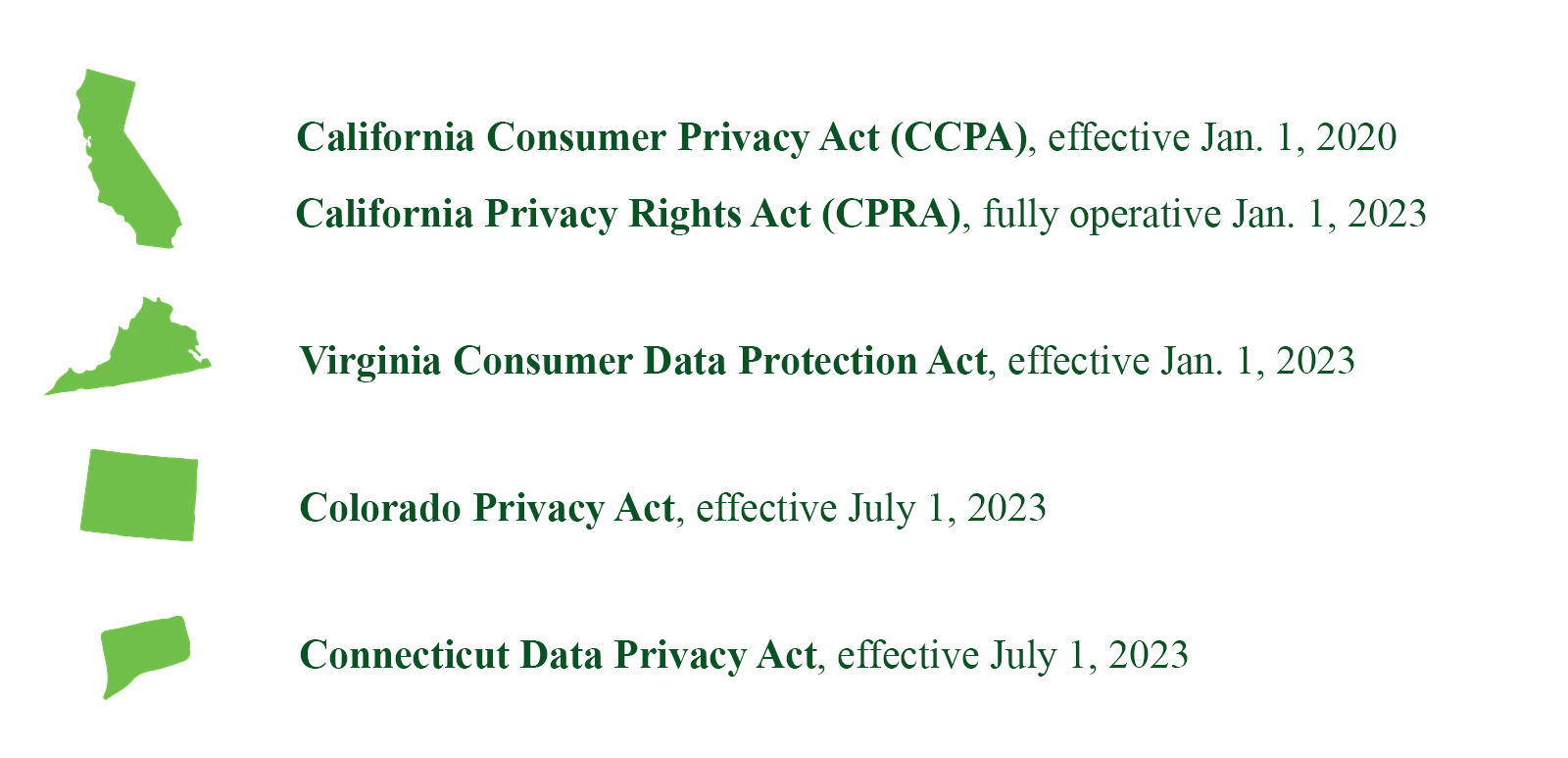
California and Virginia already have operative data privacy laws, and on July 1, laws from two more states—Colorado and Connecticut—came into effect.
CA, VA, CO, CT privacy laws
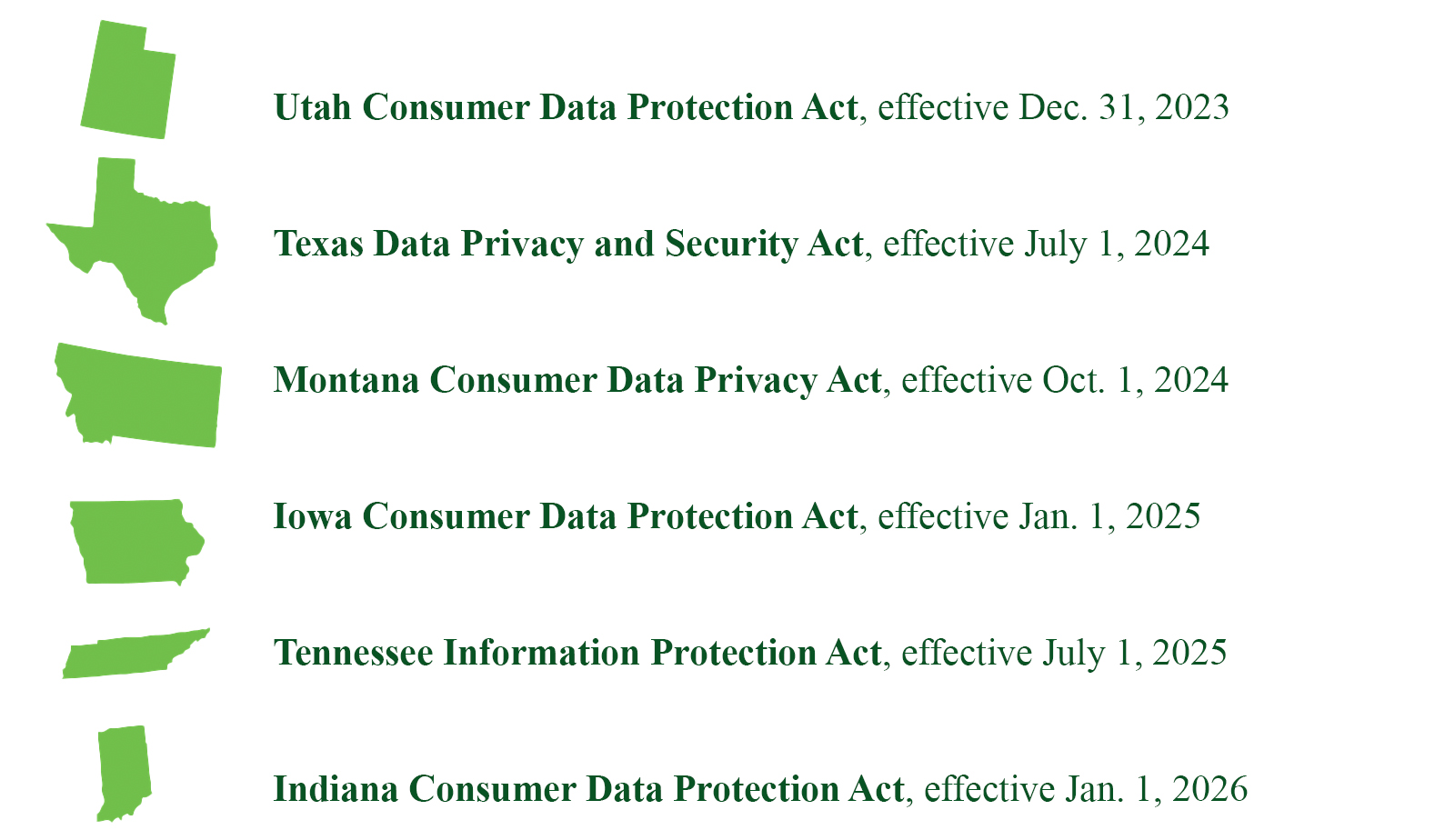
Six other states—Utah, Texas, Montana, Iowa, Tennessee, and Indiana—have passed laws; however, these have yet to take effect. Although these six states are all predominately red, each has different rules related to consumer rights and business obligations. In some cases, the differences are massive.
UT, TX, MT, IA, TN, IN privacy laws
Take Montana, for example. According to recent reporting from Politico, Montana resisted a great deal of Big Tech lobbying. Despite complaints from the State Privacy and Security Coalition, Montana legislators refused to remove “universal opt-out requirements,” which essentially allow Montanans to opt-out of tracking with a single click. Additionally, Montana legislators refused to allow carve-outs for “pseudonymous data,” which would have allowed tech companies to continue to track consumers who have opted out.

Lobbyists advocated for a provision that would have provided companies with time to remedy a violation before accruing a fine; however, it was to no avail, as Republican Gov. Greg Gianforte and bill sponsor Sen. Daniel Zolnikov (R-MT) didn’t take the bait.

Speaking about the lobbyists’ attempts to get him to water down the bill, Zolnikov colorfully said, “I’m not an idiot, and you treating us in Montana like a bunch of rural backwoods folks is quite an insult as well.”

Suffice it to say, it is too simplistic to assume that blue-leaning states offer tougher consumer data privacy legislation than red-leaning states. In an effort to highlight the myriad differences between the states’ data privacy legislation, the International Association of Privacy Professionals (IAPP) provides an excellent chart of all the consumer privacy bills, which they update frequently. It shows the bills’ statuses: Introduced, In Committee, In Cross Chamber, In Cross Committee, Passed, and Signed.

Additionally, the chart highlights the states’ various, and varying, consumer rights—e.g., right to access; right to correct; right to delete; right to opt-out of certain processing; right to portability; right to opt-out of sales to third parties; right to opt-in for sensitive data processing; right against automated decision making, and private right of action, which is essentially the consumers’ right to seek civil damages for a business’ violation of the law.

IAPP’s chart also lists the state laws’ different business obligations—e.g., opt-in defaults, which require businesses to treat a consumer under a certain age with an opt-in default for the sale of his or her personal information; transparency requirements, risk assessments, and processing limitations.

Minimize your data collection, processing, and usage.

I would be remiss if I didn’t point out that the best course of action would be to abstain from collecting, processing, trading, selling, and otherwise handling sensitive consumer data in the first place. If possible, you should comply with the most stringent laws (e.g., CPRA, GDPR) and adhere generally to the principle of data minimization, which states that one should only handle user data that is essential to the task at hand, and only for as long as that task takes.

However, not every company can completely abstain from processing consumer data. For such companies, here are a few ways to navigate the myriad data privacy laws in the states:

Identify which, if any, laws apply to your business.

Each state has a different threshold for companies doing business in its state. There are thresholds that pertain to the number of customers in the state, the percentage of revenue attributable to the sale of personal data, and a minimum number of customers.

For example, the Virginia law—which incidentally was based on a bill drafted by an Amazon lobbyist—only pertains to either (1.) businesses that have at least 100,000 customers in Virginia, or (2.) businesses that have at least 25,000 consumers and make at least 50 percent of its gross revenue from the sale of personal data. Also, if one’s business doesn’t have at least an annual revenue of $25 million, the Virginia law isn’t applicable.

Aside from these basic thresholds, there are many other ways in which a state’s law may not pertain to your business. States have different regulations related to the types of data that an organization is allowed to collect and how that data can be used.

Some states have processing loopholes; for example, laws in Iowa, Utah, and Indiana—some of the weakest in the country—have a rather broad definition of what it means to “sell” user data. If you’re not explicitly charging money for user data in those states, you’re likely in the clear.

Review your service contracts with third-party vendors; frequently update your internal and external privacy policies, and have an incident response plan in case of a cyberattack.

As a best practice, it’s prudent to build data protection clauses directly into the contracts you have with your third-party vendors. Even if it’s not required by law today, it may be down the road. You don’t want to be held liable for data protection mistakes made by your vendors. Also, when in doubt, put things in writing. Auditors—and regulators—need to see written procedures for information collecting practices. Also, have an incident response plan and ensure that your privacy policies are up-to-date and accurate.

Err on the side of caution, and look to California and Europe.

Of the ten state laws in the U.S., California is the most stringent; thus, you’re probably in compliance with the other state-level laws if you comply with the CPRA. However, every business operates differently; these laws are quite granular, and I’m not a lawyer. Thus, in the short term, be sure to have your chief security officer and legal team assess the ten laws.

In the long term, Congress will eventually pass a federal data privacy law. So, if you’re compliant with GDPR in 2023, you’ll most likely be all set by the time the federally mandated bill comes down the pike—whenever that may be.

John Donegan

John Donegan

Enterprise Analyst, ManageEngine

Want to read<br>this article on the go?

Want to read
this article on the go?

Do it on the ManageEngine
Insights app.

Published on December 01, 2022 | 6 min

It is more important than ever to ensure that all employees are cognizant of privacy and security issues.

With employees increasingly working remotely and using non-sanctioned devices, it is vital to establish a zero trust framework. At the core of this framework is the “principle of least privilege,” whereby users are granted access to the fewest amount of resources for the shortest amount of time necessary to complete a task. Until shown otherwise, IT personnel should assume that every access request has been compromised. Additionally, IT personnel should authenticate users based on their identity, location, and device health, while also looking out for any uncharacteristic, anomalous behavior.

All employees should embrace a zero trust mindset
In addition to a zero trust framework, all employees should have a zero trust mindset. Employees should be wary of emails from unknown sources; all strange phone calls should be treated as potential social engineering efforts, and any shadow IT—devices, software, applications, and services not officially sanctioned by IT personnel—should be reported to IT personnel. This zero trust mindset applies to all employees in an organization, including those in the upper echelons of the org chart. After all, C-level employees and other privileged users are often the most valuable targets for bad actors.

Many high profile attacks are the result of privilege abuse, often due to bad actors gaining access to users’ privileges. It’s particularly important to instill a zero trust mindset in these privileged users. If a privileged user has directly or indirectly facilitated breaches in the past, IT personnel should consider privileged session recordings. By overseeing privileged users’ activities on databases, remote servers, and other critical systems, one can support audits and instantly terminate a user session that looks suspicious. All that said, the key to global data privacy and security has less to due with monitoring employees’ activities and more to do with building a zero trust mindset in all employees.

Assign data privacy scores to hold employees accountable
When it comes to instilling a zero trust mindset in every employee, there are certain tried-and-true methods. At least initially, it does comes down to education. Most companies hold mandatory courses about privacy and security, followed by quizzes, often with questions based on real-world incidents that have happened inside and outside of the company. However, this is the bare minimum.

At ManageEngine, we use “data privacy scores” to hold employees accountable. After holding training courses and periodic quizzes, every team is given a data privacy score, which is posted on an internal forum. These data privacy scores are not so different from the public posting of students’ scores in law school. However, given that these data privacy scores are awarded at the team level, no single employee is singled out. We’ve found that these scores have helped to hold employees accountable.

Although we may have courses and quiz questions related to GDPR or CPRA, we encourage our employees to think more about underlying principles, as opposed to laws.

Focus on principles, rather than laws
New laws are always coming down the pike. By focusing on the principles behind these laws, employees will generally be prepared when the laws do arrive. For example, we stress the principle of data minimization. Across the board, employees should only collect customer data that is necessary, and that data should only be kept for the minimum amount of time necessary. Another example, which pertains primarily to designers and developers in the organization, is the principle of privacy by design. Employees should think proactively about the privacy and security repercussions that their products may facilitate in the future.

Embed contextual hooks in software tools
Placing contextual hooks in applications has proven to be quite an effective way to remind employees about privacy and security issues. For example, if a ManageEngine employee posts another employee’s name, email, or phone number in an internal communications channel, a chatbot pops up with a message stating, “Sharing personal information is not a good practice.” If necessary, this chatbot could be programmed to block the data sharing entirely. Nevertheless, this contextual learning teaches employees about privacy and security in real time, in a real work environment, which allows them to gain a strong grasp of these issues over time.

Also, it is important to stress that security and privacy awareness is ongoing. Much like the team-level data privacy scores, contextual hooks within applications need to be frequently updated.

Conclusion
Even companies that hold a lot of mandatory info-sec education sessions fall victim to preventable cyberattacks. Education alone isn’t enough. Not only do we encourage our employees to embrace a zero trust mindset, but we periodically assign teams data privacy scores and place contextual hooks within software tools. It is vital that all employees make data privacy and security a priority in their lives—in and outside of the 9-5 workday. Thankfully, by using the strategies above, we’ve found that data privacy and security concerns eventually become second nature.

You see the following because WP_DEBUG and WP_DEBUG_DISPLAY are enabled on this site.

  •  
  •  
  •  
  •  
  •  
  •  
  •  
  •  
  •  
  •  
  •  
  •  
  •  
  •  
  •  
  • true
  • Post type is.
  • Post type is.
  • Post type is.
  • Post type is.
  • Post type is.
  • Post type is.
  • Post type is.
  • Post type is.
  • post
  • Is supported post type?
  • Is supported post type?
  • Is supported post type?
  • Is supported post type?
  • Is supported post type?
  • Is supported post type?
  • Is supported post type?
  • Is supported post type?
  • true
  • Is auto insert for post types?
  • Is auto insert for post types?
  • Is auto insert for post types?
  • Is auto insert for post types?
  • Is auto insert for post types?
  • Is auto insert for post types?
  • Is auto insert for post types?
  • Is auto insert for post types?
  • false
  • Not supported post type or insert TOC is disabled.
  • Not supported post type or insert TOC is disabled.
  • Not supported post type or insert TOC is disabled.
  • Not supported post type or insert TOC is disabled.
  • Not supported post type or insert TOC is disabled.
  • Not supported post type or insert TOC is disabled.
  • Not supported post type or insert TOC is disabled.
  • Not supported post type or insert TOC is disabled.
  • false
  • Post eligible.
  • Post eligible.
  • Post eligible.
  • Post eligible.
  • Post eligible.
  • Post eligible.
  • Post eligible.
  • Post eligible.
  • false
  • Found headings:
  • Found headings:
  • Found headings:
  • Found headings:
  • Found headings:
  • Found headings:
  • Found headings:
  • Replace found headings with:
  • Replace found headings with:
  • Replace found headings with:
  • Replace found headings with:
  • Replace found headings with:
  • Replace found headings with:
  • Replace found headings with:
  • Shortcode found, add links to content.
  • Shortcode found, add links to content.
  • Shortcode found, add links to content.
  • Shortcode found, add links to content.
  • Shortcode found, add links to content.
  • Shortcode found, add links to content.
  • Shortcode found, add links to content.
  • true
Rajesh Ganesan

Rajesh Ganesan

CEO at ManageEngine (Zoho), ManageEngine

Want to read<br>this article on the go?

Want to read
this article on the go?

Do it on the ManageEngine
Insights app.

Published on September 22, 2022 | 5 min

Unfortunately, we are living in an age in which the mass commodification of consumer data has become commonplace and generally accepted. Companies, and data brokers, can buy and sell the majority of adults’ personal data with impunity.

Aside from the California Consumer Privacy Act (CCPA), which came three years after the E.U.’s General Data Protection Regulation (GDPR), we haven’t seen major U.S. legislation on the personal data front. To be sure, there’s a patchwork of state laws. In addition to the CCPA and California Privacy Rights Act (CPRA), there are the Virginia Consumer Data Protection Act; the Colorado Privacy Act; the Connecticut Data Privacy Act, and the Utah Consumer Privacy Act, to name a few; however, it is time for a strong privacy law at the federal level, and with a few revisions, the American Data Privacy Protection Act (ADPPA) could be this law.

The current state of the ADPPA

On one hand, the ADPPA is far and away the closest the U.S. has ever been to issuing a federal data privacy law; the bill is bipartisan in nature, and it passed the House Energy Commerce Committee with a whopping 53-2 vote. On the other hand, in its current form, this bill does not appear to have much potential. Right now, it can’t get past Speaker of the House Nancy Pelosi, let alone reach the Senate floor.

The main concern held by Pelosi is that the ADPPA would supersede state laws, thus diluting the protections already offered by California’s CPRA and the consumer data protection bills held by other states.

In a September 1 statement, Pelosi writes,

“Governor Newsom, the California Privacy Protection Agency (CPPA), and top state leaders have pointed out the American Data Privacy and Protection Act does not guarantee the same essential consumer protections as California’s privacy laws.”

Likewise, last month the CPPA released a letter opposed to the ADPPA, and in late July, the five-member CPPA board voted unanimously to oppose the ADPPA or any bill that would supersede existing state laws. They write,

“The ADPPA would remove important safeguards that are already available to Californians today and tie the hands of states from improving privacy protections in the future. We urge lawmakers to focus their efforts on ensuring that any privacy legislation follows the model of other federal privacy laws and sets a floor, not a ceiling, on privacy rights.”

A floor, not a ceiling

This exact language was also used by 10 state attorneys general in their open letter to Congress in July. The attorneys general—from California, Connecticut, Illinois, Maine, Massachusetts, Nevada, New Jersey, New Mexico, New York, and Washington — write,

“It is critical that Congress set a federal privacy-protection floor, rather than a ceiling, to continue to allow the states to innovate to regulate data privacy and protect our residents.”

In addition to the preemption issue, these attorneys general believe that states are inherently better suited to respond to technological changes, and there are concerns that the current ADPPA bill compromises the ability of state attorneys general to investigate entities that violate the law.

What exactly is in the current ADPPA bill?

Initially spearheaded by House Energy and Commerce Chair Frank Pallone (D-NJ), Cathy McMorris Rodgers (R-WA), and member of Senate Commerce Committee Sen. Roger Wicker (R-MS), the ADPPA is an attempt to minimize the collection of Americans’ personal data.

Much like the GDPR, this legislation would bolster Americans’ consumer privacy rights, while also holding data collectors accountable for discriminatory data handling practices.

Stronger consumer privacy rights

According to the language in the current bill, the ADPPA provides users with the right to “access, correct, (and) delete” data pertaining to them. Under this bill, most technology companies would be barred from collecting any user data they do not need; only “reasonably necessary” data could be collected. As a caveat, those organizations that are already regulated by existing privacy regulations—such as education, healthcare, and certain financial services companies —would not incur additional compliance burdens from ADPPA.

Additionally, assuming a federal prosecutor isn’t already on the case, individuals would now be able to sue companies for mishandling their data.

More protections for minors

The ADPPA would also provide more protection for minors. Currently, federal privacy laws ban organizations from using personal data to target users under the age of 13; however, the ADPPA would bump this up to 17.

Per Section 205 of the proposed bill, targeted advertising to individuals under 17 is expressly prohibited; entities can’t transfer covered data of individuals to third parties without these individuals’ consent. Put differently, the data of all Americans under 17 would now be defined as “sensitive covered data.”

Public registry of data brokers

Under the ADPPA , which falls under the purview of the FTC, there would be a newly created public registry of data brokers. According to Section 206, data brokers will be required to register with the FTC if they process covered data of more than 5,000 people.

So far, this all sounds well and good. However, in addition to the preemption problem (the potential for the ADPPA to supersede the CPRA and other state laws), there are a number of problematic loopholes in the current bill.

Loopholes

Other than the creation of a registry, the ADPPA continues to let data brokers operate with impunity. Despite this, the proposed bill has instigated a lobbying surge from the data brokerage industry.

Also, the language of the bill provides a few problematic carve-outs. “Covered data” does not include “de-identified data,” “employee data,” or “publicly available information.” The exception for “de-identified data” is particularly problematic because, as we have seen time and again, data can get de-identified and re-identified.

Also, there are loopholes for law enforcement. The bill reads,

“A covered entity may decline to comply with a request to exercise a right described in subsection (a), in whole or part, that would…interfere with law enforcement, judicial proceedings, investigations, or reasonable efforts to guard against, detect, or investigate malicious or unlawful activity, or enforce valid contracts.”

In most cases, law enforcement agencies would still be allowed to collect biometrics, genetic information, and “known nonconsensual intimate images.” Seeing as federal law enforcement agencies are one of the biggest purchasers of Americans’ data, these loopholes should not be taken lightly.

In summary

There is little doubt that the collection of Americans’ personal data needs to be reined in. A federal data privacy law is certainly welcome. That said, it is important that Congress passes legislation that sets a floor, rather than a ceiling, for Americans’ privacy rights. Any federal law needs to encourage and respect existing, protective laws at the state level.

There is an inherent risk that a federal law could be amended and watered down in the future; so, just as the CPRA cannot be amended unless those amendments further protect Californians, any federal data privacy law needs to guarantee the same.

Lastly, the carve-out for de-identified data needs to be addressed, and although a public registry is nice, we would be better served by an actual crackdown on the data brokerage industry. At any rate, we’re moving in the right direction with this bill.

John Donegan

John Donegan

Enterprise Analyst, ManageEngine

Want to read<br>this article on the go?

Want to read
this article on the go?

Do it on the ManageEngine
Insights app.

Artificial Intelligence

The role of AI and ML in the BFSI and FinTech industries

Published on September 17, 2022

AI and ML technologies are critical components in almost every industry, and the banking, financial and insurance services (BFSI) sector is no different. The introduction of AI in BFSI operations has helped these industries improve their customer centricity, and has enabled them to become more technologically relevant. Key applications rely on AI and ML technologies primarily in the customer care, risk management, and fraud detection domains. Financial technology services have witnessed a boom in the past few years, and AI and ML components are predicted to be vital reasons for this growth in the future.

 In this episode of the ManageEngine Insights Podcast, we’ll hear from Utpal Chakraborty, an eminent data scientist and AI researcher with more than two decades of industry experience. He’ll share the many benefits of incorporating AI and ML in the banking sector and what it means for the future of the industry. 

Agenda

  • Best use-cases of AI and ML in the BFSI sector
  • Importance of explainable AI in the BFSI industry
  • Using AI to meet regulatory compliance mandates
  • AI’s role in green finance
  • AI’s role in upcoming technologies in the fintech industry
  • The future of BFSI and fintech
WATCH NOW
Priyanka Roy

Priyanka Roy

Senior Enterprise Evangelist, ManageEngine

Catch up on expert <br> videos like this anytime<br>with the ManageEngine <br> Insights app.

Catch up on expert
videos like this anytime
with the ManageEngine
Insights app.

Privacy and Compliance

Securing data through the compliance lens

Published on September 09, 2022

As globalization takes shape and government regulations defy borders, the issue of compliance risk remains a top-level business issue. Growing concerns over consumer privacy and data security have prompted a rush of legislation intended to hold organizations more accountable for maintaining and sharing the information they collect about consumers.

Given the speed and scope of change, more senior executives and board members are becoming anxious about not keeping up with advances and trends in the marketplace. Their fears are well-founded. Not staying current with compliance management can expose organizations to greater regulatory and reputational risk. 

In this videocast, we’ll explore complex scenarios where enterprises struggle to balance their compliance needs and business goals. We’ll also take a look at the role of evolving technologies in an organization’s compliance journey.

Agenda  

  • Mandating privacy and compliance for every employee
  • Addressing complex scenarios faced by employees regarding data privacy
  • Evaluating the ways organizations deal with employee data
  • Overcoming the friction caused when organizations embrace emerging technologies
  • Discussing the effects on privacy in an AI-driven world
  • Exploring the current frameworks available for AI governance and development
WATCH NOW
Naveena Srinivas

Naveena Srinivas

Enterprise Analyst, ManageEngine

Catch up on expert <br> videos like this anytime<br>with the ManageEngine <br> Insights app.

Catch up on expert
videos like this anytime
with the ManageEngine
Insights app.

Published on August 05, 2022 | 4 min

Big Tech is incurring the wrath of Republicans and Democrats alike. Albeit for different reasons, each side of the aisle wants to rein in the economic and political influence of these companies.

Twitter, Meta, and Google are embroiled in federal lawsuits. In late May, the FTC sued Twitter for failing to protect users’ personal data (the company used phone numbers for ad purposes). Meta faces an antitrust suit from the FTC for engaging in a “bury or buy” scheme to squash competition, and Google faces three high-profile antitrust suits: one from the DOJ; another from the Texas AG and ten states; and a third from a state coalition made up of over 30 states.

Citing risks to our democracy, the DOJ recently gave support to the forthcoming bipartisan bill, American Innovation and Choice Online Act (AICOA), which is scheduled to hit the Senate floor this summer. Led by Amy Klobuchar (D-MN) and Chuck Grassley (R-IA), the AICOA seeks to prohibit these digital platforms from discriminating in favor of their own products and services.

Additionally, as politicians and regulators both realize, these tech platforms wield entirely too much economic and political power. There are concerns from the right that social media companies silence conservative voices, as well as concerns (from both sides) that these platforms interfere with elections and amplify disinformation and misinformation.

What are the best ways to fight disinformation and rein in the self-preferencing of dominant platforms?

Aside from breaking up the Big Tech platforms—which would take years, if not decades, in the unlikely event such legislation were to pass—some have called for self-regulation. However, as has become abundantly clear, relying on Meta, Google, and Twitter to curate content with the public interest in mind is not realistic.

Federal data privacy legislation

Others have suggested issuing a federal data privacy law, much like the GDPR. This is a good idea.

With such a law in place, Big Tech platforms would not be able to use consumer data in one sector to bolster their market share in a different sector (unless users provide their consent). The GDPR already has this rule in place, and it’s a good one.

One quick caveat: Google and Meta are so powerful because of network effects. By acquiring data on users across a variety of sectors, they have become behemoths in the digital marketing space. If a new law were to arise preventing the aggregation of user data across sectors, this would give Google and Meta first mover advantage and potentially solidify them as the winners in their respective spaces.

Mandated data portability

Another idea put forth is mandated data portability. This concept, which is also already mandated by the GDPR, says that if users want to leave a social media company, they can take all their own data with them. The problem here is that the most valuable user data is platform-specific metadata, which inherently does not transfer from one platform to a different platform. After all, users behave differently from one API to another.

An underacknowledged answer: middleware

Like many others, Francis Fukayama (Stanford Cyber Policy Center), Barak Richman (Duke Law), and Ashish Goel (Stanford Computer Science) recognize that Big Tech platforms exploit user data and function as “information monopolists.”

As they write in their Stanford Policy Cyber Center report, “Middleware for dominant digital platforms: A technological solution to a threat to democracy”, “Digital platforms’ concentrated economic and political power is like a loaded weapon sitting on a table.” I won’t name any names, but some person or entity could pick up this “weapon” and use it for his or her own purposes. One way around this issue is middleware software.

Potential of middleware

Middleware refers to a competitive layer of new companies that mediate the relationship between users and the Big Tech platforms. At the most basic level, this could entail a company that performs fact-checking or content labeling services on social media platforms. For example, social media tweets, shares, or posts could be labeled as “unverified,” “misleading,” or “lacks context.”

In regard to search platforms, such as Google or Amazon, one could use middleware to adjust search results to show more eco-friendly, lower priced, or domestically-produced products. One could block certain content or products from appearing in search results altogether.

Importantly, users would choose what middleware software they want to utilize, and the middleware’s algorithms would need to be transparent.

Issues with middleware

A lot of details would need to be worked out; however, Fukayama and his colleagues believe that a profit-sharing plan between the middleware companies and the platforms is a viable model. That said, these revenue sharing agreements could not apply to advertising revenue though, as this would undoubtedly jeopardize the integrity of the middleware companies’ algorithms and services.

Additionally, middleware’s engagement with social media companies could encourage more splintering and lead to (even worse) filter bubbles than we already see today.

Conclusion

Big Tech’s digital platforms have reached an unprecedented level of economic and political power, and users do not have much transparency into how the platforms’ algorithms operate. Moreover, these same companies have routinely violated their users’ privacy, while operating in an exploitative and monopolistic manner.

In addition to federal antitrust legislation, many in the public policy realm have offered state regulation, data portability, and privacy law as potential solutions. Middleware gets less attention. Middleware should be explored as a viable solution to the undue influence currently wielded by Big Tech platforms. Although there are a lot of kinks to work out, a solution that offers users algorithmic transparency and more control over user privacy would certainly be a good thing.

John Donegan

John Donegan

Enterprise Analyst, ManageEngine

Want to read<br>this article on the go?

Want to read
this article on the go?

Do it on the ManageEngine
Insights app.

Subscribe to GDPR

Thanks for subscribing to ManageEngine Insights. If you do not receive our welcome email, please check your SPAM folder.