Published on October 30, 2026 | 5 min

With Halloween approaching, Meta's lawyers are opting to trick rather than treat.

The tech behemoth is changing its liability terms for the output of its generative AI tools. The updated "Commercial Terms" govern who is legally and financially liable when Meta's generative AI tools make mistakes.

The changes were scheduled to take effect on Friday, October 30; however, due to widespread backlash, the date has been pushed back. Now scheduled for November 20, these new Commercial Terms state that Meta's business customers are “solely responsible for and assume any and all risks associated with such AI features and any resulting content.” Yikes.

Meta's proposed changes have garnered pushback from politicians on both sides of the aisle

Besides shifting AI output risk to its customers, Meta's new terms also involve new web-crawling permissions. According to the terms, Meta can use crawlers and bots to access and collect data from domains and URLs “associated with” a business’s products or services. Thus, Meta will now have contractual permission to pull data from enterprises' websites, although surely they were doing this before (at least on publicly-facing sites).

Meta has verbally said that they will adhere to robots.txt protocols—the signals that companies put up when requesting that their pages are not to be crawled; however, compliance with robots.txt is voluntary and companies' requests to not crawl aren't necessarily legally binding.

After the recent backlash, Meta removed the word "train" from its terms, suggesting that crawled content would not be used to "train" the company's AI tools; however, media and IP attorney Matt Topic believes Meta's replacement word, "develop," is broad enough to include training. 

Senator Marsha Blackburn (R-TN) has described Meta's proposed changes as "attempting to exploit American creators and businesses by granting itself sweeping authority to scrape content from any website associated with Facebook and Instagram business accounts."

Likewise, Senator Adam Schiff (D-CA) has been appalled, calling for Meta to make changes to its proposed terms. Specifically, he'd like Meta to “provide explicit guarantees that external technical boundaries like paywalls and robots.txt protocols will be fully respected.”

Enterprises will certainly face new risks

Any enterprise using Meta Business Agent (Meta's customer-facing AI assistant tool on WhatsApp, Instagram, and Facebook Messenger) will face new risks, as will organizations using Llama or Muse.

Meta's Commercial Terms govern any use of Meta's products for business or commercial purposes. This includes running ads, managing Facebook pages, and operating WhatsApp business accounts.

According to Meta's updated Commercial Terms, any business that does not agree with the terms, "may stop all access or use of our products for business or commercial purposes." Very well. But unless enterprises opt to leave Meta's ecosystem altogether, there will be a need to manage the new risks.

Liabilities from AI tools' mistakes will shift to enterprises

To quote Meta's new terms directly, "You acknowledge and agree that AI features may make mistakes and may not always produce accurate, complete, or suitable results. You are solely responsible for and assume any and all risks associated with such AI features and any resulting Content, including evaluating the suitability of any Content for business or commercial purposes."

So if, while working on behalf of your business, Meta's Business Agent were to mishandle a customer complaint, botch a refund, or make unsupported advertising claims, your business would likely be on the hook for any financial and legal liabilities incurred. Given that Meta builds and controls the underlying AI models, this new accountability seems backwards.

Domain crawling

I won't cite the entire legal statement, but it begins with "You authorize us (or any entity acting on our behalf) to use automated software (such as web scrapers, bots, robots, spiders, crawlers, and user agents) and create test credentials to access, index, cache, analyze, collect, retrieve, or crawl the domains, web pages, or URLs (and any content available through them) that are associated with your products or services..."

This sounds to me like Meta intends to scrape the entirety of their customers' websites without much concern for copyright violation. Meta was likely already doing this for publicly-facing pages, but now they seem to be legally covering themselves to dig deeper. This would be my best guess.

Shadow AI and potential data exposure

As we know, when employees use unsanctioned, shadow AI tools for work activity, sensitive corporate data can be made public through data leaks.

With Meta's new legal terms placing AI risk firmly on its business customers, Meta's customers can now be on the hook for not only data exposure, but also any corresponding legal or financial liabilities as well. As an example, perhaps Meta scrapes sensitive business information and then Meta Business Agent is trained on that information. What could go wrong? This seems like a legal minefield.  

These changes to its Commercial Terms come while Meta is embroiled in several other lawsuits

Meta was recently fined $25 billion by a New Mexico judge, who ruled that Facebook routinely lied about how it handles user data. In a scathing ruling, district court Judge Francis Mathew said, "The lies extend beyond Facebook's data practices as well. [They speak to] the heart of Facebook's core business practices."

An important AI copyright infringement case, Kadrey v. Meta, is ongoing as well. According to Maxwell Pritt, a partner at Boies Schiller Flexner LLP,  Meta CEO Mark Zuckerberg was warned about the illegality of pirating works, but he gave his employees the go-ahead nonetheless. In Pritt's 2025 Senate testimony, he says Meta employees allegedly tried to hide the company’s behavior by moving a torrenting operation (via Library Genesis) from Facebook servers and onto AWS servers. A discovery order in this case took place on October 19, 2026.

Advice for enterprises that use Meta AI tools

If your organization uses Meta Business Agent, Llama, Muse, Facebook, Instagram, WhatsApp, or Messenger, there are some clear steps to take.

Firstly, assess what relevant tools, if any, your organization is using. Your IT department should ban shadow AI, especially the personal use of Muse on work devices.

IT can also prohibit employees from sharing public links of business content on Meta-owned properties. And it's worth considering blocking muse.ai and metaaiusercontent.com via DNS filters.

Secondly, be sure to do an audit of the content that currently exists on public pages (and in any shared links). Gate or remove any content you don't want crawled and used to train Meta's AI tools. Of course, sensitive corporate data should never exist on any Meta platforms.

Lastly, if you want to continue using Business Agent, or any other Meta AI tool, ensure that the AI deployments are adequately tested before they go live. Be sure to continuously check to ensure they are behaving as intended, and keep a human in the loop to review for accurate refunds, pricing, consumer messaging, and proper log keeping.

Continue to keep an eye on Meta's proposed changes to its Commercial Terms. Given the recent pushback, I wouldn't be surprised if they change the terms or delay the start date yet again.


John Donegan

John Donegan

Enterprise Analyst, ManageEngine

Want to read<br>this article on the go?

Want to read
this article on the go?

Do it on the ManageEngine
Insights app.

Published on September 23, 2026 | 7 min

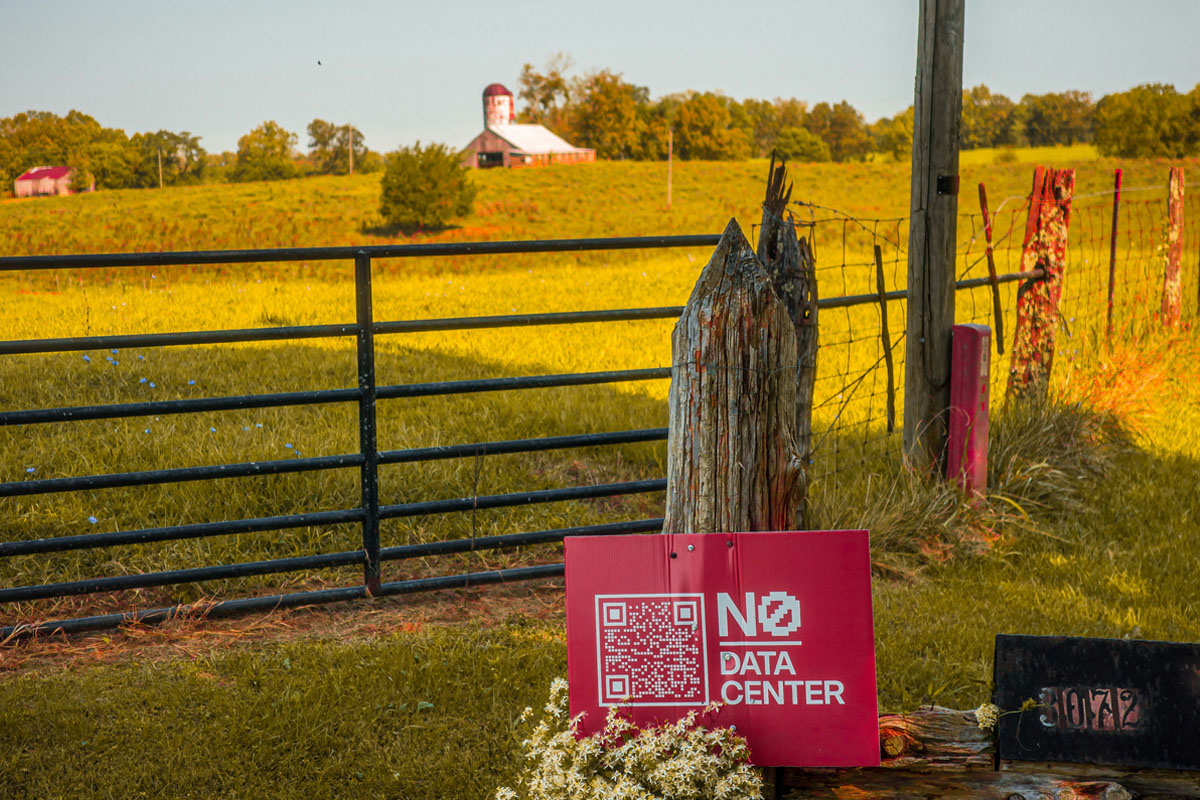
Over the past six months, Americans' support for data center construction has plummeted. In fact, when it comes to data center backlash, no other country comes close to the United States.

According to UK-based consultancy Public First's August 2026 study, The Opposition to Data Centers, the scale of opposition to data centers in the U.S. is off the charts. Americans are more supportive of power plants, electric infrastructure, and office complexes; most survey respondents said they'd rather see land go undeveloped than to see a data center built. 

Opposition to data centers is highest when the construction is within ten miles of a respondents' house, suggesting that Americans overwhelmingly don't want them in their backyards. Interestingly, rural respondents are the demographic most against new data center construction, and perhaps unsurprisingly, those who don't trust tech companies are especially wary of data centers.

The American respondents' biggest concerns are higher energy bills, water shortages for households, and negative impacts on the environment. That said, I believe this American resistance to data centers is also a referendum on Big Tech and a trust in these American CEOs' efforts to build out more AI.

In an August 26 Information Technology and Innovation Foundation (ITIF) webinar, "Can the United States win the AI race if Americans oppose data centers?,"  Paul Lekas, an EVP at the Software & Information Industry Association (SIIA) says, "Populist opposition to Big Tech is definitely a factor [...] There is apprehension in society around AI."

Data center opposition is a uniquely American phenomenon at the moment

Public First's data shows that there is not nearly as much data center opposition in other parts of the globe. For example, survey respondents in India, Nigeria, Vietnam, Indonesia, and many parts of southeast Asia are extremely supportive of new data center construction.

By no means is Public First's study the only data point. A recent NBC News Decision Desk Poll of U.S. adults found that 69% were opposed to data center development, and 70% of these respondents said they were more worried about AI than excited by it. Put simply, a lack of trust in tech companies is driving this data center opposition.

Data centers are a contentious political issue

According to Public First's study, data center support has plummeted since January, particularly among Democrats. However, in the run-up to the midterm elections, politicians from both parties are souring on data center support.

Writing for Politico, Andrew Howard explains, "There’s no clean ideological lane. From MAGA Republicans to far-left Democrats, there are strange bedfellows joining forces against data centers, further complicating the narrative with voters."

In Texas, Republican Gov. Greg Abbott recently paused approval for new data center construction, opting to wait for regulators' audits of these projects' tax breaks and water use. This decision came after Abbott received complaints from longtime conservative voters in remote parts of Texas.

Some politicians are pushing for moratoriums, while others are campaigning against tax incentives and carve-outs. In Michigan, GOP Senate nominee Mike Rogers recently called for a one-year moratorium on new data center construction. And in Ohio, GOP Sen. Jon Husted is facing debilitating data center backlash during his reelection campaign. Husted's competitor, Sherrod Brown, has tried to cash in on this, labeling Husted "the face of data centers."

Caught in a tight race in Nevada, Republican Gov. Joe Lombardo issued a statement on September 18, saying, “Data centers must pay their share, protect our water resources, keep costs from being passed on to ratepayers, and protect the communities that host them.” To be sure, data center construction is now a flashpoint issue for pols on both sides of the aisle.

The pro-data center contingent is yet to find its footing

Generally speaking, the tech industry has been caught off guard, and there is not a lot of effective messaging out there from tech companies and the data center builders. Americans are worried that data centers will raise their electricity bills, drain their water supplies, and help Big Tech build advanced AI tools that some people don't want in the first place.

According to the Center on Budget and Policy Priorities, eight states enacted legislation to reel in data center tax subsidies, and seventeen other states considered, but ultimately did not pass, similar laws last year.

There are ways that data center builders, tech companies, and lobbyists can change the narrative around data centers. For example, according to Public First's study, Americans are most concerned with electricity costs. To assuage these fears, data center companies should promise to cover any electricity grid increases that their data centers would cause, effectively guaranteeing that local electric bills won't rise; in a perfect world, data centers would generate all their own power on-site and not pull from the grid at all. Such messaging would be a boon to the pro-data center movement. 

Data center proponents could also bring attention to the examples of data centers being a win-win for tech companies and the surrounding communities.

Loudoun County, Virginia

Thirty-five miles southwest of D.C., this northern Virginia county is poised to bring in $1.1 billion in tax revenue from data centers in 2026. In fact, data centers currently account for 38% of Loudoun County's General Fund. The tax benefits from data centers have allowed Loudoun residents to build roads, schools, libraries, parks, and a new recreation center. What's more, the residential property tax has dropped significantly over the past decade, from $1.14 per $100 of assessed home value in 2016 to $0.805 per $100 of assessed value in 2026. According to Jared Walczak, vice president of state projects at the Tax Foundation, without data center development, the average homeowner in Loundoun County would pay roughly $5,800 more in property taxes.

Quincy, Washington

Another good example is Microsoft's activity in Quincy, Washington. A small farming town before the tech behemoth set up shop, Quincy now generates 57% of its property tax revenue from data centers. In 2018, Quincy collected $9.8 million in tax revenue; six years later, that number ballooned to $20 million. These funds have funded a new high school, a hospital, and other town infrastructure without raising taxes on residents.

Cedar Rapids, Iowa

Another interesting case study can be found in Cedar Rapids. On one hand, Google's data center development in the region is expected to create 1,000 new construction jobs, and a partnership with the Cedar Rapids Electrical Trade Center should create 700 electrician apprentices by 2030. 

On the other hand, the Google data center deals are under scrutiny due to allegations of kickbacks and non-disclosure agreements. Cedar Rapids Mayor Tiffany O'Donnell has effusively denied the kickbacks; however, she concedes that Google (and QTS Data Centers) will receive a 15-year-long tax break.

Gubernatorial nominees Rob Sand (D) and Zach Lahn (R) are each calling for an end to Iowa's tax breaks for these data centers. It is a huge issue in the current Iowa race.  In his policy plan, Sand writes, "Right now, Iowa faces a nearly $1.4 billion budget deficit. We shouldn’t be handing out more tax breaks for major corporations at the expense of Iowa taxpayers. These data centers are also getting huge sales tax breaks on everything inside the data center.”

The Republican candidate's camp has responded in kind, telling The Gazette, “From day one, Zach Lahn has called for a moratorium on data centers, ending their unfair tax incentives, restoring local control to communities, and setting the ‘rules of the game’ at a state level, so these large data centers cannot raise taxes or increase electricity costs for Iowans. Once again, Rob [Sand] is copying our campaign and mirroring our policy.” 

So, clearly the Iowan candidates are cognizant of the data center backlash and trying to win over angry voters.

The U.S. data center backlash is likely a referendum on some tech companies' AI goals

More than any other country in the world, the United States is increasingly opposed to data center construction. As Seb Wride, head of polling at Public First, points out, "This is not a flashpoint issue in the UK or France or in Germany."

I believe that the uniquely American opposition to data centers is a referendum on AI more generally. And Wride's data supports this. He says, "The root cause of a lot of this data center opposition is coming from AI in general."

In the same conversation, Paul Lekas at the Software & Information Industry Association, says, "I think that it's important for industry to meet people where they are and listen to their concerns. And I think we need to look at these concerns as solvable problems. And then there's this bigger issue of trust and 'how is AI going to benefit me?' which is a much bigger conversation."

To be fair, it's hard for people to be excited about tech CEO's trailblazing AI initiatives when they publicly say things like, “I think that AI will probably, most likely, sort of lead to the end of the world. But in the meantime, there will be great companies created with serious machine learning.” This was Sam Altman at Airbnb's Open Air conference in 2015.

Or how about Elon Musk being asked on Ted Cruz's podcast about the possibility of killer robots annihilating humanity?  "20% likely," Musk said. "Maybe 10%," And it could happen in "five to 10 years." Meanwhile, Musk is actively building humanoid robots. If this is the tech CEOs' endgame, perhaps Americans are right to be wary of non-stop AI development.

Looking forward

The pro-data center contingent is certainly aware that they have a messaging problem. In an attempt to rein in the data center backlash, QTS Data Centers, Compass Datacenters, Digital Realty, and Vantage Data Centers recently joined forces to create a nonprofit called Infrastructure for America. Similarly, Build American AI, which is an off-shoot of the pro-AI super PAC "Leading the Future," is launching a multi-million dollar pro-data center ad campaign in Kansas, Ohio, and Wisconsin.

Given that data centers are such a flashpoint issue in the United States, I agree with Lekas when he says, "It will be hard to have any turnaround before the midterm elections, but I do think this is possible." That said, at this moment, the folks in the pro-data center contingent have an uphill battle on their hands.

Related reading

John Donegan

John Donegan

Enterprise Analyst, ManageEngine

Want to read<br>this article on the go?

Want to read
this article on the go?

Do it on the ManageEngine
Insights app.

Published on August 20, 2026 | 4 min

Although enterprises in the Dominican Republic are rapidly embracing emerging technologies, their investments often fail to bring returns on investment. According to our recent Dominican Republic digital transformation survey, this gap in emerging tech adoption and ROI can be attributed to three main areas: legacy systems, operational tool sprawl, and mounting cybersecurity risks in the region. In order to unlock authentic, long-term business value, executive leadership in the Dominican Republic should prioritize data governance and address each of these issues in turn.

Legacy systems

Although Dominican enterprises are eager to modernize genAI and other digital technologies, nearly a third (31%) remain anchored in architectures that are heavily dependent on legacy systems. What's more, a large amount (41%) are stuck in a cloud-siloed state of transition, whereby some of their systems and data are on-premises and some are in the cloud. Without unified visibility, consolidation, and integration across the corporate networks, executives are unable to make informed decisions and accurately assess their enterprise's security posture. Whenever possible, Dominican execs should pivot to a unified approach.

Operational tool sprawl

According to nearly all (89%) of the IT experts we surveyed in the Dominican Republic, the rapid proliferation of AI and other emerging technologies has increased operational complexity over the last couple years.

Much of this complexity can be attributed to an extremely fragmented technology environment, where 61% of Dominican organizations are dealing with anywhere between 11 and 25 disparate tools to conduct their operations on a daily basis.

In fact, of all the nations we surveyed, the Dominican Republic ranked the highest in operational tool sprawl. The key to dealing with such sprawl is to have a unified visibility of the enterprise's infrastructure, which unfortunately most Dominican organizations do not have.

Most Dominican companies are opting for a fragmented ecosystem, focusing on purchasing a motley of top-tier, best-of-breed solutions, as opposed to a unified platform. Although many executives acknowledge that the dispersion of tools is hindering their operational efficiency, more than half of them (51%) still opt for a motley of best-in-class solutions, rather than a unified platform. 

Mounting cybersecurity risks

Given the recent advances in AI, perhaps it shouldn't come as a surprise that there have been a bevy of increasingly sophisticated cyberattacks in the region. Unfortunately, a majority (64%) of Dominican respondents say their organizations endured more successful cyberattacks last year than in previous years.

Without a doubt, generative AI is creating a new frontier of risk. Although these new AI tools offer great business potential, they're also at the disposal of bad actors, which creates a bit of a paradox.

To be fair, Dominican IT experts understand this paradox well; a whopping 73% of them consider genAI tools to be high-risk, and these experts recognize that AI offers both immense potential and some equivalent dangers. It maybe goes without saying, but more than ever, it is vital that these new tools are deployed (and used) safely inside organizations.

The roadmap to achieving digital objectives should involve a unified infrastructure

From a digital strategy standpoint, Dominican executives appear to be very much aligned. In fact, the vast majority of respondents (90%) say that the various executives in their organizations have a high degree of alignment when it comes to digital objectives. That said, there is a strategic gap in the implementation. Not all IT leaders (only 37%) agree that simplifying and unifying the technology platform is a shared priority.

So, while almost everyone (90%) is aligned on the enterprise's objectives, not everyone (37%) agrees on the roadmap. In my opinion, this needs to change, and everyone should embrace a unified infrastructure and get on the same page.

Key takeaways

While executives in the Dominican Republic are quite excited about generative AI tools and other emerging technologies, there are a host of technical realities stifling innovation. A proliferation of legacy systems, widespread operational tool sprawl, and some budget constraints are making it hard to turn these new technology investments into measurable business results.

Making things more difficult, the region is experiencing mounting cybersecurity events—far more than the other nations we surveyed in Latin America. Without a doubt, this creates a tricky situation.

Executive leadership should transition from a reliance on a bunch of disconnected tools to a unified and resilient ecosystem. In my opinion, real growth depends not so much on software accumulation in and of itself, but rather on leadership's ability to simplify their architecture. Again, executives should roll out these new generative AI tools with the utmost care; in the genAI era, data governance is more important than ever.

Given the rapidly changing AI landscape, executives should also make a concerted effort to close the talent gap to account for these new technologies. And from a strategic point of view, all leadership within the organization should get on the same page. Put simply, when we talk about a Dominican road-map for long-term competitiveness, the key is employing a more unified infrastructure while also emphasizing strong data governance.

Wilson Calderon

Wilson Calderon

Associate Technical Director LATAM, ManageEngine

Want to read<br>this article on the go?

Want to read
this article on the go?

Do it on the ManageEngine
Insights app.

Published on December 06, 2025 | 8 min

In its current effort to become “the world’s most AI-friendly country,” Japan is using a combination of “hard law” instruments and non-legally binding “soft law” guidelines. Its AI Promotion Act, which was passed back in May and took effect in September, is designed to facilitate AI development and encourage widespread social adoption of AI technologies.

The AI Promotion Act creates a new AI Strategy Headquarters, which is chaired by the Prime Minister and tasked with coordinating policy across all government ministries. The fact that this new entity is chaired by Prime Minister Sanae Takaichi shows that Japan is taking AI very seriously right now. Also, according to the AI Promotion Act, a forthcoming AI Basic Plan is expected in 2026.

In his recent report for the Center for Strategic and International Studies (CSIS), Kyoto University researcher Hiroki Habuka writes, “The newly enacted AI Promotion Act can be understood as a mechanism to ensure the entire government can respond swiftly to changes in AI technology and risks, enabling the Cabinet Office to serve as a ‘control tower’ for risk assessment and the consideration of countermeasures.” The law is, by design, subject to change.

Although the AI Promotion Act technically requires businesses to adhere to the new measures implemented by the government, the law is also non-binding, and there are no penalties for noncompliance at this time. Later, we’ll discuss how non-binding laws work uniquely well in Japan—and not so well in the U.S.

Japan’s extreme sense of urgency regarding AI development

Sensing that they are behind in the AI arms race, Japan wants to create policy that encourages innovation and public usage of AI. According to a December 6 Jiji Press article, Japan believes that “the United States and China are taking the lead in the development of AI, with the proportion of people who have used generative AI standing at 68.8% and 81.2% respectively, far higher than 26.7% in Japan.”

The Japanese government hopes to change these numbers; in fact, per the draft version of the forthcoming AI Basic Plan, Japan intends to increase the AI utilization rate among the public to 50 percent, and eventually to 80 percent.

According to Japan’s AI Guidelines for Business, a soft-law instrument that was first published in April 2024 and then updated in December 2024 and March 2025, AI is viewed as a solution to social and economic problems unique to the island nation—such as labor shortages arising from Japan’s aging population and low birthrate numbers.

Japan’s pillars for AI governance and “Society 5.0”

Although operating with a new sense of urgency in 2025, Japan has not changed its AI governance policies dramatically. As Habuka explained during a March 2025 CSIS event,

“The Japanese AI governance policy has not dramatically changed since around 2016. So, we have mainly three pillars for AI governance. The first one is promoting the development and use of AI across society. The second pillar is taking a sector-specific regulatory approach rather than [a] holistic approach. The third pillar is pursuing an agile and multi-stakeholder governance model, rather than the top-down or command-and-control type of governance.”

Since 2016, Japan has had a vision for its future society. Called “Society 5.0,” it is a future where cyberspace and the physical world are fully integrated with AI and robotics. As Habuka explains, “The Society 5.0 vision is like a human-centered society where a high-degree of integration between cyberspace and physical space can promote economic development and also solve societal problems.”

Given this vision, it is safe to say that Japan is ready to embrace AI into the fabric of their society.  And to be sure, this vision for the future explains some of the country’s unique AI policy decisions.

Japan amended its Copyright Act to make accommodating provisions for AI training

As I’ve previously addressed on ManageEngine Insights, the Copyright Act of Japan (1970) was amended back in 2018 to create accommodating provisions for AI training.

As it currently stands, Japanese entities that are building AI models can legally process any data “regardless of whether it is for non-profit or commercial purposes, whether it is an act other than reproduction, or whether it is content obtained from illegal sites or otherwise.” Policy-maker Nagaoka Keiko has gone on the record, saying “It is possible to use the work for information analysis—regardless of the method, regardless of the content.”

As long as the copyrighted training data is being used for information analysis (as opposed to human enjoyment), that usage is likely not subject to Japanese copyright law.

However, there are exceptions to this “information analysis” loophole. If the copyright holder is “unreasonably harmed” (e.g., their earnings are jeopardized), the LLM service providers could be liable.

Additionally, although these companies can legally pull copyrighted material into their AI models’ training data, regulators don’t want to see AI output that looks overly similar to that copyrighted work. And, as another caveat, the users’ inputting of copyrighted works isn’t covered by the information analysis provision; so, hypothetically, users could get into trouble.

Japan may amend its federal data privacy legislation (APPI) to bolster AI development

Japan’s data privacy regulator—the Personal Protection Commission (PPC)—is currently considering amending the “Japanese Act on the Protection of Personal Information” (APPI) in order to make it easier for AI companies to use people’s personal data to train their models.

The proposed amendment would allow third parties to use data subjects’ personal information in AI model development efforts—without the data subjects’ prior consent—as long as there is “objectively no risk” to the data subjects.

As it stands today, the APPI mandates that AI companies gain prior consent before processing Japanese citizens’ sensitive information, such race, medical records, and criminal backgrounds; however, in an effort to bolster AI model training, the PPC is rethinking its policy.

As long as the sensitive data is solely being used to help train the models, and it doesn’t violate the users’ personal rights or interests, the PPC doesn’t seem to think there’s an issue.

Defending his rationale for rolling back this prior consent mandate, PPC Chair Satoru Tezuka worries that, without such deregulatory intervention, “Japan would find itself unable to compete on the same footing as the rest of the world.”

While the PPC plans on rolling back the prior consent mandate, it also intends to pair this deregulation with harsher fines on businesses that repeatedly violate existing personal privacy laws. A bit of a balancing act.

Similarities between the AI governance policies of the U.S. and Japan

From a regulatory standpoint, the U.S. and Japan each believe that there shouldn’t be a one-size-fits-all AI law. Given that AI tools tend to amplify existing risks, such tools should be regulated through existing legal frameworks within various industries. Or at least, that’s the train of thought.

Essentially, both nations believe that AI regulation should be sector-specific and based on the specific use case, as well as the level of risk. Both countries rely on their existing laws and regulatory frameworks to address AI risks in specific fields.

And where the nations’ AI governance policies diverge

Under the current administration, the U.S. is taking a market-led approach (and of course, the European Union takes more of a rule-marking/regulatory approach). Conversely, Japan takes a primarily “soft-law” approach, whereby businesses voluntarily comply with suggested regulations, and the Japanese government offers non-binding, subject-to-change guidance.

Soft law instruments work particularly well in Japan because it’s a culturally unique country. In CSIS’ March 2025 event, “Unpacking Japan’s AI Policy,”  Gregory Allen, the director of the Wadhwani AI Center, says,

“It […] speaks to why Japan is so comfortable with a soft law approach because historically, Japanese companies really do get on board with soft law approaches to an extent that is greater, perhaps, than other countries or regions.”

Habuka agrees with this sentiment, and then laments that Japanese companies can sometimes be too compliant. In fact, Japanese companies’ proclivity to be hyper-compliant was a concern that was cited in a recent government report. Habuka says,

“There’s a difference—cultural difference. Interestingly, in their report there is a sentence that says, given that Japanese companies are too compliant, maybe, new regulation would [have] too strong [of a] chilling effect on companies, and that is why we shouldn’t directly jump into a new regulation on AI.”

In addition to a penchant for rule-following, as well as a tendency to put the group (and society) ahead of the individual, Japanese society is not as litigious like American society. Habuka elaborates,

“Our society—Japanese society—is not like the U.S. society, where you can just go to court if you caused any problems. Like, Japanese businesses are really reluctant to go to the court. We prefer ex ante agreement or maybe settlement. And for that kind of culture, it’s important to have, to some extent, an agreed [upon] framework or guidance to be responsible for innovation, rather than just make things happen and go to court afterwards.”

It might go without saying that the soft-law approach would not work well in the United States.

Japan’s unique cultural context makes the soft-law approach viable

Given Japan’s strong culture of social accountability throughout society, most businesses are wary of ignoring AI ethics and governance guidelines; the last thing Japanese companies want is dilution of public trust. In a November 2025 brief written for the National Bureau of Asian Research, Kyoko Yoshinaga explains,

“Several factors explain why this approach works effectively in Japan. The long-standing relationship between Japanese government and industry means that when the government issues a guideline, companies tend to comply even without legal obligation. They know that noncompliance could result in reputational harm, loss of government support, or stricter regulation later.”

Again, quite different from the U.S.

Other differences between American and Japanese AI governance policies

In his October report, “Japan’s agile AI governance in action,” Habuka points out that the differences between the two nations’ AI governance policies reflect their respective national strategies more broadly. Habuka writes,

“The AI Action Plan for the United States explicitly sets competition among nations and the establishment of technological dominance as its clear goals. This is based on a competitive worldview that positions AI as a strategic asset capable of altering the geopolitical power balance. In contrast, Japan’s policy prioritizes fostering public trust in AI systems.”

What’s more, Japan doesn’t try to intervene in algorithmic output to try to impose its preferred views on the greater world. Emphasizing the two countries’ ideological differences, Habuka continues,

“While Japanese policy documents speak of fundamental values such as the rule of law, human rights, democracy, diversity, and fairness, they make no mention of content intervention to exclude specific political or social ideologies from AI. This approach seeks to form a cooperative international order where different values can coexist and interlink, rather than attempt to propagate a specific set of values globally. In short, whereas the United States aims for the export of its own values, Japan aims for interoperability based on the premise of diverse values.”

In short, for better or worse, due to vast cultural differences, it is unlikely that the U.S. could—or would—be able to successfully incorporate many of Japan’s AI governance policies.

Related reading:

John Donegan

John Donegan

Enterprise Analyst, ManageEngine

Want to read<br>this article on the go?

Want to read
this article on the go?

Do it on the ManageEngine
Insights app.

Published on September 25, 2025 | 6 min

The World Economic Forum’s Future of Jobs Report 2025 identifies creativity as one of the top skills employers say they need most in the years ahead. That finding may surprise you considering the creative powers of AI, particularly generative AI (GenAI). The technology can already write code, compose content, draft strategies, and produce artifacts that rival the work of the most talented humans. Over time, GenAI’s capabilities promise to become even more impressive.

Given GenAI’s creativity, what role is left for us humans in the creative process? And how should organizations think about the future of creative work?

IT and business leaders need to address those questions as they build workforces that can thrive alongside accelerating AI adoption. The answers lie in understanding creativity, the difference between human and AI creativity, the ways they complement each another, and how organizations can optimize human and AI co-creation to make it a competitive advantage.

Defining creativity

Creativity can be a slippery concept. At its core, though, creativity is about producing something both novel and valuable regardless of domain. It can result in a technology breakthrough, a new product design, a compelling marketing campaign, or a breathtaking work of art.

You don’t have to be an artist or “creative type” to be creative. Scientists, technologists, engineers, and mathematicians can be just as creative as poets, sculptors, painters, and dancers. In the IT department, creativity can be expressed by automating a process to eliminate tedious manual tasks, solving a complex problem under a tight timeline and budget, enhancing a user experience to improve productivity and reduce help desk calls, and countless other activities.

Finally, creativity is a skill that can be developed, not a trait you’re born with or without. “My research shows that we all have roughly equal creative potential,” wrote Dr. Robert Epstein, creativity expert and senior research psychologist at the American Institute for Behavioral Research and Technology. According to Epstein, “creativity is an orderly and predictable process,” meaning it can be “engineered—and that all of us can realize the enormous creative potential lying within us.”

Human vs. AI creativity

AI clearly demonstrates forms of creativity. Large language models and generative systems can produce outputs that surprise even experts, from unexpected breakthroughs in science to original artwork that blurs the lines between human and machine art.

“Standardized creativity tests, traditionally used to measure human creativity, have been adapted to evaluate the outputs of generative AI,” wrote Dr. Jennifer Haase and Prof. Dr. Sebastian Pokutta. “The results are striking, with AI-generated content sometimes matching or even exceeding human performance in tasks that measure everyday originality and elaboration.”

Hasse and Pokutta go on to note that “AI-generated outputs have proven so convincing in practical scenarios to even fool experts in whether content was created by humans or AI…one of the most substantial possible benchmarks. This evidence underscores the argument that generative AI tools possess inherent creativity, characterized by their ability to autonomously produce novel and valuable output and pass the test of being indistinguishable from human output.”

But the creative mechanisms are different. Humans bring context, lived experience, and emotion to creative work. We can connect dots across domains, empathize with unspoken needs and desires, interpret meaning and make ethical judgments based on our unique perspectives.

GenAI creativity, on the other hand, is computed using algorithms, large datasets, and processing power. AI learns patterns and structures from training data to generate new outputs. While it can produce highly innovative results, GenAI creations are bound by existing data. And GenAI cannot independently experience or interpret emotions, culture, or context.

“AI does not replace human creativity and understanding; on the contrary, it entirely relies on them,” wrote Bernardo Kastrup, founder and CEO of AI silicon company Euclyd. “Its value resides solely in stretching, leveraging the re-use potential of human production, not replacing it. AI amplifies the reach of human productivity; it doesn’t render it redundant. All meaning and all creativity discernible in the outputs of AIs are human meaning and human creativity…Artificial Intelligence ultimately is human intelligence.”

Creative collaboration with AI

Working successfully on creative projects with GenAI means leveraging its strengths as well as our own. Let GenAI process vast amounts of data, identify patterns, generate novel combinations, produce iterations and variations, and execute repetitive or technical tasks. Meanwhile, you can provide the creative vision, ensure cultural and emotional resonance, make intuitive leaps and connections, and evaluate and refine the GenAI output.

In practice, here’s how you can divide and conquer creativity with AI:

  • Idea generation. Use AI to brainstorm quickly and explore ideas you might not consider.
  • Creative drafting. Let AI handle first drafts of designs, content, or proposals, freeing you to refine and improve.
  • Feedback loops. Let AI analyze creative work and offer suggestions to help you iterate faster. Provide your feedback on AI output to help the AI improve its results over time.
  • Skill development. Use AI to teach techniques for creative writing, design, or coding.

 This division of creative labor—letting humans and AI do what they do best—fosters hybrid intelligence. According to Dr. Cornelia C. Walther, a visiting scholar at Wharton and director of global alliance POZE, this new type of intelligence “represents the synergy between AI’s speed and analytical rigor and [natural (human) intelligence]’s depth of insight. Organizations and individuals can harness solid data-driven capabilities by uniting both and still honor essential human values, ethical reasoning, and collective stewardship.”

One caveat before moving on: human-AI collaboration doesn’t always produce optimal results. “On average, human–AI combinations performed significantly worse than the best of humans or AI alone,” according to a meta-analysis of 106 human-AI performance studies published in Nature Human Behaviour. Researchers also “found performance losses in tasks that involved making decisions and significantly greater gains in tasks that involved creating content. Finally, when humans outperformed AI alone, we found performance gains in the combination, but when AI outperformed humans alone, we found losses.”

Cultivating human creativity

AI creativity will no doubt improve over time through the efforts of Anthropic, Google, OpenAI, and other AI vendors. Your creativity, and the creativity of your colleagues, can be improved through effort as well.

Dr. Epstein, the creativity expert, identifies four core competencies that you can develop to cultivate your creativity:

  • Capturing. Record new ideas as they occur. Fleeting thoughts and inspirations can be developed into creative solutions or innovations. Epstein suggests using notebooks, voice recorders, or digital apps to jot down ideas immediately. The key is to have a reliable system in place to ensure that no idea is lost, regardless of its initial perceived value.
  • Challenging. Question the status quo and take risks. Challenging involves pushing boundaries and not being afraid to make mistakes or face failure as you pursue new ideas. This competency asks you to habitually embrace uncertainty and reframe challenges as opportunities to learn and grow.
  • Broadening. Expand your knowledge and have more experiences. Exposing yourself to diverse ideas, cultures, and disciplines enhances creative thinking. Here, Epstein recommends that you read widely, explore new hobbies, travel, and interact with people from different backgrounds to fuel creative inspiration.
  • Surrounding. Create an environment that promotes creative thought. This includes your physical workspace, social interactions, and cultural atmosphere. Incorporate natural light, inspiring artwork, and flexible furnishings in your workspaces. Promote a collaborative corporate culture that encourages people to share and develop new ideas.

By focusing on these four core competencies, individuals and organizations can systematically enhance their creative capabilities, leading to more innovative solutions and a more dynamic approach to problem-solving.

Creating the hybrid future

The rise of GenAI doesn’t diminish the need for human contributions to creative efforts. If anything, that need is magnified. Machines can generate, but only humans can judge, contextualize, and give meaning. For IT and business leaders, the future of creative work means cultivating human creativity within your organization and designing processes that let you divide and conquer creative work to ensure your people and your AI systems can do what they do best.

Related reading:

Brent Dorshkind

Brent Dorshkind

Enterprise Analyst, ManageEngine

Want to read<br>this article on the go?

Want to read
this article on the go?

Do it on the ManageEngine
Insights app.

Published on August 27, 2025 | 5 min

People on both sides of the AI spectrum are earning money and driving traffic by making hyperbolic claims about generative AI (genAI).

On one side of the spectrum, there are the AI zealots, boosters, and cheerleaders. Many of these folks (e.g., OpenAI CEO Sam Altman, NVIDIA CEO Jensen Huang) make their livelihoods by marketing genAI as a potential savior of humanity. These boosters are keen to cite AI’s potential existential risks; however, their warnings serve primarily as marketing endeavors. By emphasizing how dangerous genAI can be in the wrong hands, boosters like Altman position their initiatives as being deathly important. As one would expect, this tactic is particularly common before funding rounds.

On the other side of the AI spectrum are the cynics and skeptics, some of whom go so far as to label the AI boosters as “charlatans” or “grifters.” Among the skeptics, there are several different camps. There are internal skeptics—researchers and academics currently working on AI initiatives—and then there are external skeptics who may have worked on AI projects in the past, but primarily build their personal brands by debunking genAI hype (e.g., NYU professor Gary Marcus, British technology pundit Ed Zitron). The boosters’ behavior is relatively straightforward, so let’s devote a bit more time to the motley world of AI skepticism.

Societal harm and ethical issues

Cynics have many different reasons to be skeptical about the current genAI craze. According to Gartner’s 2025 Hype Cycle for AI, genAI has recently gone from the peak of inflated expectations to the trough of disillusionment. This isn’t to say that genAI won’t continue to have a positive impact on society, business, education, health, and other facets of life; however, many researchers are increasingly starting to question whether the pros do, in fact, outweigh the cons.

Many ethics-focused academic researchers are concerned with algorithmic biases, misinformation, and other potential societal harms posed by genAI. For example, in their book, “The AI Con: How to Fight Big Tech’s Hype and Create the Future We Want,” researchers Emily Bender (University of Washington) and Alex Hanna (DAIR) describe some chatbots as “a racist pile of linear algebra,” given the tools’ propensity to perpetuate racial inequities.

Aside from misinformation and algorithmic biases, many AI skeptics are concerned about climate issues and the amount of energy that it takes to operate the data centers that power genAI models. Others are worried about genAI causing a deterioration of critical thinking skills, widespread job displacement, and the potential for millions of workers to be left behind.

Corporate hype and untenable economics

Not to be undone, another branch of vocal AI skeptics focuses on the precarious financial situation allegedly faced by many of the big players in the genAI space. As an example, Ed Zitron frequently predicts that the genAI bubble will burst, leading to the contraction of stock valuations and a subsequent depression. Likewise, Gary Marcus describes the genAI landscape as economically unstable given the exorbitant costs to power the models, combined with a lack of corresponding revenues.

Marcus, Zitron, and other vocal critics take umbrage with the idea that current genAI models, and the continuous scaling of LLMs specifically, can ever lead to artificial general intelligence (AGI) or super-intelligence. To be fair, Marcus doesn’t think AGI is unattainable per se; he just prefers a hybrid, neurosymbolic AI approach as opposed to the current, widespread approach of scaling LLMs.

Existential risks

Yet another branch of genAI criticism focuses on the potential existential harms, such as AI-fueled wars, human extinction, and widespread social instability. For example, OpenAI co-founder and former chief scientist Eliezier Yudkowsky wrote a March 2023 essay in Time Magazine, warning that without a proposed moratorium on genAI research, “literally everyone on Earth will die.” Co-written with AI researcher Nate Soares, Yudkowsky’s forthcoming book has an equally incendiary title, “If Anyone Builds It, Everyone Dies: Why Superhuman AI Would Kill Us All.”

Geoffrey Hinton, who helped develop neural network technologies back in the 1980’s, also believes AI poses existential risks. In an April 2025 interview with CBS News, Hinton says, “The best way to understand it emotionally is we are like somebody who has this really cute tiger cub. Unless you can be very sure that it’s not gonna want to kill you when it’s grown up, you should worry.” Yoshua Bengio, a former colleague of Hinton and another pioneer of neural networking, has likewise been outspoken about the potential for AI to outsmart humans and enact a takeover.

To reiterate, AI boosters are also keen to cite AI’s potential existential risks, although this is usually an effort to market their projects, fund a particular organization, or position themselves as experts on AI policy. To be sure, genAI companies are often chasing government contracts and private equity capital, so it makes sense that they’d position their organizations as being the key to preventing existential harms.

AI centrists take a relatively measured approach

As a quick caveat, centrist is a relative term. One person’s centrist is another’s “zealot,” and yet another’s “doomer.” Nevertheless, there are some people (e.g., Anthropic CEO Dario Amodei) who talk about the potential negative effects of current genAI models, even when it goes against their financial interest to do so.

Despite the fact that Amodei is deep in the AI arms race, he’s a realist when it comes to many genAI issues. I very much agree with Amodei when he says that AGI is primarily a marketing term, and I appreciate his honesty about the uncertain financial trajectory of genAI companies—especially in regard to scaling LLMs (which his company is doing).

In a recent interview with Alex Kantrowitz‘s Big Technology podcast, Amodei says, “On the underlying technology, I’ve started to become more confident. There isn’t no uncertainty about it. [There is uncertainty.] I think the exponential that we’re on could still totally peter out. I think there’s maybe, I don’t know, a 20 or 25% chance that some time in the next two years, the models just stop getting better—for reasons we don’t understand, or maybe for reasons we do understand, you know, like data or compute availability.”

Although some detractors have accused the Anthropic CEO of being an AI doomer, I find much of his commentary to be realistic and refreshing.

Key takeaways

In our currently over-hyped genAI environment, there are plenty of vocal AI cheerleaders and skeptics. While wading through the assortment of opinions, it’s important to assess the speakers’ financial motives. The CEO of the world’s largest semiconductor chip company is logically going to describe AI as being as important as electricity; conversely, many outspoken AI critics are trying to sell books, drive traffic, and build their own personal brands by questioning the technology. Although the potentials (and risks) of genAI are real, it’s best to take the hyperbole of the boosters (and the doomers) with a grain of salt.

John Donegan

John Donegan

Enterprise Analyst, ManageEngine

Want to read<br>this article on the go?

Want to read
this article on the go?

Do it on the ManageEngine
Insights app.

Published on July 11, 2025 | 4 min

Generative AI (GenAI) doesn’t need an introduction anymore. It’s already here, sitting in meetings, drafting documents, summarizing data, and yes, even helping fix bugs at 2am.

But here’s the thing: for all the noise around it, the biggest shift isn’t just in what AI can do, it’s how it’s changing the way we work.

Not in theory. In real, everyday workflows. Across teams. Across departments. Across continents.

Let’s talk about what that actually looks like.

1. No one starts from scratch anymore  

Whether you’re writing a client pitch, a job description, or a tricky technical document, starting with a blank page is basically optional now.

Teams are using GenAI to generate solid first drafts in moments. Not perfect ones, but good enough to move faster. Then it becomes a human job again: tweak, edit, shape, approve.

It’s not about “letting AI write the content.” It’s about people spending less time stuck and more time making things better.

2. Support teams are getting some real backup  

Forget the chatbots that just send you to a FAQ page. The new generation of AI-powered agents can read between the lines, literally.

They understand what the user’s really asking, even when the question is a bit messy. They can pull from product documentation and past tickets, and even suggest next steps without escalating everything to a human.

Support teams aren’t getting replaced; they’re getting some breathing room. And response times are finally catching up with customer expectations.

3. Data is no longer just for the “data people”  

For a long time, getting answers from data meant waiting. Waiting for someone to pull a report. Waiting for someone else to explain it.

Now? You can just ask. Like, in actual sentences.

“Which regions had the highest churn last quarter?”

“What’s the forecast for product X in LATAM next month?”

And you get answers in dashboards, charts, or even plain English. It’s like having a data analyst on-demand without the scheduling back-and-forth.

4. Developers are coding with a copilot (literally)  

Ask any developer, and here’s what they’ll tell you: writing new code is only half the battle. The rest is fixing bugs, writing tests, and figuring out what that one teammate meant in a comment from three months ago.

GenAI is becoming a second set of eyes. Suggesting better ways to write a function. Auto-generating tests. Even helping junior devs ramp up faster by explaining code in simple terms.

5. Internal knowledge isn’t trapped in docs anymore  

Every company has that one person who knows everything; how the system was set up, what happened during that migration, and where the archived logs are stored. And when they’re out of office (or leave), it’s panic.

Now, GenAI can surface that kind of information from docs, tickets, wikis, and emails in seconds. You ask it a question, then it quickly provides a relevant answer—and even summarizes it if needed.

6. Decision-making is happening without the overhead  

Decision paralysis used to be part of the job. You’d gather inputs from five different tools, sit through three meetings, debate numbers for a week, and still feel like you were guessing.

That loop is starting to break.

With GenAI, teams don’t need to wait for an analyst to package insights. The AI can pull live data from across systems, summarize key takeaways, and even outline what each scenario might look like if you tweak a variable.

It’s still your call, but you’re making it with better visibility and without the calendar chaos.

7. Employee experience is getting more personal  

Let’s be honest: most enterprise systems treat employees like rows in a spreadsheet. Same onboarding checklist. Same training modules. Same “How are you feeling today?” survey.

GenAI is quietly shifting that.

Now, employees can get help tailored to them. Not just what role they’re in, but where they are in their journey, what they’re trying to learn, how they prefer to work, and even how they’re feeling lately.

Final thoughts

Most of the time, an emerging technology promises to “revolutionize” something and then quietly becomes another tab in the browser.

That’s not what’s happening here.

Generative AI is changing how work feels. It’s giving teams more time to think, build, and solve. And slowly but surely, it’s helping enterprises work more like the future they’ve been talking about for years.

Sneha Banerjee

Sneha Banerjee

Enterprise Analyst, ManageEngine

Want to read<br>this article on the go?

Want to read
this article on the go?

Do it on the ManageEngine
Insights app.

Published on June 10, 2025 | 7 min

When it comes to protecting its citizens’ data, Brazil is a country the rest of the world should emulate. The South American country is dead serious about protecting its citizens’ privacy.

Much of Brazil’s data privacy enforcement power steps from its General Data Protection Law, “Lei Geral de Proteção de Dados” (LGPD). Inspired by the E.U.’s GDPR, the LGPD was enacted in August 2018, and it became effective on September 18, 2020. The legislation is a part of a wide-ranging effort to regulate the collection, processing, and storage of Brazilians’ personal data by companies, both foreign and domestic.

 In an effort to protect the privacy rights of Brazilian data subjects, the LGPD forces covered entities to disclose data breaches, install data privacy officers, and take precautions when accessing Brazilians’ biometrics or transferring personal data internationally to other entities.

 Since the LGPD became effective in 2020, Brazil’s data privacy regulatory body, the National Data Protection Authority (ANPD), has aggressively cracked down on Brazilian entities and international tech giants alike.

Brazil’s data regulator is off to the races

The ANPD, which is an independent, public authority linked to the Brazilian Ministry of Justice, enforces the LGPD. The ANPD issues guidelines for covered entities to follow, reviews and approves these entities’ data protection impact assessments, and applies sanctions on entities that fail to comply with the law.

Failure to comply with the LGPD can result in fines up to 2% of the entity’s annual revenue—with a maximum penalty of 50 million reais per violation (roughly $9.3m USD).

Helmed by Waldemar Gonçalves, the ANPD has issued enforcement activities on over seven public government agencies and at least one private Brazilian company. Additionally, twenty large companies have been investigated and inspected for data protection officer (DPO) appointment-related issues.

Perhaps most enviable, the ANPD has shown that it isn’t afraid to go after international tech conglomerates that process Brazilans’ personal data. In fact, the ANPD has already issued preemptive and preventive measures against the likes of Meta, X, TikTok, Telegram, and Sam Altman’s Tools for Humanity project.

ANPD stops Meta and X from indiscriminately using Brazilians’ data to train AI projects

Last year, Meta and X both found themselves in the ANPD’s crosshairs, as both tech behemoths were scraping Brazilian users’ data from social media platforms and using that personal data to train generative AI systems.

In order to stop Meta from pulling Brazilians’ data from Facebook, Instagram, and Messenger and using it to train Meta’s AI systems, the ANPD issued a preventive measure on July 1, 2024. That measure suspended one of Meta’s privacy policies, “Facebook Online Services of Brazil.”

Meta was in violation of the LGPD in four different ways. Without getting into the legalese, Meta had essentially failed to (1) provide adequate disclosures, (2) enact guardrails for children, (3) give data subjects opt-out mechanisms, and (4) respect the legitimate expectations of Brazilian social media users.

If Meta were to have violated the ANPD’s preventive measure, the company would have been required to pay 50,000 reals (roughly $10,000) per breach per day. Facing this reality, Meta addressed the four noncompliance issues. Meta began providing Brazilians with notices and disclosure about how their data would be used for AI training; it allowed Brazilians to opt-out of the data collection, and it committed to not ever process the personal data of Brazilian minors for the purpose of AI training. On August 30, 2024, after Meta had made the requisite adjustments, the ANPD suspended its preventative measure.

Around the same time period, the ANPD went after X for using Brazilians’ tweets to train Grok. Much like Meta did, X made changes to its privacy policy to ensure that user consent would be obtained before X processed any user data and used it to train its generative AI systems.

The key here is transparency. Tech companies try to process our data in ways that best serve their interests; moreover, these processes are often put into practice by default. Users do not always know, as the policies are frequently buried in privacy documents. In the case of Meta and X, the ANPD has showed that it will not tolerate such behavior.

ANPD cracks down on TikTok and Altman’s Tools for Humanity

In December of 2024, the ANPD ordered TikTok parent company ByteDance to strengthen its age verification measures on the platform. Access to TikTok was blocked in Brazil if a user wasn’t registered. TikTok appealed the ruling; however, a federal court eventually ruled that ByteDance must suspend unregistered users’ access to TikTok.  Additionally, ByteDance was forced to submit a compliance plan, which included age verification mechanisms.

In a legal win for the ANPD, TikTok complied with the court ruling in March, ensuring that Brazilian children and adolescents could not view content on TikTok without a registered account. The ANPD is keeping TikTok active in Brazil, while ensuring that it takes the appropriate privacy and security measures.

Via another preventive measure, the ANPD also regulated Sam Altman’s Tools for Humanity project in Brazil. If you haven’t read about it, Altman’s borderline-dystopian project involves paying users (in Worldcoin cryptocurrency) for access to their irises.

The ANPD ruled that Tools for Humanity must stop offering compensation in exchange for Brazilians’ biometric data. Also, the enforcement agency demanded that Tools for Humanity identify on its website exactly who is processing the Brazilians’ personal data. Incidentally, Spain and Portugal have also taken legal action against Altman’s project.

Other ANPD enforcement activity to date

The ANPD has issued at least seven sanctioning decisions regarding the communication of data breaches. Under Article 48 of the LPGD and the subsequent Resolution CD/ANPD No. 15 (passed in April 2024), companies must provide sufficient information about breaches to the ANPD—and to the affected data subjects themselves.

Companies must tell the ANPD within three business days after the company learns about a breach involving “risk or harm to certain forms of personal data.” The following data falls under that umbrella: all sensitive personal data, data from children and the elderly, financial data, certain authentication data, data protected by legal or professional secrecy, and large-scale data.

Data breach incidents must be communicated, not only to the ANPD, but also to the data subjects—either by phone, email, or letter.

After a breach on the INSS (Brazil’s National Social Security Institute) occurred between August and September 2022, the ANPD took enforcement action on February 1, 2024. And the ANPD’s action was affirmed on appeal on July 26, 2024.

Such enforcement of a public entity isn’t anomalous; in fact, the majority of ANPD’s early enforcement activity was directed at public entities in Brazil. Another public entity, the AMSPE (State Government Employee Medical Assistance Institute), was issued multiple warnings in 2023 for not disclosing a breach within the requisite three days.

Of course, it has gone after private entities as well. As another quick example, again in 2023, the ANPD levied a fine on Telekall Infoservice. This privately-owned telecom company incurred a small fine for processing personal data illegally and failing to appoint a DPO. Although the fine was only 14,000 reais (roughly $2,960 USD), it sent a message.

 In short, the ANPD is taking its enforcement of the LPGD seriously.

Biometrics, AI, and future legislation

The ANPD is certainly focused on data breach notifications, DPO appointment issues, and international data transfer regulation. However, the enforcement agency has set its sights on biometrics and AI as well.

Currently, the ANPD has requested data protection impact assessment reports from nearly two dozen Brazilian football clubs; the concern here is the use of facial recognition software at stadiums, as well as the use of biometrics via apps that sell tickets to matches.

Again, the issue at hand is transparency. The ANPD wants to ensure that these clubs are complying with LGPD regulations related to registering and processing data. Also, there is a concern related to the collection of biometric data from fans under age sixteen.

In regard to AI, Brazil is currently trying to pass a federal legal framework; in fact, this legislation is currently in its final stages within Brazil’s National Congress. That said, ANPD President Gonçalves isn’t waiting for the new AI law to pass.

Gonçalves believes he can regulate AI via the LPGD today. At the 2025 Mobile World Congress in Barcelona, Gonçalves said,

“We are not waiting for the AI legal framework in Brazil to begin regulating. Article 20 of the LGPD already requires us to address automated decision-making. For now, we are focusing on this article. When the law is enacted, it will bring additional obligations for regulating AI in Brazil, and that will lead to further regulatory actions.”

When Gonçalves speaks at these events, he repeatedly emphasizes ANPD’s key priorities—protecting Brazilian data subjects’ rights, addressing biometrics and AI, protecting children and adolescents, and blocking tech companies from surreptitious data collection.

Gonçalves’ agency is doing a stellar job so far. While the APND has yet to levy any enormous fines, it is aggressively enforcing the LGPD by investigating covered entities–both foreign and domestic—and forcing these companies to change their behavior if they want to do business in Brazil.

The United States would be wise to take a page out of Brazil’s playbook, although that would require Congress to pass a federal data privacy law, which seems unlikely in this climate.

Until then, viva Brazil!

Related reading:

John Donegan

John Donegan

Enterprise Analyst, ManageEngine

Want to read<br>this article on the go?

Want to read
this article on the go?

Do it on the ManageEngine
Insights app.

Artificial Intelligence

How everyday users can actually make gen AI work for them

Published on April 30, 2025

AI tools are everywhere—but why do so many creatives and professionals struggle to make them useful? In this episode, host Lauren Spiller talks with Dave Nestoff, founder of AI Artistry, about the biggest obstacles facing real users of AI tools. With a background in software development, training, and AI research, Dave breaks down why AI often frustrates us and what it takes to make it worth the squeeze.

Agenda

  • Why AI isn’t working the way most people expect it to

  • The myth of the “out-of-the-box” AI success

  • The four buckets of practical AI

  • Blending AI into individual workflows

  • The importance of intuition in effective AI use

  • How companies can support AI adoption

  • AI’s limitations and human creativity

WATCH NOW
Lauren Spiller

Lauren Spiller

Enterprise Analyst, ManageEngine

Catch up on expert <br> videos like this anytime<br>with the ManageEngine <br> Insights app.

Catch up on expert
videos like this anytime
with the ManageEngine
Insights app.

Published on April 24, 2025 | 7 min

When it comes to AI, I’m in disagreement with Hollywood auteur Paul Schrader.

The septuagenarian screenwriter of Taxi Driver is spellbound by AI. On Facebook in January, Schrader marvels,

“I’m stunned. I just asked ChatGPT for ‘an idea for a Paul Schrader film.’ Then Paul Thomas Anderson. Then Quentin Tarantino. Then Harmony Korine. Then Ingmar Bergman. Then Rossellini. Lang. Scorsese. Murnau. Capra. Ford. Spielberg. Lynch. Every idea ChatGPT came up with—in a few seconds—was good. And original. And fleshed out. Why should writers sit around for months searching for a good idea when AI can provide one in seconds?”

I’ll respond to his (admittedly rhetorical) question: Because such AI reliance poses existential threats, such as mass copyright infringement, widespread job displacement, and the dilution of human creativity in society.

Nevertheless, in regard to handling these existential threats posed by generative AI (genAI), Hollywood offers a particularly insightful case study—one that can provide invaluable lessons for executives in many other industries.

The Hollywood case study: AI’s impact on labor

Unlike some jobs poised to be upended by AI—e.g., copy editors, translators, paralegals, call center workers—many Hollywood jobs are protected by strong trade unions.

These unions certainly went to bat for their constituents in 2023. Facing existential threats from AI, the Writers Guild of America (WAG) and the Screen Actors Guild—American Federation of Television and Radio Artists (SAG-AFTRA) both went on strike in 2023. The 148-day-long WGA strike ended on September 26, 2023, and the 118-day-long SAG-AFTRA strike wrapped up a couple weeks later. We’ll cover each in turn.

The SAG-AFTRA deal and actors’ digital replicas

The 2023 strike was necessary because developments in the AI space were happening so quickly. Speaking at a Brookings Institute event, SAG-AFTRA national director and chief negotiator Duncan Crabtree-Ireland explains, “We couldn’t wait three years until our next contract cycle. It had to be dealt with now.”

A deal was eventually struck to ensure that actors had strong digital provisions, including the right to fair compensation and the principle of informed consent. According to the agreement, studios must get “clear and conspicuous” consent from actors before using a digital replica. 

Essentially, if a studio wants to use an actor’s digital replica, there has to be a “reasonably descriptive explanation” of what they’re going to do with this replica. Legal language related to the use of such replicas cannot be boilerplate, and the explanation can’t be buried on page 32 of a contract.

Also, if digital replicas are employed, studios must compensate the actors for the amount of time it would have taken the actors to perform the scenes themselves.

As far as what constitutes “fair compensation” for the use of a digital replica, there will be a negotiation process between the actor and the studio. Importantly, the SAG-AFTRA agreement’s “digital replication provisions” include all actors, including background actors.

Although the agreement was successful, by no means do the lawyers at SAG-AFTRA feel they are out of the woods just yet.

Crabtree-Ireland says, “In terms of looking to the future, what we’re concerned about is the growing use of generative AI, and in particular the idea of creating synthetic performers.”  By “synthetic performers,” he’s referring to the emergence of fully-synthetic actors who are not just replicas of existing actors.

The WGA and writers’ compensation

In regard to the writers’ strike, WGA lawyers had some leverage in the negotiations because creative works made entirely from AI are not copyrightable. According to the U.S. Copyright Office, a human has to “select and arrange” AI-generated content in a creative way in order for it to be eligible for copyright.

In the wake of the WGA agreement, writers now receive full credit for all written content—even if generative AI was used in the process.

Additionally, if a studio provides a writer with an AI-generated draft, this draft is not considered to be “source material”; hence, writers are entitled to full compensation (and writing credit) for everything. Writers also get paid for polishes and second drafts of AI-generated scripts. And lastly, they have agency in the process. Writers can decide to use genAI in their writing process; however, the studio cannot force them to do so.

Despite these legal wins, there’s still a great deal of consternation among Hollywood talent. Speaking with the Brookings Institute, writer David Goodman, who executive produces Family Guy, says,

“I do feel that this technology is impressive. At some point, it could literally generate what are seemingly original scripts. It’s very scary. As soon as the companies can get rid of writers, they will.”

Even if film studios don’t immediately get rid of writers, there is a fear that, due to AI developments, writing could morph into a less profitable enterprise. The job of a writer could turn into merely rewriting or polishing AI-generated scripts; this would be exponentially less lucrative for screenwriters, as rewrites garner roughly 25% of what original screenplays command.

Other lingering concerns: AI model training, derivative content, and biases

Despite the WGA and SAG-AFTRA deals, there is still cause for concern for Hollywood talent. Firstly, the contracts only cover the next 36 months. Secondly, no agreement has been reached regarding the use of copyrighted material to train AI models.

As of now, writers can request that genAI companies don’t use their copyrighted content to train models. That said, how exactly do writers know that their works are not being used for model training? They don’t.

Copyright issues aside, there are warranted concerns that AI will cause the quality of film and TV content to deteriorate. The technology might just churn out derivative and mediocre (yet serviceable) works. What’s more, seeing as genAI models are trained on old scripts, it stands to reason that these genAI-drafted scripts will contain the myriad biases from Hollywood’s past writing.

Although lucrative in the short-term, this removal of the human element is concerning. I agree with Crabtree-Ireland, who laments,”It’s a big concern from a labor union perspective, but also as a human being—and someone who cares about culture—what the impact of taking human creativity out of the cultural marketplace would really mean for our society.”

Recent genAI partnerships, the studios’ dilemma, and the future

GenAI companies are courting Hollywood studios. OpenAI is particularly keen to see studios using its video generation model, Sora. That said, so far, studios have been reluctant to enter into partnerships, although there are a couple of exceptions.

In mid-February, UK-based video effects (VFX) group DNEG acquired Metaphysic, which is an AI content creation start-up and a partner in the content provenance consortium, C2PA.

Another notable exception is Lionsgate. The mini-major has a partnership with New York-based AI start-up Runway. It’s a symbiotic relationship. Runway trains their genAI model on Lionsgate’s extensive catalog of film and TV shows; in turn, Lionsgate uses Runway’s AI to generate content for future projects (and reduce its VFX costs).

The studios’ dilemma is as simple as this: studios want to save money on production costs; however, they don’t want to alienate their talent and generate derivative content.

Also, some writers are furious that there is no language in the recent WGA agreement preventing genAI companies from training their models on writers’ copyrighted works. Speaking to the L.A. Times, The Killing showrunner Veena Sud says, “I’m stunned, disgusted, horrified at what is essentially straight-up plagiarism.”

Screenwriter John Rogers shares Sud’s anger. He laments, “These companies have gotten hundreds of billions of dollars of value that would not exist if not for our work.” Although no production companies have sued genAI companies on Hollywood talent’s behalf, some actors and writers are taking things into their own hands.

For example, Robert Downey, Jr. and Nicolas Cage have both voiced concern about using their digital likenesses. Downey, Jr. has vowed to sue anyone who uses his digital replica—even after his death. He says, “[I’ll be dead], but my law firm will still be very active.” Cage agrees with this sentiment, saying, “I mean, what are you going to do with my body and my face when I’m dead? I don’t want you to do anything with it!”

There’s even the distinct possibility that there could be fully-synthetic Hollywood stars down the line. As UVA economics professor and Brookings Institute fellow Anton Korinek says, “I think there is a significant risk that the actors of tomorrow, including the superstars among actors of tomorrow, may also be fully-synthetic.”

Hollywood’s ongoing AI battle is a forewarning for other industries

AI’s impact on the Hollywood workforce and labor policy may be a precursor as to how things play out in other industries. It is important to remember that despite some fear-mongering in the tech news media, the AI situation is not outside of human control. Humans ultimately steer the trajectory of AI and other emerging technologies’ impact on labor and industries.

AI isn’t inherently bad or good. Employed correctly, AI can lower costs for studios and make writers, actors, and VFX workers’ jobs easier; however, it’s important that workers remain a part of the conversation. This may require union intervention in some instances.

As AI assumes an increasingly significant role in more and more industries, it is vital that guardrails are put in place. After all, AI should augment (rather than replace) humans’ work.

Across all industries, there will be struggles between business interests; efforts to respect the historical human output; and challenges to maintain the integrity and quality of products. This was certainly true in the recent Hollywood labor struggle, and it will be true elsewhere.

Related reading:

John Donegan

John Donegan

Enterprise Analyst, ManageEngine

Want to read<br>this article on the go?

Want to read
this article on the go?

Do it on the ManageEngine
Insights app.

Subscribe to generative AI

Thanks for subscribing to ManageEngine Insights. If you do not receive our welcome email, please check your SPAM folder.