
Published on July 16, 2025 | 5 min

According to Chainalysis, a blockchain analytics firm that tracks illicit activity, the amount of ransomware payments decreased by roughly 35% in 2024. In the prior year, ransomware entities extorted $1.25 billion from victims; however, in 2024, that number dropped to $813.5 million.

The steep decline in payouts can be attributed to successful international law enforcement efforts, sanctions against cryptocurrency tumblers, and victims’ increased reluctance to pay. That said, attacks are still rampant in the first half of 2025.

The ransomware ecosystem in 2025

Given the inherently shadowy nature of the ransomware landscape, aggregating the data is an imperfect science. Through its cyber threat intelligence division, Chainalysis combs the blockchain for financial signatures of bad actors, monitors crypto mixing activities, and tracks data leak sites.

Comparitech, a U.K.-based research firm, also tracks the ransomware landscape by analyzing leak sites and corresponding directly with targets. In the first six months of 2025, Comparitech found that there have been 3,627 ransomware attacks—a 47% increase from the first two quarters of 2024. Of these 3,627 attacks, Comparitech was able to confirm 445 successful attacks and over 17 million breached records.

Law enforcement activity has fragmented the ransomware landscape

In 2024, there were several high-profile, successful law enforcement operations that drastically changed the ransomware ecosystem. Operation Cronos, a joint venture between the U.K.’s National Crime Agency and the FBI, disrupted LockBit RaaS in February 2024, resulting in an 80% decrease in LockBit profits and a splintering of LockBit affiliates.

Three months later, in May 2024, a multinational initiative, Operation Endgame, successfully dismantled BlackCat/ALPHV, further disrupting the ransomware ecosystem. Speaking to Chainalysis, Lizzie Cookson, a senior director of incident response at the ransomware incident response firm Coveware, directly attributes the current fragmentation to Operations Cronos and Endgame.

“The market never returned to the previous status quo following the collapse of LockBit and BlackCat/ALPHV,” says Cookson. “We saw a rise in lone actors, but we did not see any groups swiftly absorb their market share, as we had seen happen after prior high-profile takedowns and closures. The current ransomware ecosystem is infused with a lot of newcomers who tend to focus efforts on the small-to-mid-size markets, which in turn are associated with more modest ransom demands.”

Additionally, in the wake of these successful enforcement efforts, bad actors are now increasingly operating multiple strains of ransomware simultaneously—so as not to put all their eggs in one basket.

The number of data leak sites has doubled

New data leak sites—websites where criminals disclose and sell stolen data—have proliferated. In an interview with Safe Mode podcast host Greg Otto, Jackie Burns Koven, the cyber threat intelligence leader at Chainalysis, explains, “The number of leak sites doubled last year. You know, that’s intentional, right? Data leak sites are meant for advertising. They’re being used by threat actors to show their virility and to twist the knife.”

According to Allan Liska, a threat intelligence analyst at Recorded Future, there were 56 new data leak sites in 2024, which is more than double the number that existed a year prior. Of course, given that criminals are inherently untrustworthy, these bad actors could be overstating the number of victims in an effort to market their wares.

Ransomware burnout is resulting in lower payouts

Victims understand that there is never a guarantee of data recovery from these criminals; this is factoring into victims’ calculus and resulting in fewer—and lower—ransom payments. As Burns Koven says, “[Victims] may ultimately determine that a decryption tool is their best option and negotiate to reduce the final payment, but more often, they find that restoring from recent backups is the faster and more cost-effective path.”

In addition to monitoring ransomware groups’ illicit activity on the blockchain, Burns Koven’s team has corresponded with incident response firms to confirm the findings that victims are, indeed, paying out less money, and less often.

“We’ve spoken with incident response firms in the space to run our data against what they’re seeing—and we’re getting confirmation from those on the front lines in negotiations for payment—that yes, indeed, they are paying less often—not only less often, but less. We’re seeing averages in the low-six figures,” says Burns Koven.

Sanctions against cryptocurrency mixers are causing laundering issues

Although they may have some legitimate, non-criminal uses, cryptocurrency mixers and tumblers are frequently used to disrupt the blockchain analysis process, which helps bad actors obscure the sources of their illicit proceeds.

Mixers and tumblers are a vital part of the ransomware landscape. In fact, many RaaS entities market their built-in mixing capabilities in an effort to lure new affiliates to their ransomware programs. However, government sanctions against mixers and tumblers have led to a decline in mixing activity. As Burns Koven explains, “We did see a decline in mixing activity this year as a ransomware off-ramp, which was pretty surprising. Mixing had become such an essential part of the ransomware ecosystem.”

While sanctions on mixers like Chipmixer and Sinbad are in place, bad actors have a more difficult time laundering their funds. Without knowing which centralized exchanges, cryptocurrency bridges, and mixing services they can trust, some criminals are now opting to hold their cryptocurrency in personal wallets. This is the modern-day equivalent of stuffing cash under a mattress. In a tale as old as time, it appears that many of the criminals in the ransomware ecosystem are distrustful of one another.

Ransomware attackers are accepting lower payments

Given the crackdown on LockBit and BlackCat/ALPHV, we’ve seen new, less experienced players enter the ransomware space. Moreover, the larger entities have either gone underground or have split into smaller entities to hedge their bets.

Burns Koven says, “[Ransomware entities] are finding that there’s security in obscurity. The groups that have really stuck out their necks and had those massive breaches, had those record payments—a lot of them don’t exist anymore. Or they’ve gone underground, be it temporarily.”

Also, the successful attackers are now settling for lower payouts.

“We’re seeing ransomware actors willing to take far, far less than the initial demands with individual victims,” says Burns Koven.

Put simply, ransomware fatigue, improved cyber hygiene, and stronger cybersecurity initiatives have all played a role in the reduction in payments across the board. In 2025, organizations are more likely than ever to use MFA, keep important data backed up, provide employees with phishing education, and have incident response plans in place.

The cyber insurance industry is likely playing a role as well; when insurance companies have stricter security requirements, organizations’ cybersecurity postures improve, which helps in the fight against ransomware attacks.

Key takeaways

We’re seeing a decline in ransomware payments due to a host of issues—successful law enforcement efforts, increased international cooperation, sanctions against mixers and tumblers, ransomware fatigue, and organizations improving their cybersecurity hygiene. This decline in payments is a welcome development; however, whether the trend continues remains to be seen.


Related reading

John Donegan

John Donegan

Enterprise Analyst, ManageEngine

Want to read<br>this article on the go?

Want to read
this article on the go?

Do it on the ManageEngine
Insights app.

Published on June 13, 2025 | 4 min

Data breaches have moved from being just IT problems to full-blown national crises. In the past 10 years, some of the world’s biggest companies and government entities have experienced breaches that exposed millions of users, sparked lawsuits, triggered CEO resignations, and, in some cases, even changed the way we approach cybersecurity.

Here are some of the major data breaches from the last decade and a look at what went wrong, how the companies responded, and the biggest lessons for everyone else.

1. Uber (2016, revealed in 2017) 

  • What went wrong: Attackers stole credentials stored in a GitHub repository and accessed Uber’s cloud systems.

  • Impact: 57 million rider and driver accounts were compromised.

  • What happened next: Uber tried to cover it up and paid $148 million in a settlement.

2. Equifax (2017) 

  • What went wrong: Attackers exploited a known vulnerability in unpatched Apache Struts to access Equifax data.

  • Impact: The personal data of 148 million people was exposed, including names, Social Security numbers, and dates of birth.

  • What happened next: Equifax paid up to $425 million in a settlement to help affected consumers, and its CEO resigned.

3. Facebook and Cambridge Analytica (2018) 

  • What went wrong: A third-party quiz app harvested data from millions of Facebook users and their friends.

  • Impact: About 50 million profiles were exploited for political advertising.

  • What happened next: Mark Zuckerberg testified before Congress. Facebook paid a $5 billion fine, one of the largest privacy penalties ever.

4. SolarWinds (2020) 

  • What went wrong: State-sponsored hackers inserted malware into SolarWinds Orion’s software updates.

  • Impact: This affected over 18,000 customers, including United States government agencies and Fortune 500 firms.

  • What happened next: This sparked a widespread move towards Zero Trust architecture.

5. 23andMe (2023) 

  • What went wrong: Credential stuffing due to reused passwords allowed attackers to exploit the DNA Relatives feature and scrape additional user data.

  • Impact: Data, including genetic information, from 6.9 million users was accessed.

  • What happened next: 23andMe faced lawsuits and eventually filed for bankruptcy in early 2025.

Data breach prevention tips for companies to stay cybersecure

1. Apply patches without delay 

Many cyberattacks exploit vulnerabilities that already have available fixes. Delays in applying security patches give attackers a window of opportunity to strike. In several well-documented incidents, breaches occurred not because of sophisticated hacking but because of a known flaw being left unpatched for weeks or even months. Staying on top of software updates is one of the simplest yet most effective ways to prevent breaches.

  • What you can do: Establish an automated patch management process to ensure critical updates are applied promptly across all systems.

2. Treat third-party vendors as part of your security perimeter 

Attackers can easily compromise a trusted supplier and use it as a gateway into larger networks. Companies often overlook the risks posed by third-party software and service providers.

  • What you can do: Conduct regular security audits of vendors, ask for compliance reports or certifications, and monitor third-party integrations for unusual activity.

3. Implement the Zero Trust security model 

Traditional security models assume that everything inside the network is safe. This assumption no longer holds in the age of cloud computing and remote work. Zero Trust requires verification for every access request, regardless of its origin.

  • What you can do: Use identity and access management tools, enforce multi-factor authentication, and restrict access on a need-to-know basis.

4. Understand your responsibilities in the cloud 

Many companies assume their cloud service provider handles all aspects of security. In reality, cloud security is a shared responsibility. A misconfigured firewall in a cloud environment can create openings for unauthorized access to sensitive data, as seen in a lot of high-profile breaches.

  • What you can do: Regularly review and update your cloud security policies. Use tools to detect misconfigurations and ensure access controls are properly set.

5. Be transparent when a breach occurs 

Attempting to conceal a breach can lead to greater reputational and legal fallout. Transparency is not only an ethical responsibility but also a critical step in rebuilding user trust and demonstrating accountability.

  • What you can do: Prepare an incident response plan that includes clear communication protocols. Notify regulators and affected users of any breach promptly and honestly.

6. Educate employees and users about cybersecurity risks 

Weak passwords, phishing, and poor cyber hygiene often open the door to attackers. Attackers can exploit reused passwords through credential stuffing, taking advantage of users who do not follow best practices.

  • What you can do: Conduct regular cybersecurity training sessions. Encourage the use of password managers and ensure that multi-factor authentication is enabled across platforms.

7. Have a ransomware response strategy in place 

Ransomware attacks have shown how disruptive and costly they can be. Even if data is recovered, operations may be halted, customers may be impacted, and reputations may be damaged.

  • What you can do: Maintain secure, offline backups. Test your disaster recovery and incident response plans regularly. Segment your network to reduce the spread of attacks.

Even the biggest companies can fall if the basics aren’t in place. If there’s one lesson to take away, it’s this: Prevention is always cheaper than recovery.

Samudhra Sendhil

Samudhra Sendhil

Enterprise Analyst, ManageEngine

Want to read<br>this article on the go?

Want to read
this article on the go?

Do it on the ManageEngine
Insights app.

Published on June 10, 2025 | 7 min

When it comes to protecting its citizens’ data, Brazil is a country the rest of the world should emulate. The South American country is dead serious about protecting its citizens’ privacy.

Much of Brazil’s data privacy enforcement power steps from its General Data Protection Law, “Lei Geral de Proteção de Dados” (LGPD). Inspired by the E.U.’s GDPR, the LGPD was enacted in August 2018, and it became effective on September 18, 2020. The legislation is a part of a wide-ranging effort to regulate the collection, processing, and storage of Brazilians’ personal data by companies, both foreign and domestic.

 In an effort to protect the privacy rights of Brazilian data subjects, the LGPD forces covered entities to disclose data breaches, install data privacy officers, and take precautions when accessing Brazilians’ biometrics or transferring personal data internationally to other entities.

 Since the LGPD became effective in 2020, Brazil’s data privacy regulatory body, the National Data Protection Authority (ANPD), has aggressively cracked down on Brazilian entities and international tech giants alike.

Brazil’s data regulator is off to the races

The ANPD, which is an independent, public authority linked to the Brazilian Ministry of Justice, enforces the LGPD. The ANPD issues guidelines for covered entities to follow, reviews and approves these entities’ data protection impact assessments, and applies sanctions on entities that fail to comply with the law.

Failure to comply with the LGPD can result in fines up to 2% of the entity’s annual revenue—with a maximum penalty of 50 million reais per violation (roughly $9.3m USD).

Helmed by Waldemar Gonçalves, the ANPD has issued enforcement activities on over seven public government agencies and at least one private Brazilian company. Additionally, twenty large companies have been investigated and inspected for data protection officer (DPO) appointment-related issues.

Perhaps most enviable, the ANPD has shown that it isn’t afraid to go after international tech conglomerates that process Brazilans’ personal data. In fact, the ANPD has already issued preemptive and preventive measures against the likes of Meta, X, TikTok, Telegram, and Sam Altman’s Tools for Humanity project.

ANPD stops Meta and X from indiscriminately using Brazilians’ data to train AI projects

Last year, Meta and X both found themselves in the ANPD’s crosshairs, as both tech behemoths were scraping Brazilian users’ data from social media platforms and using that personal data to train generative AI systems.

In order to stop Meta from pulling Brazilians’ data from Facebook, Instagram, and Messenger and using it to train Meta’s AI systems, the ANPD issued a preventive measure on July 1, 2024. That measure suspended one of Meta’s privacy policies, “Facebook Online Services of Brazil.”

Meta was in violation of the LGPD in four different ways. Without getting into the legalese, Meta had essentially failed to (1) provide adequate disclosures, (2) enact guardrails for children, (3) give data subjects opt-out mechanisms, and (4) respect the legitimate expectations of Brazilian social media users.

If Meta were to have violated the ANPD’s preventive measure, the company would have been required to pay 50,000 reals (roughly $10,000) per breach per day. Facing this reality, Meta addressed the four noncompliance issues. Meta began providing Brazilians with notices and disclosure about how their data would be used for AI training; it allowed Brazilians to opt-out of the data collection, and it committed to not ever process the personal data of Brazilian minors for the purpose of AI training. On August 30, 2024, after Meta had made the requisite adjustments, the ANPD suspended its preventative measure.

Around the same time period, the ANPD went after X for using Brazilians’ tweets to train Grok. Much like Meta did, X made changes to its privacy policy to ensure that user consent would be obtained before X processed any user data and used it to train its generative AI systems.

The key here is transparency. Tech companies try to process our data in ways that best serve their interests; moreover, these processes are often put into practice by default. Users do not always know, as the policies are frequently buried in privacy documents. In the case of Meta and X, the ANPD has showed that it will not tolerate such behavior.

ANPD cracks down on TikTok and Altman’s Tools for Humanity

In December of 2024, the ANPD ordered TikTok parent company ByteDance to strengthen its age verification measures on the platform. Access to TikTok was blocked in Brazil if a user wasn’t registered. TikTok appealed the ruling; however, a federal court eventually ruled that ByteDance must suspend unregistered users’ access to TikTok.  Additionally, ByteDance was forced to submit a compliance plan, which included age verification mechanisms.

In a legal win for the ANPD, TikTok complied with the court ruling in March, ensuring that Brazilian children and adolescents could not view content on TikTok without a registered account. The ANPD is keeping TikTok active in Brazil, while ensuring that it takes the appropriate privacy and security measures.

Via another preventive measure, the ANPD also regulated Sam Altman’s Tools for Humanity project in Brazil. If you haven’t read about it, Altman’s borderline-dystopian project involves paying users (in Worldcoin cryptocurrency) for access to their irises.

The ANPD ruled that Tools for Humanity must stop offering compensation in exchange for Brazilians’ biometric data. Also, the enforcement agency demanded that Tools for Humanity identify on its website exactly who is processing the Brazilians’ personal data. Incidentally, Spain and Portugal have also taken legal action against Altman’s project.

Other ANPD enforcement activity to date

The ANPD has issued at least seven sanctioning decisions regarding the communication of data breaches. Under Article 48 of the LPGD and the subsequent Resolution CD/ANPD No. 15 (passed in April 2024), companies must provide sufficient information about breaches to the ANPD—and to the affected data subjects themselves.

Companies must tell the ANPD within three business days after the company learns about a breach involving “risk or harm to certain forms of personal data.” The following data falls under that umbrella: all sensitive personal data, data from children and the elderly, financial data, certain authentication data, data protected by legal or professional secrecy, and large-scale data.

Data breach incidents must be communicated, not only to the ANPD, but also to the data subjects—either by phone, email, or letter.

After a breach on the INSS (Brazil’s National Social Security Institute) occurred between August and September 2022, the ANPD took enforcement action on February 1, 2024. And the ANPD’s action was affirmed on appeal on July 26, 2024.

Such enforcement of a public entity isn’t anomalous; in fact, the majority of ANPD’s early enforcement activity was directed at public entities in Brazil. Another public entity, the AMSPE (State Government Employee Medical Assistance Institute), was issued multiple warnings in 2023 for not disclosing a breach within the requisite three days.

Of course, it has gone after private entities as well. As another quick example, again in 2023, the ANPD levied a fine on Telekall Infoservice. This privately-owned telecom company incurred a small fine for processing personal data illegally and failing to appoint a DPO. Although the fine was only 14,000 reais (roughly $2,960 USD), it sent a message.

 In short, the ANPD is taking its enforcement of the LPGD seriously.

Biometrics, AI, and future legislation

The ANPD is certainly focused on data breach notifications, DPO appointment issues, and international data transfer regulation. However, the enforcement agency has set its sights on biometrics and AI as well.

Currently, the ANPD has requested data protection impact assessment reports from nearly two dozen Brazilian football clubs; the concern here is the use of facial recognition software at stadiums, as well as the use of biometrics via apps that sell tickets to matches.

Again, the issue at hand is transparency. The ANPD wants to ensure that these clubs are complying with LGPD regulations related to registering and processing data. Also, there is a concern related to the collection of biometric data from fans under age sixteen.

In regard to AI, Brazil is currently trying to pass a federal legal framework; in fact, this legislation is currently in its final stages within Brazil’s National Congress. That said, ANPD President Gonçalves isn’t waiting for the new AI law to pass.

Gonçalves believes he can regulate AI via the LPGD today. At the 2025 Mobile World Congress in Barcelona, Gonçalves said,

“We are not waiting for the AI legal framework in Brazil to begin regulating. Article 20 of the LGPD already requires us to address automated decision-making. For now, we are focusing on this article. When the law is enacted, it will bring additional obligations for regulating AI in Brazil, and that will lead to further regulatory actions.”

When Gonçalves speaks at these events, he repeatedly emphasizes ANPD’s key priorities—protecting Brazilian data subjects’ rights, addressing biometrics and AI, protecting children and adolescents, and blocking tech companies from surreptitious data collection.

Gonçalves’ agency is doing a stellar job so far. While the APND has yet to levy any enormous fines, it is aggressively enforcing the LGPD by investigating covered entities–both foreign and domestic—and forcing these companies to change their behavior if they want to do business in Brazil.

The United States would be wise to take a page out of Brazil’s playbook, although that would require Congress to pass a federal data privacy law, which seems unlikely in this climate.

Until then, viva Brazil!

Related reading:

John Donegan

John Donegan

Enterprise Analyst, ManageEngine

Want to read<br>this article on the go?

Want to read
this article on the go?

Do it on the ManageEngine
Insights app.

Published on July 20, 2024 | 4 min

Generation Z has the dubious distinction of being the most dangerous demographic—at least from a corporate cybersecurity perspective.

According to a May 2024 ManageEngine study, Gen Zers have supplanted Millennials as the generational cohort that poses the greatest security threat.

Poor password hygiene

To be fair, the majority of respondents from every generation fail to vary their online passwords adequately. Overall, 59% of study respondents reported using the same password across multiple accounts.

Generally speaking, the younger the cohort, the more likely they are to reuse passwords. According to the study, 53% of Baby Boomers, 57% of Gen Xers, and 66% of Millennials reported reusing passwords. Gen Z was in a tier of their own, however, as 72% of them reportedly reuse passwords.

Asked about how they “keep track of their passwords,” 15% of Gen Zers said they liked to keep their passwords the same because it’s easier to remember them that way. Somewhat surprisingly, Boomers vary their passwords more often; in fact, only 6% of Boomers like to keep all their passwords the same. That said, Boomers (57%) do write down their passwords more than any other demographic.

A nonchalant approach to cybersecurity

Gen Z is quite laid back when it comes to cyber vigilance. As an example, their generational cohort is the most likely (82%) to connect phones and laptops to public Wi-Fi. To be fair, many Boomers (47%), Gen Xers (69%), and Millennials (75%) also reported doing this.

Additionally, Gen Zers don’t seem overly concerned about phishing scams. A number of Gen Zers (14%) were not concerned at all about phishing, and only 25% were very concerned. On the other end of the spectrum, Boomers (42%) were very concerned about phishing, and only a few (4%) claimed to be unconcerned at all.

Although this is speculation, it’s plausible that these percentages could be due to Gen Zers’ advanced media literacy—and older users may be more susceptible to scams in general.

That said, perhaps Boomers do have cause to be concerned, as many of them (49%) said their personal information has been comprised by a data breach. Nevertheless, Gen Zers’ behavior is the most likely to have repercussions for organizations.

Gen Zers’ behavior is likely to have the most repercussions

At this juncture, it is worth noting that Gen Zers have not had their personal data leaked as often as the older cohorts. In fact, only 41% of Gen Zers reported having their personal information leaked as a result of a data breach. This percentage seems rather high, until one looks at Millennials (54%), Gen Xers (51%), and Baby Boomers (49%).

On another interesting note, Gen Zers appear to be the least trusting demographic of the bunch. More than any other cohort, Gen Zers (54%) say they would lose trust in a business in the aftermath of a data breach.

Now, it very well could be that Gen Zers are not worried about things like data breaches, scams, and phishing attacks because they are younger, quite technologically savvy, and perhaps, they just haven’t experienced such events yet.

Nevertheless, the fact remains: Gen Zers pose the greatest risk to organizations’ cybersecurity for an obvious reason: they’re entering the workforce in increasingly large numbers. Conversely, to cite an obvious example, when a retired Baby Boomer suffers a data breach, he or she is rarely on a corporate network. And the survey data tells this story quite clearly.

Boomers (43%) and Gen Zers (43%) “clicked on links via text and email from unknown senders” at the same rate. However, the Gen Zers’ clicks caused far more corporate collateral damage.

According to the survey, a number (4%) of Gen Zers who opened links from unknown senders said that their organization got a virus as a result. This percentage was twice as high as all other surveyed demographics.

In short, Gen Zers are currently the most dangerous cybersecurity offenders. To be sure, all demographics need to improve their cybersecurity hygiene, but Gen Zers are packing the biggest punch.

Other key survey findings

The majority (59%) of consumers are using the same password across multiple online accounts, a slight increase from ManageEngine’s 2023 findings.

Only 77% of consumers said they’d change their password following a cyberattack or data breach.

Nearly 60% say they would still trust companies with their personal information in the aftermath of a data breach or cyberattack.

Nearly half (45%) of respondents say they generally trust big tech organizations (such as Amazon, Apple, Google, and Meta) to keep their personal data secure.

Methodology

During May 2024, ManageEngine, in partnership with Dynata, conducted a consumer survey, which targeted 1,000 adults across the United States, aged 18 and up. Figures for age, education, employment, gender, income, and region were weighted to bring them into line with their actual proportions in the population. That said, the sample is based on those who agreed to participate; thus, no sampling error estimates could be calculated. Baby Boomers were classified as those born between 1946-1964 (60-78), and respondents born between 1997-2012 (12-27) were classified as Gen Zers.

John Donegan

John Donegan

Enterprise Analyst, ManageEngine

Want to read<br>this article on the go?

Want to read
this article on the go?

Do it on the ManageEngine
Insights app.

Published on May 05, 2023 | 5 min

Passwords have been the cornerstone of digital security since time immemorial. They are such a critical aspect of our security infrastructure and practices that we have an entire day, the first Thursday of May, dedicated to raising awareness about the importance of setting strong passwords and maintaining good online security habits. Unfortunately, passwords are also considered to be one of the biggest security weak links. A recent report by Verizon found that compromised passwords are involved in 81% of all data breaches. As cyberattacks and criminals become increasingly sophisticated with each passing day, adopting the latest technological developments to hone their skills, and the need for stronger and more secure authentication methods have become imperative.

Enter passwordless authentication, a new way to authenticate users without the need to enter passwords every time.

Why do we need passwordless authentication?

In a password-based authentication process, regardless of whether multi-factor authentication (MFA) has been adopted, the first step involves the user entering their username and password, which serves as proof of their identity.

However, this process has two major disadvantages. The first problem arises when users choose weak and predictable passwords. Weak passwords can be easily guessed, stolen, or hacked, leaving sensitive data vulnerable to cybercriminals. More than 24 billion login credentials are already available in the public domain, according to research by Digital Shadows. Password reuse is also a common problem, as users often use the same password for multiple accounts. This makes it very easy for cybercriminals to gain access to multiple accounts with just one stolen password.

The second problem arises when even after choosing strong passwords, users fail to remember them. Having to constantly reset passwords can quickly lead to frustration which can then make people careless about where they store their passwords. You’d be surprised at how fast an annoyed user can abandon security for the sake of convenience and store their passwords in an Excel sheet! This frustration and carelessness can then bring us back to square one, where users set easy and predictable passwords just so that they don’t forget them easily.

Coming back to multi-factor authentication, although it certainly helps to have an additional layer of security, MFA adoption rates have been abysmally low. Microsoft engineers reportedly said that 99.9% of the compromised accounts they track every month don’t use MFA. More importantly, MFA is also not immune to cyberattacks as hackers have discovered multiple ways, such as MFA bombing and man-in-the-middle attacks, to capture MFA details, such as any one-time passwords (OTPs) sent during the validation process. According to a recent study by SecureAuth, security experts are also worried about the risks associated with traditional MFA, with 55% reporting that relying on OTPs using texts and phone calls leaves them open to cyberattacks.

Removing the password barrier

These challenges can be eliminated with the adoption of passwordless authentication methods. In addition to providing a more convenient and user-friendly authentication experience, passwordless login methods also significantly reduce the risk of cybercrimes and data breaches.

These new authentication methods use alternative forms of identification, such as biometrics, hardware tokens, and passkeys. Biometric authentication uses unique physical characteristics such as fingerprints, or facial recognition to authenticate users. Hardware tokens are physical devices that generate one-time passwords (OTPs) or cryptographically signed messages. Passkeys, also known as FIDO2 keys, are small USB or NFC devices that allow users to authenticate without the need for a password.

The Fast Identity Online (FIDO) alliance is an open industry association that was established to develop and promote awareness about authentication standards that help reduce the world’s over-reliance on passwords. The alliance has developed a global authentication standard known as FIDO authentication, which forms the foundation for passkeys. The unique selling proposition of passkeys is that they are strong, phishing-resistant, and are designed so that there are no shared secrets. Passkeys are essentially a pair of cryptographic keys—a public key and a private key—generated by the user’s authorized device.

Any application or website that the user wants to log into stores a copy of the user’s public key when they log in, but the private key is stored only on the authorized device. After this device validates the user’s identity, usually with the help of biometric authentication tools, the two keys come together to grant access to the desired destination.

The security advantages of adopting passkeys are multifold. Passkeys cannot be guessed or shared between users as they are a unique combination of cryptographic keys. Further, they are resistant to phishing attempts because they’re unique to each site or app that the user wants to access. As a result, they won’t work on fake or look-alike sites and applications. To top it off, all these capabilities also mean that passkeys cannot be stolen by hacking into a company’s server or database.

It is not surprising then that many tech companies are now deliberating making passkeys available to their users. Apple has made passkeys available to its iOS 16 users for a while now, and Google just took its step into the passwordless future by announcing that its users can now use passkeys to log in to their Google accounts across all platforms.

Making the transition to a passwordless world

The choice to adopt passwordless authentication depends upon the needs of the organization. It’s not a one-size-fits-all solution that can be quickly implemented without much forethought. It depends upon the IT security strategy, needs, and budget of an organization and requires a detailed plan before implementation.

While it may seem like a daunting task, it can be executed smoothly with the right approach. Here are a few suggestions to make the transition easier:

1. Start small: Begin with a pilot program to test the new authentication method before rolling it out to the entire organization.

2. Educate your users: Provide training and resources to help employees understand the benefits and proper usage of the new authentication method.

3. Use a phased approach: Roll out the new authentication method in phases, starting with low-risk applications and select departments and gradually moving to higher-risk ones.

4. Offer continuous support: Provide support and resources to those who might need assistance with the new authentication method.

5. Monitor and evaluate: Continuously monitor and evaluate the new authentication method to ensure it is effective and meets the needs of the organization.

Any change or modernization is met with apprehension and resistance in the beginning, but don’t let it deter your efforts. While passwords may have been the default go-to until now, the rate of data breaches we’re witnessing and the rapid pace of advancements in cybersecurity threats mean that organizations need to adopt more secure authentication practices quickly. Whether or not passkeys truly take over for passwords is yet to be seen, but organizations need to prepare themselves for a future when passwords become obsolete and passwordless authentication is the order of the day.

Priyanka Roy

Priyanka Roy

Senior Enterprise Evangelist, ManageEngine

Want to read<br>this article on the go?

Want to read
this article on the go?

Do it on the ManageEngine
Insights app.

Published on December 03, 2021 | 4 min

Most asset classes within the insurance industry have data going back for centuries; however, the cyber insurance industry is still in its infancy. Due to an increase in ransomware attacks, sophisticated hackers, and costly data breaches, many cyber insurance providers are becoming afraid to take on more business.

According to a recent Reuters’ article, London-based underwriting behemoth Lloyd’s of London has been discouraging its 100-member syndicate from taking on cyber insurance business in 2022. Seeing as Lloyd’s of London represents nearly one fifth of the entire global cyber insurance market, this is absolutely huge news.

Attacks are increasing in the current remote work environment

The pandemic resulted in a shift to remote work and an increase in cyber risk for organizations. In a recent study, 83% of IT professionals said they believed remote workers posed an increased cybersecurity risk; and sure enough, cyberattacks increased over the last year.

According to a recent threatscape report, cyberattacks were up 17% in Q1 2021, compared to the same quarter in 2020. Not only are organizations more vulnerable, but attackers are getting more sophisticated. All of these factors have caused insurance providers to become nervous.

Premiums, deductibles, and coinsurance are all on the rise

Insurance premiums are climbing, as are loss ratios. In the insurance world, a loss ratio is the ratio of losses paid out to the premiums earned, usually expressed as a percentage.

In August, American International Group (AIG), the second biggest underwriter of standalone cyber insurance policies in the United States, raised their premiums 40% globally, with the largest premium hikes in North America.

Limits are decreasing

While cyber insurers are charging more than ever for premiums, they’re also lowering the amounts they’re willing to pay out. According to Caspar Stops, head of cyber and technology at Optio Insurance, limits have come down by nearly half; companies that were paying out £10 million last year are now only paying out £5 million this year.

On an earnings call with analysts, AIG CEO Peter Zaffino said, “We continue to carefully reduce cyber limits and are obtaining tighter terms and conditions to address increasing cyber loss trends, the rising threat associated with ransomware, and the systemic nature of cyber risk generally.” Coinsurance—splitting the risk between customers and insurance providers—is also becoming popular.

Additionally, insurers are issuing new exclusion clauses. Just last week, Lloyd’s of London underwriting director Patrick Davidson issued new cyber war and cyber operation exclusion clauses, stating that the insurance group will no longer cover acts of cyber war or “nation state retaliation attacks.” Of course, whether an attack can be attributed to a nation state can be a rather gray area, leaving Lloyd’s with a great deal of latitude. To put it mildly, this is a rather ominous development, and it speaks to the extent that cyber insurance providers are becoming skittish.

Bad actors are getting more savvy

Ransomware groups are moving away from scattergun attacks, and they’re increasingly engaged in targeted attacks.

Historically, these groups preferred to target healthcare companies and municipalities, given that these organizations often have understaffed IT departments; however, these targets also usually have less money to pay out. As of late, ransomware groups have shifted their attention to manufacturing and other industries.

These bad actors usually have a good idea as to the amount that any given target company can pay. Savvy cyber criminals are likely conducting social engineering attacks to ascertain which companies are insured. After all, insured companies may be particularly attractive targets to bad actors, as these companies are presumably more likely to pay a ransom. As a caveat, this isn’t a reason to avoid cyber insurance.

What’s on the horizon

For years, cyber insurance companies enjoyed rising premiums. In fact, according to the National Association of Insurance Commissioners, premiums have doubled since 2015, and insurers fetched $3.15 billion in premiums in 2020 alone. However, the times are changing.

The near future appears to be filled with more risk assessment processes, lower payouts, and higher premiums. It’s likely that we will see a pullback and restriction of coverage, followed by a restructuring of premiums. The current panic that we’re seeing from the Lloyd’s of London underwriting team, and others, will eventually fade.

It’s vital to have a robust security infrastructure in place

Cyber insurers are asking more and more questions before issuing insurance. Many providers require their clients to have certain measures in place, such as mandatory infosec training; a company-wide password policy; two-factor authentication at all critical access points; frequent data backups; strong patch management, and robust physical security. Some insurers will even require that organizations have adequate network monitoring software in place before they provide coverage.

So, with cyber insurance underwriting standards changing rapidly, it’s more important than ever to have strong cyber hygiene and appropriate IT security infrastructure in place.

John Donegan

John Donegan

Enterprise Analyst, ManageEngine

Want to read<br>this article on the go?

Want to read
this article on the go?

Do it on the ManageEngine
Insights app.

Published on February 02, 2021 | 5 min

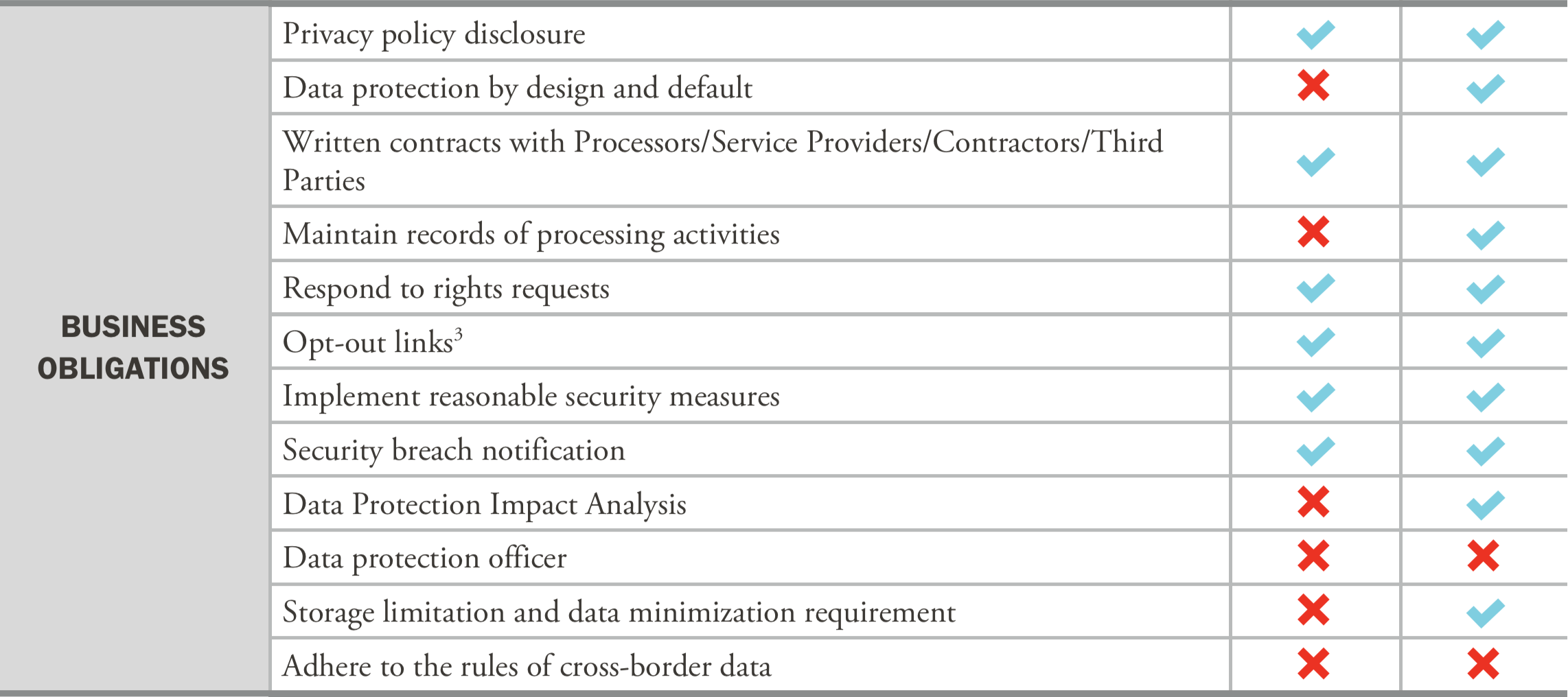
Passed on November 4, 2020, Proposition 24—now known as the California Privacy Rights Act (CPRA)—amends and bolsters the existing CCPA. The CPRA, which can be thought of as CCPA 2.0, makes data minimization a must for any business that does business in California, collects consumer data, and satisfies one of the following: has over $25m in annual revenue; makes more than half of its revenue from the sale of consumer data; or processes the personal information of more than 100,000 California residents or households.

The CCPA has been enforced since July 1, 2020, and enforcement of the CPRA is set to begin in July of 2023; however, there is a “look back” period that begins on January 1, 2022. Any data collected after this date will be subject to the CPRA, so if business leaders are not doing so already, they should prepare for the new obligations.

California Consumer Privacy Act (CCPA) vs. California Privacy Rights Act (CPRA)
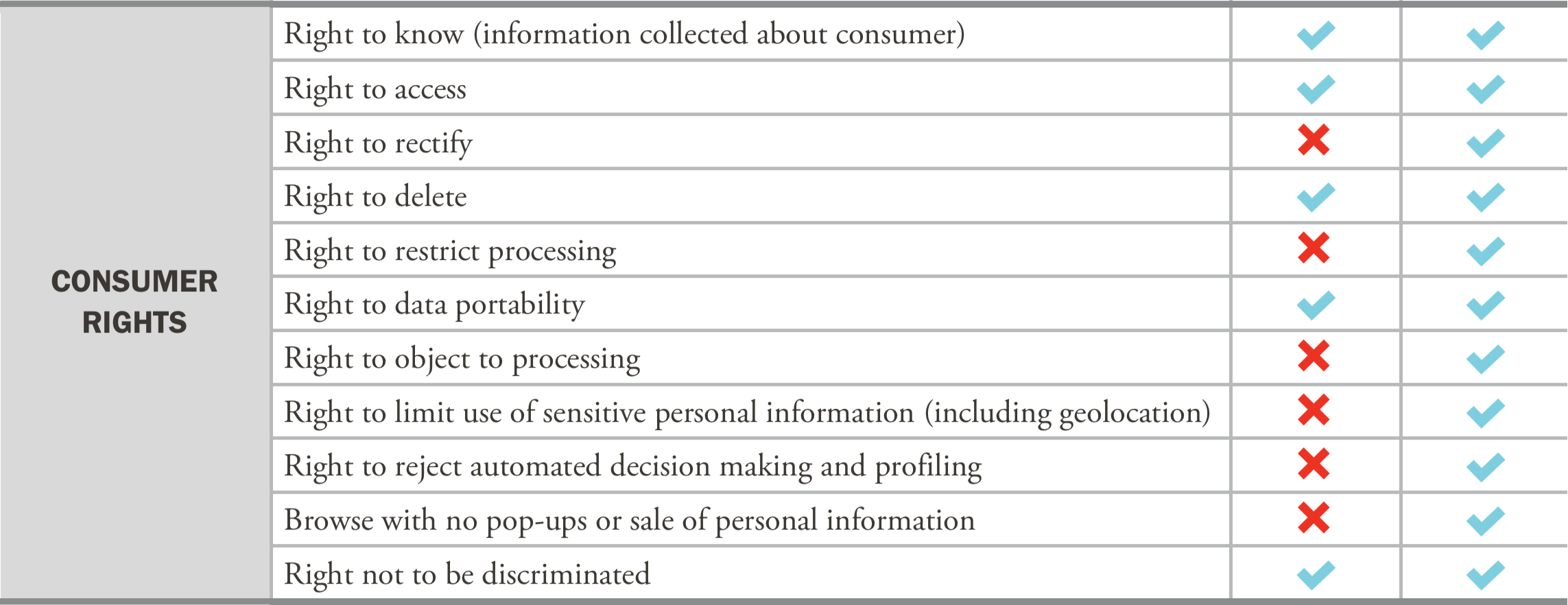
California Consumer Privacy Act (CCPA) v. California Privacy Rights Act (CPRA)
1. B2B and employee information exempted until Jan 1, 2022; 2. B2B and employee information exempted until Jan 1, 2023.

With a new category for “sensitive personal information,” data minimization is vital

Already a core component of the GDPR, data minimization is set to become an important part of the CPRA. According to Section 1798.100(c), the CPRA prevents businesses from collecting more personal information than is “reasonably necessary and proportionate to achieve the purposes for which the personal information was collected or processed.” Likewise, businesses are not to retain such personal information for any longer than is reasonably necessary [Section 1798.100(a)(3)].

The CPRA creates a new category for “sensitive personal information.” This includes social security numbers, driver’s license numbers, precise geolocation data, race, ethnicity, religion, sexual orientation, union membership, philosophical beliefs, genetic data, biometrics, and other health information. This is an extremely broad definition, making corporate data minimization (and data mapping) more important than ever.

The corporate liability for data breaches expands

Under the CPRA, data breaches will be particularly painful for companies that see their customers’ personal information compromised. The CPRA expands the existing law, allowing customers to bring legal cases against a company if their email address, password, or any other personal information is compromised during a breach.

California Consumer Privacy Act (CCPA) v. California Privacy Rights Act (CPRA) 33. The CPRA expands the CCPA’s “Right to Opt-Out” to include not only the sale, but also the sharing of personal information. Businesses that share personal data are “covered businesses,” regardless of whether these businesses make money from this sharing.

The creation of a new watchdog group

Perhaps the most obvious new provision of the CPRA is the creation of a new government agency tasked with handling compliance and enforcing the law. This California Privacy Protection Agency (CPPA) will be comprised of a five-member board, which will be announced later this year. Additionally, there will be a Chief Privacy Auditor who will be responsible for auditing businesses and liaising with European data protection agencies. Working on a three-pronged front, the agency will be tasked with additional rule-making, enforcement of the law, and some education initiatives. In regard to the education component, the agency will periodically allocate some of its annual budget to educating consumers and businesses about CPRA compliance.

We can expect to see more audits under the CPRA

If an organization processes enough personal information to be deemed a significant risk to consumer privacy or security, the aforementioned agency and the Chief Privacy Auditor will conduct an annual cybersecurity audit of the organization. Additionally, all high-risk organizations will be mandated to submit regular risk assessments to the agency as well.

California Consumer Privacy Act (CCPA) v. California Privacy Rights Act (CPRA) 4

With new provisions for automated decision-making technologies, consumer rights are bolstered

Under the CPRA, for the first time, consumers can opt-out of automated decision-making technologies. Consumers can inquire about the nature of the AI-based models your organization is using, as well as how their personal information is being used in such models. If any consumers object to their inclusion in these models, organizations must remove these customers’ data.

Consumers have more ways to restrict corporate data processing

Whereas the CCPA currently requires businesses to include a “Do not sell my information” link, the CPRA takes things a step further, mandating a “Do not sell or share my personal information” link, as well as a “Limit the use of my sensitive personal information” link.

The inclusion of “sharing” is an important modification of the CCPA. Under the CPRA, now covered businesses are responsible for not only the selling of consumer data, but also the sharing of such data. This includes any sharing of consumer data “to a third party for cross-context behavioral advertising, whether or not for monetary or other valuable consideration.” [Section 1798.100(a)(3)]

California Consumer Privacy Act (CCPA) v. California Privacy Rights Act (CPRA) 2*Charts from Frost, Brown, Todd LLC

How best to prepare for the CPRA

If you’re already in compliance with the GDPR, you likely won’t have too much to worry about when the new regulatory agency begins enforcing the CPRA in July 2023. That said, the “look back” period is less than a year away, so it’s important to review your CCPA compliance and, if necessary, revamp your processes to meet the new requirements of the CPRA. Below are some suggested steps to take to ensure that your business will be ready.

1. Cut out all superfluous data collection. Much like the GDPR, the main goal of the CPRA is to ensure that organizations do not collect any more customer data than they need. As a best practice, be sure to only collect information on your customers that you absolutely need; make sure you only collect that data for the purpose in which you need it, and don’t keep any of this data for any longer than necessary.

2. Create a data inventory. Through the creation of a data inventory, you can maintain a handle on your data at all times. With a data inventory, you’ll know exactly what personal information has been collected and, importantly, why it’s been collected.

A data inventory will also help you account for retention periods—how long is the data being collected?—as well as the involvement of any third-party recipients—is the data being shared with any other organizations? To be sure, the creation of a data inventory is a crucial step in CPRA compliance, as it helps with audits and subjects’ access requests. It also helps you know exactly which applications and systems the consumer data is on, as well as whether these apps and systems are internal or external.

3. Track the trajectory of your collected data. Before the CPRA comes into effect, be sure to have your data flows in order. With data maps and data flow diagrams, you can effectively track the trajectory of your data. As mentioned earlier, companies need to ensure they are keeping track of any data that qualifies as “sensitive personal information” under the CPRA’s new definition.

Conclusion

Overall, the CPRA expands upon the CCPA, as it bolsters consumers’ rights; accounts for new algorithmic decision-making technologies, and takes a more comprehensive view of what qualifies as “sensitive personal information.” It also creates a new regulatory agency and expands the corporate liabilities for data breaches. To put it simply, if corporations are not already taking consumer data privacy seriously, they need to start. Although the law passed earlier in the year, it will not be enforced until January 2023. Nevertheless, we’ll keep you up to date on any additional changes as they come along.

John Donegan

John Donegan

Enterprise Analyst, ManageEngine

Want to read<br>this article on the go?

Want to read
this article on the go?

Do it on the ManageEngine
Insights app.

Subscribe to data breaches

Thanks for subscribing to ManageEngine Insights. If you do not receive our welcome email, please check your SPAM folder.