
Published on November 27, 2025 | 6 min

Ransomware attacks have reached a new level of sophistication in 2025, with cybercriminals employing artificial intelligence (AI) to enhance their strategies. Traditional defense mechanisms are no longer enough to fend off these advanced threats. Organizations must adapt by leveraging AI and automation to stay one step ahead. In this blog, we’ll explore how ransomware has evolved, the role of AI and automation in defense, and practical ways to outsmart these threats.

The 2025 ransomware landscape  

Ransomware continues to be one of the most significant cybersecurity threats in 2025, with cybercriminals increasingly relying on AI to enhance their tactics. In the US, ransomware attacks are becoming more sophisticated, leveraging AI to avoid traditional defenses and increase the success rate of breaches.

Recent high-profile attacks on US organizations—including hospitals, local governments, and financial institutions—highlight the devastating impact of AI-enhanced ransomware. Cybercriminal groups are now using AI to automate their attacks, refine their methods, and target even the most secure systems. For example, in 2025, AI-driven ransomware groups have been able to bypass traditional security measures like firewalls and endpoint protections by analyzing network traffic in real time, identifying vulnerabilities, and launching attacks faster than ever before.

These attacks aren’t just a risk to data integrity—they can cause massive disruptions to daily operations, leading to financial losses, reputational damage, and legal consequences. The combination of AI and ransomware has made it more critical than ever for US organizations to adopt robust, AI-powered defense strategies.

How automation can turn the tables 

While threat actors continue to weaponize automation in their ransomware campaigns, IT and security teams can use the same strategy to build faster, smarter defenses. By automating key security processes—from patching to response workflows—organizations can minimize vulnerabilities, shorten incident response times, and reduce the overall impact of attacks.

Automate patch management before it’s too late

One of the most common ransomware entry points is unpatched software. Automating your patch management processes ensures that known vulnerabilities are closed before they can be exploited. Rather than relying on manual updates, automated systems scan for missing patches, apply them across operating systems and third-party apps, and verify deployment—all on a consistent schedule.

Use AI to detect threats in real time  

Automation combined with AI allows for faster, more accurate threat detection. Modern endpoint tools can recognize unusual file behavior—such as mass encryption or lateral movement—and alert teams before ransomware spreads. Some solutions even use behavioral analysis to isolate threats automatically, reducing the burden on human analysts during critical moments.

Ransomware detection and response in real time  

Automated ransomware detection systems can identify suspicious activity, like mass file encryption or unauthorized privilege escalation, using behavioral analysis and AI. Once a threat is detected, automation allows you to contain it quickly—isolating endpoints, revoking access, and launching predefined incident response workflows before human intervention is even needed.  

Rely on automated, resilient backups  

Backups remain one of the most reliable ways to recover after an attack. But backups only help if they’re recent, secure, and accessible. Automating data backup and recovery ensures backups are taken on schedule, stored in protected formats, and regularly tested—reducing downtime and helping you bounce back without paying ransom.  

Proactive threat monitoring and policy enforcement  

Security shouldn’t stop at response. Continuous, automated threat monitoring enables real-time visibility into unusual access patterns, login anomalies, and lateral movement—helping organizations catch potential threats before they escalate. It also supports consistent enforcement of critical policies—like privilege access, multi-factor authentication (MFA), and data loss prevention (DLP)—particularly in complex or distributed IT environments.

AI-driven defense strategies  

To effectively combat AI-driven ransomware, organizations should adopt several AI-powered defense strategies. These not only help against financially motivated attackers but also prepare businesses for ideologically driven threats, such as those posed by hacktivists.

1. Implement Zero Trust architecture  

Zero Trust security models operate assuming that every request for access should be verified, regardless of whether the request came from inside or outside the network. This makes it much harder for attackers to gain a foothold—even if they manage to bypass the initial layers of defense—as they are continuously scrutinized.

2. Use AI for threat detection  

AI can be used to identify anomalous behavior that might signal the onset of a ransomware attack. By analyzing network traffic, user behavior, and system interactions, AI can detect deviations from the norm in real time and raise alarms before an attack escalates. This early detection can help IT teams take swift action, preventing further damage.

3. Automate incident response  

When a ransomware attack does occur, time is of the essence. Automated incident response systems can immediately isolate infected devices, block malicious traffic, and initiate backup restoration processes—all without the need for human intervention. This rapid response can significantly reduce the damage caused by the attack.

4. Ensure regular updates and patching  

AI-driven tools can continuously monitor software and systems for vulnerabilities, automatically patching them as soon as updates are available. This proactive approach ensures that attackers cannot exploit known vulnerabilities.

5. Support employee training and awareness  

While AI and automation are critical, human error remains one of the biggest security risks. Weak passwords, in particular, are a common entry point for ransomware. Poor password practices continue to undermine even the most advanced defenses. Regular training on phishing awareness and strong password habits—combined with automated tools that flag suspicious activity—can greatly reduce the chance of a successful attack.

The CIO’s role in leading AI-powered cybersecurity 

In today’s threat landscape, the Chief Information Officer (CIO) plays a pivotal role in shaping an organization’s AI-driven cybersecurity strategy. Beyond overseeing technology investments, the CIO must lead a cultural transformation—shifting cybersecurity from a siloed IT concern to a shared business imperative. 

1. Champion cybersecurity as a business priority  

To embed security into the fabric of the organization, CIOs must position it as essential to business continuity and innovation—not just a compliance checkbox. This involves aligning cybersecurity initiatives with core business goals and ensuring the executive team understands the risks and the ROI of proactive defense. A recent survey highlights that 41% of CIOs now identify their role as primarily strategic, emphasizing the integration of AI into business strategies.

2. Drive cross-departmental collaboration  

CIOs can break down silos by fostering collaboration between IT, HR, legal, compliance, and operations teams. When security becomes everyone’s responsibility, organizations are more likely to adopt secure behaviors and support risk mitigation strategies across departments.

3. Promote a security-first culture  

Establishing a security mindset starts with awareness. CIOs should sponsor regular employee training, phishing simulations, and incident response exercises. Communicating wins, sharing lessons from incidents, and rewarding secure behavior help reinforce positive habits and accountability.

4. Set the tone at the top  

CIOs need to lead by example and ensure cyber risks are part of strategic board discussions. By maintaining transparency around threats, vulnerabilities, and response readiness, CIOs build organizational trust and create a culture where cybersecurity is taken seriously from the top down.

The bottom line: Stay ahead with automation and AI

Ransomware continues to evolve, but so do the tools and strategies to counter it. By integrating AI and automation into your cybersecurity strategy, you can dramatically enhance your defenses and reduce the likelihood of a successful attack. Organizations that proactively adopt these technologies will be in a much stronger position to defend against the increasingly sophisticated threats of 2025.

Ransomware may be a reoccurring threat, but with the right combination of AI-driven detection, automated response, and employee awareness, you can outsmart the attackers before they even have a chance to strike.  

Dillon Fuller

Dillon Fuller

Contributor, ManageEngine

Want to read<br>this article on the go?

Want to read
this article on the go?

Do it on the ManageEngine
Insights app.

Published on July 16, 2025 | 5 min

According to Chainalysis, a blockchain analytics firm that tracks illicit activity, the amount of ransomware payments decreased by roughly 35% in 2024. In the prior year, ransomware entities extorted $1.25 billion from victims; however, in 2024, that number dropped to $813.5 million.

The steep decline in payouts can be attributed to successful international law enforcement efforts, sanctions against cryptocurrency tumblers, and victims’ increased reluctance to pay. That said, attacks are still rampant in the first half of 2025.

The ransomware ecosystem in 2025

Given the inherently shadowy nature of the ransomware landscape, aggregating the data is an imperfect science. Through its cyber threat intelligence division, Chainalysis combs the blockchain for financial signatures of bad actors, monitors crypto mixing activities, and tracks data leak sites.

Comparitech, a U.K.-based research firm, also tracks the ransomware landscape by analyzing leak sites and corresponding directly with targets. In the first six months of 2025, Comparitech found that there have been 3,627 ransomware attacks—a 47% increase from the first two quarters of 2024. Of these 3,627 attacks, Comparitech was able to confirm 445 successful attacks and over 17 million breached records.

Law enforcement activity has fragmented the ransomware landscape

In 2024, there were several high-profile, successful law enforcement operations that drastically changed the ransomware ecosystem. Operation Cronos, a joint venture between the U.K.’s National Crime Agency and the FBI, disrupted LockBit RaaS in February 2024, resulting in an 80% decrease in LockBit profits and a splintering of LockBit affiliates.

Three months later, in May 2024, a multinational initiative, Operation Endgame, successfully dismantled BlackCat/ALPHV, further disrupting the ransomware ecosystem. Speaking to Chainalysis, Lizzie Cookson, a senior director of incident response at the ransomware incident response firm Coveware, directly attributes the current fragmentation to Operations Cronos and Endgame.

“The market never returned to the previous status quo following the collapse of LockBit and BlackCat/ALPHV,” says Cookson. “We saw a rise in lone actors, but we did not see any groups swiftly absorb their market share, as we had seen happen after prior high-profile takedowns and closures. The current ransomware ecosystem is infused with a lot of newcomers who tend to focus efforts on the small-to-mid-size markets, which in turn are associated with more modest ransom demands.”

Additionally, in the wake of these successful enforcement efforts, bad actors are now increasingly operating multiple strains of ransomware simultaneously—so as not to put all their eggs in one basket.

The number of data leak sites has doubled

New data leak sites—websites where criminals disclose and sell stolen data—have proliferated. In an interview with Safe Mode podcast host Greg Otto, Jackie Burns Koven, the cyber threat intelligence leader at Chainalysis, explains, “The number of leak sites doubled last year. You know, that’s intentional, right? Data leak sites are meant for advertising. They’re being used by threat actors to show their virility and to twist the knife.”

According to Allan Liska, a threat intelligence analyst at Recorded Future, there were 56 new data leak sites in 2024, which is more than double the number that existed a year prior. Of course, given that criminals are inherently untrustworthy, these bad actors could be overstating the number of victims in an effort to market their wares.

Ransomware burnout is resulting in lower payouts

Victims understand that there is never a guarantee of data recovery from these criminals; this is factoring into victims’ calculus and resulting in fewer—and lower—ransom payments. As Burns Koven says, “[Victims] may ultimately determine that a decryption tool is their best option and negotiate to reduce the final payment, but more often, they find that restoring from recent backups is the faster and more cost-effective path.”

In addition to monitoring ransomware groups’ illicit activity on the blockchain, Burns Koven’s team has corresponded with incident response firms to confirm the findings that victims are, indeed, paying out less money, and less often.

“We’ve spoken with incident response firms in the space to run our data against what they’re seeing—and we’re getting confirmation from those on the front lines in negotiations for payment—that yes, indeed, they are paying less often—not only less often, but less. We’re seeing averages in the low-six figures,” says Burns Koven.

Sanctions against cryptocurrency mixers are causing laundering issues

Although they may have some legitimate, non-criminal uses, cryptocurrency mixers and tumblers are frequently used to disrupt the blockchain analysis process, which helps bad actors obscure the sources of their illicit proceeds.

Mixers and tumblers are a vital part of the ransomware landscape. In fact, many RaaS entities market their built-in mixing capabilities in an effort to lure new affiliates to their ransomware programs. However, government sanctions against mixers and tumblers have led to a decline in mixing activity. As Burns Koven explains, “We did see a decline in mixing activity this year as a ransomware off-ramp, which was pretty surprising. Mixing had become such an essential part of the ransomware ecosystem.”

While sanctions on mixers like Chipmixer and Sinbad are in place, bad actors have a more difficult time laundering their funds. Without knowing which centralized exchanges, cryptocurrency bridges, and mixing services they can trust, some criminals are now opting to hold their cryptocurrency in personal wallets. This is the modern-day equivalent of stuffing cash under a mattress. In a tale as old as time, it appears that many of the criminals in the ransomware ecosystem are distrustful of one another.

Ransomware attackers are accepting lower payments

Given the crackdown on LockBit and BlackCat/ALPHV, we’ve seen new, less experienced players enter the ransomware space. Moreover, the larger entities have either gone underground or have split into smaller entities to hedge their bets.

Burns Koven says, “[Ransomware entities] are finding that there’s security in obscurity. The groups that have really stuck out their necks and had those massive breaches, had those record payments—a lot of them don’t exist anymore. Or they’ve gone underground, be it temporarily.”

Also, the successful attackers are now settling for lower payouts.

“We’re seeing ransomware actors willing to take far, far less than the initial demands with individual victims,” says Burns Koven.

Put simply, ransomware fatigue, improved cyber hygiene, and stronger cybersecurity initiatives have all played a role in the reduction in payments across the board. In 2025, organizations are more likely than ever to use MFA, keep important data backed up, provide employees with phishing education, and have incident response plans in place.

The cyber insurance industry is likely playing a role as well; when insurance companies have stricter security requirements, organizations’ cybersecurity postures improve, which helps in the fight against ransomware attacks.

Key takeaways

We’re seeing a decline in ransomware payments due to a host of issues—successful law enforcement efforts, increased international cooperation, sanctions against mixers and tumblers, ransomware fatigue, and organizations improving their cybersecurity hygiene. This decline in payments is a welcome development; however, whether the trend continues remains to be seen.

Related reading

John Donegan

John Donegan

Enterprise Analyst, ManageEngine

Want to read<br>this article on the go?

Want to read
this article on the go?

Do it on the ManageEngine
Insights app.

Published on October 31, 2024 | 4 min

Initially signed into law back in March 2022, the Cyber Incident Reporting for Critical Infrastructure Act (CIRCIA) requires CISA to develop new reporting requirements for critical infrastructure companies that incur cyberattacks or make ransomware payouts.

Supplementing CIRCIA, in April 2024, the Department of Homeland Security issued a notice for proposed rulemaking, and the subsequent period for public comments ended on July 3, 2024. It was initially supposed to end on June 3, but they pushed it out a month. At any rate, the wheels are in motion.

The notice for proposed rulemaking addressed how exactly CISA would implement CIRCIA, as well as the logistics surrounding covered entities’ reporting and retention of information related to cyber incidents and ransom payments.

Now, CISA intends to publish the final rule in September of 2025, with the law not formally taking effect until 2026; nevertheless, covered entities need to prepare as soon as possible.

Covered entities affected by CIRCIA

In the United States, 85% of all critical infrastructure entities are privately owned; hence, it is important to have an effective public-private partnership between the government and the private sector.

CIRCIA primarily affects 16 different critical infrastructure sectors: chemical; commercial facilities; communications; critical manufacturing; dams; defense industrial bases; emergency communications; energy; financial services; food and agriculture; government facilities; healthcare and public health; information technology; nuclear reactors, materials, and waste; transportation services; water and wastewater systems.

According to CISA’s estimates, over 300,000 entities will be covered by CIRCIA. Many of these entities, including companies in healthcare, energy, and agriculture, will likely be surprised to learn that they are covered by the proposed rules. Thus, the first thing to do is to find out whether your organization is covered by the upcoming law.

CIRCIA’s reporting and retention requirements

Once the requirements do take effect, covered entities have to report all “substantial cyber incidents” to CISA within 72 hours. To be more specific, that is 72 hours after the organization has a “reasonable belief” that an incident has occurred.

If the cyber incident involves a ransomware attack and a payment is made, the organization must report that incident within 24 hours.

Even though covered entities do not technically have to report cyber incidents until 2026, CISA is encouraging covered entities—critical infrastructure organizations of a certain size—to begin reporting today.

As far as what exactly constitutes a “substantial cyber incident,” this could be: (1.) a substantial loss of confidentiality, integrity, or availability of data; (2.) a serious impact on the resiliency of operational systems and processes; (3.) a significant business or industrial disruption; (4.) a ransomware payment or attack; or (5.) unauthorized access to the system facilitated via a third party or supply chain compromise.

Penalties for noncompliance

Failure to comply with CIRCIA will result in extremely harsh criminal and civil penalties.

Any individual who interferes with CISA’s ability to acquire accurate information can incur fines and land in jail for up to five years. If domestic or international terrorism is involved, the potential jail time increases to eight years. Also, if an individual in the organization refuses to comply with a request for information or a subpoena, CISA can then send the case to the Attorney General to levy criminal or civil penalties.

The CIRCIA timetable and other concerns

First of all, the 2022 law stipulates that 18 months after the comment period closes, CISA then has 18 months to finalize the regulations. Given that the comment period ended on July 3, 2024, that puts the approximate start date at January 3, 2026. Assuming no other delays, from that day on, Congress then has 60 days to review the rules before they become effective.

Now, many covered organizations are likely concerned about negative publicity and economic fallout from complying with CIRCIA. CISA is taking steps to address this. The agency promises only to release anonymized and aggregated data. Moreover, all covered organizations can designate their comprised data as being either commercial, financial, or proprietary, and it will be handled accordingly. Additionally, all this information is exempt from FOIA disclosures. Hopefully, this assuages some concerns.

Preparing for these new reporting requirements

Despite CIRCIA not taking effect until early 2026, it is vital that covered organizations take a proactive approach. After confirming that the law does, indeed, apply to your company, it’s important to assess the efficacy of your security tools.

To that end, it is important to be able to show regulators and auditors that your organization has proper cyber hygiene, adequate reporting processes, incident response, and recovery plans. Through the use of data mapping, you can begin to assess which records need to be retained in the event of an incident.

Of course, effective planning will likely involve many different departments. It’s wise to designate a compliance team, including specific personnel to do the actual reporting if there’s a substantial cyber incident.

Unfortunately, given the amount of cyberattacks on American critical infrastructure entities, I expect that CIRCIA will, indeed, be enforced in 2026. If your organization is covered under the law, I’d recommend preparing today.

John Donegan

John Donegan

Enterprise Analyst, ManageEngine

Want to read<br>this article on the go?

Want to read
this article on the go?

Do it on the ManageEngine
Insights app.

Published on September 19, 2024 | 5 min

With over two billion people voting in over 60 countries, 2024 is poised to be one of the most consequential election years in recent memory. Unfortunately, it may also be the year that AI undermines election integrity.

AI poses threats to election security officials in myriad ways. Election officials have to contend with AI-fueled ransomware attacks, AI-powered phishing attempts, and bad actors using AI to overwhelm officials with disingenuous open records requests.

Moreover, in the run-up to the U.S presidential election, we can expect to see more synthetic media disseminating across social networks. We’ve already seen deepfake audio and media used to manipulate voters in the New Hampshire primary. In that particular incident, a political consultant, Steven Kramer, created synthetic robocalls, using Biden’s voice to encourage primary voters to stay away from the polls. In the aftermath of those robocalls, Lingo Telecom, the company that transmitted the calls, paid a $1 million FCC fine. The FCC subsequently banned all robocalls that use synthetic audio, and Kramer faces a bevy of criminal charges.

Although there are many different AI concerns, the spread of AI-powered misinformation and disinformation on social media remains the most serious AI-related threat to election integrity.

Social media is ground zero for misinformation

Given the lack of effective content moderation on social media platforms, bad actors often have little trouble spreading disinformation (false content designed to manipulate elections) and misinformation (false content distributed by social media users without nefarious intent). Complicating matters, AI-powered bots are able to hyper-target certain audiences while effectively disseminating this content far and wide.

As deepfakes become increasingly convincing, it’s naive to think AI-fueled disinformation won’t affect voters this year. Unfortunately, the most prominent social media companies have little interest in flagging such content.

The top social media companies tend to prioritize user engagement above all else; as long as advertisers don’t leave, these companies don’t have much of an incentive to act in society’s best interest. Meta (Facebook and Instagram) has long been been accused of allowing targeted disinformation to spread in the run-up to elections.

As a quick example, earlier this year, a deepfake audio file circulated on Facebook, jeopardizing the integrity of a Slovakian election. Two days before the election, users shared a fake recording, depicting liberal candidate Michal Šimečka and journalist Monika Tódová plotting to rig the election. At the time of the incident, Meta’s manipulated media policy did not account for deepfake audio; however, Meta subsequently vowed to adjust their policy.

Meta has made election ad policy adjustments

In the U.S., Meta blocks all electoral ads during the seven days leading up to elections, and since January 2024, political advertisers must disclose whenever they’ve used AI to manipulate media in political ads on Meta’s platforms.

Meta’s manipulated media policy is well-intentioned; however, it doesn’t address the dissemination of all types of AI-manipulated content. For example, Meta’s manipulated media policy still wouldn’t cover the aforementioned fake conversation between Šimečka and Tódová. That would apparently fall under the purview of Meta’s “coordinated inauthentic behavior” policy.

According to their policy statistics, Meta employees have successfully removed over 200 networks of coordinated inauthentic behavior networks since 2017. If you find Meta’s moderation policies confusing, you’re not alone. Meta’s Oversight Board has called the company’s synthetic media policies “incoherent and confusing,” although Meta has supposedly made policy adjustments.

At the 2024 Munich Security Conference, Meta promised to address the proliferation of deepfake media designed to trick voters. Meta may be able to identify AI-generated images that have been created with Meta AI; however, it remains to be seen how well it can assess other forms of synthetic media flooding their platforms.

David Evan Harris and Lawrence Norden, two scholars from UC-Berkeley and NYU, respectively, are not optimistic about Meta’s efforts to address AI-fueled misinformation initiatives. Harris’ opinion on this matter is particularly valuable, as he was formerly the research manager for responsible AI at Meta.

Of late, Meta has made some good AI policy decisions; for example, earlier this month, Meta joined the steering committee for the Coalition for Content Provenance and Authenticity (C2PA). That said, given Meta’s immense reach and poor track record, a lot of synthetic, election-influencing content is sure to go undetected.

Nevertheless, Meta is not my greatest concern. That dubious distinction belongs to X.

Elon Musk uses X to advance his political interests

After firing his election integrity team last year, Musk wasted no time inserting himself into the election process. He quickly encouraged his followers to vote for Trump and vowed to contribute $45 million a month to a pro-Trump super political action committee: America PAC.

Seemingly unafraid of financial backlash, Musk isn’t afraid to instigate regulators. For example, in 2018, Musk tweeted that he had secured funding to take Tesla private, which resulted in a $40M fraud settlement with the SEC.

As of today, Musk faces at least eleven different legal battles with the U.S. federal government; thus, it should come as no surprise that he’s trying to use his funds (and X) to his political advantage.

Harvard Business School professor David Yoffie explains, “Given the challenges Musk faces and his political predisposition today, he would clearly like to see a Trump administration in office.” Trump and Musk have grown closer in recent months; in fact, Trump has offered Musk a role in his upcoming administration should the ex-president win.

Musk’s proclivity for spreading false election information, his aversion to content moderation related to election integrity, and his use of X to actively promote political candidates of his choice are all cause for concern—and that’s without dwelling on the fact that an immense amount of AI-generated election misinformation already flourishes on X.

There are solutions

Musk and X aside, there are steps that social media platforms can take to ensure that AI-fueled election misinformation doesn’t jeopardize elections. 

Media platforms need to verify all election officials’ accounts, and these platforms should use resources to make sure AI-generated content is labeled accordingly.

While domestic and international threat actors “flood the zone” with disinformation (political operative Steve Bannon uses a different term, of course), it’s important that everyday citizens do the opposite leading up to election day.

Local officials—and everyday citizens—can monitor social media and search platforms, verify election information, and amplify official election content.

As a quick example, everyday citizens can direct voters to the National Association of Secretaries of States’ #TrustedInfo2024 initiative and CISA’s Election Security Rumor vs. Reality website.

To be fair, X and Meta do have policies in place to remove misinformation related to voter registration and methods of voting. As X CEO Linda Yaccarino stated earlier this year, “Every citizen and company has a responsibility to safeguard free and fair elections.”

I agree with Yaccarino. However, considering who owns the leading social media companies, I think we may have to rely more on “citizens” and less on “companies” if we want to keep our election integrity intact.

Related reading

John Donegan

John Donegan

Enterprise Analyst, ManageEngine

Want to read<br>this article on the go?

Want to read
this article on the go?

Do it on the ManageEngine
Insights app.

Published on October 27, 2023 | 4 min

Cyberattacks have become so common that there’s one every 39 seconds.

Sensitive data has always been a prime target of cybercriminals. “During the first quarter of 2023, more than six million data records were exposed worldwide through data breaches,” says a Statista report. Attackers tend to target high-value data such as payment details, PII, healthcare records, authentication credentials, insurance records, and more.

Data breaches are an expensive problem. Based on IBM’s cost of a data breach report, the global average cost of a data breach in 2023 was $4.45 million. The actual cost of a data breach amounts to more than just money lost to ransom, the cost of investigating the breach, or the revenue lost due to business downtime. Additional expenses include fines related to regulatory compliance violations, legal and audit fees, the fall of stock prices for publicly listed companies, and customer retention costs due to reputational damage.

While organizations are doing their best to adopt effective strategies to protect sensitive data, there’s no 100% foolproof cybersecurity system.

More and more organizations are acknowledging the fact that they are far more vulnerable to sophisticated attacks than ever before. The risk to business continuity and increase in the cost of data breaches have forced mature organizations to focus on bringing their cyber risk scores down to acceptable levels and minimizing the impact of a data breach.

Time matters

“Time is the new currency in cybersecurity both for the defenders and the attackers…early detection and fast response can significantly reduce the impact of a breach.”

                                                                                              IBM’s Cost of a Data Breach Report 2023

According to IBM’s Cost of a Data Breach Report 2023, the average data breach life cycle is 322 days—meaning it takes that long for organizations to identify and contain an active breach. This period usually gives attackers enough time to get away with their plan and access sensitive data and client records. The close relationship between response time and a data breach is a critical factor that can define the impact and severity of a data breach on an organization.

Take the case of one of the biggest breaches to date, the Equifax data breach. Hackers exfiltrated sensitive data of more than 148 million consumers—40% of the American population. Equifax had failed to patch a known vulnerability, making it easier for the attackers to enter its system. While the breach was discovered on July 29, 2017, it’s believed that the breach had occurred much earlier, possibly as early as May 2017. But Equifax made the public disclosure only on Sept. 7, more than a month after its discovery. This delay in detection and response gave attackers plenty of time to exfiltrate sensitive data. And this cost the company dearly. Equifax was fined $700 million for the breach. The Equifax data breach is a perfect example of the grave effects of a delayed response time.

In the business world, time is money. The same is true in the case of a data breach. A shorter mean time to detect (MTTD) means less time for cybercriminals to steal or tamper with sensitive data. And a faster response means better chances of controlling the damage caused by the breach. Both these factors can indirectly help reduce the total cost of a data breach. This means every second after a breach starts is pivotal and can directly determine the impact of the breach.

AI and automation can help

The good news is that AI and automation can be helpful in preventing and mitigating data breaches. IBM’s report shows that organizations that used both AI and automation reduced the data breach life cycle by 108 days. In fact, “organizations that deployed security AI and automation extensively saw, on average, nearly $1.8 million lower data breach costs than organizations that didn’t deploy these technologies.”

AI-based solutions can be a powerful instrument to curb data breaches. AI has the power to monitor and analyze large volumes of transactional data to detect fraudulent activities, anomalies, and unusual behavior. The implementation of AI-driven fraud detection systems can help banks save around $10 billion annually according to a study by Juniper Research. Automation, on the other hand, can help reduce data breach detection time and ensure quick incident response.

A survey by Capgemini Research Institute reports that 75% of cybersecurity executives use AI in network security, and another survey by BlackBerry found that “the majority (82%) of IT decision-makers plan to invest in AI-driven cybersecurity in the next two years and almost half (48%) plan to invest before the end of 2023.”

Being prepared

Preventing a breach might be implausible, but how an organization navigates its response to a breach is significant. Conducting regular security audits to ensure security measures are up to date, investing in a swift breach response system, and providing employees security awareness training can help organizations be better prepared. Additionally, investing in the right data security tools, leveraging AI and automation, and implementing Zero Trust principles can help reduce the time taken to detect and respond to a data breach, or even keep it from happening in the first place.

Breaches can be an expensive problem. However, with the right mindset, tools, and technology, IT teams can respond quickly to contain a breach and minimize its damaging consequences.

Athira Jayakumar

Athira Jayakumar

Enterprise Analyst, ManageEngine

Want to read<br>this article on the go?

Want to read
this article on the go?

Do it on the ManageEngine
Insights app.

Published on July 14, 2023 | 4 min

While we have largely accepted the fact that cybersecurity is becoming a never-ending war, there often comes along some particularly nasty attacks that leave us reeling in their wake. One such recent attack is the ransomware attack on widely used file transfer software MOVEit. Considered to be one of the biggest cyberattacks of the year, the ransomware attack has affected dozens of major organizations, such as British Airways, the BBC, PwC, EY, Siemens, and Schneider Electric.

The extortionist ransomware group, Clop, has claimed responsibility for carrying out this attack, which exploited a zero-day vulnerability in MOVEit. What makes this attack different is the (intended) impact it had on MOVEit’s supply chain, affecting other organizations that use the software.

Did you know?
Zero day is a term used to describe newly discovered security vulnerabilities in software. These are referred to as zero-day vulnerabilities, because the vendor has zero days to work on a security patch or an update to fix the issue.

The MOVEit attack suggests more cybercriminals are recognizing that if they can compromise a trusted vendor, they can topple all the vendor’s customers. The increase in such supply chain ransomware attacks further fuels concerns that cybercriminals may have struck a simple yet lucrative business model that furthers the extent of the damage they can inflict, thereby greatly influencing their bargaining power.

You’re only as safe as your weakest link

Supply chain attacks are known to be far more severe than traditional cyberattacks that target a single organization. While organizations can be hyper vigilant about their own perimeter security, gaining visibility and control of their entire vendor network poses a much greater challenge. Add subcontractors that vendors engage into the mix, and you have an even murkier landscape that is prone to multiple vulnerabilities and cyber risks. As enterprises grow increasingly reliant on third-party vendors, the risks, too, grow multifold. Supply chain attacks are lethal because they violate the chain of trust, bypass typical defensive mechanisms, and cause crippling damage to their victims.

Once in motion, supply chain attacks can be extremely challenging to mitigate, as they can go on to affect secondary-level organizations, too. This is exactly what happened with the MOVEit attack. The attack on MOVEit allowed Clop to compromise MOVEit’s customer, Zellis, which in turn gave the ransomware group access to Zellis’ customers, including British Airways, the BBC, and Boots. Similar patterns were also recorded in the December 2020 SolarWinds attack.

Future of cybersecurity

An alarming point to consider in this latest ransomware attack is that the Clop group has demanded payment to not release the stolen data rather than to decrypt the affected systems. Attackers are more frequently using tactics like this to raise the pressure on victims, making their jobs easier while victims struggle to retain control over their sensitive data.

If you’ve been following predictions by industry analysts, you probably saw this attack trend coming. We need to be prepared for more attacks like these on file transfer applications and document management programs in the future, as cyber criminals have realized the value of such data-rich tools. The main question that remains then is how do you effectively assess risks and implement suitable controls for your supply chain?

One of the major problems in securing the supply chain is ascertaining where the organizational responsibility lies. Different departments work with different aspects of the supply chain, but there is no one person or team who is accountable for the whole thing.

Some important questions to consider are, how are security clauses in contracts with vendors and suppliers enforced? Who is responsible for ensuring that subcontractors also have appropriate levels of security and compliance, and how is this enforced? Does your organization’s incident response plan include risks analysis, threat detection, and mitigation for the entire supply chain? What happens to the existing vendors and subcontractors who may not exhibit required levels of security and compliance?

While these may seem daunting and overwhelming to tackle all at once, taking a step-by-step approach will enable you to gradually ensure 360° security for your organization.

1. Assess your organizational structure: There may be hundreds of third-party vendors that your organization works with, so be prepared for this step to take time. You may also need to assemble a team to oversee this. This team will need to hold all levels of suppliers accountable while ensuring the overall security of the organizational supply chain.

2. Verify supply chain security: Review and monitor the key contracts in place and ensure that the adequate security practices are being adhered to throughout the life cycle of the contract.

3. Validate data protection and stakeholder communication guidelines: Ensure that all best practices and process incidents, breach notifications, and industry reporting requirements are being met.

4. Foster trust in your supply chain partners: Keep your vendors and subcontractors constantly informed about the importance of maintaining clear and prompt channels of communication. Lead by example and keep your vendors in the loop about your internal security best practices.

Priyanka Roy

Priyanka Roy

Senior Enterprise Evangelist, ManageEngine

Want to read<br>this article on the go?

Want to read
this article on the go?

Do it on the ManageEngine
Insights app.

IT Security

Assessing the cybersecurity and emerging tech landscape with Graham Cluley

Published on January 12, 2022

Enterprise analyst John Donegan speaks with cybersecurity veteran Graham Cluley, whose award-winning podcast “Smashing Security” has over 7 million downloads. Cluley discusses security threats, emerging technologies, Big Tech overreach, and contemporary media effects.

Agenda

    • Cybersecurity threats
    • Ransomware and cyber insurance
    • Synthetic media
    • The data brokerage industry
    • Regulation and algorithmic decision-making
    • Media effects
    • IoT devices and data collection
    • Deepfake technology and new threats
    • The migration to remote work
LISTEN NOW
John Donegan

John Donegan

Enterprise Analyst, ManageEngine

Listen without limits—<br>stream this podcast on <br>the ManageEngine Insights app.

Listen without limits—
stream this podcast on
the ManageEngine Insights app.

Published on December 03, 2021 | 4 min

Most asset classes within the insurance industry have data going back for centuries; however, the cyber insurance industry is still in its infancy. Due to an increase in ransomware attacks, sophisticated hackers, and costly data breaches, many cyber insurance providers are becoming afraid to take on more business.

According to a recent Reuters’ article, London-based underwriting behemoth Lloyd’s of London has been discouraging its 100-member syndicate from taking on cyber insurance business in 2022. Seeing as Lloyd’s of London represents nearly one fifth of the entire global cyber insurance market, this is absolutely huge news.

Attacks are increasing in the current remote work environment

The pandemic resulted in a shift to remote work and an increase in cyber risk for organizations. In a recent study, 83% of IT professionals said they believed remote workers posed an increased cybersecurity risk; and sure enough, cyberattacks increased over the last year.

According to a recent threatscape report, cyberattacks were up 17% in Q1 2021, compared to the same quarter in 2020. Not only are organizations more vulnerable, but attackers are getting more sophisticated. All of these factors have caused insurance providers to become nervous.

Premiums, deductibles, and coinsurance are all on the rise

Insurance premiums are climbing, as are loss ratios. In the insurance world, a loss ratio is the ratio of losses paid out to the premiums earned, usually expressed as a percentage.

In August, American International Group (AIG), the second biggest underwriter of standalone cyber insurance policies in the United States, raised their premiums 40% globally, with the largest premium hikes in North America.

Limits are decreasing

While cyber insurers are charging more than ever for premiums, they’re also lowering the amounts they’re willing to pay out. According to Caspar Stops, head of cyber and technology at Optio Insurance, limits have come down by nearly half; companies that were paying out £10 million last year are now only paying out £5 million this year.

On an earnings call with analysts, AIG CEO Peter Zaffino said, “We continue to carefully reduce cyber limits and are obtaining tighter terms and conditions to address increasing cyber loss trends, the rising threat associated with ransomware, and the systemic nature of cyber risk generally.” Coinsurance—splitting the risk between customers and insurance providers—is also becoming popular.

Additionally, insurers are issuing new exclusion clauses. Just last week, Lloyd’s of London underwriting director Patrick Davidson issued new cyber war and cyber operation exclusion clauses, stating that the insurance group will no longer cover acts of cyber war or “nation state retaliation attacks.” Of course, whether an attack can be attributed to a nation state can be a rather gray area, leaving Lloyd’s with a great deal of latitude. To put it mildly, this is a rather ominous development, and it speaks to the extent that cyber insurance providers are becoming skittish.

Bad actors are getting more savvy

Ransomware groups are moving away from scattergun attacks, and they’re increasingly engaged in targeted attacks.

Historically, these groups preferred to target healthcare companies and municipalities, given that these organizations often have understaffed IT departments; however, these targets also usually have less money to pay out. As of late, ransomware groups have shifted their attention to manufacturing and other industries.

These bad actors usually have a good idea as to the amount that any given target company can pay. Savvy cyber criminals are likely conducting social engineering attacks to ascertain which companies are insured. After all, insured companies may be particularly attractive targets to bad actors, as these companies are presumably more likely to pay a ransom. As a caveat, this isn’t a reason to avoid cyber insurance.

What’s on the horizon

For years, cyber insurance companies enjoyed rising premiums. In fact, according to the National Association of Insurance Commissioners, premiums have doubled since 2015, and insurers fetched $3.15 billion in premiums in 2020 alone. However, the times are changing.

The near future appears to be filled with more risk assessment processes, lower payouts, and higher premiums. It’s likely that we will see a pullback and restriction of coverage, followed by a restructuring of premiums. The current panic that we’re seeing from the Lloyd’s of London underwriting team, and others, will eventually fade.

It’s vital to have a robust security infrastructure in place

Cyber insurers are asking more and more questions before issuing insurance. Many providers require their clients to have certain measures in place, such as mandatory infosec training; a company-wide password policy; two-factor authentication at all critical access points; frequent data backups; strong patch management, and robust physical security. Some insurers will even require that organizations have adequate network monitoring software in place before they provide coverage.

So, with cyber insurance underwriting standards changing rapidly, it’s more important than ever to have strong cyber hygiene and appropriate IT security infrastructure in place.

John Donegan

John Donegan

Enterprise Analyst, ManageEngine

Want to read<br>this article on the go?

Want to read
this article on the go?

Do it on the ManageEngine
Insights app.

Published on August 16, 2021 | 7 min

From a public policy perspective, the proper response to a ransomware attack is anything but straightforward. On one hand, this brazen criminal act is abhorrent and worthy of the most aggressive response possible. On the other hand, banning private companies from paying ransoms would likely exacerbate an already nightmarish situation.

From both sides of the aisle there have been calls for mandatory reporting of ransomware attacks, as well as penalties for companies that decide to pay up. In this article, we analyze the merits and downsides of proposed ransomware-reporting legislation, as well as potential solutions.

Proposed state legislation

North Carolina—In a 114-0 vote, North Carolina’s House of Representatives overwhelmingly passed a no-ransom bill in May. This bill, which advanced to a state Senate committee, would ban all state and local government agencies from paying ransoms. Representative Jake Johnson (R-NC)’s bill seeks $15 million to help these government entities bolster their cybersecurity infrastructure.

New York—Sponsored by Sen. Phil Boyle (R-NY), Senate Bill S6154 establishes a grant program, which would give local government agencies $5 million to bolster their security, and it also would prevent taxpayer funds from being used to pay ransom.

Another proposed bill, S6806A, not only would ban ransom payments by government agencies, but it also would prevent businesses and healthcare entities from paying ransoms as well. Without a doubt, this is the most sweeping legislature proposed to date. Even the bill’s sponsor, Sen. Diane Savino (D-NY), seems to think this bill might be taking things too far. Savino admits,

“I understand this is probably not the way to go about it. How do we tell private businesses what to do? But we need to do something. If we continue to just stand back and do nothing, that’s not a solution.”

It’s not every day that we hear the primary bill sponsor admit that it’s flawed.

Pennsylvania—Sen. Kristin Phillips-Hill (R-PA) has sponsored a similar no-ransom bill, which passed a Senate Judiciary committee and currently awaits a decision from the full state Senate. Philips-Hill’s bill prohibits all taxpayer money from being used to pay ransoms, although there is a clause that allows the governor to make an exception in the case of an emergency.

Given that many ransomware attackers threaten to leak corporate data if they do not receive payment, Phillips-Hill has framed the issue as one affecting the data privacy of many everyday Pennsylvanians. As Phillips-Hill states,

“Our citizens’ personal information is on the line. We have to do everything we can to protect them.”

According to Phillips-Hill’s memorandum seeking bill co-sponsors, “In 2019 at least 966 U.S. government agencies, educational establishments, and healthcare providers experienced ransomware attacks at a potential cost in excess of $7.5 billion.” Phillips-Hill sees her state-level bill as a way to take the target off Pennsylvania’s back.

Although this strategy is well-intentioned, it does beg the question: Do ransomware attackers really care which states have laws against paying ransoms? It seems unlikely that these bad actors are that discerning.

Proposed federal legislation

Cyber Incident Notification Act of 2021—Alongside Sen. Marco Rubio (R-FL) and Sen. Susan Collins (R-ME), Sen. Mark Warner (D-VA) has put forth the Cyber Incident Notification Act of 2021. As Warner says in a recent Axios interview,

“As we have this debate about ransomware, let’s at least make the payments more transparent.”

Warner’s bill proposes mandatory reporting for federal contractors, government agencies, and “critical infrastructure owners and operators,” such as businesses involved in energy, manufacturing, and finance. Warner has made it clear that reporting will be kept confidential, and he’s vowed to give businesses immunity—as long as they report. As an aside, it is technically illegal to pay ransoms to entities that have been sanctioned by the U.S. government, and this likely happens quite frequently. As Warner explains,

“Congress needs to act. What I’m working on now—and this topic is bipartisan…we are working on a bill that would require mandatory reporting if you are a critical infrastructure company or a federal government contractor or the government itself. There would be mandatory reporting to the government so law enforcement and our private sector partners—the cloud providers, the cyber defense firms—can all hear mid-stream.”

It remains to be seen how Warner’s bill will be received, but it does seem to be a step in the right direction.

Study on Cyber-Attack Response Options Act—Another bipartisan bill has been proposed by Sen. Sheldon Whitehouse (D-RI) and Sen. Steve Daines (R-MT). This bill, tentatively titled the Study on Cyber-Attack Response Options Act, would allow private companies to retaliate against bad actors. As it stands now, only the US government has the legal authority to go on the offensive against ransomware criminals; however, Whitehouse and Daines wonder if this should be changed.

If it were up to them, they’d like to see the Department of Homeland Security conduct a study to determine whether or not private entities should be allowed to retaliate against cybercriminals.

Whitehouse and Daines are asking DHS to recommend 1. Which federal agency or agencies may authorize proportional actions by private entities. 2. What level of certainty regarding the identity of the attacker is needed before such actions would be authorized. 3. Which entities would be allowed to take such actions and under what circumstances. 4. What actions would be permissible; and 5. What safeguards should be in place. In a recent press release, Daines writes,

“The United States is home to some of the best and brightest technological minds in the world—we should be doing all we can to support them, not hold them back. The federal government should do more to empower the private sector to directly counter cyber threats from across the globe rather than tie their hands.”

Aside from mandatory reporting legislation and potential retaliation clauses, there is an additional question as to whether or not ransomware payments should be banned altogether.

Should the U.S. make it illegal to pay ransoms?

It is tempting to ban ransom payments altogether. After all, if companies were not allowed to pay out ransoms, there would be no incentive for bad actors to conduct ransomware attacks. However, this would likely make things worse. For many companies, it is far cheaper to pay the ransom payment than to rebuild their security networks. Of course, the type of company is significant; if a water treatment center or energy facility is breached, civilians could be without clean water or power for long periods of time. Ransomware is a serious issue to be sure—and one that the Biden administration is actively focused on.

As we learned from the Colonial Pipeline incident, there are times when it does make sense to pay the ransom, lest millions of Americans are stuck without access to gas. In that case, Colonial voluntarily reported the ransomware attack, and the Department of Justice and FBI were able to recover some of the ransom; in fact, they recovered 63.7 of the 75 Bitcoins that the Colonial CEO paid out.

In this instance, the encryption tools handed over did not work, so one could argue that paying the ransomware was not the right thing to do. However, alerting the authorities did pan out, and that is because they followed the money.

In the case of an attack, report the incident and follow the money

Other than Monero, which markets itself as a truly private, untraceable cryptocurrency, the majority of cyrptocurrencies can be tracked down. Simone Maini, the CEO of Elliptic—the London-based blockchain analysis software provider that tracked down the DarkSide privacy wallet—explains how her company helps find ransomware attackers. Speaking to Vorawan Wangpanitkul during a decentralized finance summit, Maini says,

“We estimate that 15% of all money laundering in Bitcoin involves the use of privacy wallets. Criminals will also try to convert transparent cryptocurrencies, like Bitcoin, into Monero—to help break the funds trail. And frequently that will involve exchanging funds in unregulated exchanges, in countries that have little or no regulation in place around crypto.”

Bad actors ask for the ransom payments in a transparent cryptocurrency, e.g., Bitcoin, and then they engage in “chain hopping,” which is essentially moving the currency from one blockchain to another, in an attempt to break the chain of traceability. Ideally, ransomware attackers want to receive Monero. As Maini says,

“In particular, we see this happening with ransomware attackers. They’ll rely on Monero, and the combination of unregulated exchanges, as part of their money laundering techniques.”

So, it seems that part of the ransomware solution may be to establish some international norms when it comes to ransomware response and cyrptocurrency regulation.

Key Takeaways

The U.S. government should continue to work with the private sector to track down ransom payments and identify attackers. To further this effort, companies should voluntarily report ransomware attacks. That said, not all companies should be mandated to report such attacks; only critical infrastructure companies and government agencies should be forced to report them. And last but not least, ransomware payments should not be made illegal.

Featured image courtesy of Sebastian Pichler/Unsplash

John Donegan

John Donegan

Enterprise Analyst, ManageEngine

Want to read<br>this article on the go?

Want to read
this article on the go?

Do it on the ManageEngine
Insights app.

Published on May 18, 2021 | 4 min

In the wake of the ransomware attack on Colonial Pipeline, President Biden issued an executive order and called upon the U.S. Senate to quickly confirm his nominees for National Cyber Director and Director of the Cybersecurity and Infrastructure Security Agency—Chris Inglis and Jen Easterly, respectively. Inglis and Easterly, both former NSA operatives, will be tasked with protecting state and federal networks from ransomware attacks, among other things.

In his remarks on the Colonial Pipeline incident, Biden vowed to make the fight against ransomware a priority. Biden said, “Our Justice Department has launched a new task force dedicated to prosecuting ransomware hackers to the full extent of the law. And, let me say that this [Colonial] event is providing an urgent reminder of why we need to harden our infrastructure and make it more resilient against all threats.”

On the cybersecurity battlefield, Biden wants to see far more collaboration between the government and the private sector. As he explained, “I signed an executive order to improve the nation’s cybersecurity. It calls for federal agencies to work more closely with the private sector to share information, strengthen cybersecurity practices, and deploy technologies that increase reliance against cyberattacks.”

For the moment, it seems as if the quick response has been somewhat effective. DarkSide, the Ransomware-as-a-Service (RaaS) syndicate responsible for the May 7 attack on Colonial Pipeline, has gone dark. Two other ransomware groups, AKO and Everest, have followed suit, and other RaaS organizations, such as Avaddon and REvil, have issued statements saying they will abstain from targeting government, healthcare, and nonprofit organizations. However, taking cybercriminal syndicates at their word is rather absurd. After all, DarkSide had promised not to target government infrastructure in the past as well.

So, why did DarkSide target Colonial Pipeline in the first place?

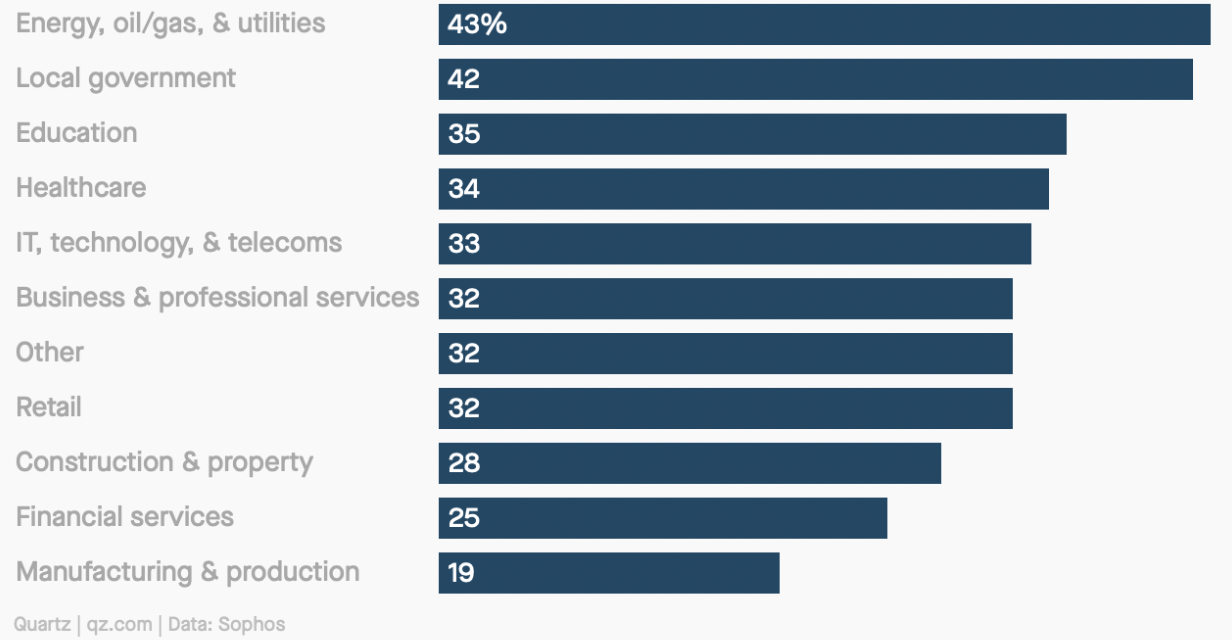
Energy companies are frequent targets, as they’re statistically the most likely to pay the ransom.

Many critical infrastructure systems tend to be older, and some were originally designed without robust security in mind. However, even more importantly, these companies are under immense pressure to maintain service. This fact alone makes such companies prime targets for ransomware attacks. Also, energy companies are more likely to pay ransoms. In a survey of 5,400 companies across the globe, Sophos researchers found that the energy sector was the most likely to pay up in the event of a ransomware attack.

Percentage of companies that paid the ransom after being hit by a ransomware attack in 2020, by sector
paying ransomware
As a caveat, it’s not only ransomware attacks that can send energy companies into a frenzy. Given that there are serious repercussions if supply chains are disrupted, energy companies have been known to succumb to well-orchestrated social engineering and phishing scams as well.

For example, in March 2019, the CEO of a U.K.-based energy firm fell victim to a deepfake audio attack, in which he was duped into transferring $234,000 to a Hungarian supplier. From there, the funds were transferred by criminals to a bank account in Mexico, and then dispersed to various locations across the globe. This was admittedly a rather brazen and unusual voice-spoofing attack; however, it’s not so surprising that the cybercriminals decided to target the energy sector in that case.

Where does the RaaS money go?

Generally speaking, RaaS organizations like DarkSide take between 20-30% of the acquired ransom. The other 70-80% goes to third-party affiliates—blackhat hackers—who gain access to a victim’s network and then deploy DarkSide’s ransomware. Working alongside law enforcement, Elliptic, a blockchain analysis firm, attempts to follow the Bitcoin ransom trail, and in this case, they were able to do so. According to their analysis of blockchain transactions, 75 BTC (a portion of the $5 million ransom paid out by Colonial Pipeline) went to a Bitcoin address; in fact, this was the same address that had received BTC from another ransomware attack on May 11.

The May 11 attack was conducted on Brenntag, a chemical distribution company. In this $4.4 million RaaS attack, hackers were able to gain access to Brenntag’s network after purchasing stolen credentials on the dark web. As an aside, it is unclear at this point exactly how hackers were able to breach the Colonial network. Nevertheless, Elliptic claims to have tracked 18% of the Colonial funds to smaller cryptocurrency exchanges, which should help law enforcement track down some of the perpetrators.

Is this the end of DarkSide?

Probably not. That said, some good things did come out of the horrific ransomware attack on the Colonial Pipeline. Ransomware-as-a-Service has become a household term on Capitol Hill, and strengthening the nation’s cybersecurity infrastructure is clearly a top priority for the Biden administration. That’s all positive.

However, the ransomware ecosystem is still alive and well, and it’s unlikely DarkSide is going gently into the good night. It is quite probable that they shut down their public-facing recruiting websites, in order to conduct an exit scam, whereby the group winds down its current operation, only to reemerge under a different shingle down the line. Nevertheless, forcing a RaaS group like DarkSide to go dark is a good first step in the long ransomware battle ahead.

John Donegan

John Donegan

Enterprise Analyst, ManageEngine

Want to read<br>this article on the go?

Want to read
this article on the go?

Do it on the ManageEngine
Insights app.

Subscribe to ransomware

Thanks for subscribing to ManageEngine Insights. If you do not receive our welcome email, please check your SPAM folder.