
Published on June 19, 2025 | 5 min

The average healthcare data breach now costs $9.8 million, but for reproductive health data, the stakes extend far beyond financial penalties. Healthcare providers now face potential criminal liability and staff reluctance to document care—not to mention the operational nightmare of maintaining different data practices across U.S. state lines.

As HIPAA faces mounting criticism from across the political spectrum and Americans’ trust in healthcare plummets to 40%, healthcare leaders face an urgent question: how can organizations protect sensitive data when the regulatory ground continues to shift? This article helps CIOs and CPOs build comprehensive reproductive health data governance frameworks that anticipate policy changes and prioritize patient trust, no matter the type of care.

How Dobbs created data chaos across state lines

The Supreme Court’s 2022 Dobbs v. Jackson Women’s Health Organization decision did more than just overturn Roe v. Wade—it exposed gaps, uncertainties, and challenges in HIPAA’s ability to protect reproductive health data. This has never been more apparent than in 2025, when the same data is treated differently depending on geography:

Abortion reporting requirements: Texas mandates extensive abortion reporting including patient demographics, payment methods, complications, reasons for the procedure, and compliance with state counseling requirements. New York, on the other hand, only reports if a patient specifically requests certain information.

Digital health app protections: Virginia prohibits search warrants or subpoenas for menstrual and fertility data from third-party apps. Conversely, states like Texas and Louisiana offer no such protections, leaving period trackers and fertility apps open to law enforcement requests during abortion investigations.

Interstate data sharing restrictions: Washington’s My Health, My Data act blocks sharing reproductive health data with out-of-state law enforcement if the data could be used to investigate or penalize care. Meanwhile, 17 states are suing to invalidate HIPAA protections, potentially exposing patients and providers to criminal liability across state lines.

If your healthcare system operates in multiple states, you already know how this regulatory patchwork leads to a volatile data governance situation. These conflicting requirements create serious business risks for organizations, with documented cases showing the increasing costs of inadequate preparation.

The business case for proactive data governance

As mentioned earlier, the financial and reputational stakes for protecting reproductive health data continue to escalate as existing frameworks fall short. Here are a few examples of actual liability cases involving healthcare organizations and breaches of reproductive health data:

Impermissible disclosure: In Pennsylvania, a patient authorized Holy Redeemer Family Medicine to release a single test result unrelated to reproductive health to a prospective employer. Instead, the provider disclosed the patient’s full medical record, including reproductive health information. The Office for Civil Rights (OCR) fined the organization $35,581 for impermissible disclosure under HIPAA.

Unauthorized access: Gulf Coast Pain Consultants in Florida allowed a former contractor to access 34,310 patient records, including reproductive health information. OCR found failures in risk analysis, access control, and monitoring, resulting in $1,190,000 in fines for multiple HIPAA Security Rule violations.

Network security breach: ORM Fertility in Oregon recently experienced a security breach involving unauthorized network access. While electronic medical records were reportedly not accessed, some patient data—including fertility-related lab data—was exposed. ORM reported the breach to HHS, and review is ongoing.

These incidents illustrate how reproductive health data governance failures create cascading risks that go far beyond initial breach costs. Healthcare leaders who implement technical safeguards can help their companies address vulnerabilities proactively rather than face penalties and investigations after incidents occur.

Technical safeguards for reproductive health data protection

CIOs looking to guide their companies through policy changes regarding reproductive health data should implement the following safeguards. These measures protect organizations from penalties and investigations while preserving patient trust:

Encryption standards and compliance: Conduct an immediate audit of all systems handling reproductive health data to identify encryption gaps, then implement current industry-standard encryption for data at rest and in transit with established guidelines.

De-identification framework development: Use research-based de-identification methods to scrub data of both obvious (e.g. name, contact information) and indirect identifiers (device IDs, usage patterns, location data) that could compromise patient anonymity. Train data teams on the heightened sensitivity of reproductive health information with clear approval workflows for data access.

Cloud storage jurisdiction management: Map current cloud storage locations and assess jurisdictional risks for reproductive health data across regions with different laws. Establish clear data residency requirements and create migration plans to move sensitive data to compliant regions, supported by monitoring systems that track data location and movement with real-time compliance alerts.

Third-party app integration security controls: Develop comprehensive vendor risk assessments specifically tailored to reproductive health app integrations, including period trackers and fertility apps. Select vendors that have adopted strong privacy safeguards, such as implementing data minimization practices or offering anonymous modes.

CIOs should recognize, however, that varying state regulations may limit vendors’ ability to maintain their commitments universally and should verify that stated policies align with actual technical implementations through regular audits and compliance reviews.

Implementation strategies from leading health systems

Effective reproductive health data governance requires more than just technical safeguards: CIOs and CPOs in the U.S. should look to leading health systems and professional associations that have integrated professional guidelines, staff training, and policy frameworks into their implementation strategies. The examples below prove comprehensive governance is achievable, even in complex regulatory environments:

Cleveland Clinic: Cleveland Clinic co-founded the MOBY.US consortium for male infertility data, demonstrating how to standardize high-quality reproductive health data sharing under strict use agreements and IRB oversight.

AccessMatters: Philadelphia-based public health non-profit AccessMatters partners with health organizations to deliver evidence-based training focused on trauma-informed, equity-centered reproductive health care.

American College of Obstetricians and Gynecologists (ACOG): ACOG develops national clinical guidelines and provides implementation toolkits including staff training modules, patient education materials, and policy templates.

CDC’s Division of Reproductive Health (DRH): Before its elimination by federal budget cuts, the DRH enabled public health researchers and practitioners to track maternal and infant health, evaluate interventions, and inform their own policies and clinical practice.

The dismantling of proven frameworks like the DRH makes coordinated governance even more critical, as organizations must now fill gaps left by reduced federal oversight. As it stands, healthcare leaders must take matters into their own hands to develop comprehensive frameworks for reproductive health data governance.

Key takeaways

As regulations continue to morph across state lines and the current administration axes critical federal resources, the window for action is narrowing. CIOs and CPOs must take the following critical steps to protect reproductive health data:

  1. Address vulnerabilities proactively to reduce financial exposure and maintain patient trust.
  2. Implement core technical safeguards: encryption, de-identification, cloud jurisdiction management, and secure third-party integrations.
  3. Build on the frameworks established by leading health systems and professional associations.

Organizations that act now will be positioned to navigate future regulatory changes while maintaining patient trust. Those that wait risk facing the escalating penalties and operational chaos that come with reactive compliance.


Lauren Spiller

Lauren Spiller

Enterprise Analyst, ManageEngine

Want to read<br>this article on the go?

Want to read
this article on the go?

Do it on the ManageEngine
Insights app.

Published on October 27, 2023 | 4 min

Cyberattacks have become so common that there’s one every 39 seconds.

Sensitive data has always been a prime target of cybercriminals. “During the first quarter of 2023, more than six million data records were exposed worldwide through data breaches,” says a Statista report. Attackers tend to target high-value data such as payment details, PII, healthcare records, authentication credentials, insurance records, and more.

Data breaches are an expensive problem. Based on IBM’s cost of a data breach report, the global average cost of a data breach in 2023 was $4.45 million. The actual cost of a data breach amounts to more than just money lost to ransom, the cost of investigating the breach, or the revenue lost due to business downtime. Additional expenses include fines related to regulatory compliance violations, legal and audit fees, the fall of stock prices for publicly listed companies, and customer retention costs due to reputational damage.

While organizations are doing their best to adopt effective strategies to protect sensitive data, there’s no 100% foolproof cybersecurity system.

More and more organizations are acknowledging the fact that they are far more vulnerable to sophisticated attacks than ever before. The risk to business continuity and increase in the cost of data breaches have forced mature organizations to focus on bringing their cyber risk scores down to acceptable levels and minimizing the impact of a data breach.

Time matters

“Time is the new currency in cybersecurity both for the defenders and the attackers…early detection and fast response can significantly reduce the impact of a breach.”

                                                                                              IBM’s Cost of a Data Breach Report 2023

According to IBM’s Cost of a Data Breach Report 2023, the average data breach life cycle is 322 days—meaning it takes that long for organizations to identify and contain an active breach. This period usually gives attackers enough time to get away with their plan and access sensitive data and client records. The close relationship between response time and a data breach is a critical factor that can define the impact and severity of a data breach on an organization.

Take the case of one of the biggest breaches to date, the Equifax data breach. Hackers exfiltrated sensitive data of more than 148 million consumers—40% of the American population. Equifax had failed to patch a known vulnerability, making it easier for the attackers to enter its system. While the breach was discovered on July 29, 2017, it’s believed that the breach had occurred much earlier, possibly as early as May 2017. But Equifax made the public disclosure only on Sept. 7, more than a month after its discovery. This delay in detection and response gave attackers plenty of time to exfiltrate sensitive data. And this cost the company dearly. Equifax was fined $700 million for the breach. The Equifax data breach is a perfect example of the grave effects of a delayed response time.

In the business world, time is money. The same is true in the case of a data breach. A shorter mean time to detect (MTTD) means less time for cybercriminals to steal or tamper with sensitive data. And a faster response means better chances of controlling the damage caused by the breach. Both these factors can indirectly help reduce the total cost of a data breach. This means every second after a breach starts is pivotal and can directly determine the impact of the breach.

AI and automation can help

The good news is that AI and automation can be helpful in preventing and mitigating data breaches. IBM’s report shows that organizations that used both AI and automation reduced the data breach life cycle by 108 days. In fact, “organizations that deployed security AI and automation extensively saw, on average, nearly $1.8 million lower data breach costs than organizations that didn’t deploy these technologies.”

AI-based solutions can be a powerful instrument to curb data breaches. AI has the power to monitor and analyze large volumes of transactional data to detect fraudulent activities, anomalies, and unusual behavior. The implementation of AI-driven fraud detection systems can help banks save around $10 billion annually according to a study by Juniper Research. Automation, on the other hand, can help reduce data breach detection time and ensure quick incident response.

A survey by Capgemini Research Institute reports that 75% of cybersecurity executives use AI in network security, and another survey by BlackBerry found that “the majority (82%) of IT decision-makers plan to invest in AI-driven cybersecurity in the next two years and almost half (48%) plan to invest before the end of 2023.”

Being prepared

Preventing a breach might be implausible, but how an organization navigates its response to a breach is significant. Conducting regular security audits to ensure security measures are up to date, investing in a swift breach response system, and providing employees security awareness training can help organizations be better prepared. Additionally, investing in the right data security tools, leveraging AI and automation, and implementing Zero Trust principles can help reduce the time taken to detect and respond to a data breach, or even keep it from happening in the first place.

Breaches can be an expensive problem. However, with the right mindset, tools, and technology, IT teams can respond quickly to contain a breach and minimize its damaging consequences.

Athira Jayakumar

Athira Jayakumar

Enterprise Analyst, ManageEngine

Want to read<br>this article on the go?

Want to read
this article on the go?

Do it on the ManageEngine
Insights app.

Published on July 14, 2023 | 4 min

While we have largely accepted the fact that cybersecurity is becoming a never-ending war, there often comes along some particularly nasty attacks that leave us reeling in their wake. One such recent attack is the ransomware attack on widely used file transfer software MOVEit. Considered to be one of the biggest cyberattacks of the year, the ransomware attack has affected dozens of major organizations, such as British Airways, the BBC, PwC, EY, Siemens, and Schneider Electric.

The extortionist ransomware group, Clop, has claimed responsibility for carrying out this attack, which exploited a zero-day vulnerability in MOVEit. What makes this attack different is the (intended) impact it had on MOVEit’s supply chain, affecting other organizations that use the software.

Did you know?
Zero day is a term used to describe newly discovered security vulnerabilities in software. These are referred to as zero-day vulnerabilities, because the vendor has zero days to work on a security patch or an update to fix the issue.

The MOVEit attack suggests more cybercriminals are recognizing that if they can compromise a trusted vendor, they can topple all the vendor’s customers. The increase in such supply chain ransomware attacks further fuels concerns that cybercriminals may have struck a simple yet lucrative business model that furthers the extent of the damage they can inflict, thereby greatly influencing their bargaining power.

You’re only as safe as your weakest link

Supply chain attacks are known to be far more severe than traditional cyberattacks that target a single organization. While organizations can be hyper vigilant about their own perimeter security, gaining visibility and control of their entire vendor network poses a much greater challenge. Add subcontractors that vendors engage into the mix, and you have an even murkier landscape that is prone to multiple vulnerabilities and cyber risks. As enterprises grow increasingly reliant on third-party vendors, the risks, too, grow multifold. Supply chain attacks are lethal because they violate the chain of trust, bypass typical defensive mechanisms, and cause crippling damage to their victims.

Once in motion, supply chain attacks can be extremely challenging to mitigate, as they can go on to affect secondary-level organizations, too. This is exactly what happened with the MOVEit attack. The attack on MOVEit allowed Clop to compromise MOVEit’s customer, Zellis, which in turn gave the ransomware group access to Zellis’ customers, including British Airways, the BBC, and Boots. Similar patterns were also recorded in the December 2020 SolarWinds attack.

Future of cybersecurity

An alarming point to consider in this latest ransomware attack is that the Clop group has demanded payment to not release the stolen data rather than to decrypt the affected systems. Attackers are more frequently using tactics like this to raise the pressure on victims, making their jobs easier while victims struggle to retain control over their sensitive data.

If you’ve been following predictions by industry analysts, you probably saw this attack trend coming. We need to be prepared for more attacks like these on file transfer applications and document management programs in the future, as cyber criminals have realized the value of such data-rich tools. The main question that remains then is how do you effectively assess risks and implement suitable controls for your supply chain?

One of the major problems in securing the supply chain is ascertaining where the organizational responsibility lies. Different departments work with different aspects of the supply chain, but there is no one person or team who is accountable for the whole thing.

Some important questions to consider are, how are security clauses in contracts with vendors and suppliers enforced? Who is responsible for ensuring that subcontractors also have appropriate levels of security and compliance, and how is this enforced? Does your organization’s incident response plan include risks analysis, threat detection, and mitigation for the entire supply chain? What happens to the existing vendors and subcontractors who may not exhibit required levels of security and compliance?

While these may seem daunting and overwhelming to tackle all at once, taking a step-by-step approach will enable you to gradually ensure 360° security for your organization.

1. Assess your organizational structure: There may be hundreds of third-party vendors that your organization works with, so be prepared for this step to take time. You may also need to assemble a team to oversee this. This team will need to hold all levels of suppliers accountable while ensuring the overall security of the organizational supply chain.

2. Verify supply chain security: Review and monitor the key contracts in place and ensure that the adequate security practices are being adhered to throughout the life cycle of the contract.

3. Validate data protection and stakeholder communication guidelines: Ensure that all best practices and process incidents, breach notifications, and industry reporting requirements are being met.

4. Foster trust in your supply chain partners: Keep your vendors and subcontractors constantly informed about the importance of maintaining clear and prompt channels of communication. Lead by example and keep your vendors in the loop about your internal security best practices.

Priyanka Roy

Priyanka Roy

Senior Enterprise Evangelist, ManageEngine

Want to read<br>this article on the go?

Want to read
this article on the go?

Do it on the ManageEngine
Insights app.

Published on April 12, 2023 | 5 min

Picture this: you’re scrolling through social media and you come across a video of a celebrity doing something outrageous. It looks real, but something about it seems off. It’s only when you read the caption that you realize it’s a deepfake, created using generative AI. From deepfake videos to ChatGPT-generated responses, it’s becoming increasingly difficult to tell the difference between human-made and AI-generated content.

But with this growing reliance on generative AI comes a new concern: the oversharing of personal data. As we become more comfortable with AI, we might be unknowingly giving away sensitive information that can be used for purposes we never intended. We’re in danger of opening a Pandora’s box of privacy breaches, where our personal information is used in ways we can’t imagine.

The consequences of oversharing personal data can be dire, with risks ranging from data breaches to the creation of malicious content. While the potential benefits of generative AI are endless, we need to be mindful of the potential risks that come with it. In this article, we’ll delve deep into the privacy breaches and potential risks associated with oversharing personal data with generative AI, and ways to mitigate the risks and protect yourself and your data.

Walking on a double-edged sword with generative AI

Generative AI is a technology that uses algorithms to create new and original content by learning from a dataset. The AI algorithm can generate new content that is similar to the original data, but not identical. It’s like a chef who learns the recipe and ingredients of a dish and then uses their creativity to make new variations of it.

But with great power comes great responsibility, and generative AI is no exception. The technology requires large amounts of data to work effectively, which can lead to privacy concerns. The more data you feed into the algorithm, the more accurate and personalized the content it generates becomes. However, this also means that personal data is being used, which can be a cause for concern.

One of the major privacy concerns with generative AI is the risk of oversharing personal and confidential information. This happens when individuals or companies feed large amounts of personal data into the algorithm, which can include sensitive information such as medical records, financial information, and personal contacts. If this data falls into the wrong hands, it could be used for malicious purposes, such as identity theft, cyberattacks, and social engineering scams. 

For example, generative AI models could be trained on personal data such as email addresses, names, and social media profiles to create highly convincing phishing emails. These emails could then be used to trick people into providing sensitive information such as passwords or credit card details. The volume of malware scams has visibly grown since the dawn of chatbot technology, and the technology’s quick adoption in applications raises concerns about data collection, privacy, and the prevalence of plagiarism and misinformation.

Others are noticing the problem with ChatGPT, a famous generative AI application, being promoted so quickly and forcefully as well. Leaders in technology and AI have also raised alerts about this. In 2021, researchers from Stanford University and the University of Washington demonstrated that it is possible to use GPT-3, another variant of ChatGPT, to extract personal information such as names, phone numbers, and email addresses from text. 

Did you know?

A study by Home Security Heroes shows that a new AI password cracker can decipher 71% of common passwords in less than a day.

Exploring ways to defend confidentiality

Generative AI can offer many benefits, but we cannot turn a blind eye to the chance of personal information leaking from training data, making it difficult to secure it. A relational database can limit access to a particular table with personal information, but an AI can be queried in dozens of different ways. Attackers will quickly learn how to ask the right questions to obtain sensitive data. Teaching an AI to protect private data is something we don’t yet understand.

To protect yourself and your data from generative AI, it is important to be aware of what data you’re sharing and use strong and unique passwords to protect your data. Limit access to devices, keep software up to date, and use privacy-preserving tools like VPNs and browser extensions to protect data. Additionally (and importantly), read the privacy policy carefully to understand what data is being collected, how it’s being used, and who it’s being shared with.

Regulators around the world are increasingly taking steps to protect users’ data from generative AI. Mentioning AI in global legislative proceedings has increased 6.5 times since 2016, from 1 in 2016 to 37 in 2022. Here are some of the steps initiated by them:

  1. Data Protection Laws: Governments are enacting or strengthening data protection laws to ensure that companies are held accountable for the data they collect from users.

  2. Algorithmic Accountability: Regulators are also pushing for greater algorithmic accountability, which means holding companies accountable for the algorithms they use and ensuring that they are transparent and fair.

  3. Privacy-by-Design: Another approach being taken by regulators is to encourage companies to adopt a “privacy-by-design” approach, which means designing products and services with privacy in mind from the outset.

  4. Ethical AI Guidelines: Many organizations, including the European Union, have developed ethical AI guidelines to help companies navigate the complex ethical issues surrounding AI, and ensure that AI is developed and used in an ethical and responsible manner.

  5. Regulatory Bodies: Governments are also creating regulatory bodies specifically dedicated to overseeing AI, such as the European Commission’s High-Level Expert Group on AI, which provides advice and recommendations on AI-related policy and regulatory issues.

Overall, the aim of these measures is to ensure that companies using generative AI are held accountable for the data they collect and use, and that users’ privacy rights are protected. The rush to integrate this technology can result in data breaches, inaccuracies, and abuse, demonstrating the need for caution and responsible management.

The Future of Life Institute has released an open letter requesting that AI laboratories and businesses cease the development of OpenAI systems after ChatGPT-4. Reputable individuals including Steve Wozniak, the co-founder of Apple, and Elon Musk, the co-founder of OpenAI, have agreed that progress should be halted to make sure that people can profit from and enjoy existing systems.

As this article draws to an end, one burning question keeps me up–what will happen when we humans become so dependent on generative AI that we can no longer produce new material for training models?

Related reading:

Naveena Srinivas

Naveena Srinivas

Enterprise Analyst, ManageEngine

Want to read<br>this article on the go?

Want to read
this article on the go?

Do it on the ManageEngine
Insights app.

Published on February 09, 2023 | 7 min

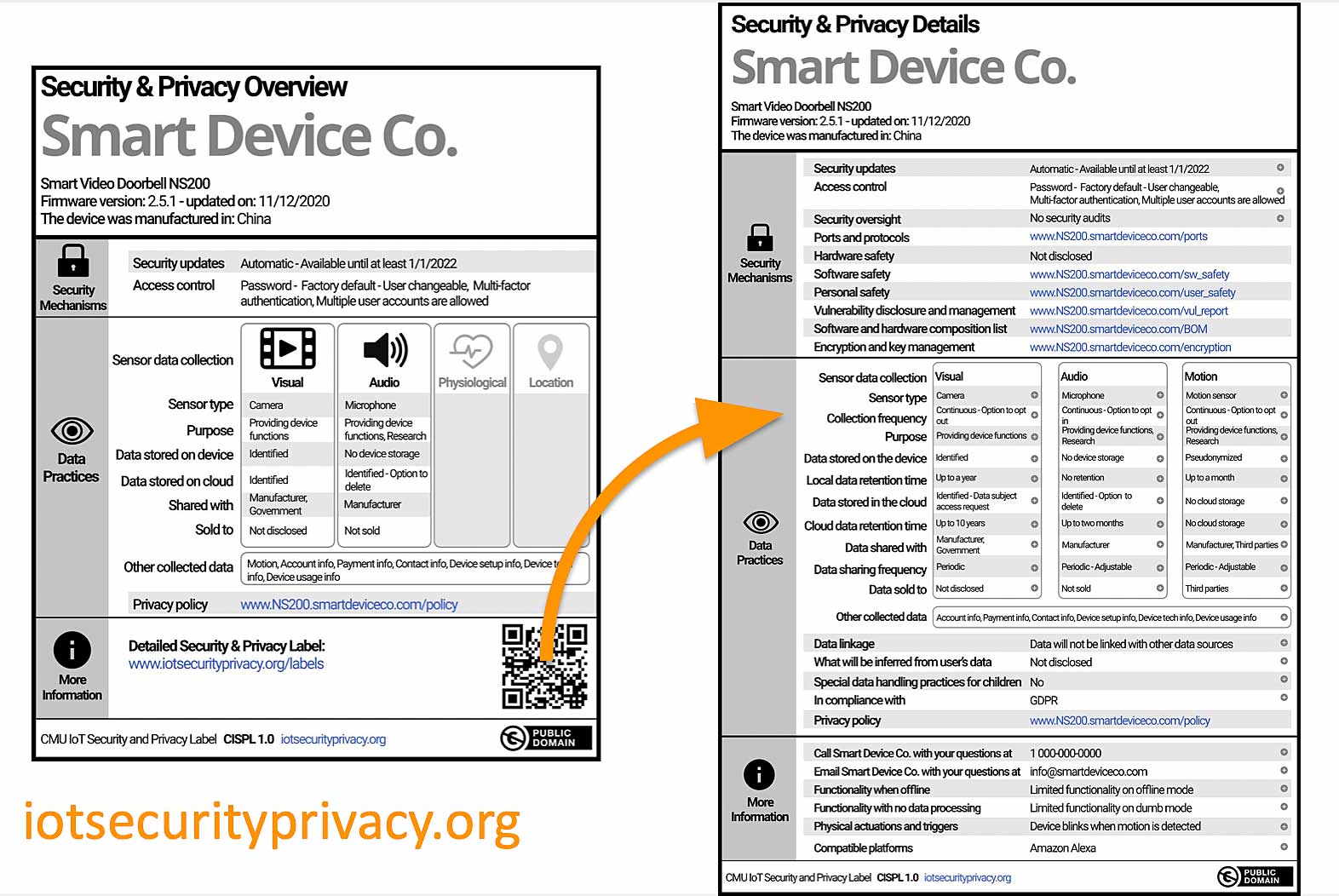
Taking a cue from the food industry, IoT manufacturers should embrace privacy and security “nutrition labels,” as these labels will allow privacy-focused companies to differentiate themselves.

Consumers are eager for transparency in this space, and IoT manufacturers would be wise to embrace these labels before a government mandate arrives—and to be sure, government involvement is on the horizon.

The U.S. Cyberspace Solarium Commission (CSC), now operating as a non-profit, non-governmental organization, has been tasked with “establish[ing] a national cybersecurity certification and labeling authority.” Initially created to assist critical infrastructure providers’ technology procurement decisions, this cybersecurity labeling program will affect much of the consumer products sector.

It remains to be seen what this labeling program will look like. In October 2022, the CSC met with roughly 50 representatives from academia, NGOs, and the private sector. At this workshop, there were some of the usual suspects—Amazon, Comcast, Google, Intel, LG, Samsung, Sony, Consumer Reports—and of course, various lobbying groups.

After the summit, a White House official said the IoT device ratings may be based on cybersecurity elements, such as vulnerability remediation, whether data is encrypted, and interoperability with other products; however, it will surely include privacy elements, including whether data has been collected on consumers.

According to reporting from CyberScoop, a policy member from the R Street Institute  left the summit believing that “more extensive privacy standards around data collection and sharing could be considered as part of the ratings system down the road.”

Without a doubt, this IoT device privacy labeling initiative owes a debt to important work from Carnegie Mellon University. In fact, CMU researcher Yuvraj Agarwal was in attendance at the summit.

The Carnegie Mellon CyLab Security and Privacy Institute

After four years of research, Pardis Emami-Naeni, Yuvraj Agarwal, Lorrie Cranor, and their colleagues have created a robust prototype of a nutrition label for IoT devices.

Made up of 47 different privacy, security, and general attributes, the prototype has two layers. The first layer, which is designed to be displayed prominently on the product package, is aimed at everyday consumers. The second layer, available online via a link or QR code, is aimed at software engineers or knowledgeable consumers seeking more detailed information.

The CMU researchers didn’t come up with this nutrition label out of a vacuum. It’s the result of the four studies below.

“Exploring how privacy and security factor into IoT device purchase behavior” 1/2019

The researchers found that privacy and security were among the most important factors that consumers consider when purchasing an IoT device. In fact, privacy and security are the most important factors, after features and price.

“Ask the experts: What should be on an IoT privacy and security label?” 12/2019

In this study, the researchers interviewed 22 privacy and security experts to ascertain what exactly to include in their label. There were experts from academia, NGOs, government, and of course various entities within the tech world, including several working in policy roles at hardware and software companies.

“Which privacy and security attributes most impact consumers’ risk perception and willingness to purchase IoT devices?” 6/2021

To improve their label design, this study helped the researchers learn which privacy and security label attributes influence consumer risk perception and willingness to purchase. The researchers learned that consumers were more willing to buy products when they knew their information wouldn’t be retained or shared with third parties.

As Emami-Naeini et al. write, “Participants frequently expressed concerns about not knowing how their information would be used if it was shared with or sold to third parties.”

“Are consumers willing to pay for security and privacy of IoT devices?” 10/2022

Through this study, the researchers learned that, yes, consumers are willing to pay a significant premium for security and privacy.

Given that privacy and security are admittedly related, it’s perhaps unsurprising that there was a lack of consensus as to whether or not privacy and security attributes should be presented in separate sections. Half of the experts felt separate sections were appropriate, and the other half wanted to combine them into one section.

An examination of the relationship between security and privacy

Through the course of these studies, there was quibbling among experts about the difference between privacy and security. Some believed that security was easier to quantify, and that privacy was more contextual and subjective.

As Emami-Naeini et al. write, “When defining security, almost all experts (21 out of 22) mentioned the CIA triad of confidentiality, integrity, and availability. However, experts had different definitions for privacy. Some experts (9 out of 22) defined privacy as having transparency and control over data practices and some experts defined privacy as the confidentiality aspect of security (8 out of 22).”

A few experts pointed out that privacy is inherently dependent upon individuals’ respective comfort levels and personal preferences. That’s technically true; however, the fact remains: it is quite simple to quantify privacy. Either a company is collecting consumers’ data or it is not. Companies either sell that data to third parties, or they do not. If companies are indeed collecting user data, they can gain consumer trust by explicitly laying out their methods and disclosing the reasons why they’re collecting user data in the first place.

Will we see security and privacy labels soon?

The ball is rolling, but the timetable for label adoption is unclear.

Voluntary label adoption seems unlikely, although CMU CyLab researchers believe that label adoption could come from retailers.

Cranor et al. write, “Retailers could incentivize adoption by requiring manufacturers of products they sell to label their products, or even by promoting labeled products; for example, by placing them at the top of search results.”

Now, big box stores, like Best Buy, certainly could refuse to carry IoT devices if the manufacturers refused to carry the privacy label. However, this seems a bit far-fetched unless retailers find a financial incentivize to to do so.

To be fair, retailers could theoretically mandate that IoT manufacturers place privacy/security labels on their packages. It’s not without precedent.

We’ve seen this with application developers and online app marketplaces

In December 2020, Apple famously began requiring that all applications in its App Store disclose data collection practices. To use the App Store, Apple required all third-party apps to disclose what type of data the app collects and whether that data is used to track users.

Shortly after Apple’s privacy nutrition label launch, Google followed suit with its own label initiative for Google Play.

A quick caveat: Washington Post tech columnist Geoffrey Fowler pointed out that Apple doesn’t immediately verify that the third-party apps’ privacy information on the Apple App Store is accurate. On the labels, there is a disclaimer that reads, “The developer indicated that the app’s privacy practices may include handling of data as described below. This information has not been verified by Apple.” Thus, even with Apple’s intervention, the nutrition label content is still based upon developer self-reporting, at least initially.

Like online marketplaces (e.g., Google Data Safety and Apple Privacy Nutrition), retailers could intervene and mandate that IoT manufacturers use privacy labels; however, the far more likely scenario is that widespread adoption of IoT privacy labels will come from a government mandate.

Another caveat: It’s worth emphasizing that these labels won’t be forced upon IoT manufacturers. All labels will be voluntary in nature.

The current state of security and privacy label legislation

Senator Ed Markey and Congressman Ted Lieu have been trying to get an IoT device certification law passed for years. Although their Cyber Shield Act never received a vote on the House or Senate floor in 2017 or 2019, they reintroduced the bill in March 2021.

According to the language in the bill, The Shield Act “requires the Department of Commerce to establish the Cyber Shield Program, a voluntary program to identify and certify covered products. These products are consumer-facing physical objects that meet industry-leading cybersecurity and data security benchmarks and that can (1) connect to the internet; and (2) collect, send, or receive data or control the actions of a physical object or system.”

Although unlikely to pass, the content within the Shield Act of 2021 is influencing the White House and CSC. Directly after the October 2022 White House workshop, Ed Markey’s camp issued a press release, praising the work toward what Markey describes as an “Internet of Things cyber label.”

According to the release, “As Americans install tens of millions of internet-connected devices for their homes, cybersecurity protections have never been more important. That’s why we introduced the Cyber Shield Act to create a voluntary consumer label indicating whether a device meets high cybersecurity benchmarks. We applaud the White House today on their announcement that they will adopt a similar approach and deliver a win for American families so that they have the information they need to safeguard their privacy at home. An Internet of Things cyber label is a critical step to returning power to consumers and strengthening cybersecurity protections.”

We’ll have to wait and see if this voluntary IoT label program ever comes to fruition; however, the ball does appear to be rolling.

Key takeaways

IoT privacy nutrition labels are coming down the pike; however, they will be voluntary at first. Keeping it voluntary isn’t necessarily a bad thing. Consumers will be certainly take notice of IoT manufacturers who opt not to use the labels.

If the privacy labels work as intended, IoT device manufacturers—and likely other industries—will be forced to compete on privacy and security, which is a net positive for consumers. Also, journalists will increasingly cover the security/privacy of specific devices, which will further drive consumer awareness.

Also, even if many consumers are initially confused by the labels, this will change over time. After all, we take food nutrition labels for granted today, when we go to the grocery store.

When mandatory food nutrition labeling came on the scene back in 1990 (the Nutrition Labeling and Education Act), it surely was met with resistance from reluctant actors in the food industry. We can expect that this privacy labeling initiative will be met with some similar resistance. Nevertheless, companies that operate in good faith would certainly be wise to embrace this labeling effort. It can only help them stand out from the pack.

John Donegan

John Donegan

Enterprise Analyst, ManageEngine

Want to read<br>this article on the go?

Want to read
this article on the go?

Do it on the ManageEngine
Insights app.

Privacy and Compliance

Securing data through the compliance lens

Published on September 09, 2022

As globalization takes shape and government regulations defy borders, the issue of compliance risk remains a top-level business issue. Growing concerns over consumer privacy and data security have prompted a rush of legislation intended to hold organizations more accountable for maintaining and sharing the information they collect about consumers.

Given the speed and scope of change, more senior executives and board members are becoming anxious about not keeping up with advances and trends in the marketplace. Their fears are well-founded. Not staying current with compliance management can expose organizations to greater regulatory and reputational risk. 

In this videocast, we’ll explore complex scenarios where enterprises struggle to balance their compliance needs and business goals. We’ll also take a look at the role of evolving technologies in an organization’s compliance journey.

Agenda  

  • Mandating privacy and compliance for every employee
  • Addressing complex scenarios faced by employees regarding data privacy
  • Evaluating the ways organizations deal with employee data
  • Overcoming the friction caused when organizations embrace emerging technologies
  • Discussing the effects on privacy in an AI-driven world
  • Exploring the current frameworks available for AI governance and development
WATCH NOW
Naveena Srinivas

Naveena Srinivas

Enterprise Analyst, ManageEngine

Catch up on expert <br> videos like this anytime<br>with the ManageEngine <br> Insights app.

Catch up on expert
videos like this anytime
with the ManageEngine
Insights app.

Published on September 02, 2022 | 4 min

Almost a year ago, India was anticipating the passage of its new personal data protection bill (PDPB). Unfortunately, it looks like the progress on the bill is back to square one, and the current state of affairs does not look good for the citizens of the country which suffers one of the highest numbers of data breaches, losses, and leaks each year.

Due to a glaring lack of privacy laws, India’s users run the risk of having their data sold, misused, or used against them. Recently, there were reports of a huge cache of data found online that included the full names, bank account numbers, and beneficiary details of Indian pension fund holders. Bob Diachenko, a security researcher from Ukraine, discovered two distinct IP addresses housing more than 288 million records online without password protection. Personal digital data safety often falls short of international requirements despite the country’s flourishing tech industry. 

Every nation now requires stringent data protection laws. Although India’s constitution explicitly recognizes the right to privacy, and the various revisions to the Information Technology Act of 2000 have offered protections against the mishandling of personal information, it’s about time the currently outdated laws are updated as they continue to erode digital privacy. This article updates you on the latest developments in India’s personal data protection policies. 

The roadmap and composition

In 2017, the bill had high expectations. In July of that year, a new commission chaired by retired Justice B.N. Srikrishna was established to create guidelines for data protection. The country’s Supreme Court ruled the next month that privacy is a part of a constitutionally recognized right to life and liberty. But it didn’t take long for the optimism to wane. According to Srikrishna, the law submitted to parliament in December 2019 provided the government with unrestricted access to personal data for the sake of sovereignty and public order.

A newer version was proposed by the Joint Parliamentary Committee as the Data Protection Bill 2021. Here are the basic objectives of this bill:

  • To create a data protection authority safeguarding Indian citizens’ data that ensures IT organizations comply with privacy and security regulations, particularly in terms of storing data.

  • To give the government the authority to request user data from businesses and to impose rules on international data flows.

  • To require large tech companies to keep a copy of sensitive personal data in India, and forbid tech companies from exporting critical personal data unless consumer permission has been received.

  • To ensure social media corporations are treated as publishers and are held accountable for the content they host.

The withdrawal 

After five years of deliberations involving the government, internet giants, and civil society activists, India’s PDPB is back to square one. The Indian government has chosen to replace the personal data protection bill with “a comprehensive legislative framework.” Worse than the current state of chaos is that no one knows what the new system will look like, whether it will prioritize the needs of the individual, as in Europe, or vested business and party-state interests, as in China.

Many still wonder: “Why was the original bill withdrawn?”

Opposition to the law mainly included tech giants and civil liberties organizations. Most private enterprises opposed the data localization norms that were part of the bill, which they felt were stringent. Many organizations representing the Indian tech sector also felt that some aspects of the PDPB would hamper the growth of the Indian tech start-up ecosystem. 

On the other hand, the Internet Freedom Foundation, a privacy advocacy group, stated more has to be done to hold the Data Protection Authority accountable and that the Indian State’s use of citizen data also needs to be kept “under control.”

The administration now intends to introduce four comprehensive pieces of legislation to address the digital tech landscape after withdrawing the PDPB. This will involve enacting new rules in the areas of social media accountability, information and technology, personal data and privacy, and telecommunications. 

The impending revamp 

The revamped Bill’s specifics and structure are unknown. According to a senior government official, the government is debating whether to include data localization in the new Information Technology Act that is being developed, and whether to restrict cross-border data transfers to “trusted geographies” exclusively. The official explained, “The idea is that the data should be accessible in the event of a crime and stored in a location that is trusted by the Indian government. 

In terms of data localization, the new bill might eliminate the classification of personal data, and limit its use to assessing damages for individuals whose personal data might have been compromised by an entity. According to sources in the IT Ministry, the government wants to introduce the legislation in parliament’s winter session, if not, the next budget session.

India is currently one of the few nations without a robust legal framework for data protection. In light of India’s ambition to promote a global image of a digital economy with a thriving data services industry, the government must step up to develop a framework that puts it on par with its competitors on the global stage. In contrast to other laws, data protection regulations must cooperate with their international counterparts in order to function effectively in a global context.

Naveena Srinivas

Naveena Srinivas

Enterprise Analyst, ManageEngine

Want to read<br>this article on the go?

Want to read
this article on the go?

Do it on the ManageEngine
Insights app.

IT Security

Raising SIEM awareness and securing enterprise endpoints

Published on June 03, 2022

In this episode of ManageEngine Insights podcast, we’ll explore various security concerns arising in enterprises and elsewhere. Enterprises need to consider both bottom-up and top-down approaches, as well as a wide variety of hardware and software-based security measures.

Joseph Steinberg is a recognized cybersecurity thought leader, columnist, CEO, and technology influencer. Joseph is one of only 28 people worldwide to hold the suite of advanced information security certifications: CISSP, ISSAP, ISSMP, and CSSLP. With nearly two decades of leadership experience in the information-security industry, he has literally written the book on information security, Cybersecurity for Dummies, as well as a study guide CISOs can study to become certified.

Agenda  

  • Approaches for protecting data and infrastructure

  • The need for leaders to internalize the importance of cybersecurity

  • Vulnerabilities and threat vectors that exploit human tendencies

  • Risks posed by weak endpoint security and suggested fixes

  • The future of cybersecurity: AI & quantum computing

WATCH NOW
Nick Glavor

Nick Glavor

Contributor, ManageEngine

Catch up on expert <br> videos like this anytime<br>with the ManageEngine <br> Insights app.

Catch up on expert
videos like this anytime
with the ManageEngine
Insights app.

Published on December 10, 2021 | 5 min

The pandemic has paved the way for fresh opportunities in cybercrime, and a surge in ransomware and mobile attacks in 2022 is expected. In 2021, cybercriminals focused on abusing the colossal shift to hybrid work and targeting organizations’ supply chains and networks to cause maximum disruption. While these criminals continue to use the pandemic as a bargaining chip to exploit organizations further, they will also find new opportunities to attack via deep fakes, cryptocurrency, and mobile wallets.

By now, most businesses recognize that they have to invest significant amounts of resources in cybersecurity. Cybersecurity Ventures expects the need for protection against cybercrime will propel global spending on cybersecurity services and products to nearly $1.75 trillion between 2021 and 2025. However, no company has the resources to fix all cyber issues, and not all issues are equally important.

This raises a question of not only whether investing in cybersecurity is enough to keep these criminals at bay, but also about the road to returning to business as usual. Below, we’ll talk about how building cyberresilience, an important aspect of cybersecurity, sets out to answer these questions.

Cybersecurity is not a strategy, but a culture

While there are many frameworks and best practice guides to equip cybersecurity leaders with the tools and knowledge needed to manage cyberrisk, business leaders, especially in small and medium-sized enterprises (SMEs) and developing industries, often struggle to understand the cybersecurity narrative and their responsibilities. On top of this, even after implementing all the correct security measures, some organizations still fall prey to cyberattacks. Organizations have to accept that there is always a risk that their network defenses can be breached.

Inadequate cybersecurity is not always due to lack of awareness; it is also due to lack of understanding. By identifying activities that are important to a business and understanding how attacks could disrupt them, organizations can start the process of risk mitigation.

With the hybrid work culture here to stay, it’s important to ensure employees are cyberconscious even when their devices aren’t being monitored. Organizations need to develop cyberconscious workplaces where every employee is aware of cyberrisks and their role in protecting the business. Such a culture will strengthen existing security measures, cultivate stronger team collaboration, and save money and resources spent on recovering from an attack.

Key factors to build cyberresilience within the organization

As professor David Denyer says, “organizational resilience is the ability of an organization to anticipate, prepare for, respond and adapt to incremental change and sudden disruptions in order to survive and prosper.” The organizations that show resilience and do well during a crisis take precautionary measures so that they are not overwhelmed and will maintain high performance even when a crisis occurs.

In 2019, British Airways was fined nearly $26 million by the Information Commissioner’s Office for violating the GDPR by failing to take the required measures to protect itself from a cyberattack, which resulted in a data breach affecting 400,000 customers.

For SMEs struggling to protect themselves with limited cybersecurity resources, a cyberattack could leave permanent damage with devastating consequences. The example of what happened to British Airways is not just to highlight the serious disruption, reputational damage, and huge fines imposed on enterprises, but also to show why organizations need to include cyberresilience as a part of their cybersecurity culture.

Cyberresilience may sound ambiguous, but it is less about technological developments and more about how people react in the aftermath of an attack. While a cybersecurity strategy attempts to prevent attacks, a cyberresilient strategy aims to soften the impact of an attack by focusing on the key elements mentioned below.

  1. Evaluate employees’ cybersecurity awareness.

    Make cybersecurity easily understandable to employees and educate them on how a few behavior changes can protect the entire team.

  2. Set clear, simple goals.

    An organization’s strategy should state “what cybersecurity stands for,” “why it’s essential for employees to be a part of it,” and “how their behavioral changes can affect the organization’s security.”

  3. A top-down approach is the first step.

    Adapting to this strategy is more of a mindset change than a plan to be executed on a whim, starting with C-suite leaders. Leaders should demonstrate strong cybersecurity etiquette and foster an environment where employees feel it is everyone’s responsibility. Leaders should understand risks specific to their organization and industry to create apt policies for employees.

  4. Identify, protect, detect, respond, and recover.

    Strategizing cyberresilience requires keeping critical resources in mind, deciding the first response in the event of an attack, keeping a constant eye out for suspicious activities, and ensuring a detailed incident response plan. A major aspect is ensuring business functions and affected resources are restored as quickly as possible and business returns to normal.

  5. Nurture your relationships.

    Create partnerships with peers, competitors, and public entities; observe how your team hires and educates them.

Forging a safety net for the expected impact cannot be defined in a checklist. Instead, keeping these primary principles in mind can help you build a cyberresilient strategy.

Cybersecurity is more effective when the organization is cyberresilient

Employees are not only the weakest links in the cybersecurity chain but also the major catalyst when adopting a security-first mindset. The aim of cyberresilience is clear: to ensure operational and business continuity with minimal impact. But the reality can be harder to pin down because there is currently no good way to measure cyberresilience.

Leaders need to have a certain level of confidence in the organization’s ability to respond to an attack; maintain customers’ trust; absorb the financial, legal, and brand impact; and get back to business. Cyberresilience is not about comparing with other organizations’ strategies and isn’t a set-it-and-forget-it approach. This framework should scale for the industry by focusing on the people, processes, and technology required to ensure entire value chains are resilient.

The NIST Cybersecurity Framework for improving critical infrastructure was launched in 2014 after the president issued an executive order to address rising cyberrisks. It called for a public-private partnership to create bold changes necessary to protect hybrid cloud infrastructures. This framework also aims to help organizations develop new, scalable cybersecurity strategies including cyberresilience, in which everyone shares the responsibility of keeping business and customer information secure.

Do you think cyberresilience will become a part of your business model?

Naveena Srinivas

Naveena Srinivas

Enterprise Analyst, ManageEngine

Want to read<br>this article on the go?

Want to read
this article on the go?

Do it on the ManageEngine
Insights app.

Published on August 05, 2021 | 4 min

The increase in ransomware attacks, remote work disruptions, and other challenges brought on by the pandemic has made organizations realize the importance of assessing their cybersecurity strategy. The pandemic will have a long-lasting impact on the threat landscape and how security teams protect people and assets. For any cybersecurity strategy to be successful in the long term, multiple lines of defense need to be in place. With remote work diluting traditional network borders, data needs to be protected accordingly, taking insider threats, stolen passwords, and other factors into account.

Security leaders have also become concerned about direct and indirect threats posed by nation-states and their proxies. This concern is warranted because critical infrastructure systems tend to be old and some were originally designed without robust security in mind. It comes as no surprise then that cybercriminals decided to target the energy sector and the Colonial Pipeline in May 2021. President Biden mentioned that he wants to see far more collaboration between the government and the private sector in terms of combating cybersecurity threats.

According to IDG’s Security Priorities Study, companies have begun looking to invest in the following technologies the most.

  • Zero trust (40%)

  • Deception technology (32%)

  • Authentication solutions (32%)

  • Access controls (27%)

  • Application monitoring (25%)

  • Cloud-based security services (22%)

Since anyone involved in IT is probably already familiar with the leading technology, Zero Trust, let’s do a deep dive into the semantics of deception technology to understand its necessity.

Deception technology: Deceive attackers

Deception is one of the armed forces’ most successful strategies for overcoming enemies, and it could be equally effective in the cybersecurity space. The aim of deception technology is to prevent a cybercriminal who has managed to infiltrate a network from doing any substantial damage. This technology is a standalone platform that works by producing traps or decoys that mime legitimate technology assets throughout an organization’s infrastructure. The platform protects networks and endpoints from various types of attacks, including ransomware and advanced persistent threats. 

Deception technology is pragmatic in the way that it doesn’t presume an organization will be able to create a perfect copy of all its endpoints and legitimate data flows. Instead, it sets up a parallel virtual infrastructure and data sets with no business purpose at all. If an endpoint tries to access any of these assets, it is likely that the endpoint is compromised since there is no legitimate reason for such activity. Notifications are instantly sent to a centralized deception server that records the affected decoy and the attack vectors used by the cybercriminal.

The deception landscape

The deception technology market was projected to grow from $1.04 billion in 2016 to $2.09 billion by 2021, at a CAGR of 15.1% from 2016 to 2021. There are now different levels of deception technology available. Some are a little better than a honeypot, while others resemble networks that include real data and devices. This includes the ability to imitate and analyze different types of traffic, provide fake access to accounts and files, and closely replicate an internal network.

Cloud data decoys can be set in a public cloud, such as one provided by AWS, Google, or Azure, or an internal private cloud. For example, an organization can create decoy cloud credentials, and once an attacker uses these false credentials, two things can happen—the organization can mount a simulated defense to the intrusion, or they can lead the attacker to another decoy, such as fake cloud data. Either way, the organization is alerted as soon as the attacker uses the decoy credentials, and their real cloud resources are kept safe.

A few deception-based security products can be deployed automatically, keep attackers busy in loops of access for more information, or generate more detailed and realistic counterattacks. When deception technology works as intended, hackers will truly believe they have infiltrated a restricted network and are gathering critical data. Cybercriminals will be accessing data, but it will only be information intended for them to see. Remember, organizations only need to detect the adversary interacting with the decoy once.

As we know, it is virtually impossible to keep persistent attackers from targeting high-profile networks. This is part of the reason that deception technology has been used by the United States government, NATO allies, and many companies in banking, finance, manufacturing, and plenty of other industries.

Deception tech is worth considering

A security strategy leveraging deception technology can provide an organization’s most classified projects with strong defenses that thwart attackers. At present, these tools are especially relevant for high-profile targets such as government facilities, financial institutions, and research firms. Recent attacks targeting critical infrastructure—and, by extension, civilians—show that now is the time for deception technology.

Deception technology meets many security program requirements by delivering highly accurate alerts, reducing the volume of useless alert traffic. Users of deception technology report that they are 12 times faster at responding to a deception-based alert when compared to other alerts, which translates to significant cost savings for organizations. However, organizations will still need a security analyst to break down the data from their deception-based security tools, so smaller companies without specialized staff typically would not be able to tap into the benefits of this technology. That being said, SMBs can still utilize deception in some fashion by contracting with security vendors that provide analysis and protection as a service.

On average, companies take nearly 200 days to realize there’s been a successful breach in their network, which is far too long. With the primary goal of early threat detection and reducing the security team’s spending, deception technology is worth consideration. We will keep you updated on any enhancements in the deception technology world.

Naveena Srinivas

Naveena Srinivas

Enterprise Analyst, ManageEngine

Want to read<br>this article on the go?

Want to read
this article on the go?

Do it on the ManageEngine
Insights app.

Subscribe to data security

Thanks for subscribing to ManageEngine Insights. If you do not receive our welcome email, please check your SPAM folder.