

Published on June 27, 2024 | 5 min

Everything’s bigger in Texas—even the state’s recent initiative to protect consumer data.

On Monday, July 1, 2024, the Texas Data Privacy and Security Act (TDPSA) goes into effect. Signed into law by Gov. Abbott back in June 2023, the TDPSA is one of the most comprehensive data privacy laws in the country.

Under the TDPSA, nearly all consumer-facing companies doing business in Texas will soon face data collection, processing, and disclosure requirements similar to those in California’s CCPA and CPRA. Although Texas and California are usually on different ends of the political spectrum, the states are apparently quite like-minded when it comes to data privacy.

The fact that Texas has decided to join California in passing one of the most stringent data privacy laws in the country suggests a few things: (1) consumer data privacy has become a bipartisan, hot-button issue; (2) consumers are paying more attention than ever to how companies are collecting, using, and selling their personal data, and (3) many state legislators don’t have much confidence in our dysfunctional Congress passing an effective federal data privacy law.

One of the TDPSA’s authors, Giovanni Capriglione (R-TX), certainly didn’t have faith in federal lawmakers taking the initiative back in 2019. While advocating for an earlier iteration of the TDPSA, Texas House Bill 4390, Capriglione bluntly told his colleagues, “I disagree that this is the duty of the federal government, mostly because I don’t have much faith that they will do it.”

Businesses affected by the Texas Data Privacy and Security Act

Most large organizations doing business in Texas will be affected. Unlike nearly all the other states with comprehensive data privacy laws in place, the TDPSA doesn’t exclude organizations that don’t meet volume thresholds (such as processing data of at least 100,000 residents). In Texas, there’s no minimum volume threshold.

According to the language in the TDPSA, the new law applies to any entity that (1) conducts business in Texas or produces a product or service consumed by residents of Texas; (2) processes or engages in the the sale of personal data, and (3) is not a small business as defined by the U.S. Small Business Administration.

As a quick aside, whether a business qualifies as “small” varies by industry; it’s usually based on annual revenue, number of employees, or both of these variables. Also, under the TDPSA, even “small” businesses are required to obtain consent before selling sensitive personal data.

Exceptions

In addition to the small business exception, the TDPSA doesn’t apply to (1) state agencies or political subdivisions; (2) financial institutions subject to the Gramm-Leach-Bliley Act (which already requires covered entities to safeguard sensitive data and explain their data sharing practices to customers); (3) covered entities or business associates already governed by the Health Insurance Portability and Accountability Act (HIPAA), and any other applicable federal and state healthcare laws; (4) non-profit organizations; (5) institutions of higher education; or (6) electric utility, power generation companies, or retail electric providers. 

Compliance obligations

Under the letter of the law, data controllers now must: (1) only process information that is completely necessary to deliver the product or service; (2) notify consumers of their privacy rights, including the type of personal information collected, consumers’ rights to opt out, and the purposes of the collecting and processing consumer data; (3) not discriminate against consumers for exercising their privacy rights; (4) not process any personal data that violates existing state and federal discrimination laws; (5) gain consent before collecting sensitive data; (6) ensure security of personal data through reasonable data security practices; (6) conduct data protection assessments; (7) respond to consumer data requests within 45 days; (8) maintain contracts with third-party data processors and ensure that these third parties are compliant with the TDPSA as well; and (9) disclose any data breach within 60 days.

TDPSA compliance will be enforced by the Texas Attorney General. Texas residents can’t initiate a private right of action (file a civil case); however, they can inform the Texas AG about the alleged violations. Businesses face fines of up to $7500 per violation.

How businesses should prepare

If you’re already in compliance with the CCPA and CPRA, you should be well on your way toward TDPSA compliance. However, in some respects, the TDPSA goes beyond the scope of the CCPA. As a quick example, the TDPSA includes provisions for privacy policy disclosures related to the sale of biometric data, and there’s also a mechanism in place for consumers to appeal a denial of a request.

To prepare for TDPSA enforcement, businesses should organize and assess all of the data they’re collecting. It is vital that all consumer consent requirements are compliant with TDPSA. Adjustments may need to be made to corporate policies and procedures;  moreover, all vendor agreements and privacy policies should be reviewed.

The growing patchwork of state laws

According to the International Association of Privacy Professional’s privacy legislation tracker, eighteen states currently have signed comprehensive consumer privacy bills into law: California, Colorado, Connecticut, Delaware, Indiana, Iowa, Kentucky, Maryland, Minnesota, Montana, Nebraska, New Hampshire, New Jersey, Oregon, Tennessee, and now, Texas.
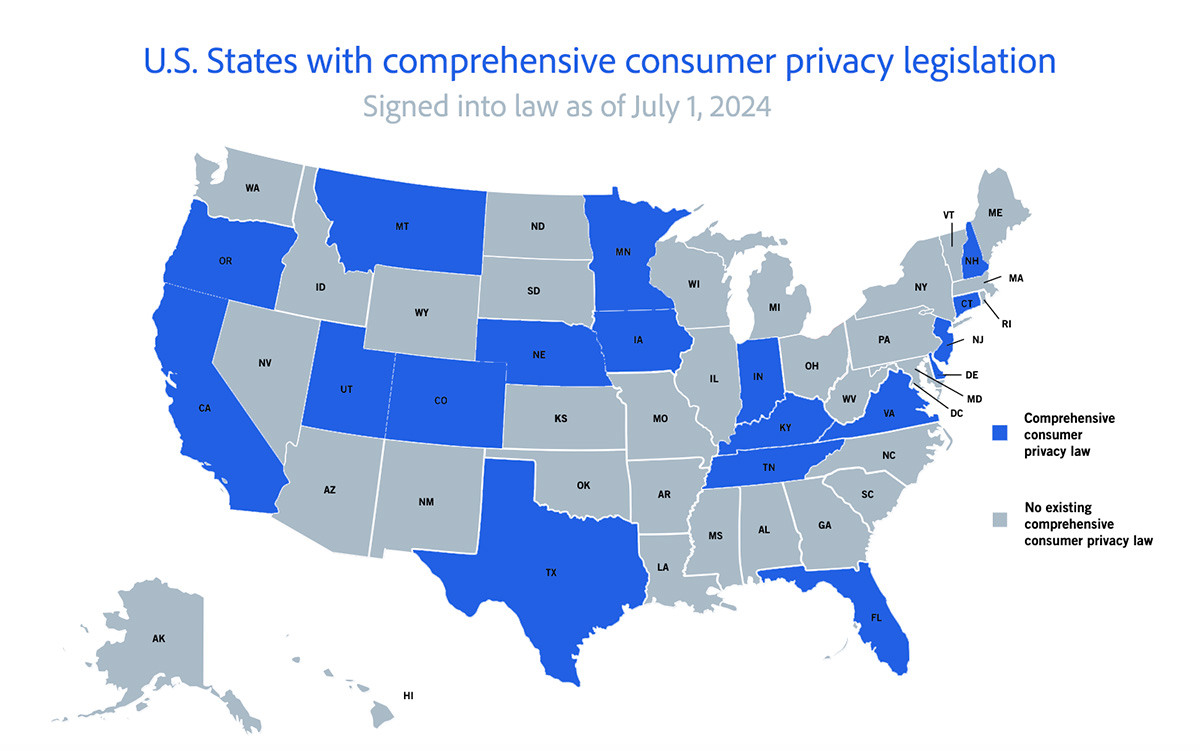
Texas Data Privacy Act

Rhode Island appears to be next up, as its Data Transparency and Privacy Protection Act passed on June 24, 2024. And Illinois, Louisiana, Massachusetts, Michigan, North Carolina, Ohio, and Pennsylvania all have data privacy bills in either committee, cross chamber, or cross committee.

Interestingly, Vermont’s Data Privacy Act, which passed 139-3 in the House, appears to be dead on arrival after a recent veto by Republican Gov. Phil Scott. Nevertheless, with so many bills coming down the pike, the pressure is certainly on Capitol Hill to enact privacy legislation at the federal level.

Key takeaways

Texas just passed one of the strongest privacy laws in the country, signaling to the folks on Capitol Hill that the state is serious about consumer data privacy.

If legislators in Washington don’t enact a federal data privacy law soon, the headache of complying with a patchwork of state laws will continue for many businesses.  The Texas law is particularly stringent; in fact, as of July 1, it won’t be uncommon for companies to be subject to California and Texas’ data privacy laws, and not many others.

In the wake of the TDPSA, hopefully folks in D.C. are realizing it’s past time for a federal law.  After all, when California and Texas—two state legislatures that don’t often see eye-to-eye—agree that consumer data privacy protections are sorely needed, odds are, they’re onto something.


John Donegan

John Donegan

Enterprise Analyst, ManageEngine

Want to read<br>this article on the go?

Want to read
this article on the go?

Do it on the ManageEngine
Insights app.

Published on April 12, 2023 | 5 min

Picture this: you’re scrolling through social media and you come across a video of a celebrity doing something outrageous. It looks real, but something about it seems off. It’s only when you read the caption that you realize it’s a deepfake, created using generative AI. From deepfake videos to ChatGPT-generated responses, it’s becoming increasingly difficult to tell the difference between human-made and AI-generated content.

But with this growing reliance on generative AI comes a new concern: the oversharing of personal data. As we become more comfortable with AI, we might be unknowingly giving away sensitive information that can be used for purposes we never intended. We’re in danger of opening a Pandora’s box of privacy breaches, where our personal information is used in ways we can’t imagine.

The consequences of oversharing personal data can be dire, with risks ranging from data breaches to the creation of malicious content. While the potential benefits of generative AI are endless, we need to be mindful of the potential risks that come with it. In this article, we’ll delve deep into the privacy breaches and potential risks associated with oversharing personal data with generative AI, and ways to mitigate the risks and protect yourself and your data.

Walking on a double-edged sword with generative AI

Generative AI is a technology that uses algorithms to create new and original content by learning from a dataset. The AI algorithm can generate new content that is similar to the original data, but not identical. It’s like a chef who learns the recipe and ingredients of a dish and then uses their creativity to make new variations of it.

But with great power comes great responsibility, and generative AI is no exception. The technology requires large amounts of data to work effectively, which can lead to privacy concerns. The more data you feed into the algorithm, the more accurate and personalized the content it generates becomes. However, this also means that personal data is being used, which can be a cause for concern.

One of the major privacy concerns with generative AI is the risk of oversharing personal and confidential information. This happens when individuals or companies feed large amounts of personal data into the algorithm, which can include sensitive information such as medical records, financial information, and personal contacts. If this data falls into the wrong hands, it could be used for malicious purposes, such as identity theft, cyberattacks, and social engineering scams. 

For example, generative AI models could be trained on personal data such as email addresses, names, and social media profiles to create highly convincing phishing emails. These emails could then be used to trick people into providing sensitive information such as passwords or credit card details. The volume of malware scams has visibly grown since the dawn of chatbot technology, and the technology’s quick adoption in applications raises concerns about data collection, privacy, and the prevalence of plagiarism and misinformation.

Others are noticing the problem with ChatGPT, a famous generative AI application, being promoted so quickly and forcefully as well. Leaders in technology and AI have also raised alerts about this. In 2021, researchers from Stanford University and the University of Washington demonstrated that it is possible to use GPT-3, another variant of ChatGPT, to extract personal information such as names, phone numbers, and email addresses from text. 

Did you know?

A study by Home Security Heroes shows that a new AI password cracker can decipher 71% of common passwords in less than a day.

Exploring ways to defend confidentiality

Generative AI can offer many benefits, but we cannot turn a blind eye to the chance of personal information leaking from training data, making it difficult to secure it. A relational database can limit access to a particular table with personal information, but an AI can be queried in dozens of different ways. Attackers will quickly learn how to ask the right questions to obtain sensitive data. Teaching an AI to protect private data is something we don’t yet understand.

To protect yourself and your data from generative AI, it is important to be aware of what data you’re sharing and use strong and unique passwords to protect your data. Limit access to devices, keep software up to date, and use privacy-preserving tools like VPNs and browser extensions to protect data. Additionally (and importantly), read the privacy policy carefully to understand what data is being collected, how it’s being used, and who it’s being shared with.

Regulators around the world are increasingly taking steps to protect users’ data from generative AI. Mentioning AI in global legislative proceedings has increased 6.5 times since 2016, from 1 in 2016 to 37 in 2022. Here are some of the steps initiated by them:

  1. Data Protection Laws: Governments are enacting or strengthening data protection laws to ensure that companies are held accountable for the data they collect from users.

  2. Algorithmic Accountability: Regulators are also pushing for greater algorithmic accountability, which means holding companies accountable for the algorithms they use and ensuring that they are transparent and fair.

  3. Privacy-by-Design: Another approach being taken by regulators is to encourage companies to adopt a “privacy-by-design” approach, which means designing products and services with privacy in mind from the outset.

  4. Ethical AI Guidelines: Many organizations, including the European Union, have developed ethical AI guidelines to help companies navigate the complex ethical issues surrounding AI, and ensure that AI is developed and used in an ethical and responsible manner.

  5. Regulatory Bodies: Governments are also creating regulatory bodies specifically dedicated to overseeing AI, such as the European Commission’s High-Level Expert Group on AI, which provides advice and recommendations on AI-related policy and regulatory issues.

Overall, the aim of these measures is to ensure that companies using generative AI are held accountable for the data they collect and use, and that users’ privacy rights are protected. The rush to integrate this technology can result in data breaches, inaccuracies, and abuse, demonstrating the need for caution and responsible management.

The Future of Life Institute has released an open letter requesting that AI laboratories and businesses cease the development of OpenAI systems after ChatGPT-4. Reputable individuals including Steve Wozniak, the co-founder of Apple, and Elon Musk, the co-founder of OpenAI, have agreed that progress should be halted to make sure that people can profit from and enjoy existing systems.

As this article draws to an end, one burning question keeps me up–what will happen when we humans become so dependent on generative AI that we can no longer produce new material for training models?

Related reading:

Naveena Srinivas

Naveena Srinivas

Enterprise Analyst, ManageEngine

Want to read<br>this article on the go?

Want to read
this article on the go?

Do it on the ManageEngine
Insights app.

Published on February 24, 2023 | 5 min

“Everyday decision-making around the world is constantly based on what came before us.”
– Steve Berry

 AI in criminal justice—a visual with robocops patrolling the streets, and an AI judge presiding over courtrooms may pop into our heads. We may not be that futuristic yet, but AI is transforming the criminal justice system in ways that even science fiction writers couldn’t have predicted.

From predictive policing to facial recognition, AI is helping law enforcement agencies prevent and solve crimes faster and more efficiently than ever before. But what does this mean for the future of criminal justice? Will algorithms replace human judges, or will AI-powered detectives work alongside human counterparts?

As with any new technology, there are both potential benefits and concerns. On the one hand, AI can help identify patterns of criminal activity that might not be immediately apparent to human investigators. On the other hand, there are concerns about bias and the potential for abuse by law enforcement agencies.

But one thing is certain: The use of AI in criminal justice is here to stay. So, whether you’re excited about the possibilities or worried about the implications, it’s important to stay informed about this rapidly evolving field. Join us as we delve into the world of AI and criminal justice, exploring its potential, its pitfalls, and its impact on the future of law enforcement.

Ethical concerns in brief

As exciting as the use of AI in criminal justice may be, it’s important to remember that it’s not all fun and games. There are some serious ethical concerns to consider when it comes to using algorithms to make decisions that can have life-altering consequences.

One of the biggest concerns is the potential for bias. Because AI is only as good as the data it’s trained on, there is a risk that it will perpetuate existing biases and discriminatory practices. This can lead to unfair outcomes for marginalized groups and perpetuate injustices in the criminal justice system.

Another concern is the lack of transparency in how AI systems make decisions. It can be difficult for humans to understand how a machine learning algorithm arrived at a particular decision, which makes it challenging to identify and correct errors or biases.

Finally, there are concerns about privacy and surveillance. The use of facial recognition and other AI-powered surveillance technologies raises questions about the right to privacy and the potential for abuse by law enforcement agencies.

As this technology continues to evolve and become more widespread, it’s essential that we address these concerns and ensure that AI is being used in an ethical and responsible manner.

The impact of building AI for criminal justice systems based on biases

AI in criminal justice may sound like a modern-day innovation, but it turns out that this technology has some seriously outdated ideas. That’s because many of the algorithms used in criminal justice are based on historical data, which means they may be perpetuating biases and injustices from the past.

For example, algorithms used to predict recidivism rates (the likelihood that a defendant will re-offend) have been found to have racial biases. This is because the data used to train these algorithms reflects historical patterns of discrimination in the criminal justice system, such as disproportionate arrests and convictions of people of color.

Similarly, facial recognition algorithms have been found to be less accurate when identifying people with darker skin tones, which can have serious consequences for people who are wrongly identified as suspects in criminal investigations. One of the first known examples of this case is of Robert William. He is an African American man who was arrested after a facial recognition system mistakenly matched his photo to a thief; he was held overnight and traumatized by his experience. His story serves as a reminder of the harm that flawed facial recognition technology can do to society.

Another example that demonstrates the potential of this technology is the Correctional Offender Management Profiling for Alternative Sanctions. It is an algorithm used to predict the likelihood of a defendant re-offending. It considers factors like criminal history and demographics to assign a risk score, but is biased against Black defendants, predicting a higher risk of re-offending than is actually the case. While this technology can be useful in predicting and preventing crime, it’s essential that we address the biases and ethical concerns that can arise.

Addressing the concerns

As it turns out, we can’t just sit back and hope that the ethical concerns surrounding AI in criminal justice will magically disappear. Thankfully, there are several initiatives underway to address these issues and make sure that AI is being used in a fair and just manner.

For example, some researchers are working on developing algorithms that are less reliant on historical data and more transparent in their decision-making processes. These algorithms could help to reduce bias and ensure that AI is being used to promote fairness in the criminal justice system.

Meanwhile, some organizations are pushing for more oversight and regulation of AI in criminal justice. For instance, the AI Now Institute has called for a moratorium on the use of facial recognition technology in law enforcement until the technology has been thoroughly evaluated and any biases have been addressed.

Other initiatives include efforts to increase diversity in the tech industry, which could help to ensure that AI is being developed and implemented by a more diverse group of people with a wider range of perspectives and experiences.

Ultimately, there’s still a long way to go before we can say that AI is being used in criminal justice in a truly ethical and just manner. But these initiatives give us hope that we can work towards a more fair and equitable system, one algorithm at a time. It requires a multi-pronged approach that involves collaboration between researchers, policymakers, civil society groups, and other stakeholders. By working together, we can help ensure that AI is being used in a way that reflects our shared values of justice, fairness, and human dignity. So let’s boldly go where no AI has gone before, and create a future that we can all be proud of!

Knowledge, not noise

Subscribe today to access this content and much more.
We promise—no spam, no ads.

By clicking Subscribe, you agree to processing of personal data according to the Privacy Policy.
Naveena Srinivas

Naveena Srinivas

Enterprise Analyst, ManageEngine

Want to read<br>this article on the go?

Want to read
this article on the go?

Do it on the ManageEngine
Insights app.

Privacy and Compliance

Securing data through the compliance lens

Published on September 09, 2022

As globalization takes shape and government regulations defy borders, the issue of compliance risk remains a top-level business issue. Growing concerns over consumer privacy and data security have prompted a rush of legislation intended to hold organizations more accountable for maintaining and sharing the information they collect about consumers.

Given the speed and scope of change, more senior executives and board members are becoming anxious about not keeping up with advances and trends in the marketplace. Their fears are well-founded. Not staying current with compliance management can expose organizations to greater regulatory and reputational risk. 

In this videocast, we’ll explore complex scenarios where enterprises struggle to balance their compliance needs and business goals. We’ll also take a look at the role of evolving technologies in an organization’s compliance journey.

Agenda  

  • Mandating privacy and compliance for every employee
  • Addressing complex scenarios faced by employees regarding data privacy
  • Evaluating the ways organizations deal with employee data
  • Overcoming the friction caused when organizations embrace emerging technologies
  • Discussing the effects on privacy in an AI-driven world
  • Exploring the current frameworks available for AI governance and development
WATCH NOW
Naveena Srinivas

Naveena Srinivas

Enterprise Analyst, ManageEngine

Catch up on expert <br> videos like this anytime<br>with the ManageEngine <br> Insights app.

Catch up on expert
videos like this anytime
with the ManageEngine
Insights app.

Published on September 02, 2022 | 4 min

Almost a year ago, India was anticipating the passage of its new personal data protection bill (PDPB). Unfortunately, it looks like the progress on the bill is back to square one, and the current state of affairs does not look good for the citizens of the country which suffers one of the highest numbers of data breaches, losses, and leaks each year.

Due to a glaring lack of privacy laws, India’s users run the risk of having their data sold, misused, or used against them. Recently, there were reports of a huge cache of data found online that included the full names, bank account numbers, and beneficiary details of Indian pension fund holders. Bob Diachenko, a security researcher from Ukraine, discovered two distinct IP addresses housing more than 288 million records online without password protection. Personal digital data safety often falls short of international requirements despite the country’s flourishing tech industry. 

Every nation now requires stringent data protection laws. Although India’s constitution explicitly recognizes the right to privacy, and the various revisions to the Information Technology Act of 2000 have offered protections against the mishandling of personal information, it’s about time the currently outdated laws are updated as they continue to erode digital privacy. This article updates you on the latest developments in India’s personal data protection policies. 

The roadmap and composition

In 2017, the bill had high expectations. In July of that year, a new commission chaired by retired Justice B.N. Srikrishna was established to create guidelines for data protection. The country’s Supreme Court ruled the next month that privacy is a part of a constitutionally recognized right to life and liberty. But it didn’t take long for the optimism to wane. According to Srikrishna, the law submitted to parliament in December 2019 provided the government with unrestricted access to personal data for the sake of sovereignty and public order.

A newer version was proposed by the Joint Parliamentary Committee as the Data Protection Bill 2021. Here are the basic objectives of this bill:

  • To create a data protection authority safeguarding Indian citizens’ data that ensures IT organizations comply with privacy and security regulations, particularly in terms of storing data.

  • To give the government the authority to request user data from businesses and to impose rules on international data flows.

  • To require large tech companies to keep a copy of sensitive personal data in India, and forbid tech companies from exporting critical personal data unless consumer permission has been received.

  • To ensure social media corporations are treated as publishers and are held accountable for the content they host.

The withdrawal 

After five years of deliberations involving the government, internet giants, and civil society activists, India’s PDPB is back to square one. The Indian government has chosen to replace the personal data protection bill with “a comprehensive legislative framework.” Worse than the current state of chaos is that no one knows what the new system will look like, whether it will prioritize the needs of the individual, as in Europe, or vested business and party-state interests, as in China.

Many still wonder: “Why was the original bill withdrawn?”

Opposition to the law mainly included tech giants and civil liberties organizations. Most private enterprises opposed the data localization norms that were part of the bill, which they felt were stringent. Many organizations representing the Indian tech sector also felt that some aspects of the PDPB would hamper the growth of the Indian tech start-up ecosystem. 

On the other hand, the Internet Freedom Foundation, a privacy advocacy group, stated more has to be done to hold the Data Protection Authority accountable and that the Indian State’s use of citizen data also needs to be kept “under control.”

The administration now intends to introduce four comprehensive pieces of legislation to address the digital tech landscape after withdrawing the PDPB. This will involve enacting new rules in the areas of social media accountability, information and technology, personal data and privacy, and telecommunications. 

The impending revamp 

The revamped Bill’s specifics and structure are unknown. According to a senior government official, the government is debating whether to include data localization in the new Information Technology Act that is being developed, and whether to restrict cross-border data transfers to “trusted geographies” exclusively. The official explained, “The idea is that the data should be accessible in the event of a crime and stored in a location that is trusted by the Indian government. 

In terms of data localization, the new bill might eliminate the classification of personal data, and limit its use to assessing damages for individuals whose personal data might have been compromised by an entity. According to sources in the IT Ministry, the government wants to introduce the legislation in parliament’s winter session, if not, the next budget session.

India is currently one of the few nations without a robust legal framework for data protection. In light of India’s ambition to promote a global image of a digital economy with a thriving data services industry, the government must step up to develop a framework that puts it on par with its competitors on the global stage. In contrast to other laws, data protection regulations must cooperate with their international counterparts in order to function effectively in a global context.

Naveena Srinivas

Naveena Srinivas

Enterprise Analyst, ManageEngine

Want to read<br>this article on the go?

Want to read
this article on the go?

Do it on the ManageEngine
Insights app.

Published on January 29, 2022 | 6 min

Misinformation has become commonplace in online discourse. Unlike disinformation, where falsehoods are deliberately spread with the intent to mislead, the incorrect facts of misinformation are spread with the belief that the information is true. Unintentionally sharing false information is more common than the intentional spread of bad information, making it much harder to combat.

The speed and the volume of data shared via advancing technologies continue to widen the potential impact of misinformation in news coverage. Whether it’s about climate change, US elections, the Omicron variant, or COVID-19 vaccine information updates, misinformation continues to spread like wildfire across the internet.

With the advent of social media, we saw online self-expression and social connection take center stage. However, as platforms like Facebook and Twitter have gained popularity, it has impacted how users share, recommend, and comment on content that resides outside of those platforms. This change has gained importance over the last decade, because news services increasingly rely on social media for distribution and engagement.

The ease and speed of sharing that legitimate news sources have enjoyed, however, has increasingly been used for nefarious purposes in recent years.  In this article, let’s take a look at how misinformation has exploded across digital platforms and the number of ways technology can help address this major issue. 

Digital strategies that led to misinformation

Reporting news is no longer the exclusive domain of professional journalists, and the public is also now involved in the news production process. While one can argue that this has a democratizing effect on news production, there are correlating processes of setbacks with the news.

With the rise of digital personalization and Big Data over the last decade, platforms made customized messaging possible to make sure content resonates with certain demographics. Studies show that one-third of the global population is on social media. While not everyone of these users seeks news, social media platforms’ recommendation engines work to keep their users engaged on their platform for as long as possible. The obligation to fact-check published content does not top their list, and can also negatively impact their engagement goals. So, when a blurb of misleading content proves to fetch more engagement, these social media algorithms don’t hesitate to push this content to other users, especially the ones who have previously engaged with similar content.

These social media algorithms certainly equip content creators and publishers with the tools they need to find their ideal audience, but that is just one side of the story. Here are a few factors that continue to be responsible for misinformation outbreaks:

  1. Content-shaping algorithms – Big Data along with machine learning assures that the consumers will get, as a social media platform might say, “appropriately personalized content.” Sometimes this means serving someone increasingly engaging content of questionable factuality.

  2. Micro-targeting – Pushing content to a hyper-specific demographic based on region, interests, or other personal information provided on the platform.

  3. Bot-generated content – These bots can produce content more quickly than the average writer, sometimes generating articles that are hard to differentiate from posts made by people, which creates the false impression that there’s organic buzz around a topic or story.

  4. Content moderation algorithms – These algorithms detect content on a platform that breaks its terms of service and removes that content without any human involvement.

While we may assume or even demand that social platforms track down misinformation, there is a low chance that Facebook, Twitter, or YouTube will completely wipe them out. One of the reasons is that it requires full-time virtual policing of all content, and given the nature of these platforms is to allow people to publish content immediately and freely, it’s inevitable that misinformation will make its way on to many of these platforms, even if for a short amount of time before being removed.

Let’s take a look at a few misinformation outbreaks that have forced digital platforms to respond. 

COVID-19 false cures and hoax claims

As the pandemic continues to spread across the globe, misinformation about the disease itself and vaccines for it has festered into almost every citizen’s social media feed. Meta revealed that it had to remove around 18 million pieces of content globally from Facebook and Instagram for violating its misinformation policy. Even YouTube has taken down one million videos related to dangerous COVID-19 misinformation, like false cures or claims of a hoax, since February 2020. These platforms have rolled out policies that mention videos and content violating the vaccine policy are those that contradict experts’ consensus on the vaccines from health authorities or the World Health Organization.

“WhatsApp killings” in India

A study by the BBC in India showed that WhatsApp has been extensively used to circulate misinformation. This misinformation has been responsible for violence and mob lynching in the country. A spate of violence in early 2018, when rumors about child kidnappers were forwarded from person to person and group to group, fueled mass hysteria mainly in rural towns and villages across the country, resulting in the killing nearly 18 people. As the platform is protected with end-to-end encryption, it is not easy to measure the extent of misinformation shared on this platform.

Groups in WhatsApp can have up to 256 people and messages with violent intent are said to be forwarded to groups with at least 100 people. Following that event, WhatsApp released an update that restricted the forwarding of messages to five recipients at a time. WhatsApp added that it hoped this measure would curb the frequency of messages being forwarded. The company has also removed the “quick forward button” next to messages containing pictures or videos.

Russia’s interference in the 2016 US elections

According to the US Senate Select Committee on Intelligence report, Russia’s Internet Research Agency (IRA) used digital personalization techniques to interfere in the 2016 US presidential elections. This campaign targeted African-Americans with misinformation to spawn outrage against other social groups, to prompt participation in protests, or even convince individuals not to take part in the elections at all.

The Russian interference in the 2016 US elections was one of the highest-profile congressional inquiries, which ended its three-year investigation in August 2020. Far from being strategy-oriented toward a mass public, the IRA information operation relied on digital personalization. While this extensive investigation proved Russian interference, there are many instances where tracking down the misinformation source proved to be intractable and futile. 

The possible cure for misinformation is here but will it work?

The rising concern about misinformation goes hand-in-hand with the measures taken by platforms to check for disinformation. There have also been several attempts by national governments globally either to come out with legislative interventions or to apply pressure on the major platforms to check for misinformation. 

Combating these technology-led misinformation outbreaks with advanced technology does not seem like a bad idea. As they say, we must fight fire with fire. AI Grover, built by a group of researchers at the University of Washington, was created as a tool to detect fake news generated by AI. It has shown 92% accuracy in detecting whether news pieces were written by humans or bots and also provided readers with up to 72% accuracy in detecting fake text. Other tools have also been created to identify fake text, but these advanced technologies have yet to demonstrate how impactful they can be in combating misinformation issues evoked by bad actors and the digitally illiterate.

However, like Mike Devito, a graduate researcher at Northwestern University says,

“These are not technological problems; they are human problems that technology has simply helped scale, yet we keep attempting purely technological solutions. We can’t machine-learn our way out of this disaster, which is a perfect storm of poor civics knowledge and poor information literacy.”

With the gatekeepers of major platforms trying their best, it would be better to prepare a digital space where users are more socially responsible about interacting with the readily available content. This will certainly improve the quality of information exchanged, thereby satisfying the primary purpose of digital platforms.

Naveena Srinivas

Naveena Srinivas

Enterprise Analyst, ManageEngine

Want to read<br>this article on the go?

Want to read
this article on the go?

Do it on the ManageEngine
Insights app.

Published on December 23, 2021 | 5 min

The pace of digital payment adoption in India has been witnessing massive growth over the last few years. India is well on its way to becoming a global fintech leader with digital transactions growing 80% in 2020 and Unified Payment Interface transactions up by 70 times in the last four years. However, with the growing rate of digital transactions, financial crime and data breaches have also increased proportionally with digital fraud attempts on financial services rising by 88.5%.

In an effort to curb these rising cases and strengthen data security policies in the country, the Reserve Bank of India (RBI) issued guidelines in March 2020 stating that merchants, payment aggregators, and ecommerce websites will not be allowed to save sensitive card information such as card numbers, CVV codes, and expiration dates. This means that cardholders will have to enter their card details every time they make an online transaction.

The RBI has also released a fresh set of guidelines in September 2021, giving businesses until the end of the year to comply with new regulations and requiring the use of encrypted tokens in the place of actual card information. According to the RBI, “while the guidelines will be technology and platform agnostic, it will create an enhanced and enabling environment for customers to use digital payment products in a more safe and secure manner.”

Tokenization explained

Tokenization is the process of replacing card details with a unique set of characters, or a token, that enables payments to be processed without exposing any sensitive card details that could potentially breach the security and privacy of consumers. A token is like an alias, an anonymized set of characters that replaces the original payment credential like a credit card. A token is used instead of the actual card number with a matching expiration date.

This token number is created using an advanced algorithm that maps the actual card number to a corresponding token number. This number is nearly impossible to crack since the original number mapped to the token resides only with the tokenization provider. In a way, tokenization is more secure than encryption, since with tokenization, there is no cryptographic key, only an intelligent mapping that cannot be cracked in the event of an attack.

There are two major types of tokenization that are used in the payment industry.

Device tokenization: Device tokenization is carried out by network providers while the token is saved on a near-field-communication (NFC)-powered mobile device, NFC-powered wearable, or any NFC-powered IoT device. The token can be embedded on these devices and then used for tap and pay transactions.

Card-on-file (CoF) tokenization or PCI tokenization: With this type of tokenization, the card details can be saved when you opt in during your initial online payment and can then be used to conduct card-not-present transactions. Such tokenizations can be performed by merchants, payment aggregators, payment gateways, or networks like Visa and Mastercard.

The RBI focused on the CoF tokenization method in its September 2021 guidelines. Tokens for each combination of card details, token requestor (merchant), and device shall be unique. Card issuers have also been permitted to offer card tokenization services as token service providers (TSPs). This service can only be offered for the cards either issued by or affiliated with the TSP

Securing the payment process

To understand how the CoF tokenization system will make the entire payment process more secure, we need to first understand how card transactions work currently. When you make a purchase online, the merchant takes your card details, and the merchant’s bank initiates the transaction by sending the details to the card network. The card network then sends those details to your card issuer’s bank requesting payment approval. In this process, your card details travel through three stakeholders, and the merchant (with your consent) can also save your card details to facilitate faster transactions in the future.

However, after the RBI’s CoF tokenization guidelines take effect, your card details will be replaced with a token in the very first step. During your initial purchase, the merchant will request the card network to generate a token for your card. This token is used throughout the entire payment chain. Merchants will receive the anonymized number from a token provider and store it in their database.

What do consumers need to do?

It should be noted that the introduction of CoF tokenization, while enhancing customer data security, will ensure customers have the same degree of convenience as before.

The RBI has also clarified that customers won’t have to memorize all of their card details. In a recent statement to the press, the RBI stated, “contrary to some concerns expressed in certain sections of the media, there would be no requirement to input card details for every transaction under the tokenization arrangement. The efforts of Reserve Bank to deepen digital payments in India and make such payments safe and efficient shall continue.”

This confirms that the payment experience for a customer will not change drastically under the new framework. Customers need to set up a one-time tokenization for each card on the first transaction with each new merchant they transact with. Starting January 2022, when customers make the first payment to any merchant, they will need to give their consent with an additional factor of authentication to tokenize their card. Once done, they can complete the payment as usual by filling in their card’s CVV and a one-time-password. This token will be saved on the merchant’s end for future transactions.

It must be noted that each stakeholder in the payment flow needs to comply with the new tokenization guidelines for the transaction to go through successfully. Even after tokenization is complete, the transaction may fail if a stakeholder has not integrated the required technology to accept or read tokenized cards.

It is also worth mentioning that tokenization can prove to be beneficial in case of fraud or theft. This is because multiple tokens are issued for the same card on different platforms. Even if a website faces a data breach, as mentioned above, it will be nearly impossible to reverse engineer or otherwise discover the actual card number, further ensuring the security of customer card information.

A step towards enhanced data security

As India moves towards implementing the Personal Data Protection Bill (newly titled The Data Protection Bill, 2021), this framework to enhance digital payment security in the country comes at a very opportune time. As fintech advances pick up pace in the country, it is important to weave in security and privacy by design at the earliest stages. Fulfilling the dream of a digital India can only succeed when data security concerns are satisfactorily addressed.

Priyanka Roy

Priyanka Roy

Senior Enterprise Evangelist, ManageEngine

Want to read<br>this article on the go?

Want to read
this article on the go?

Do it on the ManageEngine
Insights app.

Published on September 12, 2021 | 5 min

Since the GDPR came into effect in 2018, many countries across the world followed suit and introduced their own data privacy laws. India is the latest addition to this list. The proposed Personal Data Protection Bill (PDPB) aims to bring about a comprehensive overhaul of India’s current data protection policies. The data protection practices of Indian organizations are currently governed by the Information Technology Act, 2000 (IT Act).

However, the two-decade-old act hasn’t been able to keep up with the rapid advancements in technology we’ve seen over the past few years. With India witnessing a massive increase in cyberattacks in recent times, cybercriminals have been steadily discovering new ways to obtain sensitive personal information. To make matters worse, the pandemic has catapulted the digital ecosystem forward by years, and remote working has expanded the attack surface available to hackers.

As organizations have adopted new technologies, the scale of their data burden and responsibility has grown exponentially. As a result, cyber risks have amplified, and regulatory authorities have been scrambling to catch up. Consequently, businesses across the globe now face a slew of privacy protection laws. As the risks of noncompliance can be dire, organizations are often left wondering how they can mitigate this ever-evolving privacy landscape.

Driving regulatory change across the country

Many Indian organizations have faced a volley of cyberattacks recently. From BigBasket, a popular online grocery delivery service, to Air India, small and large organizations alike have fallen prey to massive data breaches, exposing the sensitive personal information of millions of customers. The only silver lining of these high-profile attacks has been that they have had a powerful effect on the regulatory landscape of the country. The PDPB thus comes at a much-needed time when the country is seeing exponential digital growth.

In 2017, the Supreme Court of India recognized the right to privacy as a fundamental right. Currently, the IT Act has two provisions to govern the improper exposure of personal information:

(i) Section 43A of the IT Act requires the maintenance of “reasonable security practices and procedures” in relation to any “sensitive personal data or information” handled by an organization.

(ii) Section 72A of the IT Act imposes a penalty on any person (including an intermediary) who intentionally discloses personal information without the consent of the user.

However, Parliament recognized that a specialized regulation for protecting privacy rights is required, and thus, the PDPB was drafted. Once implemented, the PDPB will repeal Section 43A of the IT Act.

What does the PDPB include?

The PDPB will be India’s first law focusing solely on data privacy and protection. It defines personal data as data “relating to a natural person who is directly or indirectly identifiable, having regard to any characteristic, trait, attribute, or any other feature of the identity of such natural person, whether online or offline, […] and shall include any inference drawn from such data for the purpose of profiling.”

The bill includes requirements for notice and prior consent for the use of individual data, puts limitations on the purposes for which data can be collected and/or processed, and has restrictions to ensure that only the data essential for providing a service is collected. In addition, the bill also includes data localization requirements and necessitates the appointment of data protection officers within organizations.

Like the GDPR, the PDPB aims to give individuals more control over their personal information. As per the bill, a separate regulator called the Data Protection Authority of India (DPA) will also need to be set up. The DPA will be entrusted with the responsibility of protecting and regulating the use of citizens’ personal data. It is supposed to act as a deterrent against the unconstitutional and illegal use of this data. The DPA will also have extraterritorial powers and will enforce monetary penalties for noncompliance. 

Implementation to be done in phases

The Joint Committee of Parliament (JCP) deliberating on the PDPB is expected to submit a report on the bill in the first week of the winter session of Parliament, which usually commences around the last week of November.

Notably, the bill is expected to undergo major changes under the JCP. The draft proposed in 2019 was opposed by many organizations, social media firms, privacy experts, and even ministers, who were of the opinion that the bill had too many loopholes to be effective and beneficial for both citizens and organizations.

However, even after enactment, the law is likely to be implemented in phases.

How can organizations prepare for the PDPB?

If your organization is already compliant with the GDPR, then you’re likely well on the path to achieving compliance with the PDPB when it comes into effect. However, a proactive approach to assessing and, if required, revamping your data privacy posture will go a long way towards preparing for the PDPB. Here are three steps to ensure your organization is well-prepared:

  1. Understand and classify your data: The basis of a strong data security strategy begins with identifying and classifying what type of data you collect and retain. Once you have an understanding of what personal information you process, you’ll have a data inventory ready to help you understand your data-processing activities. Where is the data stored? For how long is it stored? Who has access to it? Is it shared with any third parties? This step ensures that you have the solid foundation needed to achieve compliance.

  2. Detect and prevent leaks: Adopting an effective data loss prevention strategy can help organizations monitor and eliminate potential risks originating from emails, webpages, and endpoints. It allows the flow of information to continue while eliminating risks, protecting critical data, and ensuring compliance. It doesn’t need to become a barrier to business processes if implemented in an adaptive manner that does not put a stop to communication but rather automatically removes any sensitive or malicious data as it enters or exits the network.

  3. Secure personal data: After the organization has ensured that personal data is classified and potential risks are removed, the data then needs to be protected both at rest and when it’s being shared in order to achieve true end-to-end data security. This can be done by implementing encryption at rest, email encryption, a managed file transfer (MFT) solution, or a combination of these technologies. An MFT solution protects sensitive data when it’s most vulnerable—while being accessed by others and while being sent to unmanaged domains, devices, or applications. It creates a secure channel with a central platform for information exchange, while providing audit trails, user access controls, and other file transfer protections.

Compliance is an ongoing journey

In the current age of information explosion, achieving compliance with data privacy standards can be daunting. However, it needn’t be so if organizations can be proactive and plan ahead of the date of enforcement. Businesses in India need to build an effective privacy and compliance strategy, as those that do will experience immense benefits. The time is ripe for organizations who haven’t yet started or are just getting started on their compliance journey, as data privacy is going to play a pivotal role in the years to come. By adopting a layered, comprehensive approach to data security, organizations can confidently embrace the new PDPB, and, once compliant, should view this as a competitive advantage.

Priyanka Roy

Priyanka Roy

Senior Enterprise Evangelist, ManageEngine

Want to read<br>this article on the go?

Want to read
this article on the go?

Do it on the ManageEngine
Insights app.

Published on November 24, 2020 | 4 min

With all the curveballs 2020 has thrown our way, one thing that has become clear is that in order to survive, businesses need to be able to respond to disruptions quickly. While many companies collapsed due to the fallout of the pandemic, the ones that didn’t—the ones that managed to survive or, in fact, thrive—are the ones that were able to think on their feet and connect with their customers. One of the most important elements of building a great customer relationship program is personalization. To remain competitive, organizations need to be responsive and provide a personalized customer experience (CX) that their end users can relate to.

When done right, personalization can yield increased engagement, greater mindshare, and enhanced customer loyalty. The market demands this personalization too, as it makes customers feel like a business understands their needs and values their input. A recent research report published by SmarterHQ found that 72 percent of consumers say that they now only engage with marketing messages tailored to their interests. This goes to show how important it has become for businesses to connect with their customers.

However, it’s important to keep in mind that the success of a personalized CX program depends on how much customers trust the company. To build a truly personalized experience, organizations need access to data that they can use to gather actionable insights. The trust that organizations will need to establish then hinges on their ability to exhibit fair practices, accountability, and transparency when it comes to data processing.

A matter of values

Global markets have become a veritable battlefield, with organizations vying for consumers’ attention. Given the dynamism of consumer behavior patterns and the unpredictability of market conditions, customer relationships are forged on one-on-one engagement. In order to build that reliable connection with consumers, organizations need to tap into customer preferences—how they act, feel, and behave. This intelligence is gathered from user data collected at various stages of the customer journey.

If consent is sought in the appropriate manner, consumers are usually okay with their data being collected and processed as long as they benefit from it. The SmarterHQ report also found that 90 percent of consumers are willing to share behavioral data if it results in a cheaper, easier shopping experience.

Now, what constitutes value will obviously differ slightly from customer to customer. Here’s where the real intelligence comes in. How do organizations leverage user data in a way that allows them to deliver maximum value to consumers? Success in personalization starts with ensuring that the organization has data that matches its business goals. This could be biographical information, data derived from how consumers engage with services or offerings, web cookie data, or survey findings—and it all must come from reliable sources.

So, this is where transparency in consent and communication preference management practices comes in. While consumers understand the trade-off involved in sharing their data with companies in exchange for value, the relationship can quickly turn sour if data is utilized in a manner that the consumer wasn’t explicitly made aware of or did not consent to.

Where data privacy and personalization intersect

Today there is heightened consumer awareness regarding how data is collected, used, and shared. Rather than looking at this shift in awareness as a deterrent, businesses need to realize that this provides a new opportunity to enhance their relationship with their customers. Consumers are more willing to share their data when they implicitly trust that, in addition to the value they’ll receive, their data will also be used only for purposes clearly stated by the company.

“Consent data”, which is information collected through an honest and transparent process, should form the cornerstone of an organization’s personalization strategy. This data needs to be obtained directly from the end user, who’s made fully aware of the intended use and potential benefits of the data. The end user needs to be informed about what data is being collected, why it is being collected, how long it will be stored or utilized, and who it will be shared with. Additionally, the practice of keeping the customer informed is not a one-time activity to be carried out at the time of data collection; this needs to be an iterative process wherein the consumer is consistently kept informed throughout the data life cycle.

When organizations use consent data, they not only improve their CX but also drive product innovation and marketing effectiveness. Brands that incorporate this transparency foster a sense of mutual trust, respect, security, and privacy with their clients. Organizations also need to keep in mind that consumer preferences can change over time, so opt-in and opt-out options should be provided at different checkpoints to give consumers control over their personal data throughout the customer journey. Lastly, businesses should incorporate the principle of privacy by design into all their business practices. This enables organizations to anticipate privacy issues and avoid them.

The bottom line is that privacy and personalization can definitely coexist, provided organizations are willing to be fair and transparent about their practices. Consumers have the power to decide whether the privacy-benefit trade-off is worth it and, if it’s not, take their business elsewhere. With user data privacy regulations such as the GDPR and the CCPA on the rise, businesses will either need to ensure that they are utilizing data judiciously or risk falling behind.

Priyanka Roy

Priyanka Roy

Senior Enterprise Evangelist, ManageEngine

Want to read<br>this article on the go?

Want to read
this article on the go?

Do it on the ManageEngine
Insights app.

Published on April 16, 2020 | 4 min

Passed by the National Congress of Brazil on Aug 14, 2018, the Brazilian General Data Protection Law, or LGPD (“Lei Geral de Proteção de Dados”), is set to take effect in August 2020. The LGPD grants data subjects a bevy of privileges, including access to their data, deletion of this data, data anonymization, and the disclosure of any third parties who may have their personally identifiable information (PII). For small and medium-sized businesses, the potential LGPD fines can be devastating; in fact, violations can be as high as 2% of annual revenue — up to 50 million Brazilian reais (roughly USD $30 million) per infraction. If your organization is currently working to address this new legislation, the following points can help you in your endeavor.

Assess whether your organization needs to be compliant

Before you assign a data protection officer (DPO), be sure to receive advice from lawyers to better understand the law. Determine whether your company is a controller, a processor, or both, as this will dictate what your liability looks like. If you do not collect, store, or sell data subjects’ PII, odds are you don’t even need to worry about the LGPD.

Also, certain data collection is exempt. As an example, anonymous data generally doesn’t apply to the LGPD. As long as anonymized data is not reversible or used for behavioral profiling, this data doesn’t fall under the LGPD’s purview. Additionally, data used for academic or artistic purposes, data used for criminal investigations or public safety issues, and data not being used for business purposes all fall outside the scope of the LGPD.

Also, per the LGPD, there are different deadlines and procedures for start-up companies and small businesses. The Autoridade Nacional de Proteção de Dados (ANDP), the government entity responsible for enforcing data protection laws, is ultimately responsible for determining which companies are required to adhere to the LGPD and appoint a DPO.

Much like the GDPR, the LGPD requires any company that processes personal data of Brazilian customers to comply with the law. So, even if your headquarters are in another country, you very well may have to adhere to LGPD regulations.

If you do have to comply with LGPD, locate where the data is stored

Whether your personal data is stored in databases, file servers, Word documents, or Excel sheets, it’s important to separate this data from non-confidential information. By isolating personal data, you can set up special security configurations and provide an extra layer of security.

Also, by isolating this sensitive data, you’ll focus more on the data flow, making it easier to answer the following questions: “What data is being collected?”, “Where is it coming from?”, “How long is it being stored?”, and “What processes are being performed upon it?” Be sure to back up this data as well, so you can access it quickly in the event of an incident.

One person in every department should be responsible for their department’s sensitive PII

If your company is indeed a data controller or processor, you should appoint a DPO (“encarregado”) to conduct a data protection impact assessment (DPIA). Be on the lookout for large-scale data processing, as well as data on vulnerable subjects, and any data that is of a personal nature. You should consider assigning one employee in every department to work closely with the DPO as the DPO performs a DPIA, as this can prevent a great deal of headaches down the road.

Also, according to the LGPD, the DPO can be located outside of Brazil. In fact, the DPO doesn’t even have to be an individual person per se; it could technically be a third-party group or committee. However, SMBs shouldn’t have to break the bank as they work to comply with the LGPD. In all likelihood, you won’t need to hire a third-party consultancy to fulfill your DPO responsibilities.

Issues unique to the LGPD

As a final caveat, there are still a few outstanding issues in regard to the LGPD roll out. Although it was originally supposed to take effect in February 2020, the LGPD has been pushed back until August 2020. We may see another delay in the coming months. Additionally, as of December 2019, the government entity responsible for enforcing the LGPD has not been formally created. And lastly, as the law stands now, it requires DPOs to provide evidence of a data breach “within a reasonable time frame,” which is a rather vague clause.

Disclosure: This article was originally published in IT Forum 365. 
Andres Mendoza

Andres Mendoza

Technical Head, ManageEngine, LATAM, ManageEngine

Want to read<br>this article on the go?

Want to read
this article on the go?

Do it on the ManageEngine
Insights app.

Subscribe to consumer privacy

Thanks for subscribing to ManageEngine Insights. If you do not receive our welcome email, please check your SPAM folder.