
Published on February 24, 2023 | 5 min

“Everyday decision-making around the world is constantly based on what came before us.”
– Steve Berry

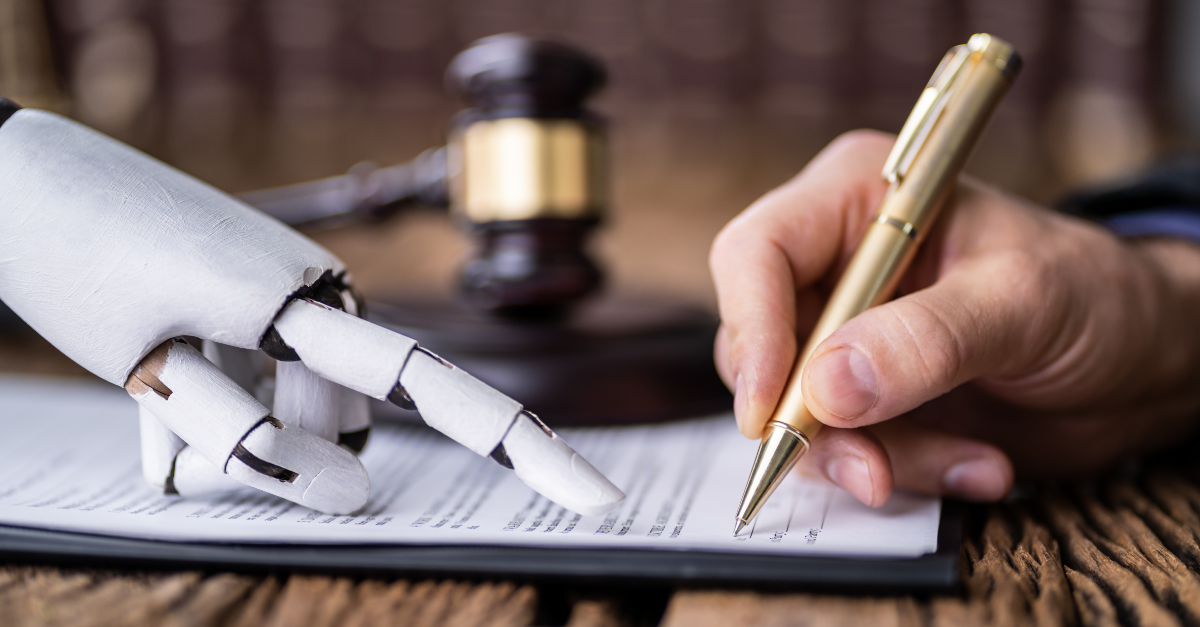
 AI in criminal justice—a visual with robocops patrolling the streets, and an AI judge presiding over courtrooms may pop into our heads. We may not be that futuristic yet, but AI is transforming the criminal justice system in ways that even science fiction writers couldn’t have predicted.

From predictive policing to facial recognition, AI is helping law enforcement agencies prevent and solve crimes faster and more efficiently than ever before. But what does this mean for the future of criminal justice? Will algorithms replace human judges, or will AI-powered detectives work alongside human counterparts?

As with any new technology, there are both potential benefits and concerns. On the one hand, AI can help identify patterns of criminal activity that might not be immediately apparent to human investigators. On the other hand, there are concerns about bias and the potential for abuse by law enforcement agencies.

But one thing is certain: The use of AI in criminal justice is here to stay. So, whether you’re excited about the possibilities or worried about the implications, it’s important to stay informed about this rapidly evolving field. Join us as we delve into the world of AI and criminal justice, exploring its potential, its pitfalls, and its impact on the future of law enforcement.

Ethical concerns in brief

As exciting as the use of AI in criminal justice may be, it’s important to remember that it’s not all fun and games. There are some serious ethical concerns to consider when it comes to using algorithms to make decisions that can have life-altering consequences.

One of the biggest concerns is the potential for bias. Because AI is only as good as the data it’s trained on, there is a risk that it will perpetuate existing biases and discriminatory practices. This can lead to unfair outcomes for marginalized groups and perpetuate injustices in the criminal justice system.

Another concern is the lack of transparency in how AI systems make decisions. It can be difficult for humans to understand how a machine learning algorithm arrived at a particular decision, which makes it challenging to identify and correct errors or biases.

Finally, there are concerns about privacy and surveillance. The use of facial recognition and other AI-powered surveillance technologies raises questions about the right to privacy and the potential for abuse by law enforcement agencies.

As this technology continues to evolve and become more widespread, it’s essential that we address these concerns and ensure that AI is being used in an ethical and responsible manner.

The impact of building AI for criminal justice systems based on biases

AI in criminal justice may sound like a modern-day innovation, but it turns out that this technology has some seriously outdated ideas. That’s because many of the algorithms used in criminal justice are based on historical data, which means they may be perpetuating biases and injustices from the past.

For example, algorithms used to predict recidivism rates (the likelihood that a defendant will re-offend) have been found to have racial biases. This is because the data used to train these algorithms reflects historical patterns of discrimination in the criminal justice system, such as disproportionate arrests and convictions of people of color.

Similarly, facial recognition algorithms have been found to be less accurate when identifying people with darker skin tones, which can have serious consequences for people who are wrongly identified as suspects in criminal investigations. One of the first known examples of this case is of Robert William. He is an African American man who was arrested after a facial recognition system mistakenly matched his photo to a thief; he was held overnight and traumatized by his experience. His story serves as a reminder of the harm that flawed facial recognition technology can do to society.

Another example that demonstrates the potential of this technology is the Correctional Offender Management Profiling for Alternative Sanctions. It is an algorithm used to predict the likelihood of a defendant re-offending. It considers factors like criminal history and demographics to assign a risk score, but is biased against Black defendants, predicting a higher risk of re-offending than is actually the case. While this technology can be useful in predicting and preventing crime, it’s essential that we address the biases and ethical concerns that can arise.

Addressing the concerns

As it turns out, we can’t just sit back and hope that the ethical concerns surrounding AI in criminal justice will magically disappear. Thankfully, there are several initiatives underway to address these issues and make sure that AI is being used in a fair and just manner.

For example, some researchers are working on developing algorithms that are less reliant on historical data and more transparent in their decision-making processes. These algorithms could help to reduce bias and ensure that AI is being used to promote fairness in the criminal justice system.

Meanwhile, some organizations are pushing for more oversight and regulation of AI in criminal justice. For instance, the AI Now Institute has called for a moratorium on the use of facial recognition technology in law enforcement until the technology has been thoroughly evaluated and any biases have been addressed.

Other initiatives include efforts to increase diversity in the tech industry, which could help to ensure that AI is being developed and implemented by a more diverse group of people with a wider range of perspectives and experiences.

Ultimately, there’s still a long way to go before we can say that AI is being used in criminal justice in a truly ethical and just manner. But these initiatives give us hope that we can work towards a more fair and equitable system, one algorithm at a time. It requires a multi-pronged approach that involves collaboration between researchers, policymakers, civil society groups, and other stakeholders. By working together, we can help ensure that AI is being used in a way that reflects our shared values of justice, fairness, and human dignity. So let’s boldly go where no AI has gone before, and create a future that we can all be proud of!


Knowledge, not noise

Subscribe today to access this content and much more.
We promise—no spam, no ads.

By clicking Subscribe, you agree to processing of personal data according to the Privacy Policy.
Naveena Srinivas

Naveena Srinivas

Enterprise Analyst, ManageEngine

Want to read<br>this article on the go?

Want to read
this article on the go?

Do it on the ManageEngine
Insights app.

Published on October 21, 2021 | 5 min

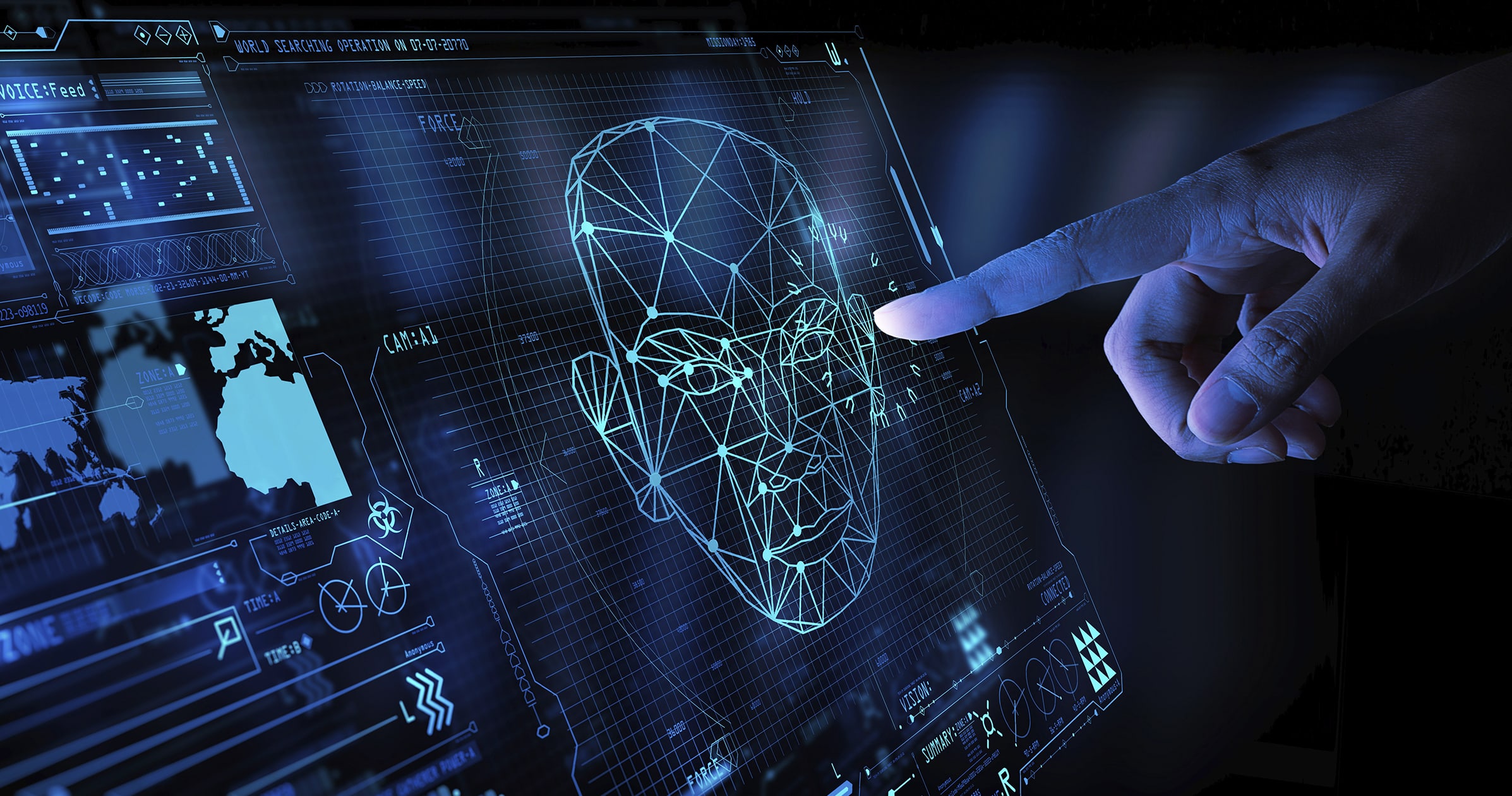
The automatic photo tagging feature on social media is quick and pretty accurate but not so secure. Most concerning, the data on social networks is publicly available and is being scraped for use in privately-held, AI facial recognition databases–without your consent. The unregulated collection and use of biometric data is a risk that’s compounded by the rise in cyberattacks.

With facial recognition technology becoming more widespread, your facial signature could end up in numerous places. You cannot be sure who might have access to your biometrics. Some might counter that any damage generated by data privacy abuses would be outweighed by the technology’s beneficial implementations.

True, facial recognition systems have done wonders around us, from helping law enforcement find missing children and arrest dangerous criminals to proving your identity at airports and banks. Yet in these cases, too, facial recognition shortcomings pave the way to abuse, this time in the form of civil rights violations.

As we’ll see below, the data privacy, civil rights, and other threats posed by facial recognition must be addressed to avoid doing more harm than good.

High-stakes application of AI facial recognition

Facial recognition databases play a significant role in law enforcement. Law enforcement agencies routinely collect mugshots from those who have been arrested and compare them to local, state, and federal facial recognition databases. For example, the FBI has over 650 million photos traced from several state databases.

Facial recognition matches the faces of people walking past these special cameras with images of people on a watch list. Watch lists contain pictures of anyone, including people who are not suspected of any misconduct, and the images can be sourced from anywhere—even from our social media accounts. For example, any photo tagged with a person’s name becomes part of Facebook’s database, which may also be used for facial recognition.

How the data is acquired matters

With a vision of better equipping law enforcement with cutting-edge technologies, Clearview AI revealed its extensive database of over 10 billion images. The company also disclosed that any of its users can upload a person’s picture, and the software could then potentially reveal that person’s identity. 

An investigation of Clearview AI by The New York Times in early 2020 revealed it has been mining online pictures to build a vast facial recognition database. Initially, Clearview AI claimed that its app was only meant to be used by law enforcement and a limited number of private companies. But the Times article made it clear that the company has consistently misrepresented the extent of its operations and aspirations.

BuzzFeed News reported that a leaked Clearview AI client list had references to hundreds of police departments and federal agencies in the United States, including ICE and Customs and Border Protection. The leaked list also included a startling assortment of buyers like the NBA, Best Buy, Walmart, and Macy’s. Although several companies have now distanced themselves from Clearview AI, a few of them said that they had conducted trial runs and nothing more.

Following this, the start-up has continued to face a slew of lawsuits. The complaints filed in France, Austria, Greece, Italy, and the United Kingdom say that the company’s method of collecting and documenting data, including images of faces it automatically extracts from public websites, violates European privacy laws.

Subduing Clearview AI

Clearview AI’s tool has faced severe criticism from tech organizations as well as United States authorities. Despite platforms like Google, Twitter, YouTube, Facebook, and LinkedIn sending cease and desist letters, Clearview CEO AI Hoan Ton-That says the company has a First Amendment right to use publicly available information for its system.

However, in August 2021, an Illinois state court ruled in favor of the American Civil Liberties Union (ACLU) in its fight against the tech start-up. The judge stated that Clearview AI cannot use the First Amendment as a defense against this suit and can continue its business only with Illinois residents’ consent.

The risk of unintentional biases

Similarly, Amazon’s cloud-based facial recognition tool, Rekognition, is the target of growing opposition nationwide. In a test conducted by the ACLU in 2018, the software incorrectly identified 28 members of Congress as criminals using a database of 25,000 mugshots.

Amazon criticized the results, claiming that the facial recognition system’s confidence threshold was lowered. But a year later, the ACLU of Massachusetts found that Rekognition falsely matched 27 New England professional athletes to mugshots. The ACLU found that both tests mismatched people of color.

Researchers at MIT’s Media Lab have found that facial recognition algorithms are more accurate at identifying white men than women and people of color because databases contain more data on white men, creating an unintended bias. The ACLU’s results validate this concern, given that nearly 40% of Rekognition’s false matches in the first test were for people of color even though they make up only 20% of Congress.

Amazon, IBM, and Microsoft pause their sale of AI facial recognition

Amazon has come under scrutiny after Rekognition showed bias against people of color. In response, the company implemented a one-year moratorium on police use of its facial recognition technology. However, in June 2020, Amazon published a surprise blog post that mentioned allowing the use of Rekognition for organizations like Thorn, the International Centre for Missing & Exploited Children, and Marinus Analytics to help rescue human trafficking victims and reunite missing children with their families.

Soon after, IBM and Microsoft announced that they would no longer provide police with their facial recognition technology because AI systems used in law enforcement need to be tested for bias. In May 2021, Amazon extended the moratorium on police use until further notice.

The current status of AI facial recognition

Facial recognition may be another erosion of personal privacy. Let’s evaluate this technology in terms of two factors: discrimination and privacy.

  1. Discrimination: Facial recognition is never 100% accurate. The error rate for children, women, and people of color is up to 35%, while the accuracy for white men is 99%. It can be argued that AI will progress and “diversify” faces over time, but for now, it puts ethnic minorities at risk.
  2. Privacy: Following the Biometric Information Privacy Act, the Commercial Facial Recognition Privacy Act was put before the US Senate in March 2019. These acts require companies to obtain the explicit consent of individuals before collecting their biometric information. Providers of facial recognition technologies and state organizations need to be mindful of these laws regarding personal privacy and the measures to be taken.

David Scalzo, one of the early investors in Clearview AI, said,

“I’ve come to a conclusion that because information constantly increases, there’s never going to be privacy. Laws have to determine what’s legal but you can’t ban technology. Sure, that might lead to a dystopian future or something, but you can’t ban it.”

We cannot overlook the breakthroughs in facial recognition. But with the amount of data that it collects and stores, concerns about facial recognition should not be ignored. If the technology vendors won’t restrain themselves voluntarily, let’s hope for legislation that compels them to address this privacy, discrimination, and other abusive issues.

Naveena Srinivas

Naveena Srinivas

Enterprise Analyst, ManageEngine

Want to read<br>this article on the go?

Want to read
this article on the go?

Do it on the ManageEngine
Insights app.

Published on November 03, 2020 | 3 min

Poor password habits have led to serious breaches over the years. According to Verizon’s latest data breach investigation report, over 80 percent of data breaches are tied to compromised passwords. That said, by no means are we approaching the end of the password era; in fact, passwords are still superior to emerging blockchain technologies and biometrics.

Biometric solutions are far from a panacea

Passwords are either entirely right or entirely wrong. Conversely, biometrics solutions require a margin of error, which can be problematic. To give a slightly innocuous example, many people can open their relatives’ mobile phones through facial recognition applications. On a more sinister note, hackers from Tencent can access phones via fingerprint scanners in under twenty minutes. Likewise, for years, scholars have shown that it is possible to bypass fingerprint readers with 2.5D fingerprint spoofs. Put simply, biometrics are not immune to breaches, and most importantly, if biometric data is stolen, it cannot be replaced.

This isn’t mere conjecture, as we’ve already seen biometric breaches in the real world. Last year, web privacy company vpnMentor found that Suprema’s security platform, Biostar2, was comprised. According to vpnMentor, the breach exposed facial recognition and fingerprint records for over 1 million people. Suprema had saved exact copies of users’ fingerprints, potentially compromising these individuals’ biometric information forever.

For companies like Suprema that store users’ biometric data, it’s wise to utilize blockchain technology to protect this data. Blockchain technologies have also been viewed as a suitable replacement for passwords in and of themselves; however, we are still years away from this.

We’re years away from a blockchain replacement

For years, whitehat hackers have suggested that blockchain distributed ledger technology (DLT) could replace traditional passwords. Several start-ups, such as Remme, already provide the service. Through the DLT model, devices are issued an SSL certificate, which is stored in a blockchain ledger (in Remme’s case, it’s Hyperledger Sawtooth). When a user attempts to log into an account, the user’s identity is verified by this technology. There is no centralized server or password database, which theoretically means that bad actors are left without a central point to target.

In theory, this emerging technology sounds great; however, it does not come without a cost. As computer scientist Nina Polshakova has shown, storing even 100 passwords on the Bitcoin blockchain ledgers can be extremely expensive. Moreover, according to Gartner, blockchain technologies are entering the “trough of disillusionment” section of the Hype Cycle, and most enterprises are still approximately seven years away from employing such technologies in a way that is operationally scalable. Additionally, some enterprises are wary of blockchain enterprises, as many crypto service providers have been mired in scandal.

As a caveat, several rather promising companies have appeared on the scene. The Syndey-based non-profit Tide Foundation is pilot-testing a technology that involves “splintering,” which is essentially a more complex version of hashing. Through splintering, passwords are broken up into small pieces and stored via a decentralized blockchain; every password is “splintered” to at least 20 nodes on Tide’s public blockchain, making these passwords 14 million times more difficult for hackers to access.

Their splintering technology has proven to be quite resilient. Despite 6.5 million attempts last year, no hackers were able to conduct a successful dictionary attack on a dataset protected by Tide’s technology. The non-profit intends to keep this technology open-source and to release it later this year for commercial use. Although Tide’s new technology sounds promising, it remains to be seen whether it will be adopted by mainstream enterprises.

Conclusion

Although passwordless authentication options are gaining prominence, there’s a reason why we’re still using passwords 60 years after their inception: they’re effective. Unlike biometric data, passwords are either definitively right or definitively wrong. With passwords, there is no ambiguity. Most importantly, passwords can be easily replaced if they are compromised. Biometric data—irises, faces, or fingerprints—can never be replaced in the event of a breach. Lastly, despite the strong work put forth by companies such as Remme and the Tide Organization, it remains to be seen whether such emerging technologies will see mass adoption.

John Donegan

John Donegan

Enterprise Analyst, ManageEngine

Want to read<br>this article on the go?

Want to read
this article on the go?

Do it on the ManageEngine
Insights app.

Published on October 19, 2020 | 4 min

While many were impressed by Google CEO Sundar Pichai’s op-ed piece in the Financial Times, it’s unclear whether Pichai was entirely forthright with his call for increased AI regulation. In fact, it is likely that Pichai acknowledges that AI regulation is inevitable, and he wants to have an influence on the forthcoming laws.

Quite similar to Big Tech’s collective call for a federally mandated U.S. data privacy law, Pichai’s clarion call for AI regulation is an attempt to get ahead of the situation. After all, formal legislation on AI initiatives would likely overwhelm AI start-ups and benefit deep-pocket players like Google.

The AI sector is in a state of hyper growth. With $26.6 billion in VC funding and 2,200 deals in 2019, investment in AI reached an all-time high. Moreover, lobbyists for the tech industry are active on Capitol Hill, with big players like the Information Technology Industry Council (ITI) staunchly advocating for industry self-regulation.

Challenges to AI governance

Despite the influx of money pouring into AI initiatives across the globe, it’s vital that tech companies are not allowed to operate with impunity. Issues such as surveillance, digital manipulation, autonomous weapons, technological unemployment, and criminal justice bias are too real to ignore.

Deepfake Audio and Video
Within the past few years, deepfake audio has already been used to swindle a handful of companies. As an example, an energy company executive was recently tricked into wiring $220,000 to a Hungarian organization because he thought the request came from his boss.

Even more problematic than voice phishing, or vishing, is the potential for deepfake audio and video to disrupt elections and sow distrust in news media. Big Tech has readily acknowledged the potential threat of these generative adversarial networks (GANs), going so far as to join forces with each another to address the issue. Amazon, Facebook, Microsoft, and the Partnership on AI recently solicited help in creating deepfake identification technologies from developers across the globe. Their Deepfake Detection Challenge (DFDC) offered over a million dollars in prizes.

Facial Recognition Biases
According to the recent NIST report on facial recognition biases, Face Recognition Vendor Test (FRVT) Part 3: Demographic Effects, African Americans experience the highest rates of false positives among all races. NIST examined the majority of facial recognition algorithms—189 software algorithms from 99 vendors—and found that these algorithms disproportionately affected African Americans. It is feared that such tools, if put into practice, could result in false accusations of innocent people.

Surveillance Concerns
In recent months, Pichai has addressed the dangers of facial recognition technologies. In fact, he’s pledged that Google will never sell its proprietary algorithms, as he’s concerned that they could be misused. The European Union also worries about facial recognition technology, to the point where they are considering a five-year moratorium on the use of facial recognition in public spaces. This would give governments the time necessary to identify rules and ethical guidelines before the technology is deployed on a wide scale.

Google’s Pichai supports such a moratorium; however, other Big Tech leaders do not. For example, Microsoft President Brad Smith doesn’t support the moratorium, nor does he promise not to sell facial recognition software at a later date. That said, Smith does agree that there needs to be more regulation in general.

Potential solutions

Although powerful lobbyist groups, like ITI, argue that any regulation of AI technologies will stifle innovation, the societal risks of not regulating AI are too serious to ignore. Tesla CEO Elon Musk, who admittedly can be a bit alarmist at times, believes that AI will eventually be able to simulate consciousness and “outthink us in every way.” A strong advocate of AI regulation, Musk co-founded OpenAI, an artificial intelligence research company, and he has also called for an AI regulatory agency, similar to the FAA for aviation or the FDA for food, drugs, and medical devices.

In addition to Pichai and Musk, other Big Tech execs have offered solutions as well. The policy principals at IBM created an AI regulatory framework that calls for an AI ethics official, mandatory checking for biases, an assessment of the potential for harm, and explainable AI (XAI).

Also, as AI increasingly runs on IoT devices, including smartphones, cars, and wearables, federated machine learning can help from a privacy perspective. Federated learning is the practice of training your AI algorithm on the IoT device itself. Rather than sending all the algorithmic data to a central server or cloud, only relevant data summaries are sent back to the central server. During federated machine learning, the data transfers can be made even more secure via homomorphic encryption and differential privacy.

In regard to managing facial recognition issues, it would be prudent to put forth a moratorium on surveillance technologies in public spaces, and to also employ additional layers of protection on devices. At this point in time, such additional layers of protection include “smile to unlock” and “liveness detection” technologies.

Lastly, the acting forces behind AI regulation should come from outside industry professionals and trade associations. Presently, there is only one organization that is comprised of both industry and non-industry participants: the Partnership on AI. Such partnerships are a step in the right direction.

John Donegan

John Donegan

Enterprise Analyst, ManageEngine

Want to read<br>this article on the go?

Want to read
this article on the go?

Do it on the ManageEngine
Insights app.

Subscribe to facial recognition

Thanks for subscribing to ManageEngine Insights. If you do not receive our welcome email, please check your SPAM folder.