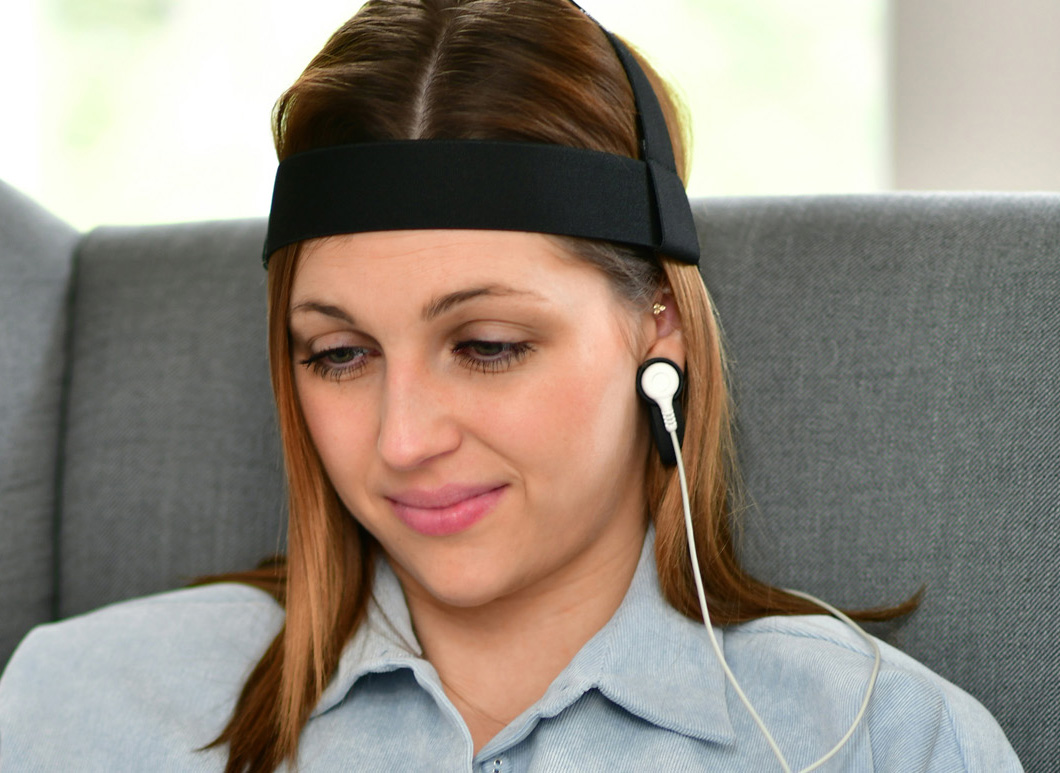


Mind tracking, hacking, and data aggregation of consumer brain activity is no longer science fiction. In fact, consumer brain wearables have been on the market for years.
Consumer-focused EEG devices, such as brainwave headsets, are available to aid with gaming, sleeping, and the prediction of epileptic seizures and other health concerns. In addition to various well-known brain-computer interface companies (Blackrock Neurotech, Neurable, Neuralink, and Synrchron among them), there are many lesser known entities in the space, such as Myndplay in the U.K. and Hangzhou-based Entertech.
Entertech made headlines a few years ago after partnering with SingularityNET to bring AI-powered neurotechologies to the consumer and enterprise markets. According to reporting from The South China Morning Post, Enertech provided the China State Grid with thousands of EEG helmets to measure worker fatigue.
For a variety of reasons, some more altruistic than others, many companies want to tap into this multibillion-dollar market. The consumer (and eventually, enterprise) neurotechnology space is already filled with patents from the usual Big Tech names. Snap, Meta, Microsoft, and Apple are all working hard to bring neurotechnology devices to the masses.
The neurotech timetable
According to Nina Farahany, an AI ethicist and professor at Duke Law School, these technologies will scale up and become a part of our everyday lives over the next 2-5 years. In fact, since she gave her estimate in a September 2023 interview, the timetable is likely closer to 1-4 years.
Big Tech as “the new Big Tobacco”
Earlier this week, on June 3, Farahany spoke on a popular podcast to discuss the dangers of the forthcoming technologies. One segment in particular jumped out at me, and it’s worth quoting in full; Farahany says we’re living in an interesting time, much like the days when the public first learned that the tobacco industry was hiding health facts. Farahany says,
“For awhile, tobacco companies were sitting on a whole bunch of information about the addictiveness of the products, about the effects on lung cancer. They had a whole lot of asymmetrical information. And people smoked.
And then it turned out they also had information that showed if a kid before the age of 15 smoked their first cigarette, they were more likely to be addicts for life, and they’d have a much harder time trying to break free of it.
Most of the tech companies are sitting on data like this. About the effect of technology on our brain and mental experiences.”
In many ways, Big Tech has far more power than Big Tobacco because the technology products’ negative effects are more insidious and harder to pin down. Equally importantly, these Big Tech companies aren’t just sitting on the pernicious data they’ve acquired. They’re leveraging it. Farahany continues,
“And they’re not only sitting on it. They’re like, ‘Oh, it turns out if we do intermittent rewards in this game, it will addict people more.’ Or, ‘If we have the notifications bunched, it will distract them and bring them back to the platform and lead to greater engagement.’
Or, ‘If we use this algorithm with short-form videos, it puts people into system 1 thinking instead of system 2 thinking; so, their brains are hijacked; their self-control is eviscerated. And they stay on the platform for longer.’ Or, ‘if we give them only information that is of this particular political leaning, it puts them in a silo and makes them stay on platform.’ They’re sitting on all this data.”
Their goal is to harvest the consumer data they’ve accumulated to strengthen their designs and algorithms in order to keep users on their platforms for as long as possible.
Today, due to corporate whistleblowers and congressional interest (from both sides of the aisle), we’re slowly learning more and more about the data Big Tech weaponizes.
Neurotechnologies offer both medical benefits and ethical risks
Nuerotechnologies have already brought medical benefits. We’ve seen Empatica release an FDA-cleared epilepsy watch; using an EEG-based algorithm, their wearable can detect the onset of a seizure. Also, researchers are working on wearable tech devices to help ALS patients’ movement and speech. Any technology that can help measure brain function, identify neurological diseases, and help combat the effects of those neurological diseases is a technology worth pursuing.
That said, we all have a right to mental privacy. And if neurotechnologies become the norm on consumer devices, it very well may be hard to get that horse back in the stable.
Even historically privacy-centric companies are invested in normalizing such tech; for example, Apple’s recent patent has EEG technologies attached to AirPods.
Now, many of us may or may not care. After all, sharing data isn’t new. Google has access to our emails. Apple has our iPhone locations. Moreover, the propensity to share personal data is even more acceptable among younger generations. Gen-Zers frequently share their locations with their friends.
The point is, we slowly become indifferent to giving our data away via emerging technologies, and it’s a slippery slope.
Solutions for consumers and enterprises
Ideally, we would try to course correct from the ad-driven ecosystem that is so rampant in search and social media companies, especially as these companies strive to become heavyweights in the ML, AI, and neurotech spaces.
As Farahany suggests, we should choose companies that don’t intentionally put addictive constructs (algorithms and designs) into their products. We should seek out companies that don’t commodify and misuse our data.
Apple, Snap, Meta, and Microsoft will likely be among the many winners in the forthcoming neurotech device space. Some of these companies are more privacy-centric than others. All other things being equal, we should support companies that are less reliant on ad revenue and the data surveillance economy at large.
After neurotech devices do permeate the consumer space, it won’t be long until they’re also in the enterprise space. And then, it will be up to the organizations to make ethical software and hardware procurement decisions.
We’re living in a unique time. Consumers, regulators, and society eventually did make Big Tobacco change some of its ways; perhaps, we’ll do the same with Big Tech.