
Published on June 27, 2024 | 5 min

Everything’s bigger in Texas—even the state’s recent initiative to protect consumer data.

On Monday, July 1, 2024, the Texas Data Privacy and Security Act (TDPSA) goes into effect. Signed into law by Gov. Abbott back in June 2023, the TDPSA is one of the most comprehensive data privacy laws in the country.

Under the TDPSA, nearly all consumer-facing companies doing business in Texas will soon face data collection, processing, and disclosure requirements similar to those in California’s CCPA and CPRA. Although Texas and California are usually on different ends of the political spectrum, the states are apparently quite like-minded when it comes to data privacy.

The fact that Texas has decided to join California in passing one of the most stringent data privacy laws in the country suggests a few things: (1) consumer data privacy has become a bipartisan, hot-button issue; (2) consumers are paying more attention than ever to how companies are collecting, using, and selling their personal data, and (3) many state legislators don’t have much confidence in our dysfunctional Congress passing an effective federal data privacy law.

One of the TDPSA’s authors, Giovanni Capriglione (R-TX), certainly didn’t have faith in federal lawmakers taking the initiative back in 2019. While advocating for an earlier iteration of the TDPSA, Texas House Bill 4390, Capriglione bluntly told his colleagues, “I disagree that this is the duty of the federal government, mostly because I don’t have much faith that they will do it.”

Businesses affected by the Texas Data Privacy and Security Act

Most large organizations doing business in Texas will be affected. Unlike nearly all the other states with comprehensive data privacy laws in place, the TDPSA doesn’t exclude organizations that don’t meet volume thresholds (such as processing data of at least 100,000 residents). In Texas, there’s no minimum volume threshold.

According to the language in the TDPSA, the new law applies to any entity that (1) conducts business in Texas or produces a product or service consumed by residents of Texas; (2) processes or engages in the the sale of personal data, and (3) is not a small business as defined by the U.S. Small Business Administration.

As a quick aside, whether a business qualifies as “small” varies by industry; it’s usually based on annual revenue, number of employees, or both of these variables. Also, under the TDPSA, even “small” businesses are required to obtain consent before selling sensitive personal data.

Exceptions

In addition to the small business exception, the TDPSA doesn’t apply to (1) state agencies or political subdivisions; (2) financial institutions subject to the Gramm-Leach-Bliley Act (which already requires covered entities to safeguard sensitive data and explain their data sharing practices to customers); (3) covered entities or business associates already governed by the Health Insurance Portability and Accountability Act (HIPAA), and any other applicable federal and state healthcare laws; (4) non-profit organizations; (5) institutions of higher education; or (6) electric utility, power generation companies, or retail electric providers. 

Compliance obligations

Under the letter of the law, data controllers now must: (1) only process information that is completely necessary to deliver the product or service; (2) notify consumers of their privacy rights, including the type of personal information collected, consumers’ rights to opt out, and the purposes of the collecting and processing consumer data; (3) not discriminate against consumers for exercising their privacy rights; (4) not process any personal data that violates existing state and federal discrimination laws; (5) gain consent before collecting sensitive data; (6) ensure security of personal data through reasonable data security practices; (6) conduct data protection assessments; (7) respond to consumer data requests within 45 days; (8) maintain contracts with third-party data processors and ensure that these third parties are compliant with the TDPSA as well; and (9) disclose any data breach within 60 days.

TDPSA compliance will be enforced by the Texas Attorney General. Texas residents can’t initiate a private right of action (file a civil case); however, they can inform the Texas AG about the alleged violations. Businesses face fines of up to $7500 per violation.

How businesses should prepare

If you’re already in compliance with the CCPA and CPRA, you should be well on your way toward TDPSA compliance. However, in some respects, the TDPSA goes beyond the scope of the CCPA. As a quick example, the TDPSA includes provisions for privacy policy disclosures related to the sale of biometric data, and there’s also a mechanism in place for consumers to appeal a denial of a request.

To prepare for TDPSA enforcement, businesses should organize and assess all of the data they’re collecting. It is vital that all consumer consent requirements are compliant with TDPSA. Adjustments may need to be made to corporate policies and procedures;  moreover, all vendor agreements and privacy policies should be reviewed.

The growing patchwork of state laws

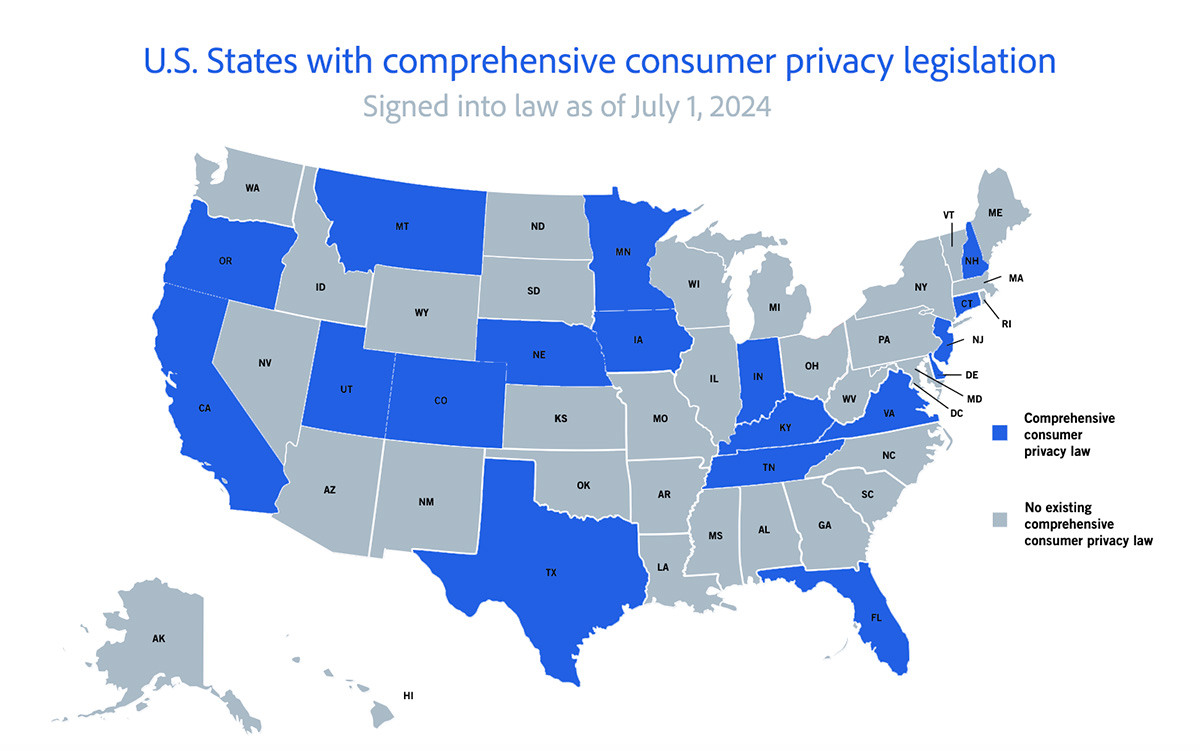
According to the International Association of Privacy Professional’s privacy legislation tracker, eighteen states currently have signed comprehensive consumer privacy bills into law: California, Colorado, Connecticut, Delaware, Indiana, Iowa, Kentucky, Maryland, Minnesota, Montana, Nebraska, New Hampshire, New Jersey, Oregon, Tennessee, and now, Texas.
Texas Data Privacy Act

Rhode Island appears to be next up, as its Data Transparency and Privacy Protection Act passed on June 24, 2024. And Illinois, Louisiana, Massachusetts, Michigan, North Carolina, Ohio, and Pennsylvania all have data privacy bills in either committee, cross chamber, or cross committee.

Interestingly, Vermont’s Data Privacy Act, which passed 139-3 in the House, appears to be dead on arrival after a recent veto by Republican Gov. Phil Scott. Nevertheless, with so many bills coming down the pike, the pressure is certainly on Capitol Hill to enact privacy legislation at the federal level.

Key takeaways

Texas just passed one of the strongest privacy laws in the country, signaling to the folks on Capitol Hill that the state is serious about consumer data privacy.

If legislators in Washington don’t enact a federal data privacy law soon, the headache of complying with a patchwork of state laws will continue for many businesses.  The Texas law is particularly stringent; in fact, as of July 1, it won’t be uncommon for companies to be subject to California and Texas’ data privacy laws, and not many others.

In the wake of the TDPSA, hopefully folks in D.C. are realizing it’s past time for a federal law.  After all, when California and Texas—two state legislatures that don’t often see eye-to-eye—agree that consumer data privacy protections are sorely needed, odds are, they’re onto something.


John Donegan

John Donegan

Enterprise Analyst, ManageEngine

Want to read<br>this article on the go?

Want to read
this article on the go?

Do it on the ManageEngine
Insights app.

Published on July 07, 2023 | 5 min

With a policy vacuum on Capitol Hill, there has been a flurry of state-level activity over the past year. Five more states passed laws in 2023, bringing the total number of state-level data privacy laws to ten.

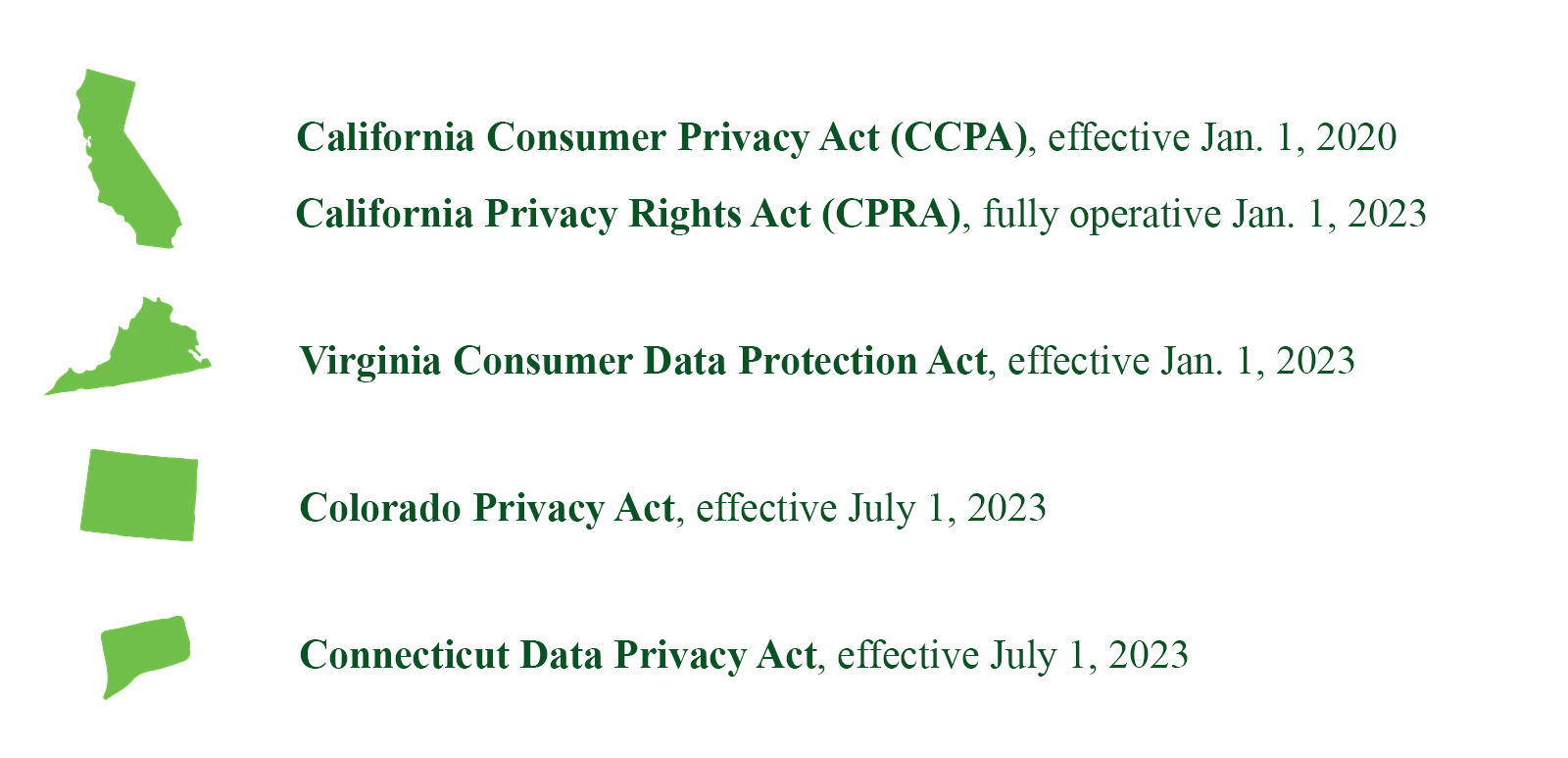
California and Virginia already have operative data privacy laws, and on July 1, laws from two more states—Colorado and Connecticut—came into effect.
CA, VA, CO, CT privacy laws
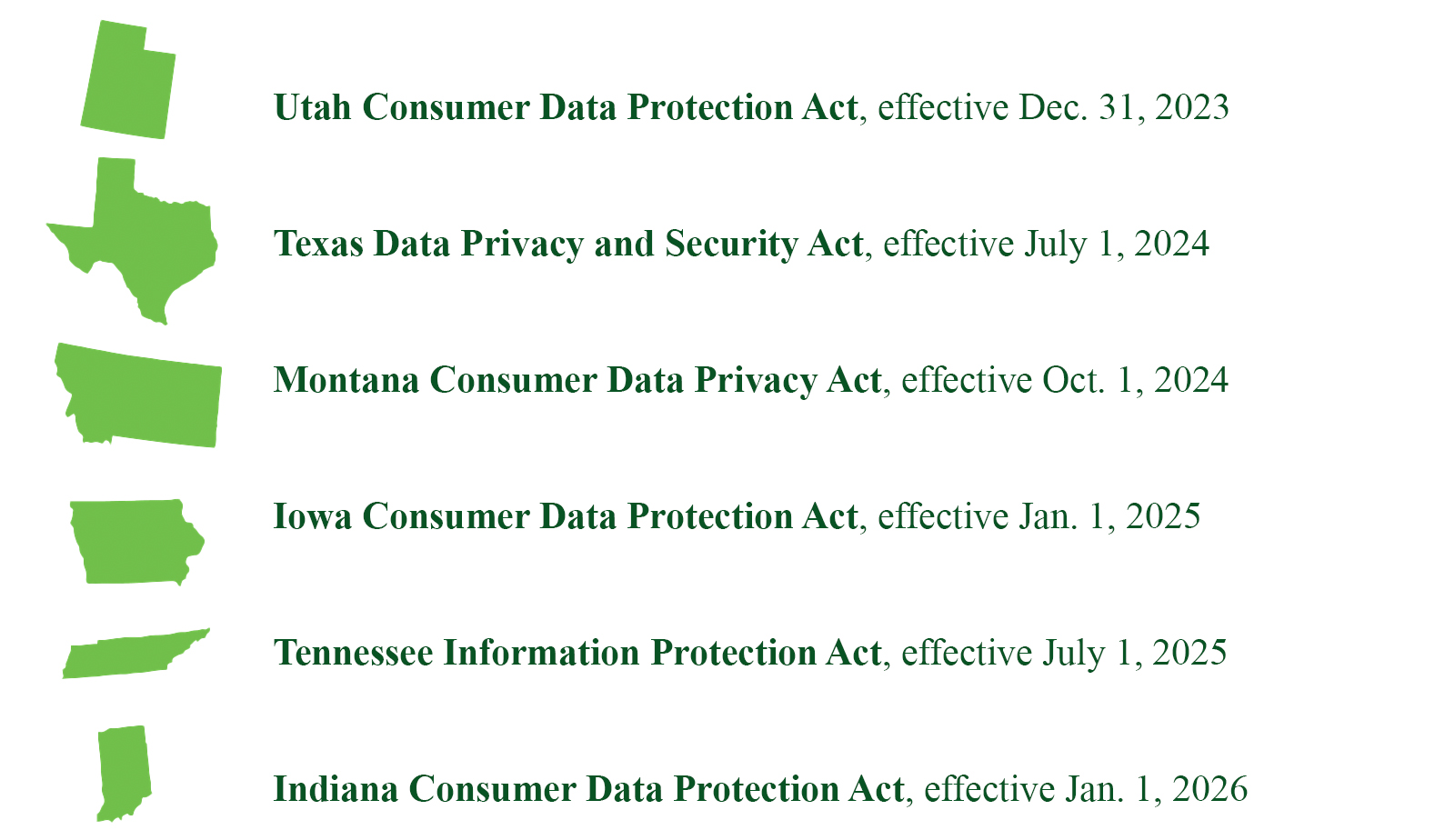
Six other states—Utah, Texas, Montana, Iowa, Tennessee, and Indiana—have passed laws; however, these have yet to take effect. Although these six states are all predominately red, each has different rules related to consumer rights and business obligations. In some cases, the differences are massive.
UT, TX, MT, IA, TN, IN privacy laws
Take Montana, for example. According to recent reporting from Politico, Montana resisted a great deal of Big Tech lobbying. Despite complaints from the State Privacy and Security Coalition, Montana legislators refused to remove “universal opt-out requirements,” which essentially allow Montanans to opt-out of tracking with a single click. Additionally, Montana legislators refused to allow carve-outs for “pseudonymous data,” which would have allowed tech companies to continue to track consumers who have opted out.

Lobbyists advocated for a provision that would have provided companies with time to remedy a violation before accruing a fine; however, it was to no avail, as Republican Gov. Greg Gianforte and bill sponsor Sen. Daniel Zolnikov (R-MT) didn’t take the bait.

Speaking about the lobbyists’ attempts to get him to water down the bill, Zolnikov colorfully said, “I’m not an idiot, and you treating us in Montana like a bunch of rural backwoods folks is quite an insult as well.”

Suffice it to say, it is too simplistic to assume that blue-leaning states offer tougher consumer data privacy legislation than red-leaning states. In an effort to highlight the myriad differences between the states’ data privacy legislation, the International Association of Privacy Professionals (IAPP) provides an excellent chart of all the consumer privacy bills, which they update frequently. It shows the bills’ statuses: Introduced, In Committee, In Cross Chamber, In Cross Committee, Passed, and Signed.

Additionally, the chart highlights the states’ various, and varying, consumer rights—e.g., right to access; right to correct; right to delete; right to opt-out of certain processing; right to portability; right to opt-out of sales to third parties; right to opt-in for sensitive data processing; right against automated decision making, and private right of action, which is essentially the consumers’ right to seek civil damages for a business’ violation of the law.

IAPP’s chart also lists the state laws’ different business obligations—e.g., opt-in defaults, which require businesses to treat a consumer under a certain age with an opt-in default for the sale of his or her personal information; transparency requirements, risk assessments, and processing limitations.

Minimize your data collection, processing, and usage.

I would be remiss if I didn’t point out that the best course of action would be to abstain from collecting, processing, trading, selling, and otherwise handling sensitive consumer data in the first place. If possible, you should comply with the most stringent laws (e.g., CPRA, GDPR) and adhere generally to the principle of data minimization, which states that one should only handle user data that is essential to the task at hand, and only for as long as that task takes.

However, not every company can completely abstain from processing consumer data. For such companies, here are a few ways to navigate the myriad data privacy laws in the states:

Identify which, if any, laws apply to your business.

Each state has a different threshold for companies doing business in its state. There are thresholds that pertain to the number of customers in the state, the percentage of revenue attributable to the sale of personal data, and a minimum number of customers.

For example, the Virginia law—which incidentally was based on a bill drafted by an Amazon lobbyist—only pertains to either (1.) businesses that have at least 100,000 customers in Virginia, or (2.) businesses that have at least 25,000 consumers and make at least 50 percent of its gross revenue from the sale of personal data. Also, if one’s business doesn’t have at least an annual revenue of $25 million, the Virginia law isn’t applicable.

Aside from these basic thresholds, there are many other ways in which a state’s law may not pertain to your business. States have different regulations related to the types of data that an organization is allowed to collect and how that data can be used.

Some states have processing loopholes; for example, laws in Iowa, Utah, and Indiana—some of the weakest in the country—have a rather broad definition of what it means to “sell” user data. If you’re not explicitly charging money for user data in those states, you’re likely in the clear.

Review your service contracts with third-party vendors; frequently update your internal and external privacy policies, and have an incident response plan in case of a cyberattack.

As a best practice, it’s prudent to build data protection clauses directly into the contracts you have with your third-party vendors. Even if it’s not required by law today, it may be down the road. You don’t want to be held liable for data protection mistakes made by your vendors. Also, when in doubt, put things in writing. Auditors—and regulators—need to see written procedures for information collecting practices. Also, have an incident response plan and ensure that your privacy policies are up-to-date and accurate.

Err on the side of caution, and look to California and Europe.

Of the ten state laws in the U.S., California is the most stringent; thus, you’re probably in compliance with the other state-level laws if you comply with the CPRA. However, every business operates differently; these laws are quite granular, and I’m not a lawyer. Thus, in the short term, be sure to have your chief security officer and legal team assess the ten laws.

In the long term, Congress will eventually pass a federal data privacy law. So, if you’re compliant with GDPR in 2023, you’ll most likely be all set by the time the federally mandated bill comes down the pike—whenever that may be.

John Donegan

John Donegan

Enterprise Analyst, ManageEngine

Want to read<br>this article on the go?

Want to read
this article on the go?

Do it on the ManageEngine
Insights app.

Published on February 09, 2023 | 7 min

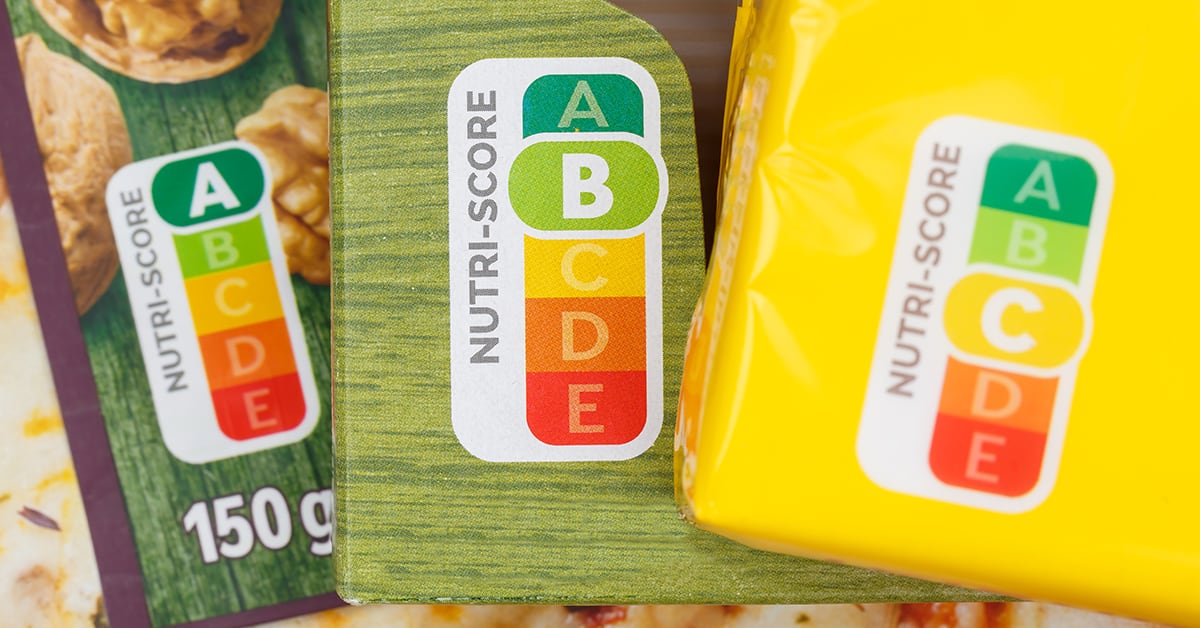
Taking a cue from the food industry, IoT manufacturers should embrace privacy and security “nutrition labels,” as these labels will allow privacy-focused companies to differentiate themselves.

Consumers are eager for transparency in this space, and IoT manufacturers would be wise to embrace these labels before a government mandate arrives—and to be sure, government involvement is on the horizon.

The U.S. Cyberspace Solarium Commission (CSC), now operating as a non-profit, non-governmental organization, has been tasked with “establish[ing] a national cybersecurity certification and labeling authority.” Initially created to assist critical infrastructure providers’ technology procurement decisions, this cybersecurity labeling program will affect much of the consumer products sector.

It remains to be seen what this labeling program will look like. In October 2022, the CSC met with roughly 50 representatives from academia, NGOs, and the private sector. At this workshop, there were some of the usual suspects—Amazon, Comcast, Google, Intel, LG, Samsung, Sony, Consumer Reports—and of course, various lobbying groups.

After the summit, a White House official said the IoT device ratings may be based on cybersecurity elements, such as vulnerability remediation, whether data is encrypted, and interoperability with other products; however, it will surely include privacy elements, including whether data has been collected on consumers.

According to reporting from CyberScoop, a policy member from the R Street Institute  left the summit believing that “more extensive privacy standards around data collection and sharing could be considered as part of the ratings system down the road.”

Without a doubt, this IoT device privacy labeling initiative owes a debt to important work from Carnegie Mellon University. In fact, CMU researcher Yuvraj Agarwal was in attendance at the summit.

The Carnegie Mellon CyLab Security and Privacy Institute

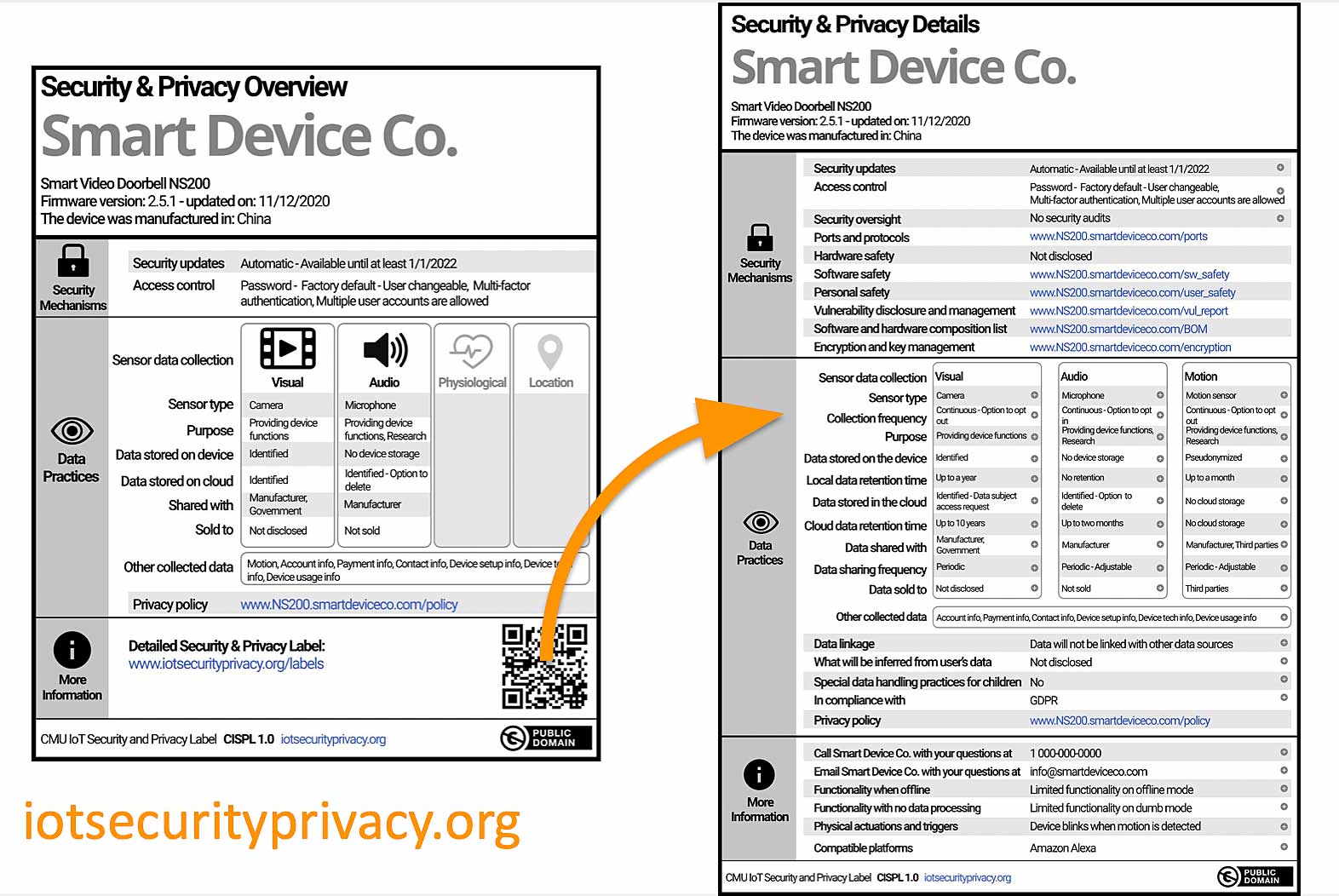
After four years of research, Pardis Emami-Naeni, Yuvraj Agarwal, Lorrie Cranor, and their colleagues have created a robust prototype of a nutrition label for IoT devices.

Made up of 47 different privacy, security, and general attributes, the prototype has two layers. The first layer, which is designed to be displayed prominently on the product package, is aimed at everyday consumers. The second layer, available online via a link or QR code, is aimed at software engineers or knowledgeable consumers seeking more detailed information.

The CMU researchers didn’t come up with this nutrition label out of a vacuum. It’s the result of the four studies below.

“Exploring how privacy and security factor into IoT device purchase behavior” 1/2019

The researchers found that privacy and security were among the most important factors that consumers consider when purchasing an IoT device. In fact, privacy and security are the most important factors, after features and price.

“Ask the experts: What should be on an IoT privacy and security label?” 12/2019

In this study, the researchers interviewed 22 privacy and security experts to ascertain what exactly to include in their label. There were experts from academia, NGOs, government, and of course various entities within the tech world, including several working in policy roles at hardware and software companies.

“Which privacy and security attributes most impact consumers’ risk perception and willingness to purchase IoT devices?” 6/2021

To improve their label design, this study helped the researchers learn which privacy and security label attributes influence consumer risk perception and willingness to purchase. The researchers learned that consumers were more willing to buy products when they knew their information wouldn’t be retained or shared with third parties.

As Emami-Naeini et al. write, “Participants frequently expressed concerns about not knowing how their information would be used if it was shared with or sold to third parties.”

“Are consumers willing to pay for security and privacy of IoT devices?” 10/2022

Through this study, the researchers learned that, yes, consumers are willing to pay a significant premium for security and privacy.

Given that privacy and security are admittedly related, it’s perhaps unsurprising that there was a lack of consensus as to whether or not privacy and security attributes should be presented in separate sections. Half of the experts felt separate sections were appropriate, and the other half wanted to combine them into one section.

An examination of the relationship between security and privacy

Through the course of these studies, there was quibbling among experts about the difference between privacy and security. Some believed that security was easier to quantify, and that privacy was more contextual and subjective.

As Emami-Naeini et al. write, “When defining security, almost all experts (21 out of 22) mentioned the CIA triad of confidentiality, integrity, and availability. However, experts had different definitions for privacy. Some experts (9 out of 22) defined privacy as having transparency and control over data practices and some experts defined privacy as the confidentiality aspect of security (8 out of 22).”

A few experts pointed out that privacy is inherently dependent upon individuals’ respective comfort levels and personal preferences. That’s technically true; however, the fact remains: it is quite simple to quantify privacy. Either a company is collecting consumers’ data or it is not. Companies either sell that data to third parties, or they do not. If companies are indeed collecting user data, they can gain consumer trust by explicitly laying out their methods and disclosing the reasons why they’re collecting user data in the first place.

Will we see security and privacy labels soon?

The ball is rolling, but the timetable for label adoption is unclear.

Voluntary label adoption seems unlikely, although CMU CyLab researchers believe that label adoption could come from retailers.

Cranor et al. write, “Retailers could incentivize adoption by requiring manufacturers of products they sell to label their products, or even by promoting labeled products; for example, by placing them at the top of search results.”

Now, big box stores, like Best Buy, certainly could refuse to carry IoT devices if the manufacturers refused to carry the privacy label. However, this seems a bit far-fetched unless retailers find a financial incentivize to to do so.

To be fair, retailers could theoretically mandate that IoT manufacturers place privacy/security labels on their packages. It’s not without precedent.

We’ve seen this with application developers and online app marketplaces

In December 2020, Apple famously began requiring that all applications in its App Store disclose data collection practices. To use the App Store, Apple required all third-party apps to disclose what type of data the app collects and whether that data is used to track users.

Shortly after Apple’s privacy nutrition label launch, Google followed suit with its own label initiative for Google Play.

A quick caveat: Washington Post tech columnist Geoffrey Fowler pointed out that Apple doesn’t immediately verify that the third-party apps’ privacy information on the Apple App Store is accurate. On the labels, there is a disclaimer that reads, “The developer indicated that the app’s privacy practices may include handling of data as described below. This information has not been verified by Apple.” Thus, even with Apple’s intervention, the nutrition label content is still based upon developer self-reporting, at least initially.

Like online marketplaces (e.g., Google Data Safety and Apple Privacy Nutrition), retailers could intervene and mandate that IoT manufacturers use privacy labels; however, the far more likely scenario is that widespread adoption of IoT privacy labels will come from a government mandate.

Another caveat: It’s worth emphasizing that these labels won’t be forced upon IoT manufacturers. All labels will be voluntary in nature.

The current state of security and privacy label legislation

Senator Ed Markey and Congressman Ted Lieu have been trying to get an IoT device certification law passed for years. Although their Cyber Shield Act never received a vote on the House or Senate floor in 2017 or 2019, they reintroduced the bill in March 2021.

According to the language in the bill, The Shield Act “requires the Department of Commerce to establish the Cyber Shield Program, a voluntary program to identify and certify covered products. These products are consumer-facing physical objects that meet industry-leading cybersecurity and data security benchmarks and that can (1) connect to the internet; and (2) collect, send, or receive data or control the actions of a physical object or system.”

Although unlikely to pass, the content within the Shield Act of 2021 is influencing the White House and CSC. Directly after the October 2022 White House workshop, Ed Markey’s camp issued a press release, praising the work toward what Markey describes as an “Internet of Things cyber label.”

According to the release, “As Americans install tens of millions of internet-connected devices for their homes, cybersecurity protections have never been more important. That’s why we introduced the Cyber Shield Act to create a voluntary consumer label indicating whether a device meets high cybersecurity benchmarks. We applaud the White House today on their announcement that they will adopt a similar approach and deliver a win for American families so that they have the information they need to safeguard their privacy at home. An Internet of Things cyber label is a critical step to returning power to consumers and strengthening cybersecurity protections.”

We’ll have to wait and see if this voluntary IoT label program ever comes to fruition; however, the ball does appear to be rolling.

Key takeaways

IoT privacy nutrition labels are coming down the pike; however, they will be voluntary at first. Keeping it voluntary isn’t necessarily a bad thing. Consumers will be certainly take notice of IoT manufacturers who opt not to use the labels.

If the privacy labels work as intended, IoT device manufacturers—and likely other industries—will be forced to compete on privacy and security, which is a net positive for consumers. Also, journalists will increasingly cover the security/privacy of specific devices, which will further drive consumer awareness.

Also, even if many consumers are initially confused by the labels, this will change over time. After all, we take food nutrition labels for granted today, when we go to the grocery store.

When mandatory food nutrition labeling came on the scene back in 1990 (the Nutrition Labeling and Education Act), it surely was met with resistance from reluctant actors in the food industry. We can expect that this privacy labeling initiative will be met with some similar resistance. Nevertheless, companies that operate in good faith would certainly be wise to embrace this labeling effort. It can only help them stand out from the pack.

John Donegan

John Donegan

Enterprise Analyst, ManageEngine

Want to read<br>this article on the go?

Want to read
this article on the go?

Do it on the ManageEngine
Insights app.

Subscribe to consumer data security and privacy

Thanks for subscribing to ManageEngine Insights. If you do not receive our welcome email, please check your SPAM folder.