
Published on August 12, 2025 | 5 min

This morning, I asked GPT-5 for a beginner yoga routine.

It gave me a beautifully sequenced flow and then suggested ending with a meditative headstand to fully center your energy. Despite having the core strength of a baguette, I found myself genuinely believing I could pull it off.

That’s the thing about GPT-5: It’s encouraging, inventive, and at times, blissfully unaware of your true limits. Its uncanny knack for anticipation somehow makes it feel almost human. For a moment, I found myself saying yes to every follow-up prompt because it seemed to know exactly what I needed next, and it was even better than previous models.

Turns out it’s not just me: Even my mom, who shares my ChatGPT account, says yes but with a “please” added to it, just in case the polite humans get remembered when the machines take over.

And now it’s not just in your search bar. It’s in your inbox, your calendar, your code editor, and maybe even planning your meal preps and date nights. As Sam Altman said during the launch of GPT-5, “[This model] is like having PhD-level researchers on your phone.”

But here’s the catch: GPT-5’s arrival isn’t happening in a vacuum. It’s landing in the middle of a messy macro moment: tariffs and job cuts, a global AI gold rush, billions sunk into data centers, and millions more into—somehow—Labubu figurines (more on this later).

We’re still arguing whether these tools are making us sharper or quietly outsourcing our brains, and we haven’t even fully processed the last model cycle yet. Even Sam Altman agrees that his kid will never be smarter than AI.

A unified AI experience

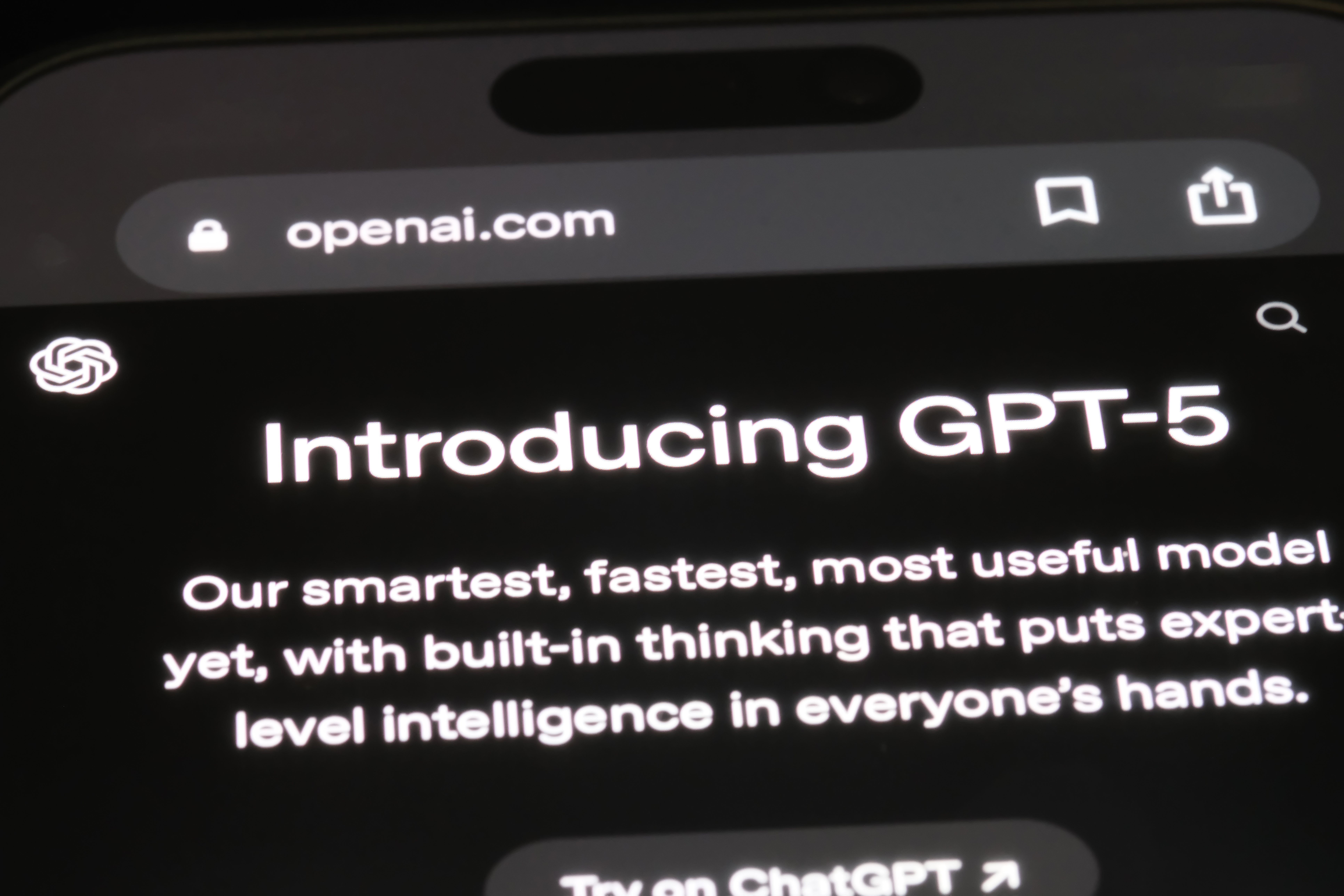
According to OpenAI, GPT-5 is its most capable and smartest model yet.

And it does feel different right off the bat. For starters, it doesn’t try to sound like a sycophantic yes man, telling us how we can never do any wrong and that we are very beautiful inside and out.

Under the hood, OpenAI has scrapped the confusing model buffet (4o, o3, and o3-mini) and replaced it with one unified system that routes your request to either:

  • GPT-5, the flagship model: The quick thinker.

  • GPT-5-Thinking: The deep thinker.

  • GPT-Pro: The premium option with higher caps if you can stomach and/or justify the $200/month bill.

In English: You were driving a stick; now it’s an automatic gearbox—quick when you need speed and careful when things get convoluted.

Real-world improvements

On paper, the upgrades land where people feel them. Reception ranges from deep anxiety of being replaced to grateful that information is becoming accessible to those without prior knowledge. Where it shines? See below:

  • A coding behemoth: GPT-5 posts 74.9% on SWE-bench Verified (real GitHub issues), edging out prior OpenAI reasoning models while using fewer tool calls. Translation: It’s better at fixing the annoying bugs that ruin your afternoon. Better at doing your whole job? Not quite yet.

  • Giving your doctor a run for their money: It’s explicitly tuned to be a more careful thought partner on health questions and scores much higher than earlier models on HealthBench, OpenAI’s physician-built evaluation. (It’s still not a doctor; you still need your real one.)

  • No more* wild made up stories: Independent roundups report GPT-5 as being more reliable, with meaningfully lower distortions and more honesty about limits, especially when the deeper reasoning kicks in.

  • Real-life hooks: You can now connect Gmail and Google Calendar so ChatGPT can help plan your day, surface emails that need replies, and juggle schedules without the copy-paste Olympics.

Why this is bigger than anticipated: Did we achieve AGI?

The productivity gains are real. GPT-5 can draft your reports, debug your code, summarize a 200-page document, and suggest three better ways to spend your afternoon all before lunch. And yes, it often anticipates what you’ll want next. (Is that where all of our “private” conversations were used? Don’t answer that.)

So, is this artificial general intelligence (AGI)? Short answer: No. Longer answer: GPT-5 is less of a final boss of intelligence and more of a matured, less confusing model of ChatGPT. It has simpler choices, better defaults, and sturdier guardrails. That simplification is likely providing the biggest real-world gains.

However, it doesn’t come with absolute consistency. GPT-5 is actually a collection of models behind the scenes. Some are brilliant, and some are average. And since queries are smartly routed, you don’t know which one you will get, so results might vary. There’s a reason behind this too, and it comes down to money.

A recent NVIDIA paper suggests the future won’t be a single, giant LLM for every task but a coordinated system of specialist models. GPT-5’s architecture is in line with this prediction: a fast, efficient model (the flagship version of GPT-5) for most jobs and an expensive model (GPT-5-Thinking) for the mental heavy lifting.

Humans already work this way. Our superpower isn’t that every person is great at everything, it’s that we specialize and share. This blueprint of mimicking the way human intelligence works might bring AI closer to AGI than any other approach.

Use it or lose it: Brain edition 

So, let’s circle back to Labubus, because they’re more than a random collectible here—they’re a reminder that when the world tilts too fast, people reach for little anchors. Whether it’s AI quietly rewriting the rules of work or an economy quietly rewriting the rules of survival, we fall back on old instincts to cope. GPT-5 didn’t launch into a calm, rational world; it landed in the middle of layoffs, tariff wars, AI arms races, and a global recession that somehow coexisted with record sales of Stanley cups and Labubu figurines. It’s a kind of collective, cognitive whiplash: We’re watching billions of dollars being poured into AI development while everyday life feels uncertain. Economists call it revenge spending. Psychologists call it coping. Either way, it’s the same instinct that kept lipstick sales high in the Great Depression: We need small luxuries to remind ourselves we’re still here.

And that’s the tension we’re living in: an AI boom colliding with human routine. We’re learning to work alongside a tool that can outthink us in seconds while still clinging to the small rituals that make life feel ours.

LLMs are on track to keep getting better. However, between the code they write and the headstands they suggest, there’s a space where you can choose how much of your thinking to outsource and how much to keep as your own. Maybe, just maybe, try to resist the urge to have these AI tools plan everything for you. There’s value in doing some of the messy thinking yourself.

GPT-5 is a leap forward in what AI can do for your daily workflow. It’s faster, more accurate, and more integrated into the tools you already use. But it’s also part of a much bigger economic gamble. It’s raising questions about skills, energy, and who this technology ultimately serves.

So use it. Enjoy it. Test its limits. Just remember: It’s a tool, not an oracle. And the best work you’ll do with GPT-5 is still the work you steer.


Samudhra Sendhil

Samudhra Sendhil

Enterprise Analyst, ManageEngine

Want to read<br>this article on the go?

Want to read
this article on the go?

Do it on the ManageEngine
Insights app.

Published on February 12, 2025 | 6 min

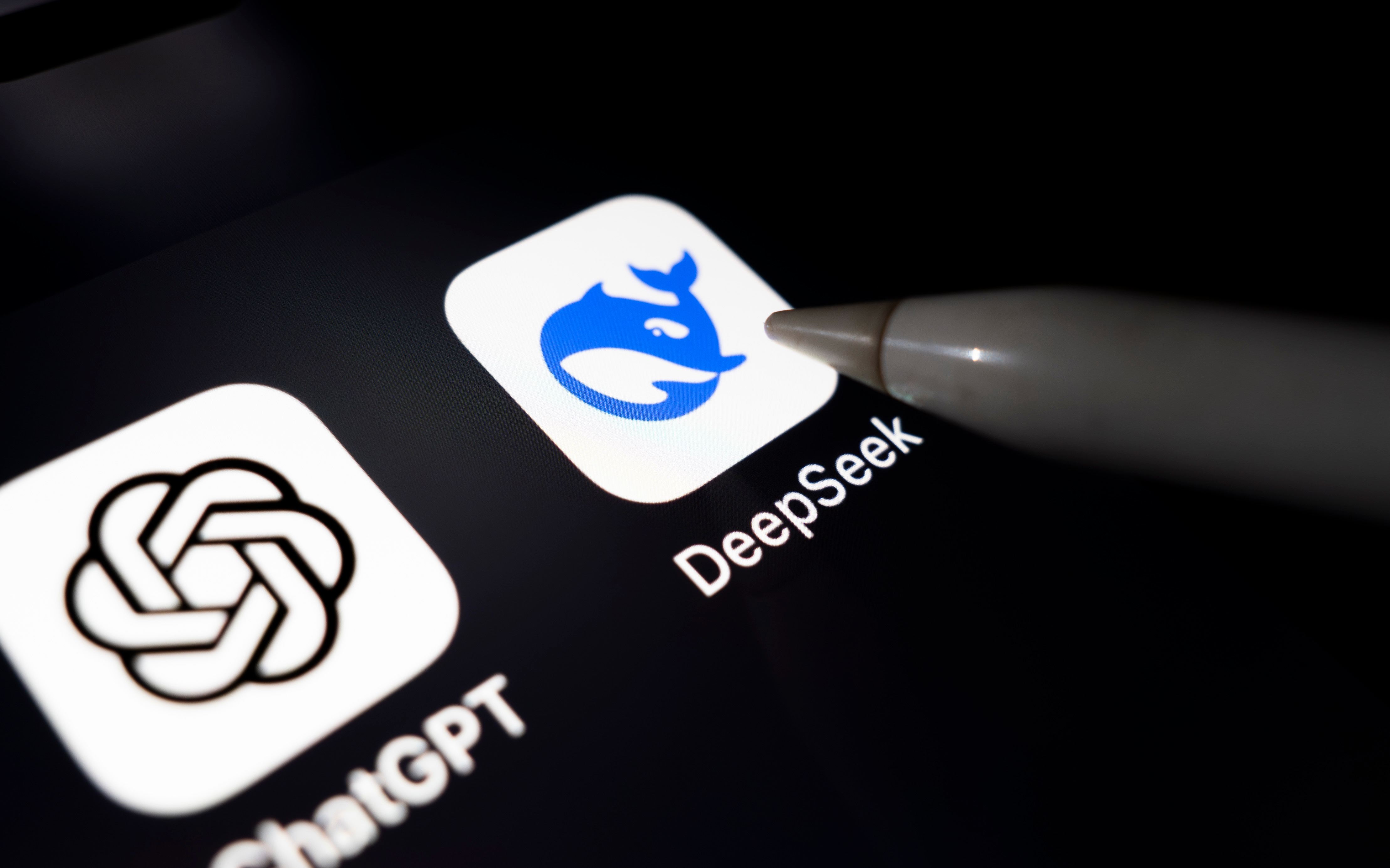
If you’ve been keeping an eye on the AI world, chances are you’ve heard of DeepSeek. This Chinese AI startup has been sending shock waves through Silicon Valley big enough to cause some major stock market turbulence. But what exactly is DeepSeek, and why is it giving tech behemoths like OpenAI, Microsoft, and NVIDIA a run for their money? We’ll break it down for you.

A giant leap for AI—at a fraction of the cost 

DeepSeek’s claim to fame is its latest AI models, DeepSeek-V3 and DeepSeek-R1, which have been touted as on par with (some say even better than) leading AI models from OpenAI and Meta. What truly shocked everyone was that while OpenAI reportedly spent somewhere north of $100 million training GPT-4, DeepSeek claims to have trained its model for under $6 million—a fraction of the cost—and that it was developed by a group of hedge fund managers as a side project.

This efficiency stems from a combination of technical optimizations. Instead of relying on the most expensive AI chips, DeepSeek reportedly made use of around 2,000 NVIDIA H800 GPUs. This is significant because these are modified versions of NVIDIA’s H100 chips, designed to comply with United States export restrictions. By working within these constraints, DeepSeek found innovative ways to make the most of its computing power.

Additionally, the company has implemented an approach known as “mixture of experts”, where different sections of the AI model specialize in specific tasks. This method not only reduces computational costs, but also enhances the efficiency of responses, particularly in complex reasoning tasks.

With that said, it’s also important to note that the $6 million estimate is now under scrutiny, with some industry experts suggesting that the true cost of developing and operating DeepSeek could be well over a billion dollars. OpenAI has also accused DeepSeek of unlawfully using data from ChatGPT to develop its own AI chatbot. This method, known as distillation, is often used to improve performance while cutting costs.

Though distillation is a common, yet controversial practice in the LLM industry, it frequently falls into a legal gray area. Ironically, ChatGPT itself has faced allegations of training on content it didn’t have the rights to access. If these claims hold up, it would be a case of the pot calling the kettle black—AI edition.

The chatbot that dethroned ChatGPT as AI’s poster child 

DeepSeek’s AI assistant quickly became the most downloaded free app on Apple’s App Store and Google’s Play Store, overtaking ChatGPT. This unexpected surge rattled tech investors, causing NVIDIA’s stock to plummet nearly $600 billion in a single day—making it the biggest one-day loss in U.S. market history. This was because DeepSeek claimed it upended the long-held belief that building powerful AI models required massive investment. The AI software company reported that high-performance AI could be developed at a fraction of the cost of OpenAI’s models, making top-tier AI more accessible and competitive than ever. 

But why do users flock to DeepSeek over more established options? One key reason is accessibility. Unlike ChatGPT, which introduced paid tiers to access advanced models, DeepSeek remained entirely free at launch. A key distinction that sets DeepSeek apart from other competitors is that it is a free-to-use, open source AI model available on web, mobile app, and API. The model can run locally and offline with limited compute power, making it an attractive alternative for users seeking high-quality AI responses without a subscription fee.

Moreover, some early testers reported that DeepSeek outperformed ChatGPT in certain areas, particularly mathematical reasoning and coding tasks. It also had the ability to search the web, reason, and “think” before responding—features initially only available on the premium ChatGPT-4 model but which were made free to users after DeepSeek’s launch, perhaps to help it retain market share.

Innovation or cause for concern? 

Despite its success, DeepSeek is not without safety controversies. Security researchers discovered that its web login page contains code linked to China Mobile, a state-owned telecom company that has been banned from operating in the U.S. There are concerns that user data might be accessible to the Chinese government, which has led to calls for banning the app on U.S. government devices. Lawmakers in multiple countries, including Australia, South Korea, and Taiwan, have already restricted or banned DeepSeek over security concerns.

Adding to this, an independent cybersecurity audit revealed that the DeepSeek iOS app transmits user and device data without encryption. This makes it vulnerable to interception, putting sensitive user information at risk. Some experts argue that these privacy flaws are not accidental but rather indicative of a deliberate design choice that prioritizes data collection over user security.

The tech behind DeepSeek: smarter, leaner, and more transparent? 

DeepSeek has adopted innovative approaches to AI efficiency. Unlike many AI models that require massive computational power, DeepSeek has optimized its training methods, significantly reducing the costs of running large-scale AI.

One of its most noteworthy features is its transparency. Unlike OpenAI, which keeps the specifics of its training data and methodologies under wraps, DeepSeek has openly released details of its AI model’s architecture. This allows researchers worldwide to study, modify, and improve upon its technology. Additionally, DeepSeek has experimented with alternative approaches to improving reasoning in AI, such as Monte Carlo Tree Search, which has been used in strategic AI applications, but now is also garnering attention for being used in LLMs.

However, while DeepSeek has shared its AI model weights, it has not disclosed its training datasets. This lack of clarity raises concerns about biases in the model and the potential use of proprietary or sensitive data sources. The question remains: can an AI model truly be transparent without revealing its entire dataset? Many experts argue that full transparency is necessary to ensure AI safety and fairness in deployment.

The political and economic fallout 

DeepSeek’s rise is not just a technological story—it has significant geopolitical implications. The U.S. government has already begun investigating potential national security risks associated with Chinese AI development. A bipartisan congressional bill is being pushed by lawmakers to ban DeepSeek entirely from government devices, citing risks of espionage and data leaks. This comes just days after the TikTok ban was passed, enforced, and ultimately reinstated in the U.S. Of course, the TikTok comparisons were inevitable, with many seeing DeepSeek as the latest episode in the U.S. vs. Chinese tech showdown.

Economically, DeepSeek’s efficiency model has created ripples in the tech industry. Its claims to be able to produce a high-performing AI model at a fraction of the cost has forced U.S. tech firms to reassess their own strategies. If AI breakthroughs can be achieved at the low costs DeepSeek claims, what does this mean for companies like OpenAI, Google, and Meta? Some analysts believe this could lead to a shift in AI research priorities, emphasizing cost-efficient methodologies over brute-force computational power.

Furthermore, DeepSeek’s success has led to significant market reactions. The AI startup’s rapid rise caused NVIDIA’s stock to experience historic losses, shaking investor confidence in the profitability of AI hardware manufacturers. As the AI landscape evolves, the industry must balance efficiency, security, and regulatory considerations to ensure long-term sustainability.

Additionally, some analysts believe that DeepSeek’s efficiency model will push U.S. companies to rethink their spending habits on AI infrastructure. If a Chinese startup can develop cutting-edge AI for a fraction of the cost, why are American firms pouring billions into similar models? This question is likely to fuel both investment strategy shifts and regulatory scrutiny

What’s next for DeepSeek? 

Despite its controversies, DeepSeek is undeniably the underdog which has become OpenAI’s largest competition. Its cost-efficient, high-performance models have forced the industry to reconsider the economics of AI development. Meanwhile, its meteoric rise has put pressure on U.S. lawmakers to scrutinize AI security risks more closely.

However, DeepSeek’s future remains uncertain. Will regulatory pressure slow its momentum, or will it continue to disrupt the AI space? With governments, tech executives, and researchers closely watching, the next chapter of the DeepSeek story is bound to be just as fascinating as its debut.

One thing is for sure: the AI race just got a lot more interesting.

 Related reading

Samudhra Sendhil

Samudhra Sendhil

Enterprise Analyst, ManageEngine

Want to read<br>this article on the go?

Want to read
this article on the go?

Do it on the ManageEngine
Insights app.

Published on April 26, 2023 | 5 min

Recent advancements in generative pre-trained transformer (GPT) technology and AI have revolutionized the way we interact with machines, allowing for a more human-like experience. Auto-GPT, a language model trained on the GPT-3.5 architecture, is a prime example of this technology. 

To put Auto-GPT to the test, I asked it to design a Masterchef-worthy recipe generator website that could create new and unique dishes based on user preferences. It goes about the same prompt multiple times and in different ways until it cracks the code, quite literally.

So, it crawled the internet and wrote a program to generate recipes based on that information. The recipe generator was functional, but it struggled to create dishes with a complex flavor profile.

Then, I asked it to write a food blog post about a restaurant. It did extensive research into the restaurant’s cuisine, the chef’s background, and customer reviews via web searches. Afterwards, it set up a blog theme and got a smaller GPT-3.5 agent to write a draft—this went on for a while in a seemingly endless loop.

Then, it realized it needed to check if the blog post accurately conveyed the restaurant’s dining experience. It proceeded to tell itself to come up with a function that checks the blog post against the planned tone and the target audience’s expectations. And so, it wrote a Python function that checked if the post included key elements like the restaurant’s atmosphere, menu highlights, and price range.

The whole journey was impressive, and also, shocking.

The (un)expected shift to the AI-first era

The last time we took the future of work so seriously, it was when all of us were confined in our homes during the COVID-19 lockdown. Back then, the future looked like hybrid workforces, democratized IT, and distributed workforces. It sounds like old news now.

Today, we stand at the brink of enormous digital transformation, and it feels like everyone is just waiting for the veil to fall off to reveal something scary—a technology that is going to replace all of us. However, it does not work like that.

 Technology has been developing at a steady pace. What’s gotten everyone on the edge of their seats now is that technology has begun to do human-like activities, like becoming creative or pondering about life, and it does so on its own.

As we tread deeper, advanced AI will bring significant changes to the way we operate, with job automation being a primary concern. A Goldman Sachs report suggests that 300 million full-time jobs could be automated due to AI. However, there will also be new job opportunities in data analysis, software development, and AI engineering. We may even see lawyers working with AI, but legal complications will arise as lawmakers struggle to comprehend this evolving technology.

As AI takes on more tasks, the skills required for employees will shift. Workers will need to develop new skills such as problem-solving and collaboration with AI systems. This shift in skill requirements will require significant investment in upskilling and reskilling programs. 

A doomsday scenario, if you will

While advanced AI technologies hold great potential for revolutionizing the way we work, the erosion of personal autonomy and privacy is ringing alarms. Its potential to automate tasks will leave people behind, especially those who resist or do not work with AI.

There is also a fear of a future in which AI is so advanced that it becomes uncontrollable or even hostile to human interests. Some experts worry that as AI systems become more powerful and autonomous, they could pose a threat and leave us worse off. While such “doomsday” scenarios do sound absurd, it’s not entirely impossible, but it will definitely not play out like robots with red lasers annihilating everything in their path.

The doom lies in the misuse of advanced AI technology. Malicious actors could use AI to generate convincing deepfakes or to conduct sophisticated cyberattacks. Additionally, the deployment of autonomous weapons could lead to chaos in conflict-prone zones where lives are at stake.

As such, experts emphasize the need for responsible development and deployment of AI technologies along with a robust regulatory framework to govern their use, which we severely lack now.  

Envisioning a future where AI enhances the human experience instead of diminishing it

In an AI-first era, companies are racing to collect and utilize data to gain a competitive edge. Data protection companies and experts will become the need of the hour as they work on safekeeping personal data. Without a doubt, companies with software that protects your data will be at the forefront of this race to have an upper hand over advanced AI.

There is no denying that in the future, AI will displace hundreds and thousands of jobs. However, the future also looks bright as AI increases our productivity and takes over routine, entry-level tasks, enabling us to focus on something bigger.

However, because of this, there will be a growing need for people who can work effectively with AI systems and help to optimize their performance. We are always going to need human decision-makers to ensure that AI is being developed and used in a responsible and safe way. This includes defining AI policies, assessing AI risks and opportunities, and ensuring legal compliance.

And lastly, we should understand that AI is not just GPT programs and a buzzword. We should stop seeing AI as software that is going to take away our jobs or help students cheat on their exams. AI is essentially human behavior imbued into a machine to augment and mimic human intelligence.

It is easy to succumb to fear-mongering and imagine AI as a threat to humanity. In an AI-first society, there might be potential to create a more inclusive, accessible, and equitable world as AI creates opportunities for those who previously struggled with speech recognition, mobility, and other disabilities.

In the future, the most significant questions will revolve around the impact of AI on civil rights. How we perceive and utilize AI technology will play a critical role in shaping the future of equality and opportunity for all. As we navigate this new AI context, fundamental questions about privacy, speech, assembly rights, and the construction of personhood in a technological age will resurface, challenging our deepest-held beliefs.

The notion of humans becoming obsolete in the face of AI is disheartening. We must acknowledge the crucial role that humans play in providing the ground truth for these models being trained and as the ultimate recipients of the output. AI is, after all, a creation of humans, and as such, it is society’s responsibility to ensure that it is implemented in a responsible and ethical manner that uplifts rather than diminishes the human spirit.

Samudhra Sendhil

Samudhra Sendhil

Enterprise Analyst, ManageEngine

Want to read<br>this article on the go?

Want to read
this article on the go?

Do it on the ManageEngine
Insights app.

Published on April 21, 2023 | 4 min

Alarm bells are sounding off in College Park, Maryland.

According to a recent study, researchers doubt it will ever be possible to reliably detect AI-generated text. Along with four computer science doctoral students, Professor Soheil Feizi’s study asks, “Can AI-generated text be reliably detected?” Their answer, unfortunately, is no.

Given that large language models (LLMs) can be used to plagiarize, conduct convincing social engineering attacks, and spread misinformation at scale, this study is definitely a cause for concern.

Current AI-generated text detection tools leave a lot to be desired

OpenAI’s AI-generated text detector is terribly inaccurate. In fact, OpenAI admits that it is not reliable, as the tool only correctly identifies 26% of AI-written text (true positives). Additionally, 9% of the time, it mislabels human-written text as being AI-written (false positives). 

Another popular tool on the market, GPTZero, essentially measures the randomness of a given piece of text. According to GPTZero’s FAQ page, that tool is capable of identifying human-created text 99% of the time and AI-generated text 85% of the time, although some may take umbrage with this assertion.

Can AI-generated text be reliably detected?

Through empirical analysis, the University of Maryland scholars looked at several popular AI text-detection models on the market and found them to be unreliable. 

Examining watermarking schemes, zero-shot classifiers, and neural network-based detectors, they found that a paraphrasing attack can help adversaries evade AI detection. They write, “We show that a paraphrasing attack, where a lightweight neural network-based paraphraser is applied to the output text of the AI-generative model, can evade various types of detectors.”

Additionally, they claim that watermarking-based detectors can be easily spoofed, making it seem as if human-made text is watermarked. Such adversarial spoofing attacks could ruin the credibility of watermarking LLM development companies. Feizi believes that social media account verification may be a good way to fight the spread of disinformation. In an email to The Register, Feizi explains,

“I think we need to learn to live with the fact that we may never be able to reliably say if a text is written by a human or an AI. Instead, potentially we can verify the ‘source’ of the text via other information. For example, many social platforms are starting to widely verify accounts. This can make the spread of misinformation generated by AI more difficult.”

It’s almost too obvious to point out, but relying on social media platforms—Meta, Twitter, and others—to handle account verification in a way that controls misinformation and benefits society, is a tough ask. As a quick example, it remains to be seen whether a blue check mark next to a Twitter handle denotes a reputable account.

GPT detectors are biased against non-native English writers

When it comes to detecting AI-generated content, it’s still early days; however, another recent study suggests that these text detection tools are biased against non-native English speakers. A Stanford study found that these tools commonly misclassified non-native English speakers’ writing as being AI-generated.

The Stanford researchers looked at seven widely-used GPT detectors: Originality.ai; Quil.org; Sapling; OpenAI (GPT-2); Crossplag; GPTZero, and ZeroGPT. When comparing the detection tools’ performance against native English speakers’ writing and non-native English speakers’ writing, the scholars found that GPT detectors unfairly penalize non-native speakers. Finding a real bias against non-native English writers, the Stanford scholars caution against relying on such detection tools in academic settings.

As LLMs like ChatGPT improve, it will likely become increasingly difficult to differentiate between human-written content and AI-generated text. However, it’s important to note that strides have been made on the AI-generated image and video detection front.

It’s easier to watermark images and video

Unlike AI-generated text, which the Maryland scholars claim will be nearly impossible to authenticate, synthetic images and video are easier to identify. By watermarking an image or video at inception, it’s possible to establish that media’s content provenance. The author of the video or image, as well as the location and metadata, can be cryptographically signed, timestamped, and stored on a blockchain. Earlier this month, San Diego-based startup Truepic collaborated with Revel.ai and Nina Schick to create what they’re calling the “world’s first digitally transparent deepfake video.”

Entitled “Mirror of Reflection,” this deepfake is sensationalist, but effective. Schick rhetorically asks, “What if our reality is changing? What if we can no longer rely on our senses to determine the authenticity of what we see and hear?”

If the scholars from University of Maryland are to be believed, such a day isn’t too far away.

Related reading:

Knowledge, not noise

Subscribe today to access this content and much more.
We promise—no spam, no ads.

By clicking Subscribe, you agree to processing of personal data according to the Privacy Policy.
John Donegan

John Donegan

Enterprise Analyst, ManageEngine

Want to read<br>this article on the go?

Want to read
this article on the go?

Do it on the ManageEngine
Insights app.

Published on April 12, 2023 | 5 min

Picture this: you’re scrolling through social media and you come across a video of a celebrity doing something outrageous. It looks real, but something about it seems off. It’s only when you read the caption that you realize it’s a deepfake, created using generative AI. From deepfake videos to ChatGPT-generated responses, it’s becoming increasingly difficult to tell the difference between human-made and AI-generated content.

But with this growing reliance on generative AI comes a new concern: the oversharing of personal data. As we become more comfortable with AI, we might be unknowingly giving away sensitive information that can be used for purposes we never intended. We’re in danger of opening a Pandora’s box of privacy breaches, where our personal information is used in ways we can’t imagine.

The consequences of oversharing personal data can be dire, with risks ranging from data breaches to the creation of malicious content. While the potential benefits of generative AI are endless, we need to be mindful of the potential risks that come with it. In this article, we’ll delve deep into the privacy breaches and potential risks associated with oversharing personal data with generative AI, and ways to mitigate the risks and protect yourself and your data.

Walking on a double-edged sword with generative AI

Generative AI is a technology that uses algorithms to create new and original content by learning from a dataset. The AI algorithm can generate new content that is similar to the original data, but not identical. It’s like a chef who learns the recipe and ingredients of a dish and then uses their creativity to make new variations of it.

But with great power comes great responsibility, and generative AI is no exception. The technology requires large amounts of data to work effectively, which can lead to privacy concerns. The more data you feed into the algorithm, the more accurate and personalized the content it generates becomes. However, this also means that personal data is being used, which can be a cause for concern.

One of the major privacy concerns with generative AI is the risk of oversharing personal and confidential information. This happens when individuals or companies feed large amounts of personal data into the algorithm, which can include sensitive information such as medical records, financial information, and personal contacts. If this data falls into the wrong hands, it could be used for malicious purposes, such as identity theft, cyberattacks, and social engineering scams. 

For example, generative AI models could be trained on personal data such as email addresses, names, and social media profiles to create highly convincing phishing emails. These emails could then be used to trick people into providing sensitive information such as passwords or credit card details. The volume of malware scams has visibly grown since the dawn of chatbot technology, and the technology’s quick adoption in applications raises concerns about data collection, privacy, and the prevalence of plagiarism and misinformation.

Others are noticing the problem with ChatGPT, a famous generative AI application, being promoted so quickly and forcefully as well. Leaders in technology and AI have also raised alerts about this. In 2021, researchers from Stanford University and the University of Washington demonstrated that it is possible to use GPT-3, another variant of ChatGPT, to extract personal information such as names, phone numbers, and email addresses from text. 

Did you know?

A study by Home Security Heroes shows that a new AI password cracker can decipher 71% of common passwords in less than a day.

Exploring ways to defend confidentiality

Generative AI can offer many benefits, but we cannot turn a blind eye to the chance of personal information leaking from training data, making it difficult to secure it. A relational database can limit access to a particular table with personal information, but an AI can be queried in dozens of different ways. Attackers will quickly learn how to ask the right questions to obtain sensitive data. Teaching an AI to protect private data is something we don’t yet understand.

To protect yourself and your data from generative AI, it is important to be aware of what data you’re sharing and use strong and unique passwords to protect your data. Limit access to devices, keep software up to date, and use privacy-preserving tools like VPNs and browser extensions to protect data. Additionally (and importantly), read the privacy policy carefully to understand what data is being collected, how it’s being used, and who it’s being shared with.

Regulators around the world are increasingly taking steps to protect users’ data from generative AI. Mentioning AI in global legislative proceedings has increased 6.5 times since 2016, from 1 in 2016 to 37 in 2022. Here are some of the steps initiated by them:

  1. Data Protection Laws: Governments are enacting or strengthening data protection laws to ensure that companies are held accountable for the data they collect from users.

  2. Algorithmic Accountability: Regulators are also pushing for greater algorithmic accountability, which means holding companies accountable for the algorithms they use and ensuring that they are transparent and fair.

  3. Privacy-by-Design: Another approach being taken by regulators is to encourage companies to adopt a “privacy-by-design” approach, which means designing products and services with privacy in mind from the outset.

  4. Ethical AI Guidelines: Many organizations, including the European Union, have developed ethical AI guidelines to help companies navigate the complex ethical issues surrounding AI, and ensure that AI is developed and used in an ethical and responsible manner.

  5. Regulatory Bodies: Governments are also creating regulatory bodies specifically dedicated to overseeing AI, such as the European Commission’s High-Level Expert Group on AI, which provides advice and recommendations on AI-related policy and regulatory issues.

Overall, the aim of these measures is to ensure that companies using generative AI are held accountable for the data they collect and use, and that users’ privacy rights are protected. The rush to integrate this technology can result in data breaches, inaccuracies, and abuse, demonstrating the need for caution and responsible management.

The Future of Life Institute has released an open letter requesting that AI laboratories and businesses cease the development of OpenAI systems after ChatGPT-4. Reputable individuals including Steve Wozniak, the co-founder of Apple, and Elon Musk, the co-founder of OpenAI, have agreed that progress should be halted to make sure that people can profit from and enjoy existing systems.

As this article draws to an end, one burning question keeps me up–what will happen when we humans become so dependent on generative AI that we can no longer produce new material for training models?

Related reading:

Naveena Srinivas

Naveena Srinivas

Enterprise Analyst, ManageEngine

Want to read<br>this article on the go?

Want to read
this article on the go?

Do it on the ManageEngine
Insights app.

Subscribe to ChatGPT

Thanks for subscribing to ManageEngine Insights. If you do not receive our welcome email, please check your SPAM folder.