





Artificial Intelligence

AI vs. AI: Defending against deepfakes and disinformation

Published on August 22, 2025

In an era where artificial intelligence (AI) doesn’t just defend but also fuels cyberthreats, enterprises face a new kind of challenge: safeguarding not only their infrastructure but also their information integrity.

In this thought-provoking episode of ManageEngine Insights, we sit down with Richard Wong, associate partner and global head of security advisory at Frost & Sullivan, to explore how deepfakes, AI-powered disinformation, and synthetic media are reshaping the cybersecurity landscape.

Together, we discuss:

  • How AI-generated deepfakes and disinformation are being used in cyberattacks

  • The role of AI in detecting and defending against synthetic threats

  • Why brand security, digital trust, and internal awareness matter more than ever

  • What organizations must do today to build resilience for the AI-powered future

If you’re a CISO, IT leader, security professional, or simply curious about the future of cybersecurity, this is one episode you won’t want to miss.

Agenda:

  • The evolution of cybersecurity in the age of generative AI

  • Real-world examples of deepfake-driven attacks on businesses

  • How AI tools are used to detect synthetic content—and their limitations

  • Why disinformation defense is becoming a boardroom issue

  • Practical steps enterprises can take to stay ahead of AI-powered cyberthreats

WATCH NOW
Samudhra Sendhil

Samudhra Sendhil

Enterprise Analyst, ManageEngine

Catch up on expert <br> videos like this anytime<br>with the ManageEngine <br> Insights app.

Catch up on expert
videos like this anytime
with the ManageEngine
Insights app.

Artificial Intelligence

Is AI distorting our sense of reality? 

Published on June 28, 2025

Why watch?  

We’re entering an era where reality isn’t what it used to be. AI is reshaping it. What happens when the images we see, the music we hear, or even the words we read can no longer be trusted as human-made? In this episode of Thinking Tech, we dive into the phenomenon of hyperreality, where the lines between real and artificial blur beyond recognition.

From deepfakes to AI-generated music and writing, we explore how technology is not just imitating human behavior but also outperforming it. And while the results can be fascinating, they also raise serious questions about misinformation, privacy, and the very nature of truth in a digital-first world.

Join us as we unravel how hyperreal content is impacting the way we perceive reality and why a simple typo might be the last signal of humanity left in a world powered by AI.

What you’ll learn  

  • What hyperreality means and how AI is fueling it

  • How AI-generated content is becoming indistinguishable from human-made media

  • Why deepfakes and hyperreal visuals are challenging our sense of trust

  • The psychological impact of being unable to tell what’s real

  • What sets humans apart in an increasingly AI-driven digital world


Watch Now
Samudhra Sendhil

Samudhra Sendhil

Enterprise Analyst, ManageEngine

Published on April 21, 2023 | 4 min

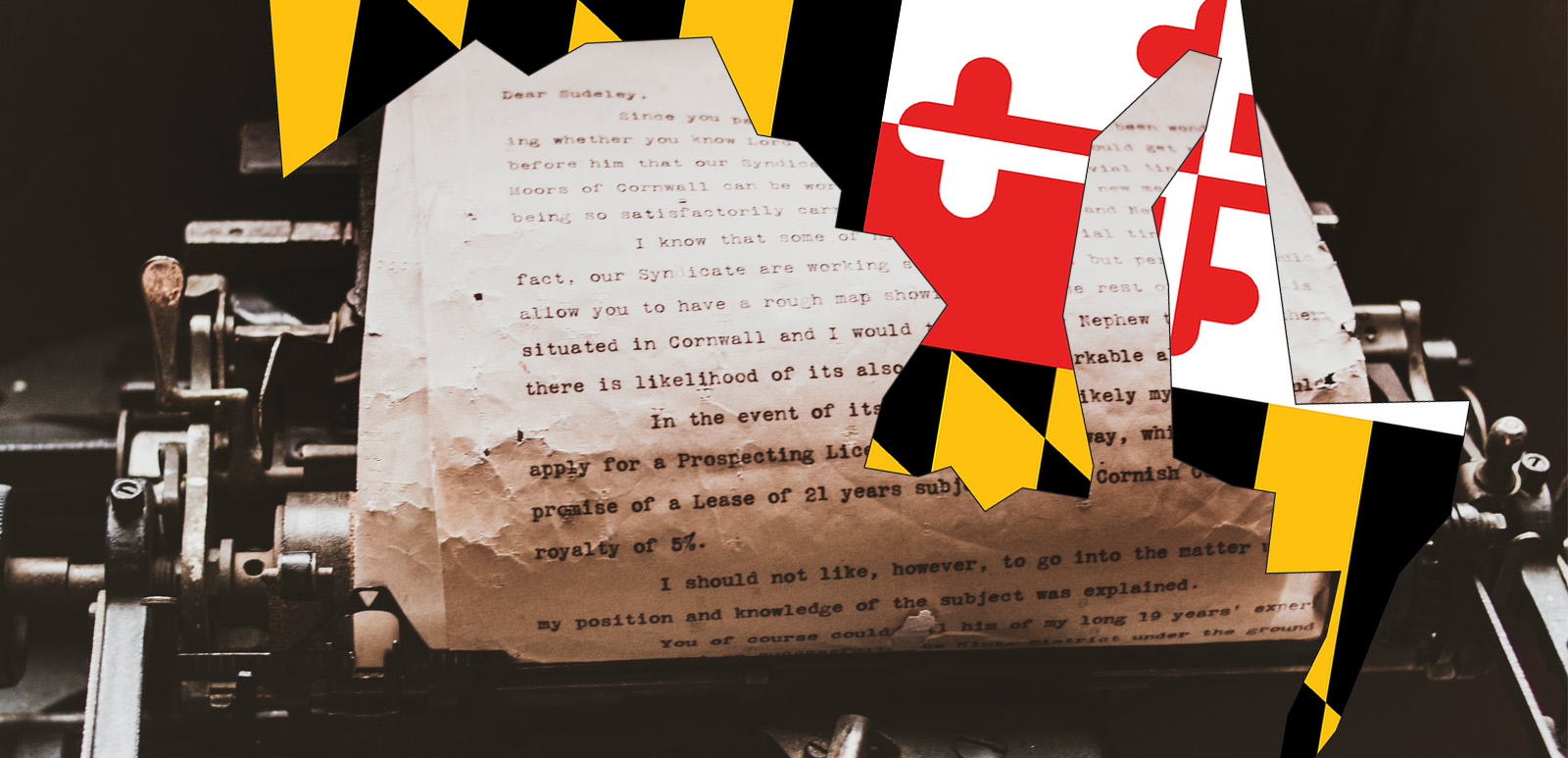
Alarm bells are sounding off in College Park, Maryland.

According to a recent study, researchers doubt it will ever be possible to reliably detect AI-generated text. Along with four computer science doctoral students, Professor Soheil Feizi’s study asks, “Can AI-generated text be reliably detected?” Their answer, unfortunately, is no.

Given that large language models (LLMs) can be used to plagiarize, conduct convincing social engineering attacks, and spread misinformation at scale, this study is definitely a cause for concern.

Current AI-generated text detection tools leave a lot to be desired

OpenAI’s AI-generated text detector is terribly inaccurate. In fact, OpenAI admits that it is not reliable, as the tool only correctly identifies 26% of AI-written text (true positives). Additionally, 9% of the time, it mislabels human-written text as being AI-written (false positives). 

Another popular tool on the market, GPTZero, essentially measures the randomness of a given piece of text. According to GPTZero’s FAQ page, that tool is capable of identifying human-created text 99% of the time and AI-generated text 85% of the time, although some may take umbrage with this assertion.

Can AI-generated text be reliably detected?

Through empirical analysis, the University of Maryland scholars looked at several popular AI text-detection models on the market and found them to be unreliable. 

Examining watermarking schemes, zero-shot classifiers, and neural network-based detectors, they found that a paraphrasing attack can help adversaries evade AI detection. They write, “We show that a paraphrasing attack, where a lightweight neural network-based paraphraser is applied to the output text of the AI-generative model, can evade various types of detectors.”

Additionally, they claim that watermarking-based detectors can be easily spoofed, making it seem as if human-made text is watermarked. Such adversarial spoofing attacks could ruin the credibility of watermarking LLM development companies. Feizi believes that social media account verification may be a good way to fight the spread of disinformation. In an email to The Register, Feizi explains,

“I think we need to learn to live with the fact that we may never be able to reliably say if a text is written by a human or an AI. Instead, potentially we can verify the ‘source’ of the text via other information. For example, many social platforms are starting to widely verify accounts. This can make the spread of misinformation generated by AI more difficult.”

It’s almost too obvious to point out, but relying on social media platforms—Meta, Twitter, and others—to handle account verification in a way that controls misinformation and benefits society, is a tough ask. As a quick example, it remains to be seen whether a blue check mark next to a Twitter handle denotes a reputable account.

GPT detectors are biased against non-native English writers

When it comes to detecting AI-generated content, it’s still early days; however, another recent study suggests that these text detection tools are biased against non-native English speakers. A Stanford study found that these tools commonly misclassified non-native English speakers’ writing as being AI-generated.

The Stanford researchers looked at seven widely-used GPT detectors: Originality.ai; Quil.org; Sapling; OpenAI (GPT-2); Crossplag; GPTZero, and ZeroGPT. When comparing the detection tools’ performance against native English speakers’ writing and non-native English speakers’ writing, the scholars found that GPT detectors unfairly penalize non-native speakers. Finding a real bias against non-native English writers, the Stanford scholars caution against relying on such detection tools in academic settings.

As LLMs like ChatGPT improve, it will likely become increasingly difficult to differentiate between human-written content and AI-generated text. However, it’s important to note that strides have been made on the AI-generated image and video detection front.

It’s easier to watermark images and video

Unlike AI-generated text, which the Maryland scholars claim will be nearly impossible to authenticate, synthetic images and video are easier to identify. By watermarking an image or video at inception, it’s possible to establish that media’s content provenance. The author of the video or image, as well as the location and metadata, can be cryptographically signed, timestamped, and stored on a blockchain. Earlier this month, San Diego-based startup Truepic collaborated with Revel.ai and Nina Schick to create what they’re calling the “world’s first digitally transparent deepfake video.”

Entitled “Mirror of Reflection,” this deepfake is sensationalist, but effective. Schick rhetorically asks, “What if our reality is changing? What if we can no longer rely on our senses to determine the authenticity of what we see and hear?”

If the scholars from University of Maryland are to be believed, such a day isn’t too far away.

Related reading:

Knowledge, not noise

Subscribe today to access this content and much more.
We promise—no spam, no ads.

By clicking Subscribe, you agree to processing of personal data according to the Privacy Policy.
John Donegan

John Donegan

Enterprise Analyst, ManageEngine

Want to read<br>this article on the go?

Want to read
this article on the go?

Do it on the ManageEngine
Insights app.

Published on April 16, 2020 | 3 min

As Chairman of the House Intelligence Committee Adam Schiff recently declared at a congressional hearing, “Advances in AI and machine learning have led to the emergence of advanced, doctored types of media—so called ‘deepfakes’–that enable malicious actors to foment chaos, division, or crises. And they have the capacity to disrupt entire campaigns, including that of the Presidency.” According to the BBC, there have already been several instances of criminals employing deepfake audio to impersonate CEOs and facilitate wire transfers.

Despite its real potential for harm, deepfake technology is merely an advanced version of existing technologies, such as Adobe Photoshop and video editing software. With every new technology, comes a host of detractors who emphasize the potential effects. It’s important to remember that the technology itself is agnostic; it can be used to help or to harm. David Doermann, director of the AI Institute at the University of Buffalo, says, “There’s nothing fundamentally wrong, or evil, about the underlying technology; like basic image and desktop editors, deepfakes [are] only a tool. And there are a lot more positive aspects of generative networks than there are negative ones.” That said, deepfake audio and video do create cause for concern, especially when they are combined with social media platforms. 

When deepfake video is shared on social media, the files are shrunk down and compressed, making it exponentially more difficult to decipher that the file isn’t real. Attributions and trace evidence are destroyed while the synthetic media is spreading like wildfire. This can have serious side effects. Considering the possibility of a deepfake video going viral the night before an IPO, BU Law Professor Danielle Citron laments, “The market will respond far faster than we can debunk it.” Also, the proliferation of deepfake media will lead to what Citron calls “the liar’s dividend,” which is the idea that people will begin to doubt whether or not content is real, allowing liars to proclaim things they actually said were not said. Addressing this trust decay, Citron says, “We’ve already seen the ‘liar’s dividend’ happen in practice from the highest of the bully pulpits. So, I think we’ve got a real problem on our hands.” 

Software companies are leading the fight

In December 2019, Facebook, along with Microsoft, the Partnership for AI, and a group of academics, launched a “Deepfake Detection Challenge,” offering $10m in prizes to contributors who can help develop deepfake detection software. This contest wraps in 2020. There are a handful of software companies focusing on media manipulation detection as well, including Deeptrace Labs in Amsterdam, ZeroFox in Baltimore, TruePic in San Diego, and of course, the Department of Defense’s Defense Advanced Research Projects Agency (DARPA)’s MediFor (Media Forensics) team is also working vigilantly in the space.

Enterprises can protect themselves from the imminent threat of deepfake audio and video

Part of the solution will be to provide comprehensive AI education. Although legislators may require search engines and social media companies to identify and provide watermarks on synthetic media, we need to educate our own employees about deepfake technologies as well. Deepfake audio, in particular, is getting increasingly prolific; so it’s important for employees to be wary of any phone calls that don’t sound quite right. These calls could be social engineering attempts. As far as deepfake videos are concerned, they can be can identified by blurriness and changes in skin tone around the perimeter of the facial region. Also, be on the look for unnatural movements and lighting as well.

John Donegan

John Donegan

Enterprise Analyst, ManageEngine

Want to read<br>this article on the go?

Want to read
this article on the go?

Do it on the ManageEngine
Insights app.

Subscribe to deepfake

Thanks for subscribing to ManageEngine Insights. If you do not receive our welcome email, please check your SPAM folder.