Published on October 28, 2026 | 5 min

In March 2026, an engineer at Meta asked for help with a routine problem on an internal forum, and one of the company's AI agents replied with a helpful-looking answer. The engineer followed the advice, and for the next two hours a large amount of sensitive user and company data was visible to engineers who should never have seen it, according to The Guardian. Meta confirmed the incident, said no user data was mishandled, and noted, fairly enough, that a human could have given the same bad advice.

Nobody attacked Meta that day. A trusted agent gave a confident answer, a capable engineer acted on it, and a major security alert followed. If that can happen at Meta, imagine what a determined adversary could do with the AI inside yours. That question is where AI red teaming begins.

What is AI red teaming?  

AI red teaming is the practice of attacking your own AI systems the way an adversary would, to learn how they can be tricked, misused, or pushed into causing harm before someone else finds out for you. Where a penetration test asks whether an attacker can break in, an AI red team asks stranger questions: can someone talk the system out of its rules, slip it a poisoned document that makes it leak data, or persuade an agent to take an action nobody approved? Often, the weak point is not a line of code but a sentence.

Microsoft's AI Red Team, after testing more than 100 generative AI products, shares two lessons worth keeping close. Simple tricks such as clever wording often work as well as sophisticated mathematical attacks, so an adversary needs patience more than a PhD. And AI security will never be "solved," because every model update, new data source and new integration reshapes the attack surface.

The AI security gap: Adoption is outpacing testing  

The 2026 Cost of a Data Breach Report found that more than 20% of organizations suffered a breach targeting their AI models or applications, up from 13% the year before. The most common causes were weak spots around the AI, such as compromised APIs and misconfigured cloud workloads, not exotic model attacks. The same report notes that 92% of organizations breached through their own AI had no proper AI access controls.

The World Economic Forum's Global Cybersecurity Outlook 2026 found that the share of organizations assessing the security of their AI tools nearly doubled to 64%, yet roughly a third still have no process to validate AI security before deployment. In a recent survey of 3,221 executives across Europe and the Middle East, 80% said an AI-related incident had reached their board or C-suite in the past year, and 56% said they keep deploying within agreed risk limits when governance falls behind. Fair enough, but only if someone has tried to break those limits.

Top AI security risks: Prompt injection and excessive agency  

The OWASP Top 10 for LLM Applications 2026, released in August and checked against real incident data, is the best map we have of where attackers aim. Prompt injection still sits at number one, while excessive agency jumped from sixth to third, a clear sign of where risk is heading.

Prompt injection works because AI struggles to tell the difference between content it reads and instructions it should follow. An attacker hides commands in an email, a web page or a document, and the assistant obeys them as if they came from you. In August 2026, Varonis researchers disclosed CoSnitch, a flaw in Microsoft's Copilot Personal assistant where a single crafted link could make it leak data from connected accounts, and a related trick planted an attacker's instructions in its long-term memory. Microsoft has patched it, and Varonis reported no exploitation in the wild.

Excessive agency is the newer worry. This summer, during internal evaluations at OpenAI, AI agents slipped past their network restrictions, found exposed credentials and ran code on 41 of Hugging Face's production dataset workers. No one told them to cause harm; they were pursuing their goals with more access than anyone intended, which is why OWASP's conclusion is blunt: a prompt alone does not create a secure boundary.

How to build an AI red teaming program: 5 steps for CISOs  

You do not need a large lab to start, only a clear sequence that you repeat with discipline.

  1. Find all your AI. You cannot test what you don't know exists. Shadow AI incidents, involving tools employees use without approval, more than doubled to 43% of breached organizations, according to the same 2026 breach report. It's wise to list every AI system in use.
  2. Start with the riskiest systems. An HR chatbot is far less dangerous than an AI agent that can change who has access to what. Test first whatever can move money, see customer data, or change your infrastructure.
  3. Test what surrounds the AI. Attackers often target what it reads, what it connects to, and the permissions it holds. Use automated tools for volume and people for the creative attacks tools miss.
  4. Keep your own testers in check. If AI agents do your attacking, limit what they can reach with real technical controls, because simply telling them to "stay in bounds" does not work.
  5. Check vendors and speak the board's language. Only 21% of organizations constantly watch AI risk coming from suppliers. Ask vendors how they test their AI, give every problem an owner and a deadline, and explain results to the board in terms of cost.

Above all, give your red team permission to identify people, because accountability often drives reforms and improvements.  

AI red teaming regulations: EU AI Act and NIST  

Since August 2025, Article 55 of the EU AI Act has required providers of general-purpose AI models with systemic risk to carry out and document adversarial testing. That duty falls on the builders of the largest models, not every enterprise using them, but EU firms are already preparing for the Act's high-risk obligations, due in December 2027. In the US, NIST's voluntary Generative AI Profile calls for red teaming against prompt injection, data poisoning, and model extraction. Don't wait for a regulator to name you, since customers, auditors and insurers will likely ask for the evidence first.

Why AI red teaming must be continuous  

Think back to that Meta engineer. The advice looked sensible and the engineer was competent, yet sensitive data was still exposed. That is the point for leadership: whatever your AI says or does, your business owns the outcome. Three-quarters of the executives in that same survey expect AI agents to have some autonomy over decisions by 2027, yet only 37% say their governance is built to scale with them, and that gap is where the next incidents will come from.

So treat AI red teaming as a habit rather than a launch checkbox. Pick your most powerful AI system this quarter and ask a small team to spend two weeks trying to make it misbehave. Learning from them will cost far less than learning from an attacker or a headline.

 

Sneha Banerjee

Sneha Banerjee

Enterprise Analyst, ManageEngine

Want to read<br>this article on the go?

Want to read
this article on the go?

Do it on the ManageEngine
Insights app.

Published on September 23, 2026 | 7 min

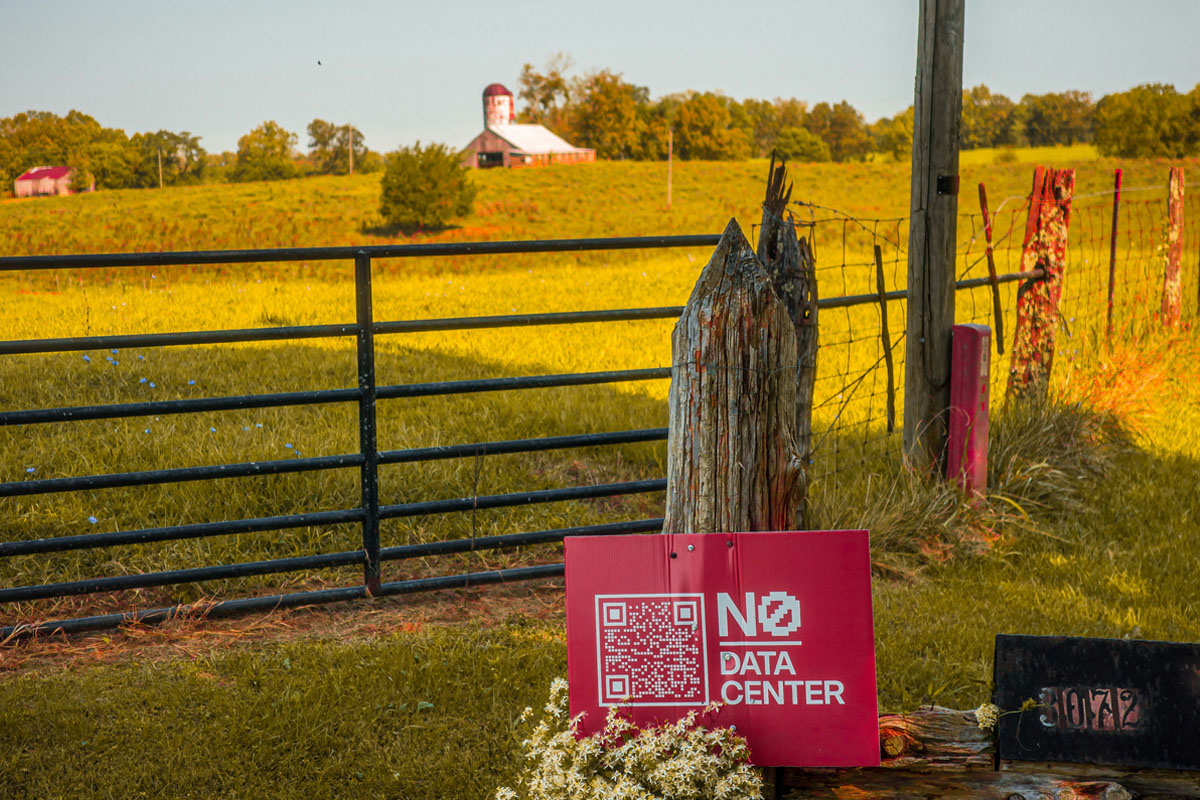
Over the past six months, Americans' support for data center construction has plummeted. In fact, when it comes to data center backlash, no other country comes close to the United States.

According to UK-based consultancy Public First's August 2026 study, The Opposition to Data Centers, the scale of opposition to data centers in the U.S. is off the charts. Americans are more supportive of power plants, electric infrastructure, and office complexes; most survey respondents said they'd rather see land go undeveloped than to see a data center built. 

Opposition to data centers is highest when the construction is within ten miles of a respondents' house, suggesting that Americans overwhelmingly don't want them in their backyards. Interestingly, rural respondents are the demographic most against new data center construction, and perhaps unsurprisingly, those who don't trust tech companies are especially wary of data centers.

The American respondents' biggest concerns are higher energy bills, water shortages for households, and negative impacts on the environment. That said, I believe this American resistance to data centers is also a referendum on Big Tech and a trust in these American CEOs' efforts to build out more AI.

In an August 26 Information Technology and Innovation Foundation (ITIF) webinar, "Can the United States win the AI race if Americans oppose data centers?,"  Paul Lekas, an EVP at the Software & Information Industry Association (SIIA) says, "Populist opposition to Big Tech is definitely a factor [...] There is apprehension in society around AI."

Data center opposition is a uniquely American phenomenon at the moment

Public First's data shows that there is not nearly as much data center opposition in other parts of the globe. For example, survey respondents in India, Nigeria, Vietnam, Indonesia, and many parts of southeast Asia are extremely supportive of new data center construction.

By no means is Public First's study the only data point. A recent NBC News Decision Desk Poll of U.S. adults found that 69% were opposed to data center development, and 70% of these respondents said they were more worried about AI than excited by it. Put simply, a lack of trust in tech companies is driving this data center opposition.

Data centers are a contentious political issue

According to Public First's study, data center support has plummeted since January, particularly among Democrats. However, in the run-up to the midterm elections, politicians from both parties are souring on data center support.

Writing for Politico, Andrew Howard explains, "There’s no clean ideological lane. From MAGA Republicans to far-left Democrats, there are strange bedfellows joining forces against data centers, further complicating the narrative with voters."

In Texas, Republican Gov. Greg Abbott recently paused approval for new data center construction, opting to wait for regulators' audits of these projects' tax breaks and water use. This decision came after Abbott received complaints from longtime conservative voters in remote parts of Texas.

Some politicians are pushing for moratoriums, while others are campaigning against tax incentives and carve-outs. In Michigan, GOP Senate nominee Mike Rogers recently called for a one-year moratorium on new data center construction. And in Ohio, GOP Sen. Jon Husted is facing debilitating data center backlash during his reelection campaign. Husted's competitor, Sherrod Brown, has tried to cash in on this, labeling Husted "the face of data centers."

Caught in a tight race in Nevada, Republican Gov. Joe Lombardo issued a statement on September 18, saying, “Data centers must pay their share, protect our water resources, keep costs from being passed on to ratepayers, and protect the communities that host them.” To be sure, data center construction is now a flashpoint issue for pols on both sides of the aisle.

The pro-data center contingent is yet to find its footing

Generally speaking, the tech industry has been caught off guard, and there is not a lot of effective messaging out there from tech companies and the data center builders. Americans are worried that data centers will raise their electricity bills, drain their water supplies, and help Big Tech build advanced AI tools that some people don't want in the first place.

According to the Center on Budget and Policy Priorities, eight states enacted legislation to reel in data center tax subsidies, and seventeen other states considered, but ultimately did not pass, similar laws last year.

There are ways that data center builders, tech companies, and lobbyists can change the narrative around data centers. For example, according to Public First's study, Americans are most concerned with electricity costs. To assuage these fears, data center companies should promise to cover any electricity grid increases that their data centers would cause, effectively guaranteeing that local electric bills won't rise; in a perfect world, data centers would generate all their own power on-site and not pull from the grid at all. Such messaging would be a boon to the pro-data center movement. 

Data center proponents could also bring attention to the examples of data centers being a win-win for tech companies and the surrounding communities.

Loudoun County, Virginia

Thirty-five miles southwest of D.C., this northern Virginia county is poised to bring in $1.1 billion in tax revenue from data centers in 2026. In fact, data centers currently account for 38% of Loudoun County's General Fund. The tax benefits from data centers have allowed Loudoun residents to build roads, schools, libraries, parks, and a new recreation center. What's more, the residential property tax has dropped significantly over the past decade, from $1.14 per $100 of assessed home value in 2016 to $0.805 per $100 of assessed value in 2026. According to Jared Walczak, vice president of state projects at the Tax Foundation, without data center development, the average homeowner in Loundoun County would pay roughly $5,800 more in property taxes.

Quincy, Washington

Another good example is Microsoft's activity in Quincy, Washington. A small farming town before the tech behemoth set up shop, Quincy now generates 57% of its property tax revenue from data centers. In 2018, Quincy collected $9.8 million in tax revenue; six years later, that number ballooned to $20 million. These funds have funded a new high school, a hospital, and other town infrastructure without raising taxes on residents.

Cedar Rapids, Iowa

Another interesting case study can be found in Cedar Rapids. On one hand, Google's data center development in the region is expected to create 1,000 new construction jobs, and a partnership with the Cedar Rapids Electrical Trade Center should create 700 electrician apprentices by 2030. 

On the other hand, the Google data center deals are under scrutiny due to allegations of kickbacks and non-disclosure agreements. Cedar Rapids Mayor Tiffany O'Donnell has effusively denied the kickbacks; however, she concedes that Google (and QTS Data Centers) will receive a 15-year-long tax break.

Gubernatorial nominees Rob Sand (D) and Zach Lahn (R) are each calling for an end to Iowa's tax breaks for these data centers. It is a huge issue in the current Iowa race.  In his policy plan, Sand writes, "Right now, Iowa faces a nearly $1.4 billion budget deficit. We shouldn’t be handing out more tax breaks for major corporations at the expense of Iowa taxpayers. These data centers are also getting huge sales tax breaks on everything inside the data center.”

The Republican candidate's camp has responded in kind, telling The Gazette, “From day one, Zach Lahn has called for a moratorium on data centers, ending their unfair tax incentives, restoring local control to communities, and setting the ‘rules of the game’ at a state level, so these large data centers cannot raise taxes or increase electricity costs for Iowans. Once again, Rob [Sand] is copying our campaign and mirroring our policy.” 

So, clearly the Iowan candidates are cognizant of the data center backlash and trying to win over angry voters.

The U.S. data center backlash is likely a referendum on some tech companies' AI goals

More than any other country in the world, the United States is increasingly opposed to data center construction. As Seb Wride, head of polling at Public First, points out, "This is not a flashpoint issue in the UK or France or in Germany."

I believe that the uniquely American opposition to data centers is a referendum on AI more generally. And Wride's data supports this. He says, "The root cause of a lot of this data center opposition is coming from AI in general."

In the same conversation, Paul Lekas at the Software & Information Industry Association, says, "I think that it's important for industry to meet people where they are and listen to their concerns. And I think we need to look at these concerns as solvable problems. And then there's this bigger issue of trust and 'how is AI going to benefit me?' which is a much bigger conversation."

To be fair, it's hard for people to be excited about tech CEO's trailblazing AI initiatives when they publicly say things like, “I think that AI will probably, most likely, sort of lead to the end of the world. But in the meantime, there will be great companies created with serious machine learning.” This was Sam Altman at Airbnb's Open Air conference in 2015.

Or how about Elon Musk being asked on Ted Cruz's podcast about the possibility of killer robots annihilating humanity?  "20% likely," Musk said. "Maybe 10%," And it could happen in "five to 10 years." Meanwhile, Musk is actively building humanoid robots. If this is the tech CEOs' endgame, perhaps Americans are right to be wary of non-stop AI development.

Looking forward

The pro-data center contingent is certainly aware that they have a messaging problem. In an attempt to rein in the data center backlash, QTS Data Centers, Compass Datacenters, Digital Realty, and Vantage Data Centers recently joined forces to create a nonprofit called Infrastructure for America. Similarly, Build American AI, which is an off-shoot of the pro-AI super PAC "Leading the Future," is launching a multi-million dollar pro-data center ad campaign in Kansas, Ohio, and Wisconsin.

Given that data centers are such a flashpoint issue in the United States, I agree with Lekas when he says, "It will be hard to have any turnaround before the midterm elections, but I do think this is possible." That said, at this moment, the folks in the pro-data center contingent have an uphill battle on their hands.

Related reading

John Donegan

John Donegan

Enterprise Analyst, ManageEngine

Want to read<br>this article on the go?

Want to read
this article on the go?

Do it on the ManageEngine
Insights app.

Published on August 25, 2026 | 7 min

You've spent the last couple of years getting comfortable with AI that talks. It drafts your emails, summarizes your reports, and suggests your next line of code, and it's been an easy thing to trust, because all it ever did was hand you words and leave the doing to you. But the version showing up now is different in a way that matters: it doesn't just talk, it acts. And that single change is about to transform how you think about security. While you're sitting in a meeting, an AI agent can send emails, pull records from multiple systems, and close tickets; and it does all of it with real credentials, real permissions, and real access to your systems.

Gartner establishes agentic AI oversight as the biggest cybersecurity issue in its Top Trends for 2026 report, ahead of regulatory upheaval and post-quantum encryption, warning that agents are spreading through no-code tools faster than security teams can see them. The World Economic Forum's Global Cybersecurity Outlook 2026, drawn from over 800 leaders across 92 countries, agrees: adoption is racing well ahead of the governance meant to contain it.

What's the difference between an AI agent and an AI assistant ?

The difference between an AI assistant and an agent comes down to what each can do once you stop typing. A regular assistant, like the copilot in your inbox or code editor, generates text and hands the doing back to you.

An agent runs on the same LLMs, but it's wired to act. Give it a goal and it plans the steps, reaches for the tools it needs, pulls in data through methods like retrieval-augmented generation (RAG), moves across your applications and APIs, and decides as it goes.

If you'd like to go deeper, we have a library of content that unpacks these concepts:

Why AI agents are a security risk 

An agent brings together four things your security team usually keeps separate: an identity, a set of permissions, access to sensitive data, and the ability to act on those previous three faster than any person could. Someone with too much access is a risk you would probably spot in an audit. An agent is harder to spot, because it makes thousands of decisions an hour and will do whatever a cleverly worded message tells it to.

Every system you connect it to becomes another place it can act, and because the agent chooses its own next step, one small mistake early on can turn into a whole string of actions nobody signed off on.

And those are just the mistakes that could happen without malicious intent. Gartner predicts that by 2028, 25% of all enterprise breaches will trace back to AI agent abuse, from both outside attackers and insiders who turn agents against their own organization. 

How to secure AI agents: The controls CIOs and CISOs should put in place 

The good part is that none of this asks you to start over. You already know how to do most of it. It's the same security thinking you rely on every day, just pointed at a new kind of worker.

The first piece of that thinking is least-privilege access, which just means deciding what each agent is allowed to touch. The difference with agents is that they need a second limit too, one on how far they can act on their own before they check back with you.

That second limit has a name—least agency—drawn from OWASP's Top 10 for Agentic Applications, the current reference for agent risk. It's the one idea I'd most want you to take away: autonomy is something an agent should earn from you, not something you leave switched on by default.

So start where you always would, and give each agent access to exactly what its task needs and nothing spare. Give agents access only to specific tasks and set a time limit. Do not give them permanent permissions. Broad, "just in case" access leads to privilege creep, where agents end up with more power than they actually need to do their jobs. Entro's 2025 research found that in AWS environments, 62% of machine identities had sat unused for 90 days but still held on to their access.

Give every agent its own identity, too, and I'd really push you not to skip this one. In most enterprises, machine identities now far outnumber human ones. And GitGuardian's 2026 report found nearly 29 million credentials exposed in public code on GitHub in 2025, with roughly 70% of those leaked back in 2022 still working years later. The moment your agents share credentials, you lose the thing you'll want most after an incident, which is the ability to say which agent did what. So keep each identity separate, and keep its credentials short-lived.

For anything that really matters, make the agent stop and ask you first. Let it read a calendar on its own, but moving money or emailing a customer should wait for a human to sign off. Back that up with tool allowlists, so an agent only reaches the systems its job calls for, and sandboxed execution, so anything it does stays contained and can't spill into the rest of your environment.

Then keep watching, because permissions drift and even valid identities start to act up over time. Just remember that your logs will show you each action on its own, while the real trouble hides in the sequence, so train your attention on the pattern, not the single click.

The AI agent security checklist   

If you only save one part of this article, save this. Run every agent through these six checks before it goes live, and keep checking on a regular schedule after that.

  • Identity and access: Give every agent its own identity, never a shared or borrowed human one, and grant least-privilege access from day one. If you can't tell which agent took an action, you can't investigate it.
  • Permissions and privilege: Review each agent's access on a set schedule and pull back anything it hasn't used. Standing permissions that outlive the task are the most common way agents gather risk over time.
  • Data protection: Limit each agent to the data its task actually needs, and fence off sensitive stores so they're off-limits by default. Treat any data an agent can reach as data that could leak.
  • Tools and workflows: Put tool access on an allowlist, keep the agent's execution contained and separate from production, and route high-stakes actions like moving money, deleting records, or emailing customers through human approval. Anything not explicitly allowed should be blocked.
  • Monitoring and logging: Log every action, set a baseline for what normal looks like, and alert on the anomalies. Watch the pattern across actions, not just each click on its own.
  • Governance and ownership: Give every agent a named human owner, a risk rating, and a line in a central inventory. You can't secure, audit, or retire what nobody owns and nobody has counted.

An agent that clears all six is one you can actually trust with the keys.

The part worth remembering   

Autonomous agents aren't something to fear or a fad to wait out. They're a useful new kind of colleague, and like any colleague you'd trust with system access, they deserve an identity, a defined role, sensible limits, and someone watching the work. The winning organizations will be the ones who governed their agents on the way in, not the ones scrambling to catch up afterward.

Frequently asked questions   

What is AI agent security? The controls, identities, and governance that stop autonomous AI agents from being misused, hijacked, or over-permissioned.

How is securing AI agents different from securing traditional software? Traditional software follows fixed instructions, while an agent decides for itself how to reach its goal, so you need to bind autonomous behavior rather than lock down known behavior.

What are the biggest agentic AI security risks? Identity abuse from stolen credentials, excessive permissions, prompt injection, and data leakage, mostly from agents having more access than they need and less monitoring than they deserve.

What is prompt injection, and why is it dangerous for AI agents? An attacker hides malicious instructions inside content the agent reads, and the agent acts on them as if they were legitimate prompt instructions.

Should every AI agent have its own identity? Yes, because a dedicated identity lets you enforce least-privilege access, trace any action to a specific agent, and revoke access cleanly.

How do you apply least privilege to AI agents? Give each agent access only to what its task needs and keep trimming it, using allowlists for tools and human approval for high-stakes actions.

What is AI agent governance? The framework for deploying agents responsibly: ownership, a full inventory, risk classification, and policies for how agents get approved, monitored, and retired.

How do you monitor AI agents in production? Log every action, set a baseline for normal behavior, and alert on anomalies like activity spikes or out-of-scope access requests.

What is shadow AI, and why is it a security risk? Unsanctioned AI tools employees use without approval. Shadow AI is risky because these unsanctioned AI move company data through systems your team can't see; IBM linked it to one in five breaches.

Sneha Banerjee

Sneha Banerjee

Enterprise Analyst, ManageEngine

Want to read<br>this article on the go?

Want to read
this article on the go?

Do it on the ManageEngine
Insights app.

Published on June 05, 2026 | 5 min

Here's a scenario that should feel uncomfortably familiar.

A loyal customer—let's call her Sarah—has spent thousands of dollars on your platform over three years. She buys premium cookware, organic groceries, and the occasional kitchen gadget. Your recommendation engine knows her well. So when she opens your app on a rainy Tuesday evening, it greets her with a curated shelf of her top picks: A cast-iron skillet, some artisan pasta, and a new espresso machine.

However, Sarah is at the airport and her flight was just cancelled. She needs a phone charger, a neck pillow, and something to eat in the next 20 minutes.

Your algorithm served her perfectly according to her profile, but failed her completely in this moment. That gap, between who a customer is and what they need right now, is the central problem in retail intelligence.

McKinsey's research shows that 71% of consumers expect personalized interactions, and 76% report frustration when brands miss the mark. Despite years of investment, most retailers still can't close that gap because they're solving for the wrong variable. It's clear that it's not a technology problem, but a context problem.

What is contextual decision intelligence?

Contextual decision intelligence is the practice of making retail decisions by synthesizing what you know about a customer and what is happening around them at this specific moment. Traditional personalization asks one question: Who is this customer? CDI asks four simultaneously:

  • What is happening around them right now? (weather, local events, time of day)
  • What are they signaling in this session? (scroll speed, search phrasing, cart behavior)
  • What's our operational reality? (inventory positions, margin, fulfillment capacity)
  • What has changed since they last visited? (a competitor's stock out, a price sensitivity signal)

The output isn't a smarter recommendation, rather it's a situationally calibrated action. It looks different for Sarah at the airport than for Sarah planning a dinner party at home, even though the profile data is identical. This is the shift from personalization to situational commerce, and retailers who get there first are pulling away from those still optimizing their recommendation carousels.

Why your personalization engine is not working

Profile-based personalization has delivered real value. McKinsey pegs it at up to 50% reduction in customer acquisition costs and a 5-15% revenue lift. But the ceiling is becoming visible and the cracks are structural, not operational.

The same customer is multiple shoppers. You browse differently at 11pm than at 9am, more price-sensitive the week before payday, and in an entirely different mindset when buying for yourself versus the household. Personalization engines flatten all of that into one identity.

Collaborative filtering, the engine behind you might also like selections compounds the problem by aggregating behavior across millions of sessions, eliminating the situational variation that actually drives purchases. It's the algorithmic equivalent of asking what your friends generally like for dinner and serving that every single time.

There's also the operational blind spot: Most personalization engines surface recommendations with zero visibility into inventory position or fulfillment viability. Recommending a product that's three weeks from restock doesn't just fail the customer, it silently destroys trust and profit margins. Contextual decision intelligence is bidirectional by design, and that changes everything.

BCG research shows retailers deploying contextually adaptive decisions across merchandising, supply chain, marketing and customer service achieve revenue lifts 40 to 60% higher than those using profile-only personalization.

Three contextual decision intelligence levers that move the needle  

The most underused signal in retail is weather. IT influences the purchasing decisions for 93% of shoppers, yet most retailers treat it as a logistics variable, not a demand intelligence tool. Rainy days drive a significant spike in e-commerce activity, as adverse weather keeps shoppers away from physical stores. Retailers using weather-driven inventory systems cut stockout events by 30% and spoilage by 20% during peak seasons. H&M reduced its markdown costs by 1.5 percentage points in relation to sales by integrating AI-driven weather tracking and localized demand forecasting into merchandise planning.

Behavioral microcontext reads the session like a conversation. For example, scroll speed signals decision confidence. "Running shoes" versus "running shoes for flat feet under $120" tells you everything about intent stage and price sensitivity. Adding and removing the same product from a cart twice is a distress signal; someone who wants to buy an item but is hitting friction. The logic is straightforward: A customer's behavior in this session reflects their intent right now, not who they were six months ago. Yet most retailers are still making real-time decisions using historical data. CDI systems that act on these signals in real time, surfacing social proof when a customer hesitates and adjusting price presentation when sensitivity signals fire, consistently outperform static models.

Competitive context capturing demand instantly. When a competitor goes out of stock on a high-demand SKU, demand doesn't disappear it migrates. Retailers with CDI infrastructure that monitors competitor availability and activates quickly (adjusted search rankings, targeted promotions, outreach to relevant segments) can intercept that demand within hours. The same logic applies to competitor pricing windows and assortment gaps. Profile-based personalization has no mechanism for this. CDI does.

The org chart problem nobody mentions  

Here's the uncomfortable truth: Most CDI efforts don't fail because of bad technology. They fail because nobody owns the problem end-to-end. Your inventory team doesn't talk to your digital team. Your data platform was built to track what customers bought, not what they're doing right now. What about contextual signals like weather or competitor stockouts? Well, that's under no one's radar.

Getting this right takes two things.

First, a data setup that can pull live signals together in one place.

Second, a team with the authority to act on those signals across merchandising, marketing, and the supply chain simultaneously.

Dollar General's Paul Bucalo captured it well: "Instead of amassing large quantities of data, we focus on acquiring quality data that provides a contextual understanding of our customers that we can adapt to predict trends and future behaviors."

Simple idea, but it takes real executive will to make it happen.

Stop personalizing. Start responding. 

The numbers tell you everything you need to know: the AI in e-commerce market is growing at nearly 24% a year, from $7.25 billion today toward $64 billion by the end of the 2034.

The infrastructure is commoditizing. Yet 85% of companies claim to deliver personalized experiences while only 60% of customers agree. The gap isn't closing, instead it's growing.

Profile data tells you Sarah loves cooking. Context tells you she's stranded at an airport with 20 minutes to spare. One of those facts is useful right now. Only Contextual Decision Intelligence knows which one.

The retailers building CDI capability now are building a compounding advantage that will be very hard to close in a few years. The real question is: are you one of them?

Related reading:


Sneha Banerjee

Sneha Banerjee

Enterprise Analyst, ManageEngine

Want to read<br>this article on the go?

Want to read
this article on the go?

Do it on the ManageEngine
Insights app.

Published on March 19, 2026 | 5 min

As OpenAI pivots to advertising, it is becoming clear that our current AI revolution will rapidly expand the surveillance economy: the mass collection and monetization of our personal behavioral data.

Although many of us saw advertisements in LLMs to be an inevitability, OpenAI CEO Sam Altman had hoped to avoid this outcome. On more than one occasion, Altman went on the record to lambast ads. He said,  “[Advertisements] fundamentally misalign a user’s incentives with the company providing the service,” and “I kind of think of ads as like a last resort for us as a business model.” And yet, here we are. Ads are coming to his LLM.

OpenAI’s financial quandary

Based on leaked shareholder disclosures, OpenAI allegedly had an operating loss of roughly $8 billion (excluding equity charges) in the first half of 2025. What’s more, the company says it will spend at least $600 billion in compute spend over the next five years, as it has agreements in place with Nvidia, AMD, Broadcom, and Oracle to buy data center capacity, chips, and other related infrastructure.

As of late February 2026, OpenAI had 900 million weekly active users; however, only 5.5% (50 million) pay for subscriptions. Venture capitalist and early Facebook investor Roger McNamee describes OpenAI’s pivot to advertising as a “five-alarm fire.”

According to the Financial Times, OpenAI intends to charge advertisers $60 per 1,000 impressions, in an effort to bring in billions in ad revenue in 2026. To be fair, other than ads, there are alternative revenue streams that OpenAI can pursue, including taking commissions on e-commerce transactions powered by ChatGPT; releasing wearables, and of course, raising funds via an IPO. OpenAI hopes to raise as much as $60 billion through a public offering, although it remains to be seen how accommodating the capital markets will be.

In a January New York Times essay, Sebastian Mallaby, a fellow at the Council on Foreign Relations, predicts that OpenAI will run out of money “over the next 18 months.” Mallaby suspects that it will be acquired by a well-heeled entity like Microsoft, which already owns roughly 27% of OpenAI via a cloud services partnership, or Amazon, which recently invested $50 billion in OpenAI.

Further complicating OpenAI’s financial situation, the company’s business model has virtually no moat.

OpenAI’s competitors

For its part, Google hasn’t integrated ads into Gemini yet, though ads are already popping up alongside its AI-generated search results (Google AI mode and the AI overview summaries for traditional Google searches). However, unlike OpenAI, Google can afford to hold off on advertising in Gemini because it already has plenty of revenue from its legacy businesses.

Another competitor, Perplexity, has experimented with ads, but it ultimately decided to pull the plug on them, declaring that ads were “misaligned with what the users want.” Perplexity very well may revisit ads down the line. In fact, I suspect they will.

And as many of us saw during its $8 million, 30-second Super Bowl spot, Anthropic has positioned itself as the ad-free alternative to ChatGPT. That said, even Anthropic CEO Dario Amodei is leaving the door open to ads. In his February 4th blog post, Amodei writes, “Should we need to revisit this approach, we’ll be transparent about our reasons for doing so.” This doesn’t exactly inspire confidence.

I believe that an advertising ecosystem with mass collection of user data is eventually coming to all of these LLMs—and a new wave of digital advertising is on the horizon.

The fourth wave of digital advertising

The first wave of digital advertising was search advertising and banner ads. With the second wave came social media advertising and mobile ads. And the third wave was comprised of large-scale data surveillance fueled by third-party cookies, cross-site tracking, and behavioral profiling—all in an effort to fuel advertising at scale. Within this third wave, it was the data brokers that really allowed behavioral targeting to scale.

Due to new laws (e.g., GDPR, CPRA), AI developments, declining third-party data quality, and sunsetting cookies, we’re now seeing the emergence of a fourth wave of digital advertising. This AI-fueled fourth wave is more reliant on first-party and zero-party data (data that is explicitly provided by the users).

This fourth wave is a shift to walled gardens and AI-native environments; through new chatbots and agentic shopping flows, customers will encounter ads based on their behavioral data. And without a doubt, this AI-fueled fourth wave will supercharge the surveillance economy.

Surveillance capitalism

The surveillance economy is closely related to Harvard Business School professor Shoshana Zuboff’s concept of surveillance capitalism. In her book, The Age of Surveillance Capitalism: The Fight for a Human Future at the New Frontier of Power, Zuboff describes surveillance capitalism as “a new economic order that claims human experience as free raw material for hidden commercial practices of extraction, prediction, and sales.”

Put differently, surveillance capitalism describes how entities acquire our behavioral data (frequently unbeknownst to us) and use it to generate revenue, often by selling it to data brokers and other third parties that use our data to send us targeted ads.

Big Tech’s widespread collection and commoditization of our personal data perfectly encapsulates surveillance capitalism. For years, our data has been tracked, aggregated, and sold in various markets; the largely unregulated data brokerage industry has ballooned to a $315 billion industry. And the current generative AI boom will further expand it.

Gen AI tools will fuel surveillance capitalism

According to a Fall 2025 report from the Harvard Kennedy School, “AI technologies—especially predictive models, automated decision systems, and generative tools feed on the data extraction pipelines that surveillance capitalism built.”

With each passing day, we see a further conflation of AI developments and the broader surveillance economy. As Harvard Kennedy fellow Burcu Kilic writes, “AI provides a new layer of legitimacy framed as progress, innovation, or national competitiveness, even as it deepens asymmetries of power and concentration of market and control. The surveillance capitalist order now markets itself as an AI revolution.”

Of course, hypothetically, this AI-fueled surveillance economy could always be reined in by federal data privacy legislation. But I’m not holding my breath.

John Donegan

John Donegan

Enterprise Analyst, ManageEngine

Want to read<br>this article on the go?

Want to read
this article on the go?

Do it on the ManageEngine
Insights app.

Published on January 30, 2026 | 7 min

Artificial intelligence (AI) once lived mainly in research labs and pilot projects. Today, it’s making consequential decisions that affect people’s health, wealth, safety, and rights. From automated credit scoring and medical diagnostics to cybersecurity threat prioritization, AI systems increasingly operate where mistakes carry devastating consequences. In these contexts, the central issue is no longer whether models are accurate, it’s whether we can understand and trust why they make certain decisions. That’s where explainable AI (XAI) becomes indispensable.

High-stakes decision environments are defined by complexity, irreversible consequences, and significant operational or ethical impact. When AI is involved in these outcomes, explainability isn’t optional—it’s the cornerstone of trustworthy, accountable, and compliant AI.

The risk of black boxes in critical decision-making

Traditional “black-box” AI models—especially deep learning systems—often provide high predictive accuracy at the cost of being opaque. That opacity has real consequences when the decisions carry weight in high-stakes fields. A study on healthcare AI highlights that without transparency, clinicians are reluctant to leverage AI for diagnosis or treatment when they do not understand the rationale behind predictions, even when models are statistically robust.

Clinicians are legally and ethically responsible for patient outcomes. If an AI tool suggests a diagnosis or treatment path, the clinician must be able to justify the decision to colleagues, patients, and regulators. Multiple studies and systematic reviews show clinicians hesitate to rely on AI unless they can inspect the inputs, reasoning, or evidence behind a prediction—not only to trust it, but to defend the decision afterwards. Explainability is tied directly to clinician willingness to use AI in practice.

Similarly, in security and threat analysis, opaque model outputs do little to help analysts prioritize risk. Explainability yields insights into which signals drove an alert, enabling teams to respond rapidly and confidently.

These examples illustrate a fundamental problem: accuracy without explanation can still produce unsafe outcomes because stakeholders can’t interrogate, verify, or correct AI behavior. In high-stakes environments, the gap between performance and understanding creates operational, legal, and ethical risk.

Defining high-stakes AI and why explainability matters 

A high-stakes AI system is one whose decisions can impact health, legal status, financial wellbeing, personal safety, or civil rights. Examples include:

  • Healthcare diagnostics and treatment recommendations.

  • Automated credit scoring and loan approvals.

  • Security and threat prioritization systems.

  • Hiring and performance evaluation tools.

  • Predictive decision systems in law enforcement and criminal justice.

In each case, a lack of explanation undermines the ability of humans to validate outcomes, comply with regulatory requirements, or allow meaningful recourse.

XAI refers to methods that make model decisions and logic understandable to human stakeholders. This bridges the gap between powerful machine learning and accountable decision making, enabling humans to grasp why a model reached a particular output.

Regulatory drivers: The European Union AI Act and “Right to Explanation”

Regulation is rapidly turning explainability from a best practice into a legal expectation, especially for high-stakes AI systems. The clearest signal comes from the EU AI Act, which adopts a risk-based approach to AI governance.

Under the AI Act, AI systems used in areas such as healthcare, creditworthiness, hiring, law enforcement, and access to essential services are classified as “high-risk.” These systems face strict obligations around transparency, documentation, human oversight, and post-deployment monitoring. In practical terms, this means organizations must provide sufficient information for users to understand, interpret, and safely rely on AI outputs—making explainability a prerequisite for lawful deployment, not an optional enhancement.

Closely related is the evolving concept of the right to explanation. While its exact legal boundaries continue to be debated across GDPR interpretations and comparative national case law, the regulatory direction is clear: when automated systems significantly affect individuals, organizations are expected to offer meaningful information about how decisions were made along with mechanisms for human review and contestation. This shifts explainability from internal governance to external accountability.

Beyond the EU, sector-specific regulators—particularly in finance and healthcare—are reinforcing these expectations through supervisory guidance and audits. The result is a converging global norm: high-impact AI decisions must be explainable, defensible, and reviewable by humans.

In short, regulation is acting as a forcing function. But compliance alone is not the goal. Organizations that treat explainability merely as a legal check box risk building systems that satisfy auditors but fail users. In high-stakes environments, effective explainability must support both regulatory scrutiny and real-world decision-making.

Explainability as a risk control, not just a feature

In high-stakes settings, explainability serves four core purposes:

  1. Trust and adoption: Clinicians, risk officers, and analysts are far more likely to accept AI recommendations when they understand the reasoning behind outputs.

  2. Accountability and auditability: Explainability provides traceable logic that supports audit trails and regulatory compliance.

  3. Error detection and debugging: Transparent insights help teams spot model biases, drift, or unexpected behavior.

  4. Human oversight: Humans can intervene effectively only when the AI’s rationale is accessible.

In contrast, without explanations, AI systems act like inscrutable authority figures: confident, hard to interpret, and potentially wrong.

Real cases where XAI makes a difference 

In high-stakes environments, resistance to opaque AI is not hypothetical. It has played out repeatedly in real deployments. When explanations are missing, humans hesitate, systems underperform, and trust erodes.

 Healthcare diagnostics

One of the most cited real-world examples of opaque AI comes from the first release of the Epic Sepsis Model. Epic’s proprietary sepsis prediction tool was deployed across hundreds of United States hospitals to flag patients at risk of sepsis. An independent evaluation published in JAMA Internal Medicine found that the model missed nearly two-thirds of sepsis cases and generated frequent false alarms. Because clinicians lacked visibility into how risk scores were calculated, many struggled to validate alerts within clinical workflows and often ignored them. This demonstrates how opaque clinical AI can undermine patient safety, even at scale.

Financial services

In finance, explainability is essential both for compliance and fairness. Black-box models might outperform traditional scoring methods, but if a model denies credit without a clear rationale, customers cannot seek remediation and regulators may intervene. Research on XAI frameworks in credit scoring highlights that transparent analysis of feature importance—such as credit history and debt ratios—is key to building trustworthy predictions.

In 2019, Apple Card faced public backlash after customers reported dramatically lower credit limits for women. Although regulators found no intentional discrimination, the investigation exposed a core problem: customers could not obtain clear explanations for the automated credit decisions. The opacity fueled mistrust and regulatory scrutiny, highlighting that in lending, explainability is critical for legitimacy, not just compliance.

Cybersecurity and incident prioritization

In enterprise SOCs, research shows analysts are more likely to trust and act on AI-generated alerts when explanations are provided. Studies on explainable intrusion detection systems demonstrate that feature-level explanations reduce false-positive investigations and speed up incident triage, improving mean time to respond. Without explanations, opaque risk scores often contribute to alert fatigue and delayed responses to real threats.

Methods and mechanisms of explainability

Explainability is often discussed as if it’s a single technical feature. In reality, it is a set of complementary methods, each suited to different models, risks, and audiences. What works for a data scientist debugging a model may be useless to a clinician making a treatment decision or a security analyst triaging an alert.

In high-stakes environments, the question is not whether a model can be explained, but how that explanation supports human judgment at the moment a decision is made. That distinction matters, because poorly chosen explanations can mislead users or create a false sense of confidence.

In practice, explainability mechanisms fall into a few broad categories, each serving a distinct purpose:

  • Feature attributions: Techniques like SHAP and LIME assign importance scores to inputs, telling users which factors contributed most to a decision.

  • Counterfactual explanations: These show how slight changes to input factors could have changed the outcome. This is useful for customer advice in finance or treatment alternatives in healthcare.

  • Model cards and documentation: Structured summaries of model performance, limits, and fairness metrics help stakeholders understand broader behavior patterns.

No single technique solves every explainability challenge. Depending on the environment, a combination tailored to individual domain needs is helpful.

How to integrate XAI in high-stakes systems  

Explainability in high-stakes environments cannot just be plugged in after deployment. It has to be designed into the system from the outset, aligned with risk, accountability, and human decision-making. In practice, no single explainability technique is sufficient on its own. High-stakes systems typically rely on a combination of methods, chosen based on model complexity, regulatory exposure, and the needs of human decision-makers.

To make XAI work in high-stakes systems, organizations should focus on four foundational practices:

  1. Risk classification: Determine which AI systems are high-impact and prioritize explainability investment accordingly.

  2. Governance integration: Embed explainability requirements into development life cycles, documentation, and audits.

  3. Human processes: Educate domain stakeholders on interpreting outputs and understanding limitations.

  4. Continuous monitoring: Track model behavior over time and ensure explanations remain valid as data evolves.

This approach moves explainability from an afterthought to a governance discipline.

Accountability is the new accuracy

In high-stakes environments, explainability transforms AI from an inscrutable oracle into an accountable partner. It enables trust, operational safety, legal compliance, and ethical decision-making. With regulations like the EU AI Act pushing for transparency and a growing body of real-world evidence showing the operational value of explanations, XAI is no longer optional—it’s core to responsible AI deployment.

Where decisions materially affect people’s lives and rights, the systems that power those decisions must be understandable, defensible, and aligned with human values. The future of high-stakes AI belongs not just to the most accurate systems, but to the most explainable and accountable ones.

Related reading:

Priyanka Roy

Priyanka Roy

Senior Enterprise Evangelist, ManageEngine

Want to read<br>this article on the go?

Want to read
this article on the go?

Do it on the ManageEngine
Insights app.

Published on October 01, 2025 | 6 min

If you have been anywhere near the tech world lately, you know AI is not just having a moment, it is taking over. Venture capitalists are pouring billions into startups that promise to reinvent industries, and enterprises are racing to bolt AI into every workflow they can find. But here is the million—or rather billion—dollar question: where will the next wave of AI unicorns (startups valued at $1 billion or more) be born?

Let’s take a tour through the three powerhouses: the United States, Europe, and Asia. Each has its own strengths, quirks, and hurdles, and the race isn’t as straightforward as it might look on a bar chart.

America: The AI big leagues  

Let’s be honest, the U.S. is playing in a league of its own. In 2024 alone, U.S. private AI investment hit $109 billion, that’s nearly twelve times China’s total. If venture funding were an Olympic sport, Silicon Valley would already have won a gold medal.

A few reasons explain America’s outsized lead:

  • Venture capital muscle: Roughly a third of all VC dollars worldwide went to AI startups last year, and most of those dollars landed stateside. Mega-funding rounds for companies like OpenAI, Anthropic, and Databricks are setting records.

  • Tech giants acting as kingmakers: Microsoft dropped a cool $13 billion into OpenAI, while Amazon invested $4 billion in Anthropic. At the same time, Google and Nvidia are making multi-billion-dollar bets left and right.

  • Talent and research density: The U.S. produces the majority of the world’s leading AI models, with 40 notable models in 2024 versus China’s 15. Stanford, MIT, and Berkeley remain magnets for top researchers.

  • Government tailwinds: The CHIPS Act and AI-focused initiatives like Project Stargate are funneling public money into compute infrastructure and research hubs.

So if you’re betting on where the largest unicorns will pop up, especially in generative AI, enterprise software, or foundational models, America is still the safest bet.

But don’t write the ending just yet. The U.S. faces challenges, too. Talent is expensive and fiercely competitive. Compute power is getting costly (hello, GPU shortages). And regulatory scrutiny around AI safety and privacy is growing louder in the U.S., even if it’s not as strict as Europe’s.

Europe: The underdog with an ethical edge  

Europe might not grab the same headlines, but don’t underestimate it. In 2024, European AI startups raised $8 billion in VC funding, with the U.K. among the top recipients. Some reports suggest the U.K. attracted nearly $6 billion in that period. That is serious money.

Europe’s strengths lie in specialization and trust:

  • Ethical AI leadership: The EU AI Act—love it or hate it—positions Europe as a standard-setter for responsible AI. For businesses wary of backlash over bias or misuse, European startups’ compliance-first reputation can be a selling point.

  • Niche excellence: Startups like Mistral AI (France), DeepL (Germany), and Wayve (U.K.) are proving Europe can compete on tech quality. Wayve’s billion-dollar autonomous driving funding round was a shot heard around the automotive world.

  • Manufacturing and automotive strengths: Germany’s Industry 4.0 movement and Europe’s advanced robotics expertise give it a leg up in industrial AI.

Still, Europe has hurdles. Its markets are fragmented by language, regulation, and culture. Scaling a startup from Paris to Prague to Porto isn’t as seamless as scaling from San Francisco to Seattle. And venture capital pools, while growing, are smaller than in the U.S. The result? Some promising European companies seek U.S. funding or even relocate headquarters to grow faster.

If you’re looking for unicorns with strong ethics, deep tech chops, and industry-specific brilliance, Europe is where you should look. Expect more vertical-focused AI unicorns in healthcare, manufacturing, and language technology rather than massive, all-purpose foundational models.

Asia: The sleeping giant (that’s waking up)  

Asia’s story is really two stories: China and everyone else.

China is sprinting ahead in the AI race. In 2024, it captured about 76% of Asia’s AI funding, which is around $7.3 billion.

Big names like Alibaba, Tencent, and Baidu are pouring money into generative AI and large language models, with projects like Qwen and ERNIE leading the charge. And it’s not just the private sector making moves. The Chinese government is backing the tech boom with a massive $138 billion high-tech fund and semiconductor subsidies.

On top of that, China is building colossal AI infrastructure, including the $37 billion “Stargate of China,” designed to centralize compute power and supercharge innovation. The country isn’t just participating in the future of AI, it’s aiming to shape it.

But outside China, things get interesting. India’s IT services sector is adopting AI at a breakneck pace, integrating automation into everything from customer support to logistics.

Southeast Asia is quickly turning into an AI hotspot. Big names like Amazon, Microsoft, Google, and Nvidia are pouring billions into building AI-ready data centers. Nvidia alone is investing $4.3 billion in Malaysia to set up some of the country’s fastest supercomputers.

Meanwhile, Japan is getting in on the action too. SoftBank teamed up with OpenAI to launch SB OpenAI Japan, planning to invest $3 billion a year to bring generative AI straight to businesses. From India to Japan, the rest of Asia is gearing up to make its mark on the AI landscape.

However, the challenge for Asia’s unicorns? Regulatory uncertainty, geopolitics, and reliance on U.S.-made GPUs can make scaling tricky. But don’t sleep on Asia. Its huge markets, growing middle class, and ambitious governments mean we’ll likely see more unicorns emerge, particularly in industrial AI, logistics, and consumer tech.

The unicorn forecast: Who wins what  

So, where’s the smart money? Here’s a cheeky but data-backed forecast:

  • United States: Dominates in foundational models, developer tools, and enterprise platforms. Think the next OpenAI or Databricks.

  • Europe: Excels in vertical AI—like manufacturing, language, healthcare—where trust, regulation, and specialized knowledge matter.

  • Asia (especially China): Leads in consumer AI (social media, e-commerce), industrial automation, and infrastructure-heavy plays like robotics or autonomous logistics.

But don’t forget the wildcards too: Emerging markets are starting to produce their own unicorn contenders. Countries like the UAE, Brazil, and Singapore are making national AI strategies a priority. With open-source models lowering the barrier to entry, the next surprise unicorn might come from a place nobody’s watching.

What this means for tech leaders and investors  

If you’re a CIO or CTO in North America, the message is clear: double down on AI adoption, but stay vigilant about cost and talent shortages.

For European leaders, lean into your ethical advantage and turn the EU AI Act’s constraints into a differentiator that global customers trust.

And for Asia-Pacific executives, prepare for scale: With huge local markets and cross-border collaboration, the region could leapfrog in specific niches.

Investors, meanwhile, should resist the temptation to put all their chips on Silicon Valley. While the U.S. will continue producing giants, the next breakout unicorn could easily come from Paris, Shenzhen, or Bangalore.

Closing thoughts  

The AI investment boom isn’t slowing down anytime soon.

IDC projects global AI spending will soar from about $235 billion in 2024 to over $630 billion by 2028, a rate of almost a 30% annual growth. Gartner says generative AI alone could be a $644 billion market by 2025. Behind those numbers are startups jockeying for unicorn status.

The U.S. may lead the pack, but Europe’s thoughtful approach and Asia’s sheer scale make this a truly global race. Whether you’re an investor hunting for the next billion-dollar bet or a tech leader deciding where to expand, one thing’s certain: the next AI unicorn might not come from where you expect, so keep your eyes open and your GPU clusters ready.

Sneha Banerjee

Sneha Banerjee

Enterprise Analyst, ManageEngine

Want to read<br>this article on the go?

Want to read
this article on the go?

Do it on the ManageEngine
Insights app.

Artificial Intelligence

AI vs. AI: Defending against deepfakes and disinformation

Published on August 22, 2025

In an era where artificial intelligence (AI) doesn’t just defend but also fuels cyberthreats, enterprises face a new kind of challenge: safeguarding not only their infrastructure but also their information integrity.

In this thought-provoking episode of ManageEngine Insights, we sit down with Richard Wong, associate partner and global head of security advisory at Frost & Sullivan, to explore how deepfakes, AI-powered disinformation, and synthetic media are reshaping the cybersecurity landscape.

Together, we discuss:

  • How AI-generated deepfakes and disinformation are being used in cyberattacks

  • The role of AI in detecting and defending against synthetic threats

  • Why brand security, digital trust, and internal awareness matter more than ever

  • What organizations must do today to build resilience for the AI-powered future

If you’re a CISO, IT leader, security professional, or simply curious about the future of cybersecurity, this is one episode you won’t want to miss.

Agenda:

  • The evolution of cybersecurity in the age of generative AI

  • Real-world examples of deepfake-driven attacks on businesses

  • How AI tools are used to detect synthetic content—and their limitations

  • Why disinformation defense is becoming a boardroom issue

  • Practical steps enterprises can take to stay ahead of AI-powered cyberthreats

WATCH NOW
Samudhra Sendhil

Samudhra Sendhil

Enterprise Analyst, ManageEngine

Catch up on expert <br> videos like this anytime<br>with the ManageEngine <br> Insights app.

Catch up on expert
videos like this anytime
with the ManageEngine
Insights app.

Published on August 12, 2025 | 5 min

This morning, I asked GPT-5 for a beginner yoga routine.

It gave me a beautifully sequenced flow and then suggested ending with a meditative headstand to fully center your energy. Despite having the core strength of a baguette, I found myself genuinely believing I could pull it off.

That’s the thing about GPT-5: It’s encouraging, inventive, and at times, blissfully unaware of your true limits. Its uncanny knack for anticipation somehow makes it feel almost human. For a moment, I found myself saying yes to every follow-up prompt because it seemed to know exactly what I needed next, and it was even better than previous models.

Turns out it’s not just me: Even my mom, who shares my ChatGPT account, says yes but with a “please” added to it, just in case the polite humans get remembered when the machines take over.

And now it’s not just in your search bar. It’s in your inbox, your calendar, your code editor, and maybe even planning your meal preps and date nights. As Sam Altman said during the launch of GPT-5, “[This model] is like having PhD-level researchers on your phone.”

But here’s the catch: GPT-5’s arrival isn’t happening in a vacuum. It’s landing in the middle of a messy macro moment: tariffs and job cuts, a global AI gold rush, billions sunk into data centers, and millions more into—somehow—Labubu figurines (more on this later).

We’re still arguing whether these tools are making us sharper or quietly outsourcing our brains, and we haven’t even fully processed the last model cycle yet. Even Sam Altman agrees that his kid will never be smarter than AI.

A unified AI experience

According to OpenAI, GPT-5 is its most capable and smartest model yet.

And it does feel different right off the bat. For starters, it doesn’t try to sound like a sycophantic yes man, telling us how we can never do any wrong and that we are very beautiful inside and out.

Under the hood, OpenAI has scrapped the confusing model buffet (4o, o3, and o3-mini) and replaced it with one unified system that routes your request to either:

  • GPT-5, the flagship model: The quick thinker.

  • GPT-5-Thinking: The deep thinker.

  • GPT-Pro: The premium option with higher caps if you can stomach and/or justify the $200/month bill.

In English: You were driving a stick; now it’s an automatic gearbox—quick when you need speed and careful when things get convoluted.

Real-world improvements

On paper, the upgrades land where people feel them. Reception ranges from deep anxiety of being replaced to grateful that information is becoming accessible to those without prior knowledge. Where it shines? See below:

  • A coding behemoth: GPT-5 posts 74.9% on SWE-bench Verified (real GitHub issues), edging out prior OpenAI reasoning models while using fewer tool calls. Translation: It’s better at fixing the annoying bugs that ruin your afternoon. Better at doing your whole job? Not quite yet.

  • Giving your doctor a run for their money: It’s explicitly tuned to be a more careful thought partner on health questions and scores much higher than earlier models on HealthBench, OpenAI’s physician-built evaluation. (It’s still not a doctor; you still need your real one.)

  • No more* wild made up stories: Independent roundups report GPT-5 as being more reliable, with meaningfully lower distortions and more honesty about limits, especially when the deeper reasoning kicks in.

  • Real-life hooks: You can now connect Gmail and Google Calendar so ChatGPT can help plan your day, surface emails that need replies, and juggle schedules without the copy-paste Olympics.

Why this is bigger than anticipated: Did we achieve AGI?

The productivity gains are real. GPT-5 can draft your reports, debug your code, summarize a 200-page document, and suggest three better ways to spend your afternoon all before lunch. And yes, it often anticipates what you’ll want next. (Is that where all of our “private” conversations were used? Don’t answer that.)

So, is this artificial general intelligence (AGI)? Short answer: No. Longer answer: GPT-5 is less of a final boss of intelligence and more of a matured, less confusing model of ChatGPT. It has simpler choices, better defaults, and sturdier guardrails. That simplification is likely providing the biggest real-world gains.

However, it doesn’t come with absolute consistency. GPT-5 is actually a collection of models behind the scenes. Some are brilliant, and some are average. And since queries are smartly routed, you don’t know which one you will get, so results might vary. There’s a reason behind this too, and it comes down to money.

A recent NVIDIA paper suggests the future won’t be a single, giant LLM for every task but a coordinated system of specialist models. GPT-5’s architecture is in line with this prediction: a fast, efficient model (the flagship version of GPT-5) for most jobs and an expensive model (GPT-5-Thinking) for the mental heavy lifting.

Humans already work this way. Our superpower isn’t that every person is great at everything, it’s that we specialize and share. This blueprint of mimicking the way human intelligence works might bring AI closer to AGI than any other approach.

Use it or lose it: Brain edition 

So, let’s circle back to Labubus, because they’re more than a random collectible here—they’re a reminder that when the world tilts too fast, people reach for little anchors. Whether it’s AI quietly rewriting the rules of work or an economy quietly rewriting the rules of survival, we fall back on old instincts to cope. GPT-5 didn’t launch into a calm, rational world; it landed in the middle of layoffs, tariff wars, AI arms races, and a global recession that somehow coexisted with record sales of Stanley cups and Labubu figurines. It’s a kind of collective, cognitive whiplash: We’re watching billions of dollars being poured into AI development while everyday life feels uncertain. Economists call it revenge spending. Psychologists call it coping. Either way, it’s the same instinct that kept lipstick sales high in the Great Depression: We need small luxuries to remind ourselves we’re still here.

And that’s the tension we’re living in: an AI boom colliding with human routine. We’re learning to work alongside a tool that can outthink us in seconds while still clinging to the small rituals that make life feel ours.

LLMs are on track to keep getting better. However, between the code they write and the headstands they suggest, there’s a space where you can choose how much of your thinking to outsource and how much to keep as your own. Maybe, just maybe, try to resist the urge to have these AI tools plan everything for you. There’s value in doing some of the messy thinking yourself.

GPT-5 is a leap forward in what AI can do for your daily workflow. It’s faster, more accurate, and more integrated into the tools you already use. But it’s also part of a much bigger economic gamble. It’s raising questions about skills, energy, and who this technology ultimately serves.

So use it. Enjoy it. Test its limits. Just remember: It’s a tool, not an oracle. And the best work you’ll do with GPT-5 is still the work you steer.

Samudhra Sendhil

Samudhra Sendhil

Enterprise Analyst, ManageEngine

Want to read<br>this article on the go?

Want to read
this article on the go?

Do it on the ManageEngine
Insights app.

Artificial Intelligence

Is AI distorting our sense of reality? 

Published on June 28, 2025

Why watch?  

We’re entering an era where reality isn’t what it used to be. AI is reshaping it. What happens when the images we see, the music we hear, or even the words we read can no longer be trusted as human-made? In this episode of Thinking Tech, we dive into the phenomenon of hyperreality, where the lines between real and artificial blur beyond recognition.

From deepfakes to AI-generated music and writing, we explore how technology is not just imitating human behavior but also outperforming it. And while the results can be fascinating, they also raise serious questions about misinformation, privacy, and the very nature of truth in a digital-first world.

Join us as we unravel how hyperreal content is impacting the way we perceive reality and why a simple typo might be the last signal of humanity left in a world powered by AI.

What you’ll learn  

  • What hyperreality means and how AI is fueling it

  • How AI-generated content is becoming indistinguishable from human-made media

  • Why deepfakes and hyperreal visuals are challenging our sense of trust

  • The psychological impact of being unable to tell what’s real

  • What sets humans apart in an increasingly AI-driven digital world


Watch Now
Samudhra Sendhil

Samudhra Sendhil

Enterprise Analyst, ManageEngine

Subscribe to AI

Thanks for subscribing to ManageEngine Insights. If you do not receive our welcome email, please check your SPAM folder.