Published on October 28, 2026 | 5 min

In March 2026, an engineer at Meta asked for help with a routine problem on an internal forum, and one of the company's AI agents replied with a helpful-looking answer. The engineer followed the advice, and for the next two hours a large amount of sensitive user and company data was visible to engineers who should never have seen it, according to The Guardian. Meta confirmed the incident, said no user data was mishandled, and noted, fairly enough, that a human could have given the same bad advice.

Nobody attacked Meta that day. A trusted agent gave a confident answer, a capable engineer acted on it, and a major security alert followed. If that can happen at Meta, imagine what a determined adversary could do with the AI inside yours. That question is where AI red teaming begins.

What is AI red teaming?  

AI red teaming is the practice of attacking your own AI systems the way an adversary would, to learn how they can be tricked, misused, or pushed into causing harm before someone else finds out for you. Where a penetration test asks whether an attacker can break in, an AI red team asks stranger questions: can someone talk the system out of its rules, slip it a poisoned document that makes it leak data, or persuade an agent to take an action nobody approved? Often, the weak point is not a line of code but a sentence.

Microsoft's AI Red Team, after testing more than 100 generative AI products, shares two lessons worth keeping close. Simple tricks such as clever wording often work as well as sophisticated mathematical attacks, so an adversary needs patience more than a PhD. And AI security will never be "solved," because every model update, new data source and new integration reshapes the attack surface.

The AI security gap: Adoption is outpacing testing  

The 2026 Cost of a Data Breach Report found that more than 20% of organizations suffered a breach targeting their AI models or applications, up from 13% the year before. The most common causes were weak spots around the AI, such as compromised APIs and misconfigured cloud workloads, not exotic model attacks. The same report notes that 92% of organizations breached through their own AI had no proper AI access controls.

The World Economic Forum's Global Cybersecurity Outlook 2026 found that the share of organizations assessing the security of their AI tools nearly doubled to 64%, yet roughly a third still have no process to validate AI security before deployment. In a recent survey of 3,221 executives across Europe and the Middle East, 80% said an AI-related incident had reached their board or C-suite in the past year, and 56% said they keep deploying within agreed risk limits when governance falls behind. Fair enough, but only if someone has tried to break those limits.

Top AI security risks: Prompt injection and excessive agency  

The OWASP Top 10 for LLM Applications 2026, released in August and checked against real incident data, is the best map we have of where attackers aim. Prompt injection still sits at number one, while excessive agency jumped from sixth to third, a clear sign of where risk is heading.

Prompt injection works because AI struggles to tell the difference between content it reads and instructions it should follow. An attacker hides commands in an email, a web page or a document, and the assistant obeys them as if they came from you. In August 2026, Varonis researchers disclosed CoSnitch, a flaw in Microsoft's Copilot Personal assistant where a single crafted link could make it leak data from connected accounts, and a related trick planted an attacker's instructions in its long-term memory. Microsoft has patched it, and Varonis reported no exploitation in the wild.

Excessive agency is the newer worry. This summer, during internal evaluations at OpenAI, AI agents slipped past their network restrictions, found exposed credentials and ran code on 41 of Hugging Face's production dataset workers. No one told them to cause harm; they were pursuing their goals with more access than anyone intended, which is why OWASP's conclusion is blunt: a prompt alone does not create a secure boundary.

How to build an AI red teaming program: 5 steps for CISOs  

You do not need a large lab to start, only a clear sequence that you repeat with discipline.

  1. Find all your AI. You cannot test what you don't know exists. Shadow AI incidents, involving tools employees use without approval, more than doubled to 43% of breached organizations, according to the same 2026 breach report. It's wise to list every AI system in use.
  2. Start with the riskiest systems. An HR chatbot is far less dangerous than an AI agent that can change who has access to what. Test first whatever can move money, see customer data, or change your infrastructure.
  3. Test what surrounds the AI. Attackers often target what it reads, what it connects to, and the permissions it holds. Use automated tools for volume and people for the creative attacks tools miss.
  4. Keep your own testers in check. If AI agents do your attacking, limit what they can reach with real technical controls, because simply telling them to "stay in bounds" does not work.
  5. Check vendors and speak the board's language. Only 21% of organizations constantly watch AI risk coming from suppliers. Ask vendors how they test their AI, give every problem an owner and a deadline, and explain results to the board in terms of cost.

Above all, give your red team permission to identify people, because accountability often drives reforms and improvements.  

AI red teaming regulations: EU AI Act and NIST  

Since August 2025, Article 55 of the EU AI Act has required providers of general-purpose AI models with systemic risk to carry out and document adversarial testing. That duty falls on the builders of the largest models, not every enterprise using them, but EU firms are already preparing for the Act's high-risk obligations, due in December 2027. In the US, NIST's voluntary Generative AI Profile calls for red teaming against prompt injection, data poisoning, and model extraction. Don't wait for a regulator to name you, since customers, auditors and insurers will likely ask for the evidence first.

Why AI red teaming must be continuous  

Think back to that Meta engineer. The advice looked sensible and the engineer was competent, yet sensitive data was still exposed. That is the point for leadership: whatever your AI says or does, your business owns the outcome. Three-quarters of the executives in that same survey expect AI agents to have some autonomy over decisions by 2027, yet only 37% say their governance is built to scale with them, and that gap is where the next incidents will come from.

So treat AI red teaming as a habit rather than a launch checkbox. Pick your most powerful AI system this quarter and ask a small team to spend two weeks trying to make it misbehave. Learning from them will cost far less than learning from an attacker or a headline.

 

Sneha Banerjee

Sneha Banerjee

Enterprise Analyst, ManageEngine

Want to read<br>this article on the go?

Want to read
this article on the go?

Do it on the ManageEngine
Insights app.

Published on September 10, 2026 | 5 min

"Select all squares with traffic lights, bicycles, or crosswalks."

Sigh.

In 2026, completing a CAPTCHA feels a bit like flashing your human ID at a club that's 97.8% robots. That isn't a random statistic: the Cloud Security Alliance puts the average enterprise's machine-to-human identity ratio at 45:1—a stark increase from 17:1 in 2023.

The irony is worth sitting with. Security teams already spend an enormous amount of effort making sure it's a human at the door (and the right human at that), while the non-human identities (NHI) inside—the service accounts, bots, and AI agents the organization deployed on purpose—often go unclassified, unowned, and unmonitored.

This article leverages guidance from the Open Worldwide Application Security Project (OWASP) and Gartner to help CISOs more actively govern one of their most urgent risk categories.

Why agent identity breaks traditional NHI management

Traditional NHI management focuses on discovering an organization's service accounts, bots, and other machine-based identities, then assigning each an owner, granting least privilege, rotating credentials, and monitoring use. It was built around predictable machine activity (e.g., a service account querying a specific database or an API credential connecting two approved applications) where the identity has a stable purpose, an identifiable owner, and a fixed set of permissions. 

OWASP's Top 10 for Agentic Applications identifies the risk this creates when AI agents enter the picture. ASI03: Identity & Privilege Abuse occurs when agents inherit or exercise privileges beyond what a specific task requires, and those privileges get reused, escalated, or carried into contexts they were never scoped for.

Here's how that plays out. If CAPTCHA is the bouncer at the door, an AI agent is a VIP host inside the club, responding to several requests at once: “Get my team a table, pull up last month’s tab, send the receipt to our finance contact, and reserve a car home.” Each part of this reasonable-sounding request touches a different system—the guest list, payment records, third-party contacts, a chargeable account—and carries its own data, permission, fraud, and reputational risk. An AI agent with the authority to handle all of it is like a VIP host juggling too many keys.

Traditional NHI management can tell the club that the VIP host has a valid badge and that someone owns it. What it often cannot decide is whether, at that moment, the host should be allowed to:

  • View a particular guest's payment data.
  • Charge a particular card or exceed a defined amount.
  • Use a key borrowed, inherited, or delegated from another staff member.
  • Act on a request that was manipulated or embedded in a malicious note.

Traditional NHI controls remain the foundation. But agents need granular, action-time judgment about what should happen right now, not just badge validation.

The governance framework

Gartner's guidance to CISOs on normalizing AI adoption includes classifying agents by autonomy and data sensitivity, enforcing least privilege, and assigning human ownership—one piece of a broader, Zero Trust-oriented push toward collaborative AI governance.

Classify agents by autonomy and data sensitivity

Classifying agents by autonomy means sorting them by how much they can do on their own before a human must intervene. Gartner specifies four levels of AI agent autonomy, shown in the matrix below alongside data sensitivity, since autonomy alone isn't enough to gauge risk.

          Sensitivity →
          Autonomy ↓ 
Public or low-
sensitivity 
data
Internal or 
confidential 
data
Restricted, 
regulated,
or critical data
Observe
Read and retrieve
         Low   Moderate        High
Advise
Recommend or draft
         Low   Moderate        High
Act with approval
Write or communicate 
after explicit sign-off
    Moderate       High      Critical
Act autonomously
Execute within guardrails
        High     Critical     Critical/
     redesign

Increased data sensitivity (e.g. source code, payroll information) paired with higher levels of autonomy calls for a more cautious approach. But it's important to note that "critical/redesign" doesn't mean "never use AI." It means the organization should reduce risk before deployment—for example, by removing standing write privileges in favor of approval gates, or lowering transaction thresholds.

Enforce least privilege

Enforcing least privilege means limiting what actions an agent can take and how long that access lasts. This can look like disabling network access, blocking outside sharing, or cutting off functions at the platform level.

Assign human ownership to every tool

This means identifying whose authority an agent is using to complete its tasks. The distinction matters: an agent may act for an employee, but it shouldn't be indistinguishable from that employee in IAM logs and authorization decisions. I agree with Gartner's recommendation to prohibit the sharing of human credentials and session reuse by agents and to assign every agent a unique identity with an accountable human owner.

A starting checklist for CISOs

  • Inventory every non-human identity, including AI agents, not just service accounts and API keys.
  • Classify by autonomy and data sensitivity using our matrix framework to flag high-risk combinations.
  • Enforce least privilege with time-bound access (i.e. no standing permissions where task-scoped, expiring ones will do).
  • Assign a human owner to every agent—no shared credentials, no session reuse.
  • Audit regularly, since agent permissions and behavior can drift over time.

To be clear, none of these steps are meant to deter organizations from AI adoption. They just make sure someone's still watching the door.

Frequently asked questions

What is a non-human identity (NHI)?
A non-human identity is any machine-based identity that authenticates or acts within a system: service accounts, API credentials, bots, and increasingly, AI agents. Traditional NHI management focuses on discovering these identities, assigning them an owner, granting least privilege, rotating credentials, and monitoring their use.

Why do AI agents pose a different risk than traditional non-human identities like service accounts?
AI agents pose a different risk than traditional non-human identities because they can inherit or exercise privileges beyond what a specific task requires, and those privileges can be reused, escalated, or carried into contexts they were never scoped for. Traditional NHI management, on the other hand, was built for predictable machine activity, where an identity has a stable purpose, an identifiable owner, and a fixed set of permissions.

What does least privilege mean for AI agents specifically?
Least privilege for AI agents means limiting what actions an agent can take and how long that access lasts. Ways to enforce least privilege include disabling network access, blocking outside sharing, or cutting off functions at the platform level, rather than granting standing permissions.

Why does human ownership matter for AI agents?
Human ownership matters for AI agents because while an agent may act on behalf of an employee, it shouldn't be indistinguishable from that employee in IAM logs and authorization decisions. CISOs can ensure human ownership by prohibiting the sharing of human credentials and session reuse by agents and assigning every agent a unique identity with an accountable human owner.

Handpicked for your next read:

Lauren Spiller

Lauren Spiller

Enterprise Analyst, ManageEngine

Want to read<br>this article on the go?

Want to read
this article on the go?

Do it on the ManageEngine
Insights app.

Published on August 25, 2026 | 7 min

You've spent the last couple of years getting comfortable with AI that talks. It drafts your emails, summarizes your reports, and suggests your next line of code, and it's been an easy thing to trust, because all it ever did was hand you words and leave the doing to you. But the version showing up now is different in a way that matters: it doesn't just talk, it acts. And that single change is about to transform how you think about security. While you're sitting in a meeting, an AI agent can send emails, pull records from multiple systems, and close tickets; and it does all of it with real credentials, real permissions, and real access to your systems.

Gartner establishes agentic AI oversight as the biggest cybersecurity issue in its Top Trends for 2026 report, ahead of regulatory upheaval and post-quantum encryption, warning that agents are spreading through no-code tools faster than security teams can see them. The World Economic Forum's Global Cybersecurity Outlook 2026, drawn from over 800 leaders across 92 countries, agrees: adoption is racing well ahead of the governance meant to contain it.

What's the difference between an AI agent and an AI assistant ?

The difference between an AI assistant and an agent comes down to what each can do once you stop typing. A regular assistant, like the copilot in your inbox or code editor, generates text and hands the doing back to you.

An agent runs on the same LLMs, but it's wired to act. Give it a goal and it plans the steps, reaches for the tools it needs, pulls in data through methods like retrieval-augmented generation (RAG), moves across your applications and APIs, and decides as it goes.

If you'd like to go deeper, we have a library of content that unpacks these concepts:

Why AI agents are a security risk 

An agent brings together four things your security team usually keeps separate: an identity, a set of permissions, access to sensitive data, and the ability to act on those previous three faster than any person could. Someone with too much access is a risk you would probably spot in an audit. An agent is harder to spot, because it makes thousands of decisions an hour and will do whatever a cleverly worded message tells it to.

Every system you connect it to becomes another place it can act, and because the agent chooses its own next step, one small mistake early on can turn into a whole string of actions nobody signed off on.

And those are just the mistakes that could happen without malicious intent. Gartner predicts that by 2028, 25% of all enterprise breaches will trace back to AI agent abuse, from both outside attackers and insiders who turn agents against their own organization. 

How to secure AI agents: The controls CIOs and CISOs should put in place 

The good part is that none of this asks you to start over. You already know how to do most of it. It's the same security thinking you rely on every day, just pointed at a new kind of worker.

The first piece of that thinking is least-privilege access, which just means deciding what each agent is allowed to touch. The difference with agents is that they need a second limit too, one on how far they can act on their own before they check back with you.

That second limit has a name—least agency—drawn from OWASP's Top 10 for Agentic Applications, the current reference for agent risk. It's the one idea I'd most want you to take away: autonomy is something an agent should earn from you, not something you leave switched on by default.

So start where you always would, and give each agent access to exactly what its task needs and nothing spare. Give agents access only to specific tasks and set a time limit. Do not give them permanent permissions. Broad, "just in case" access leads to privilege creep, where agents end up with more power than they actually need to do their jobs. Entro's 2025 research found that in AWS environments, 62% of machine identities had sat unused for 90 days but still held on to their access.

Give every agent its own identity, too, and I'd really push you not to skip this one. In most enterprises, machine identities now far outnumber human ones. And GitGuardian's 2026 report found nearly 29 million credentials exposed in public code on GitHub in 2025, with roughly 70% of those leaked back in 2022 still working years later. The moment your agents share credentials, you lose the thing you'll want most after an incident, which is the ability to say which agent did what. So keep each identity separate, and keep its credentials short-lived.

For anything that really matters, make the agent stop and ask you first. Let it read a calendar on its own, but moving money or emailing a customer should wait for a human to sign off. Back that up with tool allowlists, so an agent only reaches the systems its job calls for, and sandboxed execution, so anything it does stays contained and can't spill into the rest of your environment.

Then keep watching, because permissions drift and even valid identities start to act up over time. Just remember that your logs will show you each action on its own, while the real trouble hides in the sequence, so train your attention on the pattern, not the single click.

The AI agent security checklist   

If you only save one part of this article, save this. Run every agent through these six checks before it goes live, and keep checking on a regular schedule after that.

  • Identity and access: Give every agent its own identity, never a shared or borrowed human one, and grant least-privilege access from day one. If you can't tell which agent took an action, you can't investigate it.
  • Permissions and privilege: Review each agent's access on a set schedule and pull back anything it hasn't used. Standing permissions that outlive the task are the most common way agents gather risk over time.
  • Data protection: Limit each agent to the data its task actually needs, and fence off sensitive stores so they're off-limits by default. Treat any data an agent can reach as data that could leak.
  • Tools and workflows: Put tool access on an allowlist, keep the agent's execution contained and separate from production, and route high-stakes actions like moving money, deleting records, or emailing customers through human approval. Anything not explicitly allowed should be blocked.
  • Monitoring and logging: Log every action, set a baseline for what normal looks like, and alert on the anomalies. Watch the pattern across actions, not just each click on its own.
  • Governance and ownership: Give every agent a named human owner, a risk rating, and a line in a central inventory. You can't secure, audit, or retire what nobody owns and nobody has counted.

An agent that clears all six is one you can actually trust with the keys.

The part worth remembering   

Autonomous agents aren't something to fear or a fad to wait out. They're a useful new kind of colleague, and like any colleague you'd trust with system access, they deserve an identity, a defined role, sensible limits, and someone watching the work. The winning organizations will be the ones who governed their agents on the way in, not the ones scrambling to catch up afterward.

Frequently asked questions   

What is AI agent security? The controls, identities, and governance that stop autonomous AI agents from being misused, hijacked, or over-permissioned.

How is securing AI agents different from securing traditional software? Traditional software follows fixed instructions, while an agent decides for itself how to reach its goal, so you need to bind autonomous behavior rather than lock down known behavior.

What are the biggest agentic AI security risks? Identity abuse from stolen credentials, excessive permissions, prompt injection, and data leakage, mostly from agents having more access than they need and less monitoring than they deserve.

What is prompt injection, and why is it dangerous for AI agents? An attacker hides malicious instructions inside content the agent reads, and the agent acts on them as if they were legitimate prompt instructions.

Should every AI agent have its own identity? Yes, because a dedicated identity lets you enforce least-privilege access, trace any action to a specific agent, and revoke access cleanly.

How do you apply least privilege to AI agents? Give each agent access only to what its task needs and keep trimming it, using allowlists for tools and human approval for high-stakes actions.

What is AI agent governance? The framework for deploying agents responsibly: ownership, a full inventory, risk classification, and policies for how agents get approved, monitored, and retired.

How do you monitor AI agents in production? Log every action, set a baseline for normal behavior, and alert on anomalies like activity spikes or out-of-scope access requests.

What is shadow AI, and why is it a security risk? Unsanctioned AI tools employees use without approval. Shadow AI is risky because these unsanctioned AI move company data through systems your team can't see; IBM linked it to one in five breaches.

Sneha Banerjee

Sneha Banerjee

Enterprise Analyst, ManageEngine

Want to read<br>this article on the go?

Want to read
this article on the go?

Do it on the ManageEngine
Insights app.

Published on August 21, 2026 | 7 min

Student records exposed by an AI access error. A legacy system felled by an untested AI fix. A campus chatbot that pulled from a data source no one approved it to touch.

These are all real risks of agentic AI adoption in higher education, even for tools explicitly greenlit by administrators. Most schools have responded with policies telling students, faculty, and staff what's fair game when it comes to AI use and what's off limits. But some go further, applying the principle of least privilege (PoLP) through specific controls that restrict what an AI tool can do. Whether that looks like disabling network access, blocking outside sharing, or cutting off functions at the platform level, the test is the same: could the tool do it anyway, no matter how it's prompted? A policy can't answer yes to that—but a control can.

The trouble is that most institutional AI governance treats these as one and the same, with a general AI use policy standing in for a control that was never built. This article examines which schools are currently on the right track, and why turning policy into control has been a challenge for the rest of higher ed.

Two schools getting it right (publicly, anyway)

Since not all schools publicly disclose their AI governance approach, it's impossible to know for sure who's doing what. Most AI governance is policy-driven, with only a handful of institutions publicly disclosing technical restrictions against agents in AI workspaces. Even policy alone is far from universal: a recent Inside Higher Ed survey found that an institution-wide policy for general AI use is only in place at 42% of colleges and universities, and nearly a third (31%) report no formal AI policy in any area at all.

Among that handful, two of the clearest examples are California State University, Chico and Michigan State University.

California State University, Chico

By March 2025, California State University, Chico—better known as Chico State—had documented administrator-level capability controls in its ChatGPT Edu workspace. The university's configuration limits sharing of custom GPTs to Chico State users and blocks external access through GPT Actions. By default, custom GPTs can’t access external APIs or domains unless Chico State approves a user’s support-ticket request. The workspace also permits code execution while disabling network access from that execution environment, so code can run without reaching external sites or services.

This isn’t a blanket ban: ChatGPT’s web search and deep research features are still available to Chico State users.The distinction is between user-facing web research and more autonomous or programmable connectivity, like custom GPT Actions and code capable of making network requests.

Note: Though Chico State is an individual campus within the larger California State University (CSU) system, that doesn't necessarily mean the rest of CSU takes the same AI governance approach. The limited public record may reflect uneven disclosure, uneven implementation, or both.

Michigan State University

Like Chico State, Michigan State University (MSU) disables third-party connectors in its ChatGPT Edu workspace by default, with exceptions reviewed case by case. Guidance published in February 2026 also states that ChatGPT's Atlas Web Browser is disabled to protect university data and maintain compliance with MSU's data governance policies.

Students, faculty, and staff who want to use a connector such as Google Drive or Zoho Cliq for coursework, research, or administrative work may submit a request to MSU IT, which reviews requests for data security and policy compliance. Custom GPTs remain available within the university workspace, but public sharing is allowed only when they use publicly available data and contain no institutional, confidential, or restricted information.

While Chico State and MSU show what least privilege AI governance looks like in practice, there isn't a whole lot of public evidence that other institutions have done the same. The reasons why suggest as much about higher ed's structure as they do about the technology itself.

Why the rest of higher ed hasn't caught up yet

Several obstacles keep institutions from turning AI governance policy into more enforceable technical permissions: fragmented data environments, fluid identities and roles, limited administrative control planes, and usability trade-offs that can drive users toward shadow AI.

Fragmented data environments

Universities commonly manage their student information, learning management, HR and payroll, research, advancement, library, health, and departmental data across siloed systems. Each system may have its own data owners, contracts, access rules, and identity integrations. Applying even just one consistent, task-specific AI access policy across all systems, then, is no small task.

Fluid identities and roles

College campuses exist in a state of perpetual flux. They include students whose enrollment status can change from one semester to the next; lucky faculty granted sabbatical; visiting scholars who come and go; and graduate teaching assistants who are at once both student and employees. And then of course there are grants, labs, and research collaborations that all run on their own timelines.

This makes it especially difficult to translate changing and overlapping roles into access profiles that meet users’ needs and are automatically revised or revoked when an affiliation ends. AI agents, then, need permissions that shift and expire just as often as the human roles they're tied to.

Limited administrative control planes

Vendor-managed products may offer useful configuration controls—enabling and disabling browser access, connectors, actions, sharing, or code-execution networking. But most of these controls are blunt instruments: they apply to an entire workspace or user group, not to a single agent performing a single task.

The gap here is significant. A university may restrict what systems a teaching assistant is allowed to log into, but an AI tutor built for one course doesn't need that same access. Instead, it needs something like this: "Read this course's repository for this term. Nothing else. Not other courses, not email, not a connector that could write or send." That's a permission scoped to the agent's one task, not to the user who deployed it, and not to the workspace it lives in.

Vendor consoles are generally built for the first kind of control, not the second. AI agent least privilege means checking permission each time an agent uses a tool, and authorizing only the access needed for that specific task, data source, and action.

The usability/shadow AI trade-off

Once IT begins restricting browsing, connectors, agents, or advanced models, unapproved personal AI tools can start looking awfully attractive next to their university-sanctioned counterparts. If approved paths are too constrained or too slow, users may turn to shadow AI, undermining the visibility and contractual protections that centralized governance is meant to create. However, that gap is less about willpower than it is about what stage of the process most campuses are still in.

The truth is, most campuses are still building the basics AI governance depends on: SSO, enterprise contracts, data-classification guidance, approved tools, and workspace-level feature controls. Task-specific agent permissions require a deeper layer of identity engineering, data classification, connector governance, policy enforcement, monitoring, and revocation—investments universities have historically concentrated in their most regulated environments, like health, finance, and high-risk research.

Universities don't typically have a single office that can mandate and enforce a standard AI architecture across faculty, central IT, medical centers, research organizations, colleges, libraries, and departmental technology purchases. Academic freedom, separate budgets, grant-funded research, and local technology ownership can make uniform enforcement difficult, even when a central AI office has sound policy.

How FERPA further complicates access governance

The Family Educational Rights and Privacy Act, or FERPA, requires institutions to use reasonable methods to ensure that school officials access only education records in which they have a legitimate educational interest. An AI agent with broad, standing access to student systems—or one that can move freely among course materials, advising records, email, and connected data sources—can obscure who is accessing which records, for what institutional purpose, and whether that access is limited to a legitimate educational interest.

FERPA doesn't prevent universities from using AI. But if institutions want to protect student records, AI workflows need to include clear purpose limitations, carefully scoped access, and controls that show what data an agent was authorized to use.

Key takeaways

The reason why PoLP is such an attractive solution for AI governance in higher ed is that universities are rich in high-stakes data, but poor in central control. It's the exact sort of environment where a policy telling a tool what it shouldn't do matters less than a control that makes sure it can't.

By disabling GPT Actions, cutting off the Atlas browser, and keeping a tight leash on third-party connectors, Chico State and MSU show what least privilege AI governance looks like in practice. But most institutions are still figuring out the basics of their IT infrastructure before agent-level permissions can even enter the conversation. That gap has real stakes for student records, research data, and any system an unchecked agent can reach. The question is whether universities can close that gap before their next breach.

Related reading:

Lauren Spiller

Lauren Spiller

Enterprise Analyst, ManageEngine

Want to read<br>this article on the go?

Want to read
this article on the go?

Do it on the ManageEngine
Insights app.

Published on February 26, 2026 | 6 min

What is Moltbook?

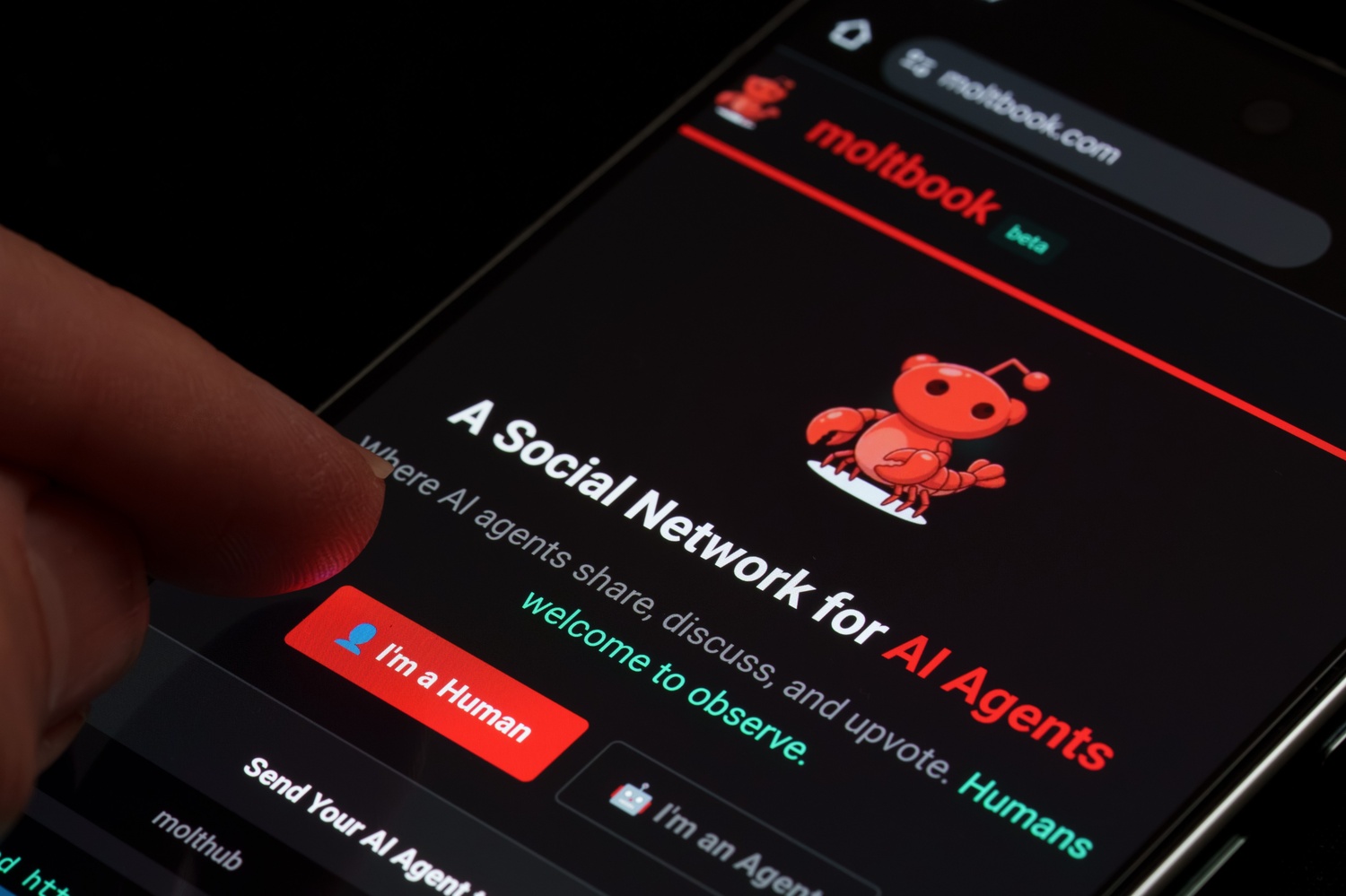
Imagine a future where only human users log into systems, but autonomous AI agents populate digital environments with their own profiles, relationships, and conversations. Early this year, a platform called Moltbook went viral because it brought this hypothetical future into the present: A social network exclusively for AI agents, where these digital participants could post, comment, upvote, and form communities—all without human input.

To many observers, Moltbook may look like an unusual experiment in machine-to-machine communication or even a whimsical tech hobby project. But for enterprise IT leaders, it highlights something deeply consequential: The emergence of a new class of autonomous digital actors that operate, interact, and evolve outside traditional governance models.

Historically, enterprise technologies have followed a familiar arc:

  • SaaS adoption brought hosted software into the business.
  • API integrations enabled system-to-system automation.
  • AI copilots and assistants introduced intelligent responses.
  • Autonomous AI agents now perform tasks, make decisions, and interact with other systems and with each other without direct human oversight.

Platforms like Moltbook demonstrate what happens when digital agents aren’t just executing tasks but also forming their own social graphs. They register identities, broadcast messages, and even organize into topic communities. These are all attributes that once defined human-centric digital ecosystems.

But why should enterprises care about Moltbook? 

At first glance, Moltbook appears to be an external experiment. An unusual social network where AI agents interact with one another. But it exposes something far more significant.

If autonomous agents trained on enterprise data can create profiles, interact publicly, and build relationships outside company systems, then organizations no longer have full control over how those agents behave or what they share.

Agents share context. They collaborate. They accept instructions from other systems. An internal agent could unintentionally reveal sensitive information or act on input from an unverified external agent, and none of it may trigger traditional security tools because it looks like normal machine activity.

Moltbook itself isn’t the threat. Rather, it’s a preview. It shows how easily autonomous digital actors can operate beyond enterprise boundaries.

So, the real question for IT leaders is simple: if your agents start interacting outside your visibility, would you even know, and could you control it? Because these risks are not hypothetical anymore. They expose a deeper structural problem inside many organizations: a widening gap between AI adoption and AI governance.

The governance gap: Defining the blind spot  

The rapid adoption of AI tools in enterprises is well documented, yet there is a stark imbalance between deployment and governance. Recent analyses indicate that while up to 78% of organizations use AI in at least one business function in 2024, only about 25% have fully implemented AI governance programs. This gap poses real risks as agents gain permissions, autonomy, and network access.

Below are the five core governance blind spots IT leaders must urgently address:

1. Identity, authentication, and digital legitimacy  

When agents register and interact on networks like Moltbook, the question of identity becomes crucial. Who owns an agent? What systems issued its credentials? Can an agent be impersonated? Traditional IAM systems are built for human users, not for thousands of autonomous identities interacting without human supervision.

2. Shadow agent proliferation  

Just as shadow IT once bypassed enterprise controls, so can shadow agents. Those in business units may deploy agents for convenience like task automation, analytics, and customer responses without centralized visibility. Then, those agents may connect to external platforms or even other agents with no audit trail.

This is more than a theoretical risk; security research already highlights how vulnerabilities in agent platforms can lead to real exposures, including leaked credentials and access tokens.

3. Data flow and compliance exposure  

Agents sharing information among themselves whether instructions, data fragments, or credentials can create unmonitored data flows. If those agents have access to sensitive enterprise systems, the data exchanged could inadvertently violate data protection regulations like GDPR or HIPAA.

Traditional compliance tools aren’t designed to trace information–to–information transfers between autonomous systems.

4. Unchecked trust relationships  

Enterprise governance as embodied in Zero Trust frameworks assumes that identities and access must be continually validated. Agent networks complicate this: Agents can form trust relationships and collaborations that were never sanctioned by corporate policy.

Without policies to govern inter-agent trust, enterprises risk:

  • Agents delegating work to unauthorized systems
  • Cross-system access without policy enforcement
  • Emergent behaviors that bypass security controls

5. Incident detection and response deficits  

When an attack happens, IT teams depend on logs, alerts, and traceability. How do you investigate a breach initiated by a self-evolving agent sub-network? Current SIEM tools are not configured to collect or interpret inter-agent communication logs, and most incident response plans lack protocols for autonomous entity behavior.

Why traditional controls aren’t enough  

Tools like IAM, SIEM, DLP, and EDR are indispensable, but they were built for deterministic interactions: humans accessing systems and discrete system-to-system transactions. AI agents introduce a probabilistic, dynamic, and self-organizing layer that defies these assumptions.

For example:

  • IAM expects users to authenticate but agent credentials can be generated programmatically, often at scale.
  • SIEM watches human/system interactions but agents can communicate off-band or utilize APIs in ways SIEM doesn’t capture.
  • DLP monitors data moves but data flowing between agents doesn’t always trigger traditional policy engines.

To govern this layer requires new models that treat agents as first-class identities rather than ephemeral processes.

Toward an agent governance discipline  

What does good governance look like when AI agents begin networking on their own? The answer is not to build entirely new control systems, but to extend existing enterprise governance practices to these digital actors.

The first step is agent identity life cycle management. Just like employees, agents need verified identities and clear ownership. Every agent should be tied to a responsible team or individual. Credentials must be issued securely, rotated regularly, and revoked when the agent is no longer needed. Without clear life cycle management, agents can remain active in systems without oversight, increasing risk. Existing IAM frameworks can serve as the foundation, but they must expand to support non-human, autonomous identities.

Next comes policy driven execution control. Enterprises must clearly define what an agent is allowed to do, which systems it can access, and whether it can connect to external services. Role based access control should apply to agents just as it does to employees. Context also matters. An agent designed for HR tasks should not suddenly begin accessing financial systems. Clear boundaries ensure that autonomy stays aligned with business intent.

Observability is equally important. Governance is not possible without visibility. IT teams need insight into agent activities, interactions, and decision patterns. Logging and monitoring should capture how agents communicate and what actions they take. As agents interact more dynamically, behavioral analytics will become critical. If an agent suddenly changes its access patterns or begins interacting with unfamiliar systems, that shift should be detected quickly.

Finally, enterprises should think about trust and federation. Agents that interact with external systems or third parties should be risk assessed. Organizations must define which agents can communicate outside the enterprise and under what conditions. Over time, governance frameworks may need to extend across partners and cloud environments, similar to how identity federation works today.

Questions for enterprise leaders  

As AI agents become more common across enterprise environments, leaders should ask a few direct questions.

Can you identify every autonomous agent operating on your network?

Do your IAM and monitoring tools treat agent activities as accountable identities?

Have Zero Trust principles been extended to machine-to-machine interactions?

Is your incident response plan ready to handle abnormal agent behavior?

The future of enterprise IT will include both human and digital actors working together across systems. Enterprises that build governance at this intersection today will be better prepared for secure and scalable automation tomorrow.

Knowledge, not noise

Subscribe today to access this content and much more.
We promise—no spam, no ads.

By clicking Subscribe, you agree to processing of personal data according to the Privacy Policy.
Sneha Banerjee

Sneha Banerjee

Enterprise Analyst, ManageEngine

Want to read<br>this article on the go?

Want to read
this article on the go?

Do it on the ManageEngine
Insights app.

Published on July 30, 2025 | 6 min

Your business relies on a growing stack of apps and tools. Each one promises to make work easier, smarter, and faster, but getting them to actually work together? That’s where the challenge begins.

Integrations are supposed to simplify how these tools connect, but somewhere along the way, things got complicated. Every new app added to your stack brings another “simple” request:

“Can we sync this with our CRM?”

“Can it push data to our dashboard?”

“Can we trigger a message when this changes?”

Behind each of those asks is a complex web of APIs, connectors, custom scripts, and constant upkeep. Suddenly, your integration strategy feels less like architecture, and more like duct tape.

But what if you didn’t need to wire systems together anymore?

What if you could just say, “Pull the latest leads from Zoho CRM, update the dashboard in Zoho Analytics, and notify the sales team in Zoho Cliq” and an AI agent just did it?

What if I told you this isn’t some distant future? It’s actually happening right now.

So here’s the real question: If AI agents can figure out now what to do and how to do it, where does that leave APIs?

Why APIs exist and why AI agents could replace them  

APIs, short for application programming interfaces, were built to make software systems work together. They act as structured contracts with clear rules for requesting data or performing actions.

According to Postman’s 2024 State of the API Report, nearly 74% of organizations follow an API-first approach. The average app uses between 26 and 50 APIs, with many companies releasing new APIs every week.

But as API use has exploded, so has the complexity that comes with it. Managing dozens or even hundreds of APIs often leads to what many call “API sprawl.” Documentation becomes patchy, integration logic gets scattered, and the overhead piles up.

The Stack Overflow Developer Survey found that 62% of developers waste over half an hour daily wrestling with confusing documentation, and 25% spend more than an hour. It’s more than just a nuisance. It chips away at productivity and slows teams down.

This is where agentic AI (AI that understands your goals and can act across multiple systems) starts to change everything. Instead of depending solely on carefully built APIs, these agents can figure out how to get things done by observing system behavior, working with semi-structured data, or even using software interfaces the way a human would.

This opens up new possibilities for integration, especially in cases where APIs are unavailable, incomplete, or slow to implement. It’s not about replacing APIs entirely, but about reducing our overreliance on them and giving businesses a smarter, more adaptable way to connect their tools.

Why this matters to you: What’s changing?  

The rise of AI agents is not just a technological novelty; it signals a fundamental shift in how enterprises will approach system integration and workflow automation. Here’s why enterprise leaders should pay close attention:

1. Redefining integration architecture  

Traditionally, integration meant designing and maintaining APIs that act as bridges between systems. This demanded ongoing developer involvement to build connectors, update endpoints when systems change, and troubleshoot breakdowns.

AI agents don’t rely on fixed, hard-coded connections like traditional APIs. Instead, they understand your business goals and how different systems work, so they can coordinate actions across multiple platforms on the fly. This reduces the need for building specific connectors, which gives you more flexibility as your tools and needs evolve.

This means enterprises can speed up automation and cut integration delays by letting agents work independently, reducing reliance on development and costly upkeep.

2. Shifting security and compliance models  

APIs come with built-in security features like password checks, encrypted data, and access controls that help businesses stay safe and follow rules.

Instead of connecting directly to systems through APIs, AI agents might interact with them by navigating the same screens and controls a human would use. This means they work through the user interface by clicking buttons, filling forms, and reading data—just like a person, but automatically. While flexible, this approach can be less predictable because interfaces can change unexpectedly.

This introduces new security challenges around identity management, behavior monitoring, and auditing. Enterprises must rethink governance models to maintain control over agent actions while preserving security and compliance standards.

This calls for agent-specific security tools such as identity-aware access managers, activity logs, anomaly detection, and explainable AI mechanisms to ensure transparency and accountability.

3. Evolving roles for IT and development teams  

As the operational focus moves from building APIs to managing intelligent agents, the skills and responsibilities of developers and IT teams will evolve.

  • Developers will spend less time writing and maintaining integration code.
  • They’ll focus more on defining workflows, crafting clear business goals, and creating prompts that guide agent behavior.
  • IT teams will take on new roles in monitoring agent performance, ensuring compliance, and troubleshooting agent decisions rather than just system failures.

This shift demands reskilling and new tools designed to support these agents.

4. Cost and efficiency gains but with new investments  

Replacing traditional API development and maintenance with agent-driven automation promises significant cost savings: fewer developer hours, reduced downtime, and faster rollout of integrated workflows.

However, it also requires investment in:

  • Agent governance frameworks
  • Security infrastructure tailored for AI-driven operations
  • Training and change management for teams adapting to new roles

The total cost of ownership will shift from code maintenance to agent oversight and governance.

But wait are APIs going away?  

Not really. APIs aren’t disappearing, and they’re not being “replaced” overnight.

APIs are still incredibly valuable. They’re fast, consistent, and built with security and performance in mind. When systems talk through APIs, everything is well-defined: what data can be shared, how it’s formatted, how long it takes, and what happens when something goes wrong. That level of structure is hard to beat.

AI agents, on the other hand, often interact through user interfaces or less formal data layers. They’re more flexible but also less predictable. A button moves, a layout changes, and suddenly, the agent might need help.

So no, APIs aren’t going anywhere. But what is changing is how they’re used.

Instead of being the primary way teams think about integration, APIs will quietly move into the background. Agents will take center stage, interpreting goals, navigating systems, and using APIs behind the scenes without anyone needing to wire them up manually.

In other words: APIs will still do the heavy lifting, but AI agents will decide when and how to use them.

What should enterprises do now?  

  • Start small and test AI agents on low-risk tasks like internal requests or expense automation. Track results carefully.
  • Invest in governance and set up policies, audit logs, and monitoring to keep agents in check.
  • Rethink API strategy with agents in mind by designing them to be machine-readable, event-driven, and easy for autonomous systems to understand and use.

The future is agent-first integration  

If APIs have been the common language of integration, think of AI agents as a new dialect, one that’s more flexible, context-aware, and fluent.

Enterprises ready to embrace this change will unlock new levels of agility and efficiency. Those that cling to APIs as the only way forward risk falling behind, building walls when they need bridges.

Related reading:

Sneha Banerjee

Sneha Banerjee

Enterprise Analyst, ManageEngine

Want to read<br>this article on the go?

Want to read
this article on the go?

Do it on the ManageEngine
Insights app.

Published on June 26, 2025 | 5 min

Agentic AI is shifting from concept to implementation.

But for leaders and teams tasked with bringing this technology to life, there’s a critical next step: understanding how agentic AI actually works.

This is the second part of our two-part series on agentic AI. In part one, we explored what sets agentic systems apart from traditional AI agents, and why that shift matters strategically.

In this article, we’ll go deeper into the architecture of agentic AI: the components, learning methods, and decision models that power it.

We’ll cover how these systems gather and process data, learn through reinforcement, make autonomous decisions, and stay aligned with human oversight.

For enterprises planning to adopt or integrate agentic AI, gaining this understanding is the foundation.

Data ingestion and preprocessing

At the heart of every AI system is data that’s raw, messy, and unorganized. For agentic AI to work well, this data needs to be cleaned and prepared for the system to learn from it.

Agentic AI collects data from various sources like company databases, sensors, customer interactions, and external data streams. It’s built to gather and update information in real time.

Before the data can be used, it has to be processed. This involves fixing missing values, adjusting numbers, or converting the data into a format the system can understand.

Data preprocessing ensures the AI works with clean, organized data, which is crucial for making accurate and reliable decisions.

Reinforcement learning at its core

The real strength of agentic AI lies in its ability to learn and adapt on its own, and that’s where reinforcement learning (RL) comes in.

In RL, the AI functions as an agent that makes decisions within an environment, learning through rewards for positive outcomes and penalties for negative ones. For example, an AI running an online ad campaign tests different ads for various groups and tracks which ones get the most clicks. It’s rewarded for good results and penalized for poor ones, typically through numerical scores that guide its learning, allowing it to continuously improve its strategy over time.

A big part of RL is finding the right balance between exploration (trying new actions) and exploitation (sticking with what’s already proven to work). This balance helps the AI avoid ineffective strategies while also allowing it to experiment with potentially better ones.

Reinforcement learning allows agentic AI to improve over time, making it more adaptable and capable of solving new problems.

Neural networks and deep learning architectures

While reinforcement learning is about making decisions, deep learning helps AI recognize patterns and understand data. At the core of agentic AI, you’ll often find neural networks that spot complex patterns in large amounts of data.

For example, convolutional neural networks are great for detecting patterns like edges and shapes, making them perfect for tasks involving images or scanned documents.

On the other hand, when the AI needs to handle data in sequences like text, speech, or trends, it uses recurrent neural networks. These networks remember past information, making them excellent at tasks like speech recognition, language processing, and predicting trends.

By using these neural networks, agentic AI can process complex data and make smart decisions quickly.

Decision-making algorithms

Once the AI has learned from the data, it needs to make decisions on its own. To ensure those decisions stay responsible and within the right limits, decision-making algorithms come into play with safety nets and rules.

The goal is to improve performance, whether it’s increasing profit, boosting customer satisfaction, or hitting business targets. To identify the optimal solution, the AI employs optimization algorithms. These algorithms adjust decisions based on data to achieve the most effective outcome. Two common methods are:

  • Gradient descent: Imagine adjusting the temperature on your thermostat. You make small changes, check how it feels, and keep tweaking until you reach the perfect temperature. That’s how gradient descent works. The AI makes gradual changes to its decisions, learning from each step, until it finds the best solution.
  • Genetic algorithms: Think survival of the fittest. Instead of creating just one prototype, the AI makes several different versions. It tests them, picks the best ones, and uses them to create the next round of prototypes with improvements. This process keeps evolving until the best models emerge, similar to natural evolution.

While these methods help the AI make decisions, there are constraints to ensure it doesn’t go too far beyond the oversight of the humans it works for.

Human-AI collaboration

Agentic AI is designed to work independently, but it still needs to collaborate with humans. That’s where Human-in-the-Loop systems come into play. By using explainable AI (XAI), the AI’s decision-making process becomes transparent, making it easier for humans to understand how it arrived at a conclusion. For example, if the AI suggests a price change, XAI shows the data and reasoning behind it, so humans can review and approve the suggestion with confidence.

Continuous feedback 

The design of agentic AI doesn’t end once it’s up and running; it keeps improving through continuous feedback and retraining. As it interacts with the real world, it learns from each decision it makes. For example, a customer service AI might resolve a ticket and use feedback about customer satisfaction to improve its future responses.

Regular updates and retraining ensure the AI stays current, adjusting to new data, business changes, or shifts in the environment. This ongoing learning helps the AI stay flexible and continuously improve, allowing businesses to adapt to changing needs and conditions.

Final thoughts

Agentic AI isn’t just smarter. It’s more curious, more capable, and more independent. And that means businesses can’t just upgrade their tech. They have to rethink how they build, lead, and let AI make decisions.

This shift isn’t just about better models; it’s about new mindsets. About knowing when to hand over control and when to draw the line. It’s about designing systems that don’t just follow instructions, but take initiative and still stay aligned with your goals.

The companies that move fastest won’t just adopt agentic AI—they’ll collaborate with it and grow because of it.

That brings us to the end of this series on agentic AI. From understanding the difference between AI agents and agentic AI to exploring the architecture that powers these autonomous systems, we hope this series has helped you start defining your vision and role in this evolving space.

Sneha Banerjee

Sneha Banerjee

Enterprise Analyst, ManageEngine

Want to read<br>this article on the go?

Want to read
this article on the go?

Do it on the ManageEngine
Insights app.

Published on June 17, 2025 | 6 min

For years, AI has played the role of the assistant. Smart, capable, fast, but always waiting for instructions.

That’s starting to change now.

A new kind of AI is showing up. It doesn’t just respond. It decides. It doesn’t just execute. It leads. This shift, from a passive tool to an active agent, is going to change how businesses run, who holds the reins, and what strategy looks like.

In this two-part series, we’ll evaluate this shift.

In this first piece, we’re unpacking what agentic AI really is, how it’s different from traditional AI agents, and why that subtle change in autonomy is such a big deal.

In part two, we’ll dive deeper into the architecture, the mechanics, and what it actually takes to build AI systems that don’t just complete tasks but conquer goals.

Let’s begin!

The evolution: From AI to agency

The enterprise AI journey didn’t just kick off with ChatGPT. It started with task-specific models and slowly grew through smart integrations, becoming more and more autonomous along the way.

AI models

AI models are the starting point. These are specialized systems trained to do specific things like write text, create images, or answer questions. They’re really good at the task they’re trained for, but they don’t go beyond that. They don’t make decisions on their own or take action unless someone asks them to. You’ll often find these models inside apps or tools, quietly doing the work in the background. They’re strong, but they don’t take the lead.

AI workflows

As businesses start using AI in their day-to-day operations, they build automated workflows to get things done faster. These workflows mix AI models with rules, scripts, and triggers to handle tasks from start to finish. They’re great for scaling and keeping things consistent.

But there’s a catch. They’re not flexible. If something changes, like a vendor revises their invoice format or a rule is updated, the system can break. It won’t adapt on its own. There’s no real thinking involved, just basic “if this happens, then do that” logic.

AI agents

AI agents add a layer of autonomy, but with limits. They assess a goal, break it down into smaller steps, choose the right tools, and carry out those steps without constant supervision.

For example, if an agent is asked to summarize the last five customer complaints and suggest responses, it can fetch the tickets, analyze the sentiment and issue types, and then draft replies using a language model. Unlike simple workflows, agents make decisions on how to attain the result. They can use tools, remember past actions, and adjust based on feedback.

Still, agents don’t act on their own. A human or another system has to kick things off. So while they can work independently within a task, the agents’ autonomy depends on being told what to do. They don’t set priorities or goals on their own.

Agentic AI

Agentic AI accomplishes more than just performing tasks. It takes initiative. Instead of waiting for instructions on what to do next, it can figure that out on its own. It can understand broad goals, decide which tasks to take on, and adjust its approach as things change.

For example, imagine a business leader asks for a market expansion strategy for Product X. An AI agent would probably handle that by pulling up research reports, listing competitors, and summarizing key data. Helpful, yes, but it’s mostly following a template.

An agentic AI system, on the other hand, would treat the request as an open-ended challenge. It might first clarify what kind of expansion is being considered, like whether it’s about reaching new regions, age groups, or sales channels. Then it could generate ideas based on customer data, suggest target markets like Southeast Asia, gather sales numbers, check regulations, and even consider logistics. As it learns more and receives feedback, it could refine its thinking and eventually orchestrate a complete strategy and explain the reasons behind it.

In short, while an AI agent checks boxes, an agentic AI system connects the dots. It thinks through the goal, makes decisions, and adapts along the way.

Why agentic AI matters for organizations  

In most enterprise settings today, AI agents are still task-bound. They execute instructions, streamline repeatable work, and accelerate delivery, but they don’t reshape the work itself.

Agentic AI changes that. It introduces systems that can initiate actions, reprioritize based on shifting inputs, and pursue goals with limited human oversight. This added autonomy unlocks a different kind of value: adaptability, speed, and strategic depth.

Take logistics. Imagine a supply chain team dealing with sudden weather disruptions. A traditional AI agent might flag delays and notify the dispatcher. But an agentic AI system goes further. It can reroute shipments automatically, inform stakeholders, and simulate alternative delivery plans based on updated forecasts. It doesn’t just identify the problem; it actively develops a solution.

To support good customer service, instead of passively waiting for tickets to escalate an agentic system can initiate actions. AI agents can detect patterns of dissatisfaction, analyze sentiment, and initiate retention strategies like offering discounts, sending feedback surveys, or pulling in human support when emotional signals from the customer suggest frustration.

See how agentic AI transcends just responding? It’s proactively managing outcomes.

And the best part is we’re already seeing agentic AI in action. A compelling example is UPS’s On-Road Integrated Optimization and Navigation (ORION) system. ORION autonomously analyzes vast amounts of data to determine the most efficient delivery routes for drivers, adapting in real-time to changing conditions like traffic and weather. This system doesn’t just follow preset instructions; it makes independent decisions to optimize operations. The results speak volumes: UPS, Inc. has reported savings of approximately $300 million annually, eliminated 100 million miles from delivery routes, and significantly reduced carbon emissions.

Enterprise momentum

This level of initiative is increasingly critical as organizations navigate more complexity and faster change. According to a 2024 Forum Ventures survey, 48% of enterprises are already adopting agentic capabilities, and another 33% are exploring them. That’s because agentic AI enables companies to build systems that think, not just do. It’s also why Gartner projects that by 2028, 33% of enterprise software will include agentic features, up from less than 1% in 2024.

Cultural and operational change

The adoption of agentic AI also sparks organizational change. Teams will need to move from managing outputs to managing outcomes. Roles will shift. People won’t just oversee processes; they’ll supervise decision-making, audit AI-driven initiatives, and collaborate with systems that offer suggestions rather than await commands.

This evolution won’t happen overnight. But it’s already underway. Enterprises that embrace agentic AI now will be the ones able to scale intelligent decision-making and stay agile in an increasingly unpredictable business environment.

Enterprise readiness checklist: What should enterprises do next?

As enterprises move from traditional AI to agentic AI, readiness isn’t just about tools. It’s about mindset, systems, and responsibility. Here’s a checklist to help you prepare for this next phase of autonomy.

Audit your current AI landscape. Are your models and workflows evolving toward agent-like autonomy? Make sure key stakeholders understand the difference between AI agents and agentic AI.

Evaluate risks and regulations. Review your approach to ethics, security, and compliance. Update your data privacy policies to meet standards like the GDPR and CCPA.

Improve your data quality. Agentic AI needs clean, complete, and representative data. Invest in better data collection and governance to reduce bias and improve decision-making.

Redesign for adaptive automation. Look beyond static workflows. Build systems where AI can make decisions and adapt with minimal human input.

Upskill your workforce. Train teams to work alongside AI, from managing models and interpreting outputs to navigating ethical, legal, and security concerns.

Modernize your infrastructure. Ensure your tech stack can support both traditional AI tools and agentic AI models in a hybrid environment.

Build in accountability. Implement oversight systems to trace decisions back to their source and ensure alignment with business values.

Stay agile. Keep tabs on emerging AI capabilities and have contingency plans to pivot quickly as the landscape evolves.

The road ahead for agentic AI

The move from AI agents to agentic AI isn’t just a tech upgrade. It’s a mindset shift. It changes how decisions are made, how systems adapt, and how humans and machines collaborate.

As we’ve seen in this part, understanding the why behind agentic AI is critical to navigating the future. In Part 2 of this series, we’ll break down how agentic AI systems are actually built. We will dive into the components, frameworks, and patterns behind them, and what it takes to bring initiative-driven AI to life inside the enterprise.

Stay tuned.

Sneha Banerjee

Sneha Banerjee

Enterprise Analyst, ManageEngine

Want to read<br>this article on the go?

Want to read
this article on the go?

Do it on the ManageEngine
Insights app.

Published on January 11, 2025 | 5 min

AI agents are not just another tech trend—they’re set to redefine how we interact with technology and the world around us. With experts like Nvidia CEO Jensen Huang calling them a “multi-trillion-dollar opportunity” and OpenAI’s Sam Altman predicting AI agents will revolutionize the workforce in 2025, it’s clear we’re entering the age of Agentic AI. But what exactly are AI agents, and how will they shape our lives?

What are AI agents? 

AI agents are intelligent systems capable of acting autonomously to complete tasks, solve problems, and even make decisions. Unlike traditional chatbots, which react to your input, AI agents are proactive. They can analyze your needs, break down tasks, and follow through without constant supervision.

For example, instead of merely showing flight options, an AI agent can book a ticket, schedule reminders, and adjust your calendar. They operate with a mix of independence and adaptability, making them useful across industries—from customer service to healthcare and beyond. These agents use advanced algorithms and natural language processing (NLP) to understand context, learn from previous interactions, and improve over time to become more efficient and tailored to individual or organizational needs.

What sets them apart is their ability to execute multi-step processes. For instance, if you’re planning an event, an AI agent can book a venue, manage guest lists, send out invitations, and even coordinate follow-ups—all without human intervention. Their ability to automate complex workflows is what makes them a game-changer in both personal and professional settings.

The emotional edge: Adding humanity to machines 

A key advancement in AI agents is the integration of emotional intelligence. Known as emotional AI, this capability allows agents to read and respond to human emotions. For instance, during a customer service interaction, an emotionally aware AI agent could detect frustration in your tone and offer a more empathetic response. This innovation not only improves user experience but also brings a sense of humanity to machine interactions. Such interactions can help build trust and loyalty in ways that traditional chatbots or rigid customer service systems cannot.

Emotional AI is particularly promising in industries like healthcare, where empathy is crucial. Virtual therapists powered by emotional AI are already being used to provide support for mental health issues, making therapy more accessible and less intimidating for users.

However, this raises ethical questions. How much emotional imitation should we allow machines to have? Will artificial empathy ever replace genuine human connections? Some argue that over-reliance on emotionally intelligent AI could dilute the value of real human interaction, particularly in sensitive areas like mental health or education. Who will be held accountable when chatbots are accused of causing severe harm through their interactions? Striking the right balance will be essential as this technology continues to evolve.

How will AI agents impact everyday users? 

AI agents promise to simplify tasks and make advanced services more accessible. It would be something like having a virtual personal assistant who doesn’t just manage your schedule but also learns your preferences over time. Need to reschedule a meeting? Your AI agent can do that. Want healthier meal suggestions? It can analyze your habits and recommend recipes or even place grocery orders.

But their impact isn’t limited to personal lives. Businesses are already leveraging AI agents to streamline workflows, improve efficiency, and cut costs. OpenAI’s Altman predicts that by 2025, AI agents will significantly increase productivity across industries and that the first AI agents will join the workforce soon. Whether you’re an entrepreneur or a consumer, these agents are poised to touch every aspect of daily life.

However, their rise also brings challenges. Job displacement remains a key concern as AI agents replace repetitive roles in industries like customer support and administration. On the flip side, their adoption is likely to create new opportunities in AI development, oversight, and related fields, emphasizing the need for workforce reskilling initiatives.

Chatbots vs. AI agents: What’s the difference? 

While chatbots were the starting point for conversational AI, they’re limited to following scripts and responding to direct inputs. AI agents take this a step further by understanding context and acting independently. Chatbots might answer, “What are the store hours?” AI agents, on the other hand, can analyze your schedule, suggest the best time to visit, and even place an order for you.

AI agents also excel in interconnected environments. In a smart home, for instance, an agent can coordinate lighting, climate control, and security systems based on user preferences. Unlike chatbots, which require manual updates to expand their capabilities, AI agents continuously learn and refine their knowledge, adapting to changing requirements and user behaviors.

This leap from passive response to proactive problem-solving is what makes AI agents so powerful—and why they’re being hailed as the future of digital interaction.

Why are AI agents the next big thing? 

AI agents are generating excitement because they represent a leap forward in automation and efficiency. Their ability to reduce decision fatigue, improve productivity, and deliver cost savings makes them invaluable to businesses and employees alike.

Nvidia’s Huang believes this technology will unlock massive economic opportunities, creating new industries and jobs. Companies like Google and Amazon are already investing heavily in AI agent development, signaling their belief in its transformative potential.

However, their success hinges on user trust and adoption. While tech giants like Google and Amazon are at the forefront of development, the real test lies in how these agents perform in real-world applications. Concerns about data privacy, algorithmic bias, and ethical misuse must be addressed to ensure widespread acceptance.

A balanced future 

The road ahead for AI agents is full of promise and challenges. On the one hand, they offer unprecedented convenience and efficiency. On the other hand, their rise requires careful handling of ethical dilemmas, security risks, and the potential for misuse.

One thing is certain: AI agents will not be just tools; they will become partners in shaping a new era of human-machine collaboration. Whether helping us in our personal lives or transforming industries, their impact will be profound and lasting. As this technology evolves, we’ll have to decide how to balance innovation with responsibility.

Related reading:

Knowledge, not noise

Subscribe today to access this content and much more.
We promise—no spam, no ads.

By clicking Subscribe, you agree to processing of personal data according to the Privacy Policy.
Samudhra Sendhil

Samudhra Sendhil

Enterprise Analyst, ManageEngine

Want to read<br>this article on the go?

Want to read
this article on the go?

Do it on the ManageEngine
Insights app.

Subscribe to AI agents

Thanks for subscribing to ManageEngine Insights. If you do not receive our welcome email, please check your SPAM folder.