
Published on May 14, 2025 | 4 min

“Your mental health matters.”

It’s the phrase we’ve come to expect each May, when inboxes swell with well-meaning newsletters, company-wide messages, and posters printed in calming pastel tones. Sometimes, there’s a yoga class or a free pizza party.

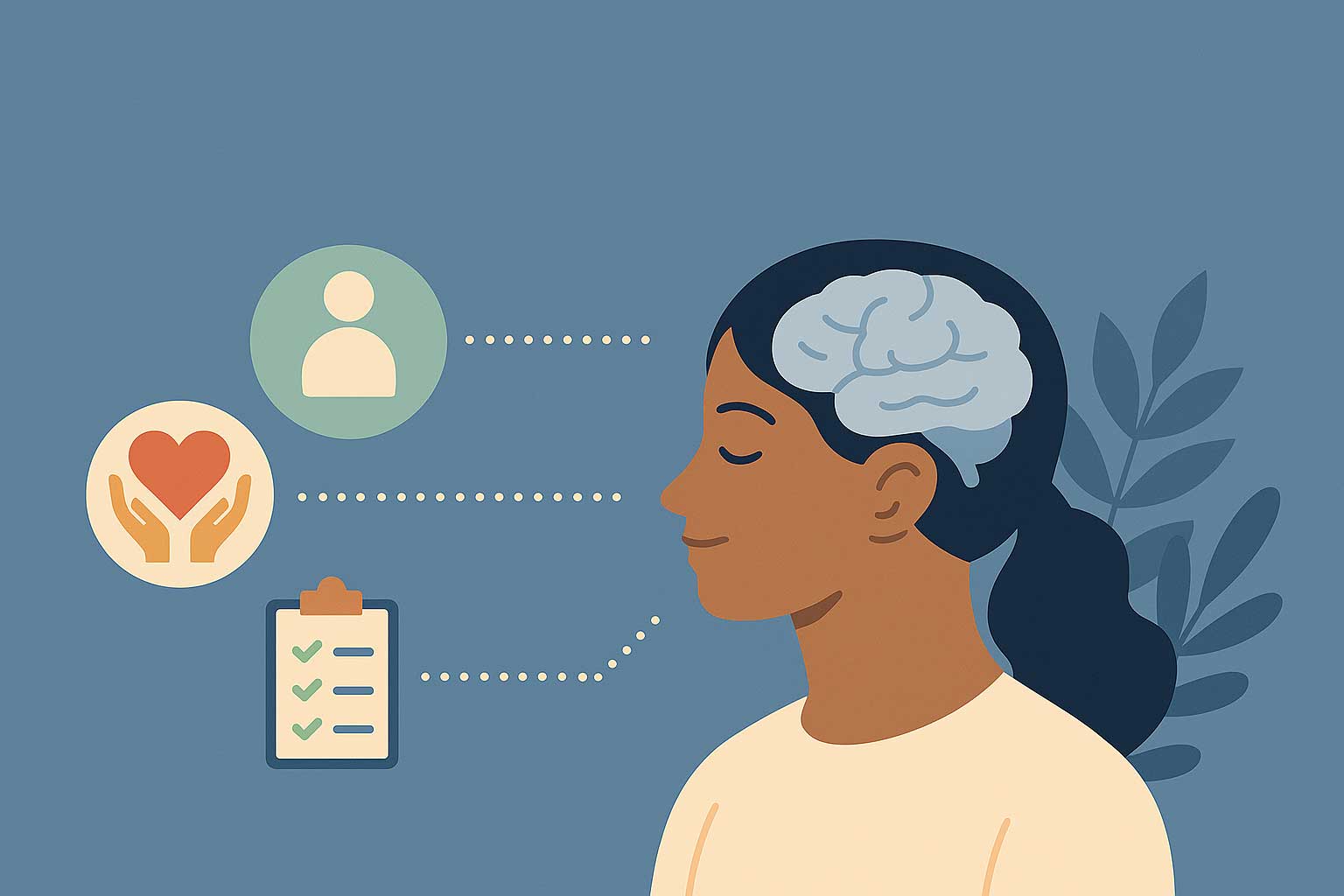
Mental health has become one of the most talked-about topics in today’s workplace, but not always in the most helpful way. While awareness is at an all-time high, action still lags behind. And often, all we get are vague affirmations that don’t address the real issues.

This Mental Health Awareness Month, let’s challenge the fluff and get real about what supporting mental health at work should actually look like.

Clichés we need to retire and why they are harmful

Let’s start with a few greatest hits from the corporate mental health playlist:

“Just take a break.”

But what if the workload doesn’t allow for one?

“You can always talk to us.”

Can we, really?

“We’re a family here.”

Families don’t usually tie your value to your output, do they?

These phrases can invalidate real experiences and discourage people from speaking up. They’re what psychologists call thought-terminating clichés—lines that shut down conversation instead of opening it. In doing so, they discourage deeper reflection or policy change. Employees might hear these and think, Maybe I’m the problem. Maybe I’m not resilient enough.

These clichés shift responsibility away from systems and onto individuals. And that’s dangerous. Statements like “positivity is a choice” may be well-meaning, but they dismiss the reality of someone’s emotional experience. They can prevent people from expressing genuine struggle.

 The workplace isn’t a therapist’s office, but it has a major effect on your mental health 

Work shouldn’t have to fix everything, but it shouldn’t make things worse either. After all, you spend five days a week waking up to go to work. About 47% of professionals cite workplace stress as their top mental health concern. Additionally, over 12 billion working days are lost globally each year due to depression and anxiety. Yet, many employees still don’t feel safe discussing mental health at work for fear of judgment or job loss. A study by Mind Share Partners found that only 37% of employees feel comfortable talking to their manager about mental health. Even fewer feel their company is equipped to respond meaningfully.

The result? People internalize, isolate, and power through until they can’t.

Many modern workplaces pride themselves in being supportive until support requires effort or costs money. A mindfulness workshop is easy to schedule. Adjusting unrealistic deadlines, reconsidering meeting overload, or addressing team dysfunction? Not so much.

Real support doesn’t always look like big initiatives. Sometimes it’s as simple as a manager saying, “I noticed you’ve seemed a little off. Do you want to talk?” Or a team lead encouraging someone to take time off—and meaning it.

Culture is built in the small moments, such as how we respond to bad days, in whether people feel safe to set boundaries, and in whether vulnerability is met with understanding or awkward silence.  

So, how can we actually help?

While the toll of poor mental health on productivity is well documented, fewer employers fully grasp the upside: how much more effective and creative their teams could be if their mental health was supported.

The good news for companies is that studies have found that investing in your employees’ mental health will see payoffs in the form of retention and trust. Employees working for a company that supports their mental health are two times more likely to report no symptoms of burnout or depression. They are also three times more likely to trust the company and stay for more than two years.

With the right support, the potential gains aren’t just personal; they become organizational. And they’re measurable.

So, where do we begin? Here are four ways to get started:

1. Normalize the messy

Mental health isn’t always neat. Let’s normalize bad days, therapy sessions between meetings, and taking time off without guilt.

2. Train the managers

Equip managers to spot red flags and respond with empathy. They can be the frontline of mental health support for employees.

3. Replace perks with policies

Free yoga won’t solve a toxic culture. Focus on real changes: flexible hours, manageable workloads, and psychological safety.

4. Learn to ask, not assume

“What would help right now?” is far more powerful than “Let me know if you need anything.”

A simple, radical idea

Here’s a simple, radical idea: Let “your mental health matters” mean something. Let it show up in calendars, in conversations, in compensation models, and in workloads. Let it live beyond the posters. Mental health isn’t a trend. It’s a human need. And it deserves more than a headline once a year.

Because the real flex? A workplace where people feel safe showing up, even on the hard days.

Samudhra Sendhil

Samudhra Sendhil

Enterprise Analyst, ManageEngine

Want to read<br>this article on the go?

Want to read
this article on the go?

Do it on the ManageEngine
Insights app.

Published on May 05, 2025 | 5 min

In every meeting, there’s a pause right after the “How are you?” and just before the “I’m good, thanks.” Most of us know that pause. It’s the split second where we decide not to say, “Actually, I’m exhausted.”

Today’s workplace looks nothing like it did a few years ago. The boundaries between work and home have blurred. The same space where we rest is now where we work, think, stress, and perform.

People are leaving jobs in droves, or staying and doing the bare minimum just to survive. Call it the Great Resignation. Call it quiet quitting. Whatever you call it, it’s clear: something’s broken with our relationship to work.

And beneath all this are deeper questions. Ones we don’t often say out loud: Why am I still so tired? Is it just me? Do I even belong here?

Let’s unpack some mental health dilemmas we often come across in the modern workplace.

Productivity anxiety 

Productivity has become an identity for knowledge workers. Being busy is a statement. If you’re not always building, creating, or optimizing, it feels like you’re falling behind.

That pressure is draining. Even when you’re off, your mind won’t stop. Should I be doing more? Why am I unmotivated? What if someone else finishes first?

This anxiety isn’t because you’re lazy; it’s because you care too much. We’ve been trained to prove our value constantly—and in a world that praises hustle, slowing down fills us with guilt.

Tip: When your mind spirals, step away and ask: “What’s the kindest thing I can do next?” Not the most efficient. Just the kindest.

Do I really belong here? 

There’s a quiet discomfort when your message is seen but not immediately replied to. When everyone is laughing in a meeting, but you hesitate to unmute. When decisions are made, and you wonder if your input even matters.

Belonging anxiety often isn’t about actual exclusion; it’s the feeling of being outside the circle—even when no one’s deliberately leaving you out. It creeps in through small moments, like when you can’t quite read the room or when remote work makes connection feel harder to reach.

Tip: Belonging isn’t about being loud or always being “on.” It’s about being seen, and that starts with making space for yourself. Whether it’s one message, one question, or one honest moment, that’s where connection begins.

Validation dependence 

There’s an emptiness after a week of hard work when no one acknowledges it. You hit deadlines, solve problems, and make things easier for everyone. But when it goes unnoticed, it stings.

It’s not about ego; it’s about connection. Recognition reminds us we matter. Without it, we start to wonder: Am I invisible?

Then, when praise does come, it feels like a lifeline. We hold on to it, overanalyze it, and crave it. But that constant need for external validation can make our self-worth fragile. One quiet day can undo an entire week of success.

Tip: Before seeking validation, pause and ask yourself: “What am I proud of today?” Even the small things count. Your worth isn’t tied to a performance review.

The purpose paradox 

We’re all told to “find your purpose.” It’s often portrayed as something clear and simple, as if purpose is just waiting for you to pick it out like an item on a menu.

But what if the work you do is good, it pays the bills, and you’re capable, but it doesn’t fully light you up? Does that mean you’re missing something?

This paradox can feel heavy, especially when others seem to wake up excited about their work while you’re just trying to get through another Monday. It can make you question whether you’re falling short, even when things are going well.

Sometimes, finding purpose is a journey, and just getting through the day is part of it.

Tip: It’s okay not to have your “why” fully figured out. Let curiosity guide you instead of pressure. What brings you joy, even if just for a moment? Follow that spark.

Career FOMO and comparison culture 

A few minutes on LinkedIn can make it feel like everyone else has it all figured out. Promotions, startups, conferences, networking opportunities—a hundred different ways people are upping their game, and you’re just trying to keep up. Even when you’re proud of your path, comparison slips in. It’s not always jealousy, but a quiet voice asking: Should I be doing more?

Constant exposure to others’ highlight reels can distort our sense of progress. It makes every decision feel like a missed chance, and we lose sight of the value in our own journey.

Tip: Mute the noise when needed. That includes social media and your inner voice keeping a score. Your journey is yours, and it’s right on time.

Crisis fatigue

The past few years have been relentless. Just when it feels like things might stabilize, something else shakes the ground, be it an economic crisis, geopolitical conflicts, climate concerns, or more.

We carry all of it with us, into meetings, inboxes, and even our bodies.

It’s not about being weak or overly sensitive. It’s about being human. Humans weren’t built to process endless stress while pretending everything is fine.

Even when we try to focus, crisis fatigue can make it hard to think clearly and be creative when our nervous system is always bracing for the next hit.

Tip: It’s okay to step away from the news occasionally. It’s not apathy, it’s self-preservation. Protecting your energy isn’t the same as ignoring the world.

The AI dilemma. Help or hurdle? 

AI is everywhere now, nudging us to take breaks, suggesting breathing exercises, and checking in with “How are you feeling today?” It sounds supportive on paper, but in practice, it can feel off.

There’s something unsettling about being prompted toward mindfulness by the same types of systems that track productivity non-stop. When tools like AI-powered wellness apps or workplace dashboards double as both coach and overseer, it creates a weird dynamic; trying to care, but also watching. Trusting that is hard.

Let’s face it: no chatbot—no matter how empathetic it seems to be—can replace a real conversation with someone who sees you. Technology can support mental health, but it can’t replace the real human connection that’s often needed.

Tip: If AI tools feel too clinical, that’s okay. Use them when helpful, and step back when they’re not. You’re allowed to want a real voice and a real ear. You deserve one.

These mental health challenges aren’t just personal issues; they’re signs that something in the way we work needs to change. Most of us are facing some version of this, even if we’re not saying it out loud. So let’s start the conversation. Whether you’re an individual contributor, a manager, or in leadership, supporting mental well-being isn’t a nice-to-have. It’s essential. People do their best work when they’re allowed to be fully human at work. That’s not a soft skill. It’s a strategic one.

Sneha Banerjee

Sneha Banerjee

Enterprise Analyst, ManageEngine

Want to read<br>this article on the go?

Want to read
this article on the go?

Do it on the ManageEngine
Insights app.

Subscribe to organizational mental health

Thanks for subscribing to ManageEngine Insights. If you do not receive our welcome email, please check your SPAM folder.