

Intro
IT teams need to maintain vigilance against worker burnout and churn due to the “always-online” nature of many critical IT functions. Digital transformation is enabling workplace productivity through technological efficiency and automation, but IT departments should be especially cautious not to view IT as a solution to all of work’s problems.
Getting the most productivity out of each employee means properly training them on your organization’s existing technologies and process, right? Well, even if your business is properly leveraging the technologies it uses, those solutions are probably not perfect, nor does their efficacy exist independently of the workers trying to use them. A significant factor in work getting done is improving the optimization and productivity of each worker, which as we’ll explore in this article series, isn’t as simple as asking employees to work harder or more hours.
One school of thought, particularly from those with an entrepreneurial mindset, focuses on bettering one’s self to improve productivity. Another common approach in business is to inspire productivity through impeccable leadership. The reality is that optimizing workplace productivity requires effort from both the bottom up and top down.
We’d like to propose that managers and leaders complement their existing technological and organizational strategies and processes with a low-tech, humanistic approach toward management. This approach has three components: personal productivity, workplace efficiency, and leadership dynamics. We’ll expand on workplace efficiency in Part 2, while the rest of this article series will focus on leadership dynamics and company culture (which form the acronym W.H.E.N.).
Below, in Part 1, we’ll explore some advice for personal productivity and healthy habit formation. These productivity tips are useful for most people, so leaders can bring some of the lessons below to those that they lead.
The personal productivity factor
If you’re looking to measure a worker’s productivity, there’s a bit of arithmetic you can use to calculate it in the abstract. The formula looks like: Productivity = Output / Input, where Output is things like units produced, tickets resolved, or revenue earned, while Input is comprised of things like hours worked and number of people working on a given output. Establishing and prioritizing the right inputs and outputs can increase productivity, but there are some hidden variables that can factor into this equation.
So what are the hidden variables? Things like emotional disposition, mental fatigue, and social insecurity can all disrupt the quantity of input and quality of output. Each of these variables may arise from within and without the workplace, disrupting productivity in often unseen ways. The bottom-up solution to reducing the impact of these disruptive hidden variables is through intentional self-improvement.
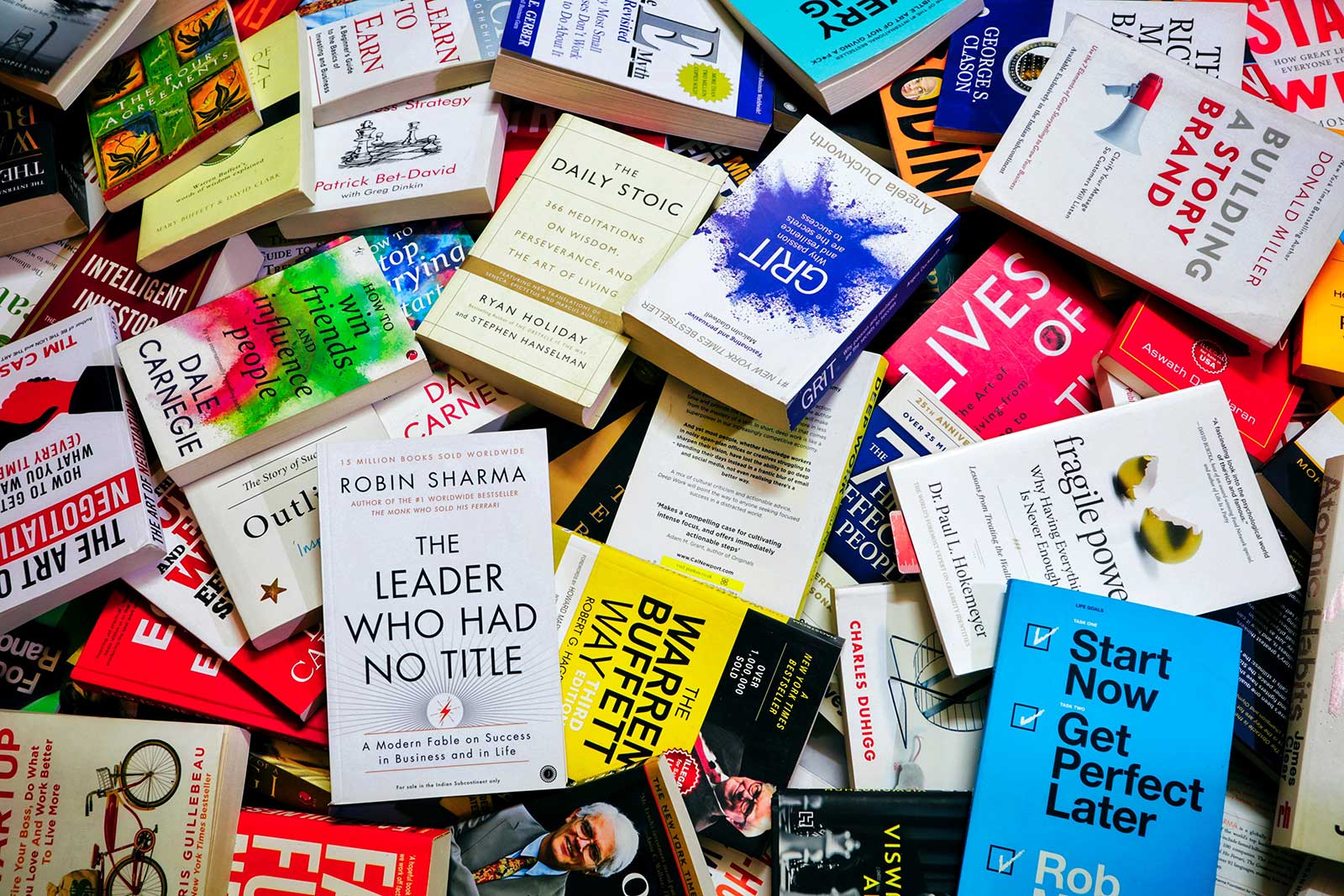
There’s an abundance of productivity, self-improvement, and optimization tips out there. Books, blogs, social media posts, podcasts, specialized courses—you name it! Plenty of genuinely useful tools and strategies are available for improving performance and hitting milestones. For leaders, improved productivity translates into efficient management and stronger teams, while others can leverage productivity to increase output and work towards promotion.
With so much content out there, what are the key takeaways that need to be parsed out? Most of the common productivity resources point to roughly the same core principles:
- Sleep right (90 minute increments, with a consistent wake-up time)
- Create a scheduled routine (block out your time with intention)
- Write down goals (identify the biggest task each day)
- Minimize distractions (stay organized and stay off your phone!)
- Drink plenty of water (keep water close at hand)
- Exercise regularly (every other day, or daily, for 15 minutes or more)
- Eat the proper balance of nutrients (enjoy a mix of fats, proteins, and carbs)
- Break apart tasks (outline the constituent steps of each task)
- Practice meditation and mindfulness (recognize your stimulus-response cycles)
- Get some sunlight (as early as possible, for as long as possible)
Personal productivity, it seems, comes down to energy management and maximizing return on investment for time allotted for work. So, is prioritizing productivity a cure-all? Not quite.
Productivity panacea
When you list all of those productivity tips together, the solution to generating more productivity seems a little obvious, right? Whether you’re leading a team, or in the trenches, you probably already know or can guess the benefits that these tips provide. You might even feel like these tips are obvious and clickbait-worthy, so you aren’t fully incorporating them into your life. However, if every worker followed this advice, they are likely to increase their productivity, irrespective of age, role, or seniority.
Although, what you might find is that incorporating these tips is actually harder than expected due to the unexpected nature of everyday life. Trying to break old habits and make new ones is difficult. What’s more, too much focus on increasing productivity will actually have diminishing returns. The phenomenon of toxic productivity has only grown in the last couple of years. As the adage roughly goes: “the difference between medicine and poison is in the dose.”
To ensure employees receive a medicinal dose of productivity tips, we recommend managers and business leaders administer those tips within the therapeutic WHEN framework, which stands for [W]isdom, [H]euristics, [E]mpathy, and [N]atural needs.
This framework allows employees the time and space they need to develop skills and demonstrate improvement. It also promotes building the right expectations for organizations to foster productive workers, without contributing to burnout or attrition.
As we’ll see in throughout this series, WHEN includes actionable workplace strategies for removing unintentional, artificial, and seemingly unavoidable limits on worker productivity. The takeaway for Part 1 is to strive for a manageable balance independent of the workplace. To that end, developing a keen sense of self-dependent productivity can be reached by starting with systems.
Start with systems, then achieving goals will follow
The in-the-moment decisions that life throws at us can often test our resolve. Emotional instability, poor physical well-being, social demands, and faulty thinking can all lead to someone throwing out the human equivalent of an error code. Or worse, the human equivalent of overclocking a processor until it melts. What often happens when we encounter resistance is that we fall back on our habits instead of properly applying logic and reason. Your goal then isn’t to learn more and think harder, but to build better habits.
Deliberate action and repeated execution builds habits, and over time those healthy habits lead to improved productivity. Author James Clear writes about the benefits of healthy habit formation and the strengths of relying on systems rather than goals in his best-selling book “Atomic Habits” (this video provides a nice overview of the book). Although there’s overlap between the two, goals ask you to rise to the occasion, while systems offer a reliable baseline to build on. The famous business and self-help book “The 7 Habits of Highly Effective People” comes to a similar conclusion by emphasizing the power of principles, which are universal and timeless guidelines for positive character ethics.
Content for consideration
It’s useful to consider your current assumptions on how best to approach work and leadership. The more clarity you have into your current systems, the better you can serve yourself, your team, and your organization. The resources below focus on self-improvement and work from an individual level. They also inspired and informed Part 1.
- Lifehacker’s article, “What Psychology Teaches Us About Structuring the Workday,” dives into aligning the work day to typical brain function and biological cues. The article isn’t too long and has very actionable instructions.
- Speaking of brain function, the brain uses around 20% of the body’s energy, so managing your energy is a big factor in productivity. To that point, HubSpot compiled a bunch of information about what and when to eat, in their infographic: “The Productivity Diet: What to Eat to Get More Done in a Day“
- Matt D’Avella, known for his productivity and minimalism videos, recently released a video called “The Death of the 40 Hour Workweek,” which explores the history of the workweek to show why this standard shouldn’t be the workplace default. At around 7:48, he makes a key point about productivity dipping after around 8 hours in a day and how most people have only about 1-4 hours of high-intensity work (depending on experience) each day. If you have time, explore his catalogue for other productivity and procrastination solutions.
- Another YouTuber, Ali Abdaal, frequently produces videos about productivity. If you want an overview of useful tips and strategies, then this video is for you. He’s distilled many productivity tips and ranked them according to usefulness (to him).
- There are some well-known productivity tips that he doesn’t rank as high for himself, but acknowledges that others might find them more useful.
- He finds the following things most effect:
- Systems, as elaborated on in “Atomic Habits”
- “The daily highlight,” which is identifying your most important task at the beginning of the day and ensuring this must-do task is completed
- Consuming content at 2x+ speed
- Finding ways to enjoy the journey (don’t over-focus on destination)
- Rounding out the recommendations for productivity YouTubers is Lavendaire. She also has many videos that distill productivity and healthy habit tips, but if you’re worried about burnout, hustle culture, or toxic productivity, then “10 Top Tips for *Healthy* Productivity” is a great resource. This video’s description is a key point to keep in mind: “What’s most “productive” is living a high quality, fulfilling life. And that’s not always about getting the most things done, but getting the right things done.”
In Part 2, we’ll investigate the three C’s of workplace efficiency: competency, collaboration, and culture. These three C’s will remain relevant as we proceed through subsequent entries in this series and explore each category of WHEN in detail.
This is Part 1 of a series. Part 1 is on personal productivity and self-improvement. Part 2 is on competency, collaboration, and culture. Part 3 is on organizational wisdom. Part 4 is on heuristic cognition. Part 5 is on empathy and emotional intelligence. Part 6 is on physical and social needs.